MBI's Middle Eastern Modular Building Council
Modular construction has moved decisively into the mainstream across the Gulf Cooperation Council (GCC). Once viewed as a solution for temporary or limited-use buildings, modular is now delivering permanent, high-quality assets that meet the region’s demands for speed, scale, and sustainability. Growing adoption across healthcare, housing, education, hospitality, and data centers reflects a broader shift in how the GCC approaches construction delivery.
One persistent misconception is that modular buildings lack durability or longevity. In practice, modern modular systems deliver lifespans comparable to traditional construction. Projects across the GCC demonstrate that modular can scale efficiently while maintaining structural performance, adaptability, and long-term value. As demand for faster project delivery increases, modular’s ability to replicate quality at volume has become a clear advantage.
The real strength of modular construction lies in early collaboration. Unlike conventional builds that tolerate late design changes, modular requires alignment at the concept and design stages. When developers, designers, engineers, and manufacturers engage early, projects benefit from reduced rework, compressed schedules, and greater cost certainty. This disciplined approach is essential to unlocking modular’s full value.
Across the GCC, national development agendas reinforce the case for modular. Saudi Arabia’s Vision 2030, the UAE’s Net Zero 2050 strategy, and similar initiatives across the region prioritize rapid delivery, sustainability, and industrial efficiency. Modular construction aligns with these goals by reducing waste, improving energy performance, and accelerating timelines through parallel site and factory work.
As the built environment evolves, so must construction methods. Modular construction offers the GCC a practical path to deliver more, faster, and better—without compromising quality. Those who embrace modular as a strategic delivery platform, rather than an alternative, will shape the region’s next phase of growth.
Middle Eastern Council Directory
Featured Article
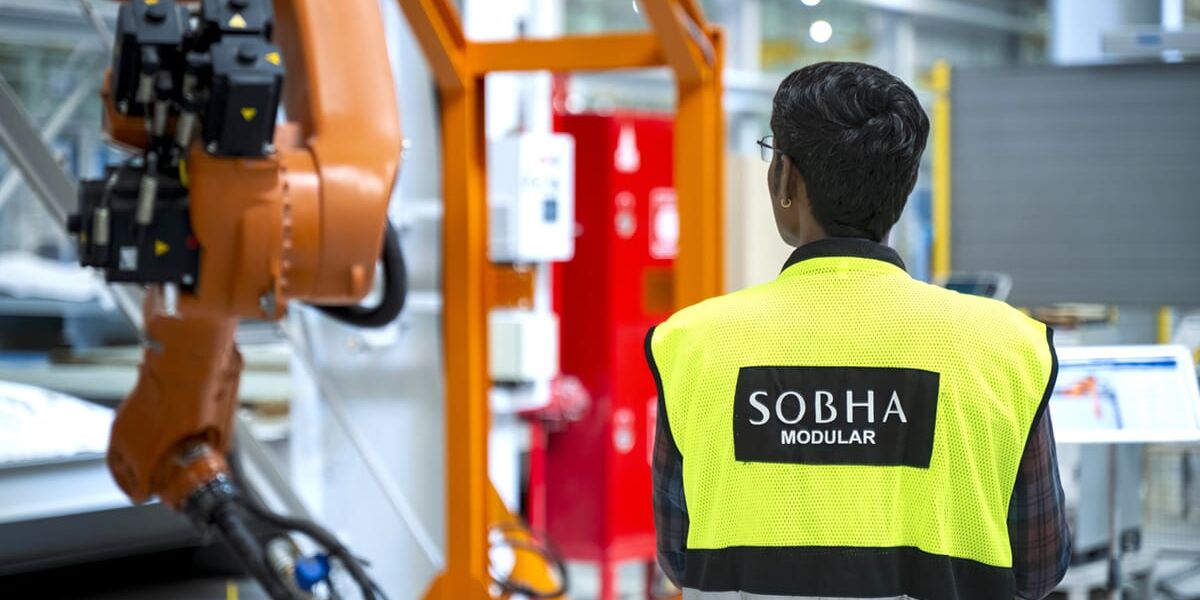
Sobha Modular Teaches Developers How to Think Like Manufacturers
At a time when modular is just getting a handle on the market in the GCC, Sobha Modular is blasting past their goals and market value with their singular focus on continuous improvement.
The modular firm, nestled under the umbrella of parent company Sobha Group, is pioneering manufacturing work one bathroom pod at a time.
With its 2.7 million square foot factory in UAE, Sobha Modular is bringing both its high-end bathroom pods to high-end residences in Dubai while developing modular projects for the U.S. and Australia.
The GCC Opportunity: What Modular Can Enable Next
Innovation keeps widening what modular can do. Better materials, automation, and digital coordination tools (including BIM) help teams deliver more complex, higher-performing buildings, not just simple boxes.
Two forces make the Gulf Cooperation Council (GCC) and the greater Middle East especially well-suited for modular scale:
1) National delivery pressure (speed + volume)
Saudi Arabia’s Vision 2030 Housing Program sets a clear goal to raise homeownership to 70% by 2030 and reports ongoing progress through annual program updates.
That kind of demand rewards delivery models that can industrialize production, replicate designs, and shorten site time.
At the same time, Saudi giga-project ambitions continue to drive demand for rapid, high-quality delivery, even as some plans get recalibrated to fit budgets and timelines. The need for speed does not disappear; delivery methods simply need to get more realistic and more productive.
2) Sustainability targets that push better building outcomes
The UAE’s Net Zero 2050 Strategy emphasizes system-wide enablers like climate finance, new technology, and upskilling. Modular aligns well because it can:
- reduce on-site waste through factory optimization
- improve airtightness and quality control for energy performance
- accelerate adoption of repeatable low-carbon specifications
Join Us!
MBI's Councils are open to members at any time. Not yet a member? Join MBI today to get involved and enjoy all the benefits of membership.
International Modular Construction Articles
How Stack Modular Is Using AI to De-Risk Mid- to High-Rise Modular Construction
Artificial intelligence is no longer a future concept in modular construction—it is already reshaping how complex buildings are evaluated, designed, and delivered.

New High-Rise Modular Apartment in Abu Dhabi Points Toward the Future of Multifamily Construction
Eagle Hills International Properties chose the BROAD Holon Building for a 16-story market rate apartment building in Zayed City, a central business district of Abu Dhabi. The project highlights the potential of the Holon system of volumetric modular construction to accelerate housing delivery.
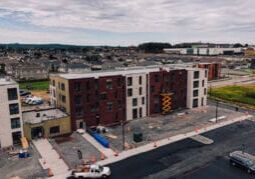
UTILE: Putting Modular Building on a Fast Track
In Quebec, UTILE is taking the lead in creating affordable modular buildings to help decrease the student housing shortage. During the process, the company discovered what it takes to make the transition to modular building a success.
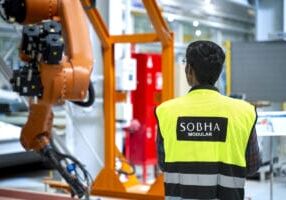
Sobha Modular Teaches Developers How to Think Like Manufacturers
With its 2.7 million square foot factory in UAE, Sobha Modular is bringing both its high-end bathroom pods to high-end residences to Dubai while developing modular projects for the U.S. and Australia.
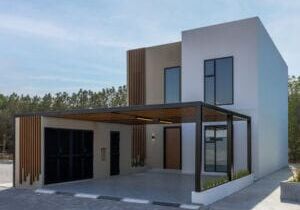
How LINQ Modular Innovates to Bring Modular To The Market in the UAE and Beyond
LINQ Modular, with an office and three manufacturing facilities in Dubai, is a modular firm based in United Arab Emirates. The company is on a mission: to break open the housing and construction markets in the Gulf Cooperation Council (GCC) area with modular.
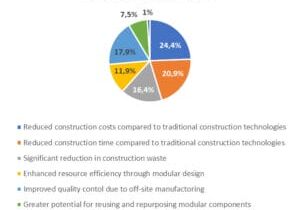
Exploring the Role of Modular Integrated Construction (MiC) in Advancing Circular City Principles – A Survey of Stakeholder Perspectives
The survey findings highlight the significant potential of Modular integrated Construction (MiC) in advancing the development of circular cities. By reducing costs, accelerating construction timelines, and minimizing waste generation, MiC offers a promising approach to sustainable urban development.
From BIM to Execution: Turning a “Pretty Picture” into a Single Source of Truth for Off-Site Construction
When implemented properly, BIM becomes the company’s digital backbone: connecting teams, standardizing information and transforming data into actionable insights. It is the key to achieving lean, predictable operations where all phases – design, planning, procurement and project execution are empowered by a single source of truth.

Homes as Essential Infrastructure
The housing crisis is nothing new. Across the world, federal, state, and municipal governments of all sizes are struggling with how to provide more affordable housing—quickly—to those who need it. In Canada, Paul Halucha, Deputy Minister of Housing, Infrastructure, and Communities Canada (HICC), argues that the federal role in housing has shifted from funding at arm’s length to actively shaping outcomes.
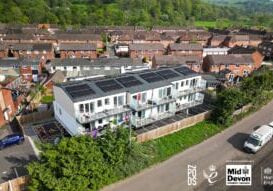
Building the Future, Offsite
In the face of a national housing crisis, England stands at a critical inflection point where innovation, scale, and public-private partnerships must converge to meet an urgent need: more homes, and fast. Homes England is helping reshape the housing market by actively supporting MMC through a strategic blend of land development, financing, and grants.
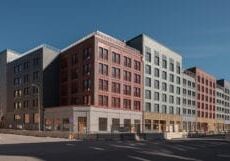
How POJI and MOKO Are Industrializing Modular Construction Through Automated Engineering Systems
Working with Scandinavian Industrialized Building System (SIBS), POJI and MOKO helped realize a modular city concept located in Järfälla municipality of Stockholm, Sweden, with 350 apartments, communal areas, restaurants, small shops, and a preschool in a pleasant mix with experiential architecture and greenery.
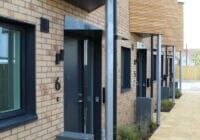
Inside Boutique Modern’s Mission to Make First Homes Affordable and Efficient in The U.K.
The U.K.-based firm has been in business for 12 years, manufacturing houses for both private clients and local government, with a large chunk of its business coming from “affordable” and social housing. Working in a 32,000 square-foot factory in Newhaven, Sussex, Boutique Modern is changing decades-old thinking about constructing houses, all through the use of modular.
Housing in the EU: What’s Next for Modular and Offsite?
According to EUROSTAT, the EU averages for housing types in cities is around 70% of people live in apartments and 30% live in houses. The suburbs and towns have around 40% living in apartments and 60% living in houses. Without exception, the modular building industry can provide new build solutions for all of these requirements.
How BIM & AI are Improving Modular Construction Outcomes Across Europe
Digitalization and ever-advancing project modelling software have been aiding traditional manufacturers, builders, and designers for years. More recently, tech-savvy modular and offsite construction stakeholders have also embraced these tools, adding their own knowledge and data to create newer, faster, more efficient ways of building. Together with new BIM- and AI-powered tools, these builders are now pushing the boundaries of what’s possible with offsite construction and energy management.
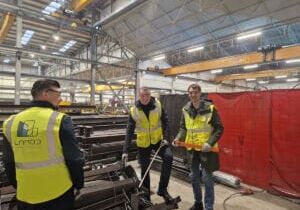
How LAMOD is Using Modular to Address Inefficiency, Sustainability, and the Future of Construction
As developers, designers, and contractors seek to understand the evolving needs of the modular industry, no one is as well-versed in the benefits of going modular as Mārcis Kreičmanis. As the co-founder and CBDO of LAMOD in Riga, Latvia, Mārcis has made it his ultimate goal to address the inefficiencies of traditional construction.

Eisa Lee, the “Bilingual” Architect
Now as the founder of XL
Architecture and Modular Design in Ontario, Canada, she applies not just her education as a traditional architect but an entire holistic view on modular design. It’s this expansive view that guides her work on being a true partner that bridges the gap between architects and modular factories as they collaborate on the design process.
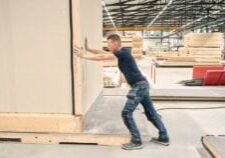
Safe Modular Construction with Aerofilm Air Caster Transport
In collaboration with Aerofilm Systems, Heijmans developed innovative skids using air caster technology for moving modules easily and safely. These pallets are equipped with an auto-flow system, making operation extremely simple.
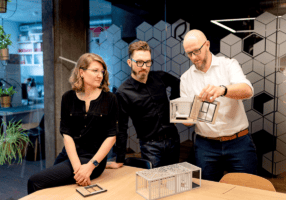
How Rebel Concept Harnesses AI as a Design Tool to Improve the DFMA Process
“The complexity of projects and the size of project are so large, and the technology is so complicated that AI would do it so much faster than we are,” says Kris Droszcz, CEO at Rebel Concept. “Everybody’s struggling to control the manufacturing processes according to the design. And I think that’s what AI will do.”
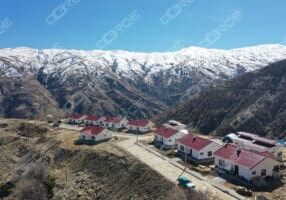
DORÇE Navigates Mountainous Terrain, Extreme Weather to Help Rebuild Türkiye
The February 6 earthquakes in 2023 were enormous. In response, DORÇE moved quickly, obtaining a government bid to help create housing and multipurpose structures—both temporary and permanent—for earthquake victims and laborers hired for reconstruction efforts.
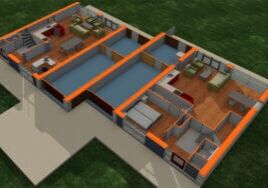
True Modular Building Seeks to Revolutionize Housing. It’s Next Stop: MBI’s World of Modular Europe
True Modular Building (TMB) specializes in crafting attainable, eco-friendly, and comfortable build-to-rent (BTR) housing with modern designs and customizable features, ensuring that residents feel at home both today and tomorrow.
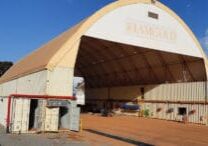
From Toronto to Suriname: A Global Modular Building Story
When I AM Gold – a Canadian gold mining operation based in Toronto, Ontario – wanted to expand its mining operations in Suriname, it knew it would also need to expand its infrastructure. More specifically, they needed to build a mechanical services compound that would allow their local crews to maintain and equipment critical to their mining operations. They also knew that it would be a challenge.