From Toronto to Suriname a Global Modular Building Story
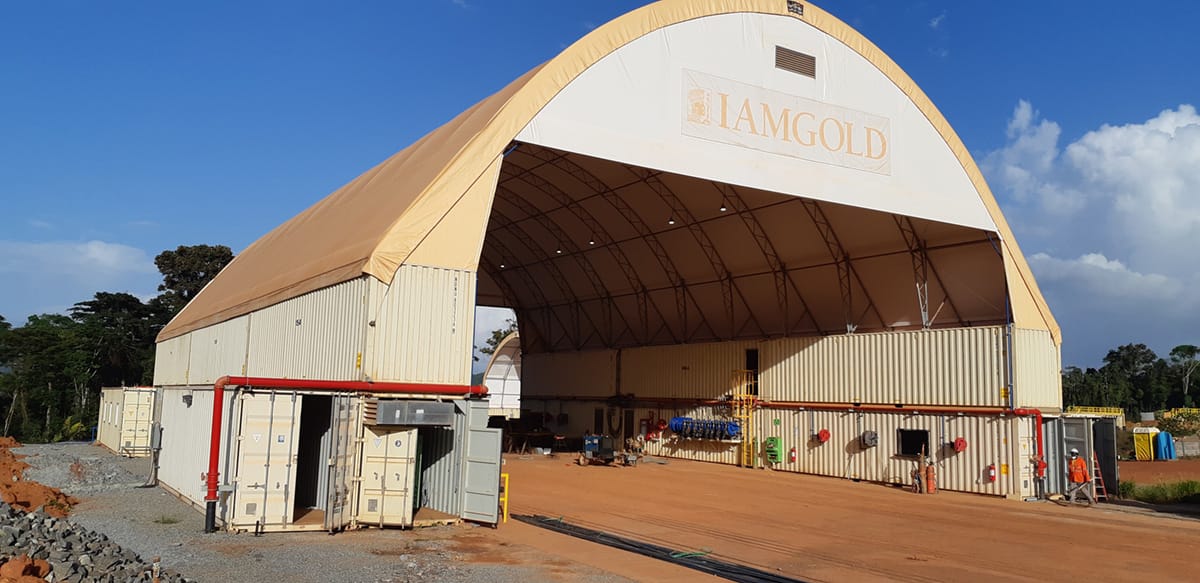
When I AM Gold first conceived of the project in Suriname to maintain its trucks and mining equipment, company leaders were planning to complete it as a stick-build project.
When I AM Gold – a Canadian gold mining operation based in Toronto, Ontario – wanted to expand its mining operations in Suriname, it knew it would also need to expand its infrastructure.
More specifically, they needed to build a mechanical services compound for their Pikin Saramacca project that would allow their local crews to maintain and repair trucks and other equipment critical to their mining operations. They also knew that it would be a challenge.
However, as a company with operations in some of the most remote and challenging places in the world, they’ve never shied away from difficult situations, and they weren’t about to start with this project.
So, in 2017, they started working on the design and planning how they would manage the construction process, and at that time, no one truly had any idea of the scale of the obstacles they would have to overcome.
Choose Global Modular
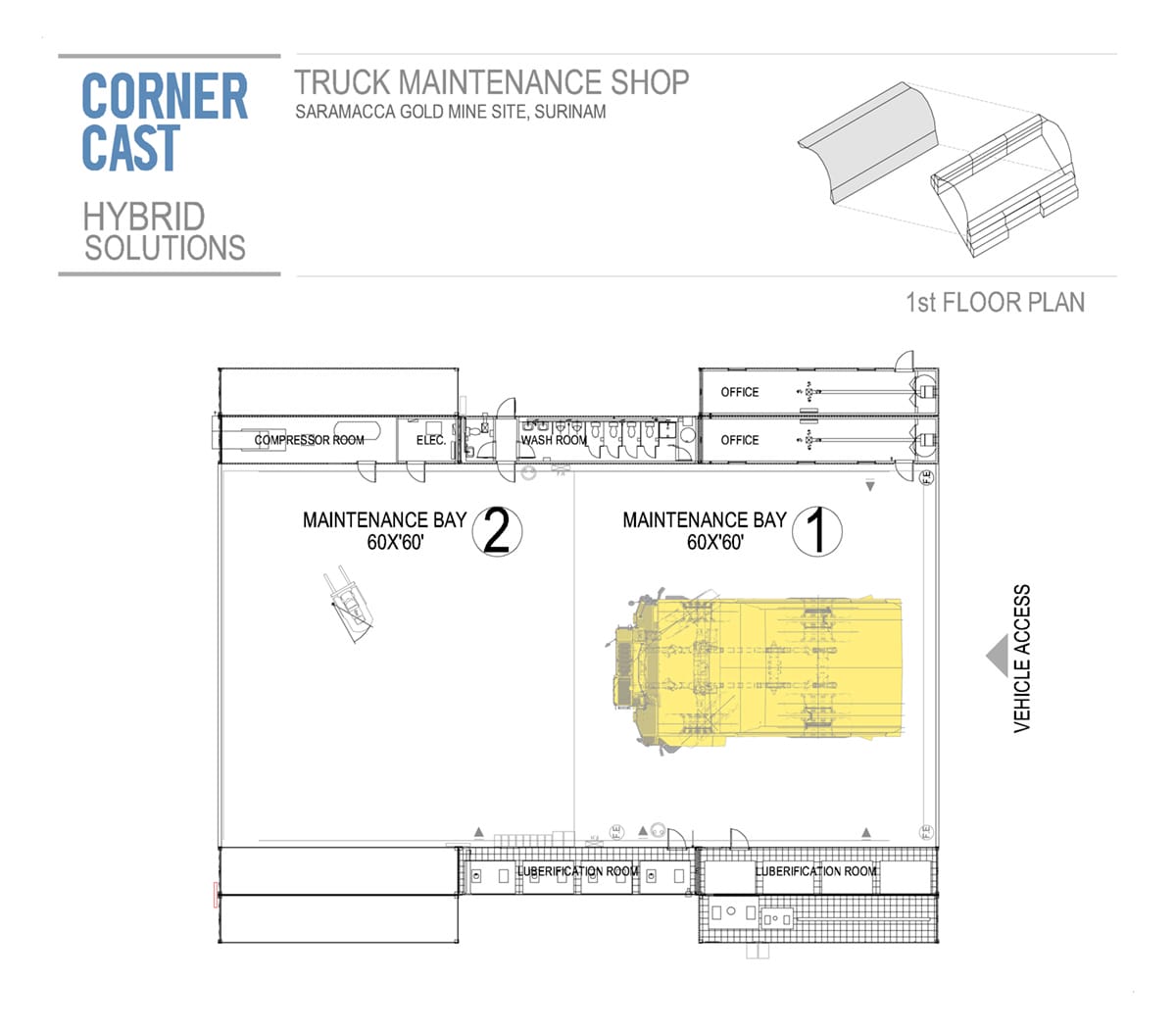
When I AM Gold first approached a multidisciplinary engineering firm BBA in Montreal, including engineer Christian Tremblay, they were planning to complete their truck shop development as a stick-built project. Early budgets and feasibility studies, however, quickly proved that the cost to build on-site in a remote location like Suriname would not only be exceedingly difficult but also exponentially more expensive than anticipated.
The only viable option to complete the project on time and within budget was to build offsite, ship completed modules to the site, and assemble them using local labor and resources. But even that would prove challenging, as the team was soon to discover in this global modular construction effort.
The only viable option to complete the project on time and within budget was to build offsite, ship completed modules to the site, and assemble them using local labor and resources. But even that would prove challenging, as the team was soon to discover.
Invited Bidders
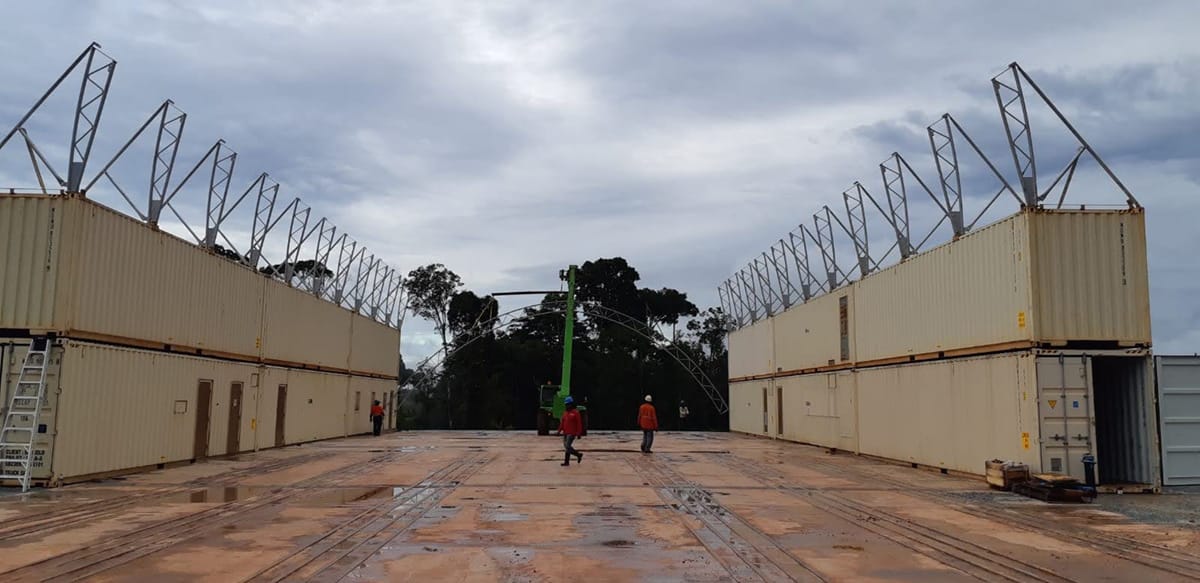
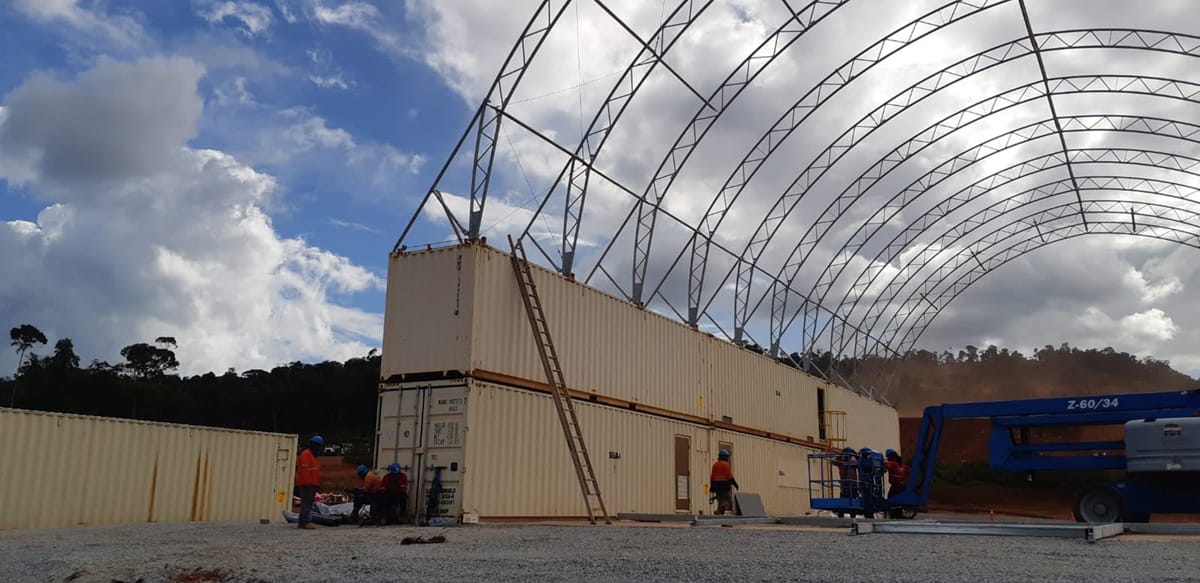
Once I AM Gold and their engineering and design team at BBA realized that global modular was the only option for their Amazon expansion project, they also realized that there are a finite number of modular building companies who could successfully design, manufacture, and outfit the steel container-based structure they needed. A short list of companies with the skills and capacity needed to deliver was created, and the companies were contacted for pricing, design, and manufacturing information.
By the end of the procurement process, Corner Cast, a Montreal-based custom modular building company specializing in steel structures, had chosen to tackle the global modular project.
Designing for International Shipping
While Corner Cast has been designing, building, and delivering high-quality steel modular structures since 2011, most of their projects thus far have been within Canada or in the continental United States.
This meant that the Corner Cast team, led by COO René Bernaert and project manager Aurélien Perez, had to ensure that all of their designs needed to be completely contained inside the shipping containers used for the project and weatherproofed for the trip to South America. It also meant that they needed to modify their designs to comply with local laws, including eliminating all wooden elements from the project.
However, with a capable and experienced in-house design team, Corner Cast handled these requirements easily, ensuring that all the modules and structural elements required for the project met the design and functionality requirements and were ready for rail shipping on time.
The Long Journey to Suriname
When you’re talking about most construction projects, the nearly 800-mile (1,200-kilometer) train journey the I AM Gold structures took from Montreal to Halifax would already be pushing the limits in terms of shipping or freight. But in this case, the containers and other structural elements built by Corner Cast had much more to travel before they arrived on site.
In fact, due to the remoteness of the port and the shipping line’s standard routes, all the containers destined for Suriname would first go to Spain before heading back across the ocean to the west coast of South America.
However, since this meant no special trips had to be made, there was a distinct environmental advantage to waiting a little longer for the containers to arrive.
A Road to the Amazon Rainforest
Having already navigated some complex issues, at this point of the project, you might assume that there would be plain sailing ahead. But not in this case.
Before and during the manufacturing and shipping of the building modules for I AM Gold’s new pit mechanical complex, the on-site construction crew led by Steve Chin A Foeng of Beyond Mining & Consulting had already been tackling some intense challenges of their own.
First and most importantly, there was the fact that the site chosen for the new mechanical workshop development was not level and needed extensive earthworks and that they had to build a haul road to the site for equipment access and to get the container modules themselves into position.
Since the site is also in a rainforest, engineers and construction crews had to carefully plan and construct concrete pads and other elements of the civils and services to minimize the impact of natural water runoff. This meant that even after the container modules and other elements of the structure arrived at the local port, they had to be stored there for nearly a year. So it wasn’t until the site and the road that would take them there were ready for use that they could finally be shipped to their final destination.
Local Challenges
Once the design, planning, manufacturing, and critical infrastructure were all in place and ready for the containers to make the final leg of the journey, the team building I AM Gold’s new mechanical service complex still had some unique issues to overcome.
Some, like the high rainfall, meant construction crews had to figure out how to keep trenches and excavations free of water for long enough to cast concrete or lay pipes. Others, like the differences in equipment and training of local crews, were solved with intensive, ongoing training, shipping tools and equipment, and making do with smaller machines wherever possible.
Then, there were some that could only be avoided, like the snakes and scorpions the crews shared the site with. Only in the Amazon will health and safety plans include the words ‘anaconda’ and ‘snake bite kits.’
Since the whole world was also caught in the grip of the COVID pandemic for a large part of this project, you can add travel restrictions and supply chain interruptions to this long list of once-in-a-lifetime problems. It’s hard to imagine any other project of this size that would face so many diverse and often quite unique difficulties.
Yet somehow, in spite of intense heat, torrential rain, unfinished roads, language and cultural differences, and deadly wildlife, the teams involved in this project successfully delivered the project to the client.
A Global Modular Solution to Complex Problems
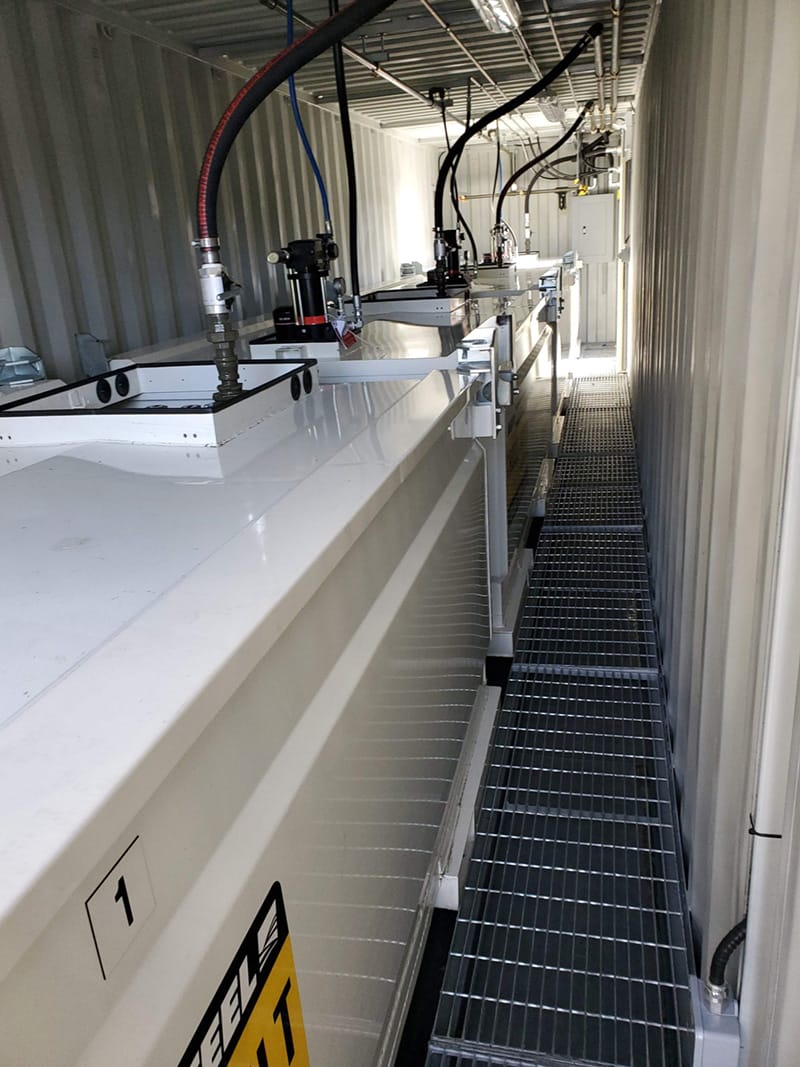
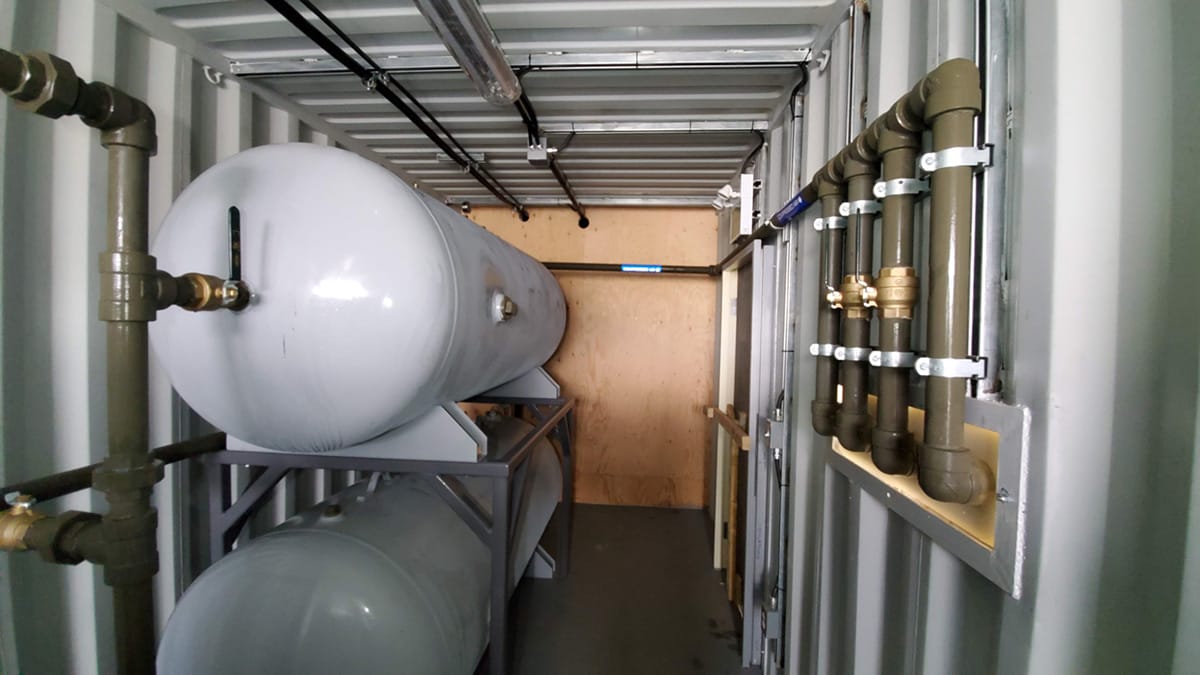
Now that the dust has settled and I AM Gold has their new truck servicing and maintenance depot, there’s one thing every member of the team involved can agree on: there’s no way they could have completed a project with this many challenges and obstacles in the time it took if they were not building modular with a global outlook.
In fact, by all accounts, assembling the project’s modular elements on-site and connecting and commissioning them for use was the fastest and easiest part of the process, all thanks to the hard work and design skills of the modular professionals at Corner Cast.
That proves that when you’re faced with the most difficult sites in most remote places, modern global modular construction solutions – and especially steel container-based buildings – should always be at the top of your list of options.
About the Author: Tamara Aspeling is a published author and freelance writer who specializes in construction and writes for print and web. She’s also a trained estimator and project manager with over 20 years of industry experience. You can reach her at www.theconstructionwriter.ca or words@theconstructionwriter.ca.
More from Modular Advantage
MBI Town Halls 2026: Reflections from Boston
By the end of 2026 MBI’s Government Affairs team will have traveled over 6,000 air miles to bring Town Hall events to five different cities in two countries.
Mind the Gap: The Interface Between Onsite and Offsite Construction
Every design for manufacture and assembly (DfMA) project — modular, mass timber, or panelized — is really two projects joined at a seam. One is built in a controlled factory to millimeter tolerances; the other in the field, in weather, to the looser tolerances of poured concrete and human hands. Between them sits an interface: where the factory’s precision meets the site’s reality.
Rules, Rails & Repeatability: Applying DfMA to Modular Healthcare
DfMA offers several advantages for healthcare projects, with faster delivery among the most valuable. Schedule matters when building new facilities, expanding campuses, renovating existing space or bringing care closer to communities that need it.
Precision and Possibility: Demands of DfMA and What Modular Mass Timber Makes Possible
Mass timber does not automatically create an efficient modular building. Its precision makes early coordination more important: fabricated components will accurately reproduce both the team’s solutions and its mistakes. The material’s advantages are realized only when supported by an equally precise design and delivery process.
Catch It in the Factory, Not in the Field: Smarter Testing for Modular Builds
Integrating watertightness and airtightness testing into factory workflows transforms quality assurance from a reactive process into a proactive commissioning strategy. It ensures that every module shipped is field ready and resilient for transportation while also supporting the ability of the modular construction industry to make buildings better.
Modular Construction Contracts: Key Considerations for Successful Canadian Projects
Starting a modular project with a well-developed contract protects both the owner and the contractor. It will help keep the project on track and on budget, and it will improve quality from the factory floor to final installation on-site.
Modular by Design: Turning Architecture into a Manufacturing System
Modular construction is often presented as a faster way to build. Speed, however, is only one part of its value. The larger opportunity is to create a coordinated design and production system that improves quality, reduces uncertainty, and allows a building to move efficiently from concept design through manufacturing, transportation, installation, and completion.
Repeatability Begins with Trust: What Alora at Dry Creek Reveals About Scaling Modular Housing
Alora at Dry Creek, a 329-unit, multifamily community comprising five four-story buildings in Centennial, Colorado, demonstrates how repeatable design, standardized manufacturing and early collaboration can work together to create a model that is not only faster to deliver, but easier to replicate across future projects.
T.R. Arnold: The Art of Third-Party Inspections
T.R. Arnold (TRA), a third-party inspection company in Elkhart, Indiana, contracts with modular manufacturers across the US. Manufacturers register with each state to which they intend to send their modules and may be required to hire a third-party inspection company.
Creating an ‘Ecosystem for Innovation:’ 50+ Years of Modular Construction Oversight in Virginia
Virginia’s modular building program began in 1973, with the implementation of the Virginia Industrialized Building Unit and Mobile Home Safety Regulations. Now it’s leading the country in modular code adoption.