UTILE: Putting Modular Building on a Fast Track
In Quebec, UTILE is taking the lead in creating affordable modular buildings to help decrease the student housing shortage. During the process, the company discovered what it takes to make the transition to modular building a success.
UTILE, a nonprofit real estate development company based in Montreal, Quebec, develops, operates, owns, and manages affordable student housing buildings. In 2013, a group of recent university graduates founded UTILE.
“We wanted to fill a big gap in the market,” says Gabriel Fournier Filion, the company’s CEO. “The province of Quebec has more than 300,000 student tenants and there was no nonprofit organization that was building housing for them.”
In 2020, UTILE opened its first student housing project, a 90-unit building in Montreal. Now, UTILE currently operates or is in the process of developing nearly 2,500 units and has expanded into Trois-Rivières, Québec City, and Rimouski.
Today, UTILE is one of the biggest nonprofit developers in Canada in terms of the number of units built per year.
Going Prefab
From its founding, UTILE had wanted to use prefabricated modules in its projects. The young company already faced the challenges of higher interest rates and higher construction costs. Intentionally adding another challenge would be downright risky.
In 2024 that desire became a reality. The Canadian Mortgage and Housing Corporation (CMHC) issued an open call for research and development projects that weren’t widely adopted by the market but could scale up the market. When the federal government offered up to a $5M subsidy to selected projects, Filion says going with prefab was a “no-brainer.”
“We could never have taken the risk if it weren’t for the federal government,” he says.
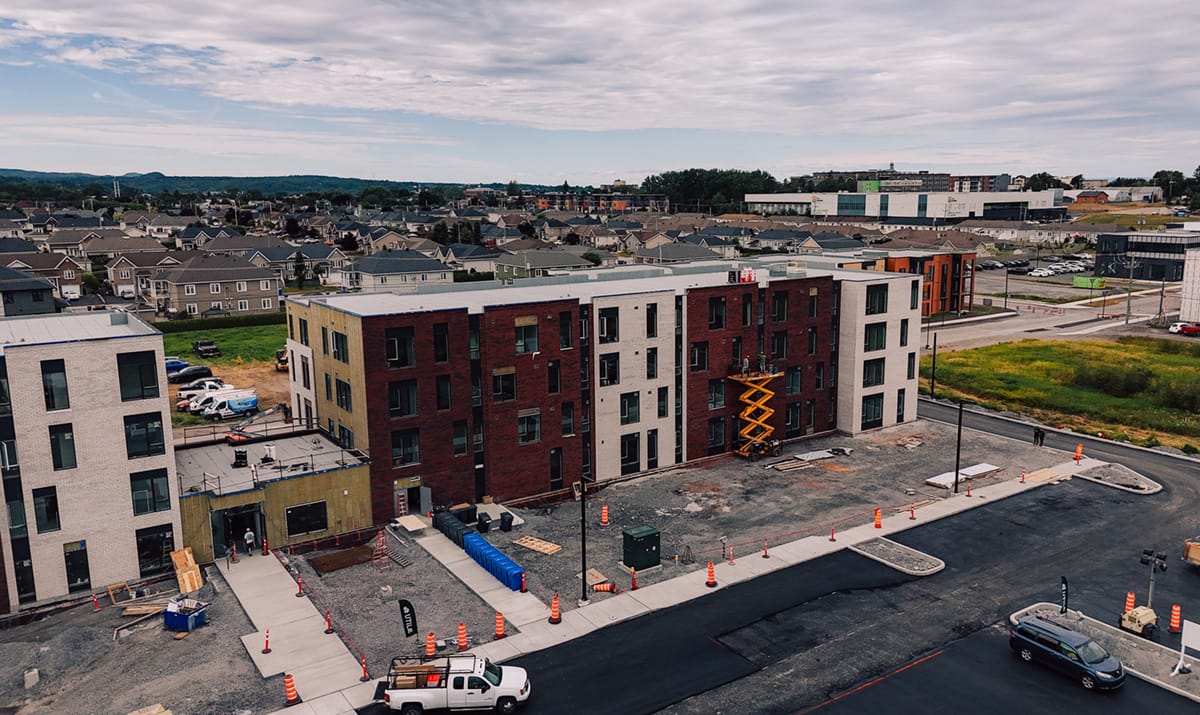
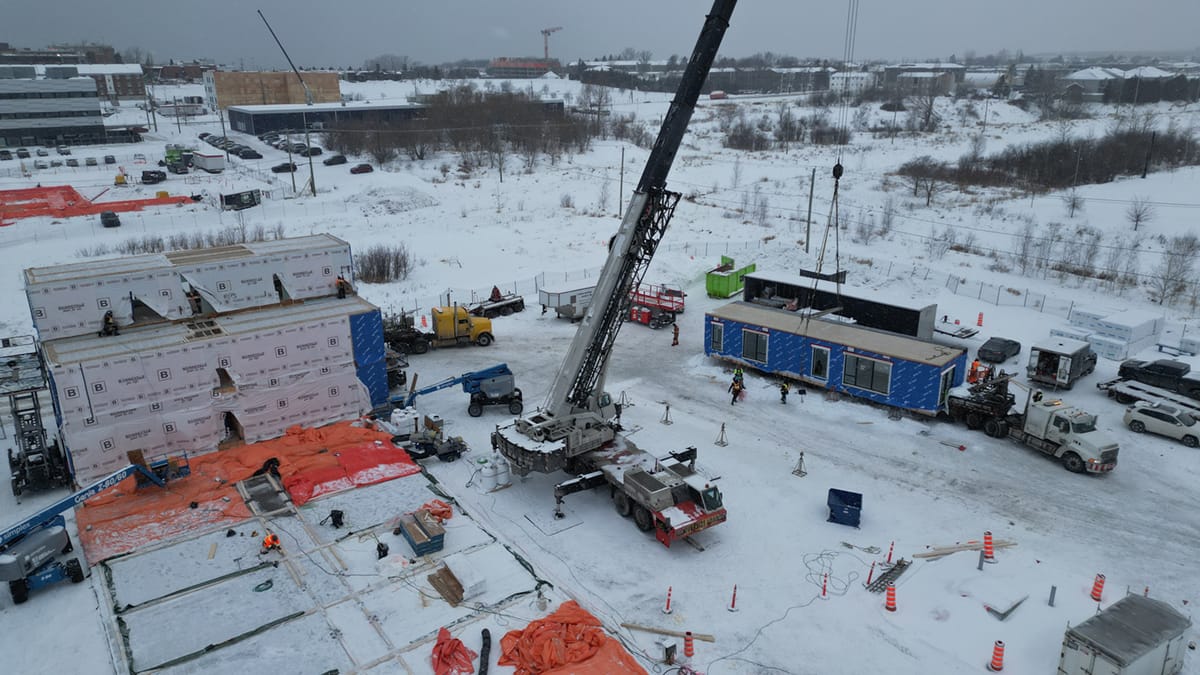
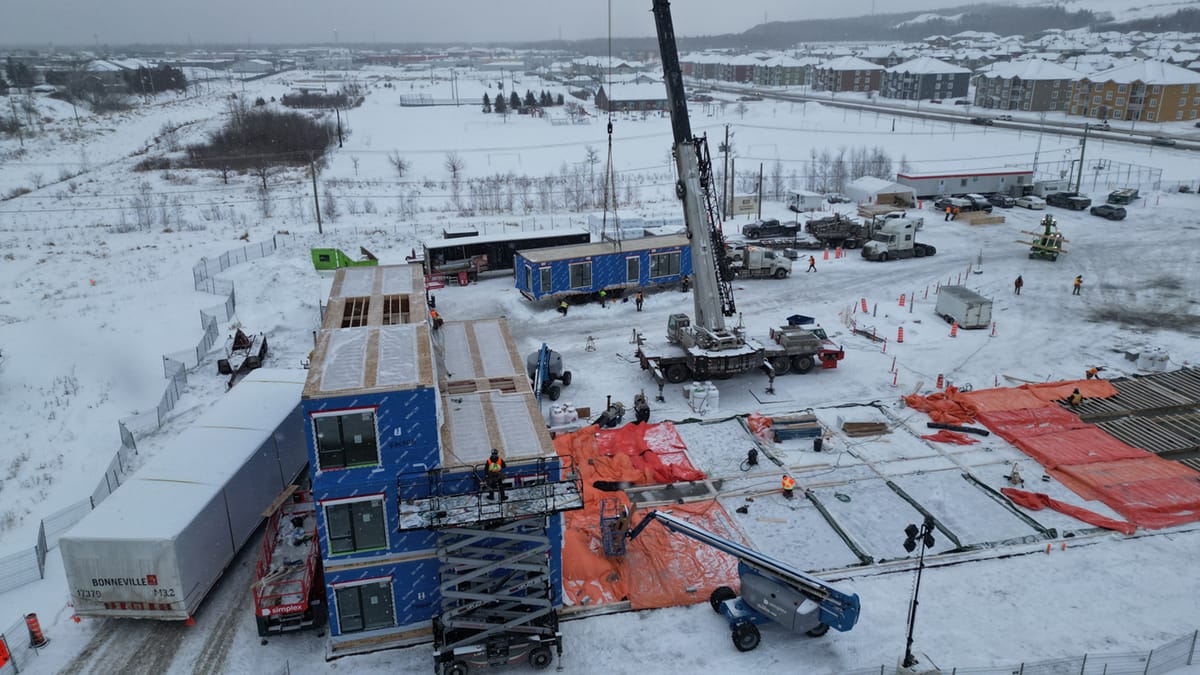
Not only did UTILE commit to a new construction method, it fast-tracked the project, based in Rimouski, to gain experience and collect data about the modular process.
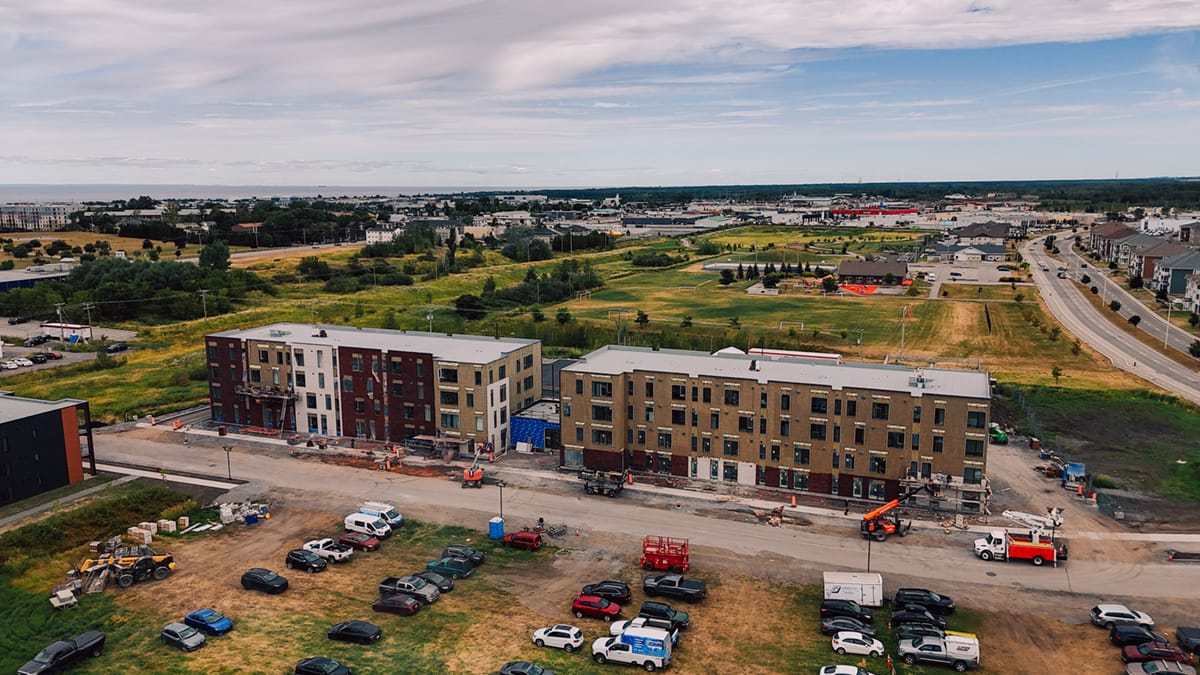
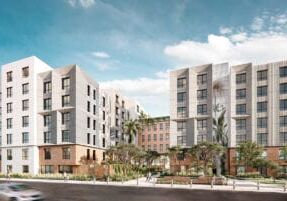
The 155-unit project was built and occupied in only 12 months.
“Normally, it takes us about four years to build a project like this—two years to create the construction plan and acquire financing and two years to build,” Filion says. “Twelve months was a huge achievement.”
A Model for Success
How did UTILE do it?
“We have a consortium model that we allocate to other real estate developers,” Filion says. “We think this is the recipe for making a prefab project a success.”
The consortium model has four steps which need to be done in order.
- Build long-term relationships. The first step is to build long-term relationships with a general contractor, a manufacturer, an architect, and an engineering firm to form a consortium. The consortium will work together with a goal of building a certain number of modular units in a specified number of years. This is contrary to the traditional construction model which is to change partners with every project. Filion notes the standard construction contract doesn’t work for the consortium model.
- Have an open book policy around costs. To reach your target price, you need both the manufacturer and the general contractor to reveal their true costs. This goes against traditional practice but is a necessary step in prefab construction.
- Increase standardization. “Standardization is paramount to decreasing construction costs and increasing productivity,” Filion says. “Our Rimouski project had 96 modules. Sixty-three of them were the same. Our manufacturer increased its productivity by 40% on our project versus a non-standardized project. And those are only the gains from standardization, not from increased robotization or other technological improvements." Standardization includes not only the modules, but the architectural and engineering plans and specifications. Everyone on the project, especially subcontractors, needs to clearly understand the plans and the scope of their work.
- Rinse. Repeat. In the precast world, good things come from repetition. According to Filion’s calculations, the first prefab project will cost more than a comparable traditional project, the second one will cost less than the first, and the third one will equal the cost of traditional construction. Cost savings come after that.
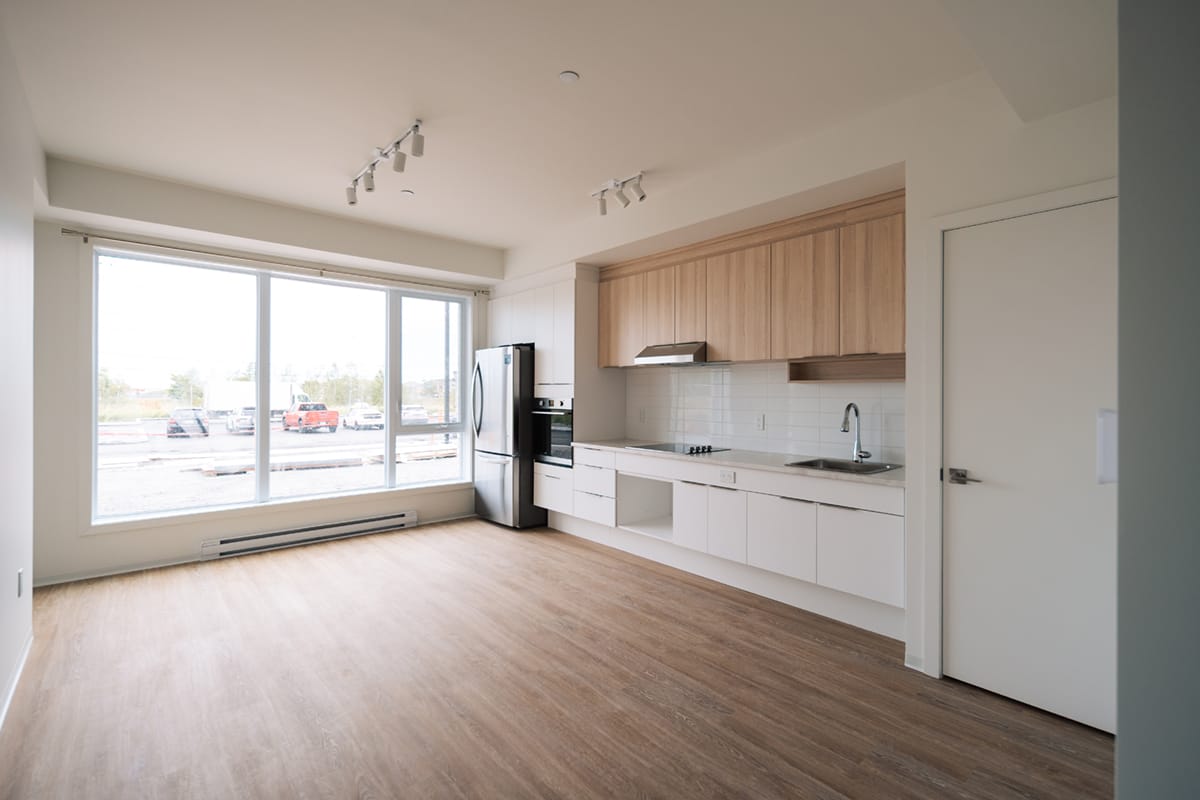
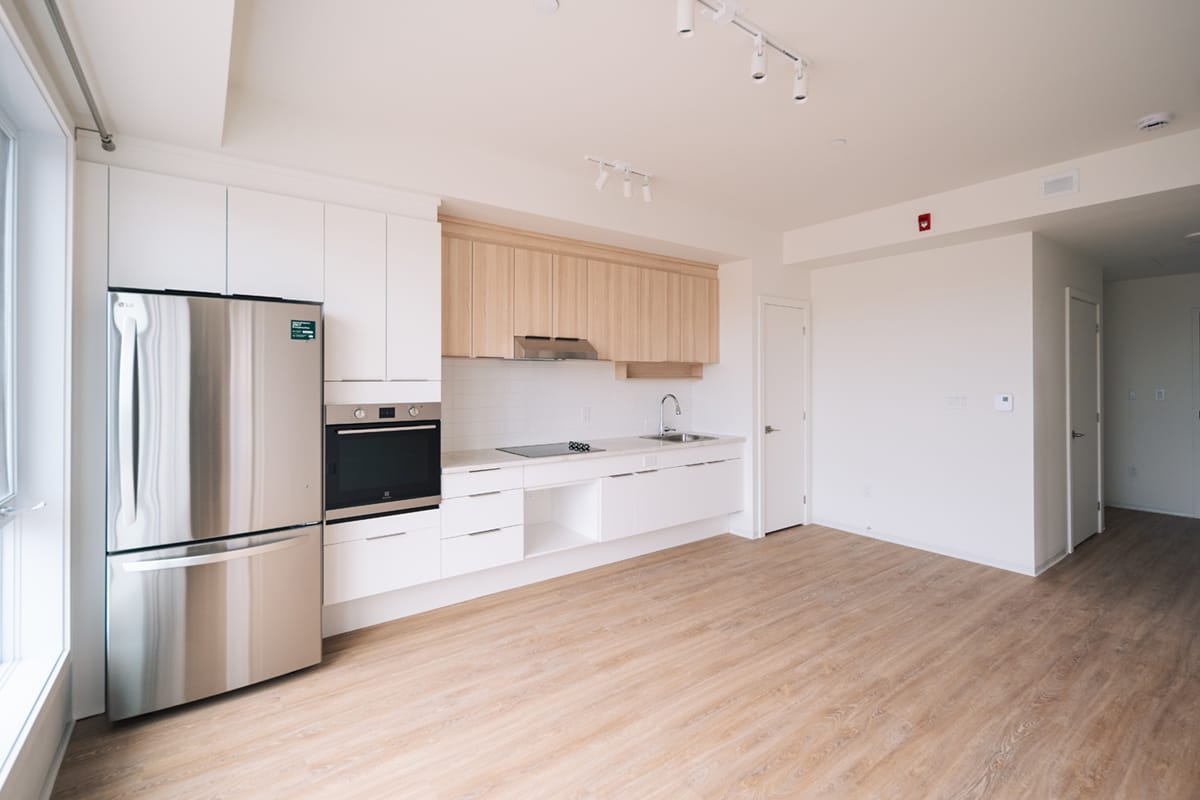
“If you make a decision about prefab construction based on a one-time pilot project, you will probably not continue with prefab because it’s hard to get it right on the first project,” Filion says. “You need to think about the long-term reward.”
Funding Issues
The main funding issue is that a bank mortgage includes the land, and everything installed on it. So, Canadian banks disburse loans upon project completion onsite, not the modular units in the factory. This requires the developer to use its equity to pay the deposit the manufacturer needs to cover the cost of materials and labor.
“Equity is precious,” Filion says. “Equity has a higher cost on capital. So it’s quite bad when you start by disbursing a huge chunk of it within a project. This lowers the return on the project.”
Another financing issue is the delay in obtaining CMHC insurance. Manufacturers typically book their production line four to six months in advance to keep their factories running at capacity. Thus, real estate developers must confirm their order to the manufacturer that far in advance. Since it takes a real estate developer four months to get financing approved, loans need to be requested eight to 10 months prior to the production date. That’s a big hurdle.
“It’s quite hard for a real estate developer to know all the project costs 10 months before starting production,” Filion says. “The delay around obtaining financing really adds to the complexity of the process.”
Other Challenges
One of the biggest challenges to starting out in modular building is that nothing is optimized. All partners are new to the prefab process. The first project has a cost premium. The goal is to lower the cost premium with every project. That involves increasing productivity at the manufacturer as well as reducing costs from the contractor and subcontractors.
Another challenge of the prefab industry is the limited volume pipeline for modular manufacturers and the scarcity of repeat business. Modular construction makes up 7.5% of all construction in Canada, while an IBISWorld report places modular residential housing at only 1.3%. UTILE’s pipeline for prefab is about 200 units annually, which isn’t large enough for most manufacturers to reach an economy of scale. UTILE’s solution is to give all its modular business to one manufacturer. In return, according to an agreement in the consortium contract, the manufacturer shares part of its profit once it reaches an economy of scale.
Managing responsibility around product quality is necessary. Since the modular unit is built in the factory and installed onsite, it’s very difficult to ascertain who is responsible for any defects. Common practice is to make both the manufacturer and the contractor liable. They may pad their bids to compensate, which raises costs.
UTILE circumvents this issue by having the general contractor and the manufacturer share the same contingency budget. They must reach budget together. The other piece of this solution is to inspect every module at the factory and when it arrives onsite and correct any defects before installation.
Advantages of Going Modular
It takes a cultural change and hard work to get started with modular building. But it’s well worth it. What does Filion consider the top three advantages of modular construction versus traditional onsite construction?
The number one advantage is that prefab construction allows the company to complete housing projects much faster than using traditional methods—one year versus four years. Faster construction also reduces the cost of construction.
Secondly, prefab construction can potentially curb inflation in the long-term. “This year we have 5% inflation on construction costs,” Filion says. “Next year, it will be 4%. We are hoping that when the market is at 5% inflation, prefab will be at only 3%.”
Finally, in the future it will be much easier to take advantage of the latest technology such as robots and AI in a manufacturing context rather than on the jobsite.
Advice for Developers
“The market in general is happy to have a nonprofit trying modular construction on a large scale because we will share information with them,” Filion says. “Our goal is to make the industry evolve. Not to find a recipe and keep it for ourselves.”
Here are some pitfalls he warns others about who are considering entering the industry.
- Taking only one prefab project. You need to complete multiple modular projects to make it profitable.
- Working with different partners. There is a learning curve that you must address with the same partner.
- Making last-minute changes. “This doesn’t work well with the manufacturing process,” Filion says. “It’s a real cultural change for real estate developers and contractors. It can create a lot of conflict.”
- Misunderstanding cost information. Contractors and manufacturers use different processes for cost verifications because their business models and cost structures vary. Not having the same mindset can cause conflicts because they don’t understand costs the same way.
Filion also shared several best practices.
- Use the consortium model. Build those long-term relationships.
- Think in terms of modular building as soon as the site is selected. The architect and designer need to work within the site restraints at the very beginning of the project.
- Get a detailed understanding of the manufacturer’s costs. It’s important that the whole team—developer, designer, architect, and engineer—visit the factory to see how it works and understand the constraints and the cost drivers. Everyone needs to understand the process.
Future Forecast
UTILE aims to launch construction of a 180-unit modular project in 2026, one of the biggest prefab projects in Canada to date.
“We hope there will be a big leap forward in the prefab industry, and that with federal assistance we can reach 10 to 15% market share,” Filion says.
About the Author: Shari Held is an Indianapolis-based freelance writer who has been covering the construction industry for more than 20 years.
More from Modular Advantage
MBI Town Halls 2026: Reflections from Boston
By the end of 2026 MBI’s Government Affairs team will have traveled over 6,000 air miles to bring Town Hall events to five different cities in two countries.
Mind the Gap: The Interface Between Onsite and Offsite Construction
Every design for manufacture and assembly (DfMA) project — modular, mass timber, or panelized — is really two projects joined at a seam. One is built in a controlled factory to millimeter tolerances; the other in the field, in weather, to the looser tolerances of poured concrete and human hands. Between them sits an interface: where the factory’s precision meets the site’s reality.
Rules, Rails & Repeatability: Applying DfMA to Modular Healthcare
DfMA offers several advantages for healthcare projects, with faster delivery among the most valuable. Schedule matters when building new facilities, expanding campuses, renovating existing space or bringing care closer to communities that need it.
Precision and Possibility: Demands of DfMA and What Modular Mass Timber Makes Possible
Mass timber does not automatically create an efficient modular building. Its precision makes early coordination more important: fabricated components will accurately reproduce both the team’s solutions and its mistakes. The material’s advantages are realized only when supported by an equally precise design and delivery process.
Catch It in the Factory, Not in the Field: Smarter Testing for Modular Builds
Integrating watertightness and airtightness testing into factory workflows transforms quality assurance from a reactive process into a proactive commissioning strategy. It ensures that every module shipped is field ready and resilient for transportation while also supporting the ability of the modular construction industry to make buildings better.
Modular Construction Contracts: Key Considerations for Successful Canadian Projects
Starting a modular project with a well-developed contract protects both the owner and the contractor. It will help keep the project on track and on budget, and it will improve quality from the factory floor to final installation on-site.
Modular by Design: Turning Architecture into a Manufacturing System
Modular construction is often presented as a faster way to build. Speed, however, is only one part of its value. The larger opportunity is to create a coordinated design and production system that improves quality, reduces uncertainty, and allows a building to move efficiently from concept design through manufacturing, transportation, installation, and completion.
Repeatability Begins with Trust: What Alora at Dry Creek Reveals About Scaling Modular Housing
Alora at Dry Creek, a 329-unit, multifamily community comprising five four-story buildings in Centennial, Colorado, demonstrates how repeatable design, standardized manufacturing and early collaboration can work together to create a model that is not only faster to deliver, but easier to replicate across future projects.

T.R. Arnold: The Art of Third-Party Inspections
T.R. Arnold (TRA), a third-party inspection company in Elkhart, Indiana, contracts with modular manufacturers across the US. Manufacturers register with each state to which they intend to send their modules and may be required to hire a third-party inspection company.
Creating an ‘Ecosystem for Innovation:’ 50+ Years of Modular Construction Oversight in Virginia
Virginia’s modular building program began in 1973, with the implementation of the Virginia Industrialized Building Unit and Mobile Home Safety Regulations. Now it’s leading the country in modular code adoption.