
About MBI in Canada: Modular Industry Growth, Advocacy, and Opportunities for Members
Representing nearly 100 Canadian modular construction companies, the Modular Building Institute (MBI) has long been the country's leading voice for commercial modular construction. Our membership spans the full spectrum of the sector—from global multinational corporations to innovative small and medium-sized enterprises (SMEs)—combining deep expertise, proven experience, and a shared commitment to advancing modular construction across Canada.
Our plans for industry growth in Canada include:
- Advocating for the commercial modular construction industry within Canada's provincial and federal governments;
- Promoting the use of modular construction through public affairs and media relations;
- Promoting a “careers in modular construction” campaign to help expand the Canadian workforce; and
- Organizing additional education and networking events for the industry.
These programs and services represent an expansion of the currently offered benefits our Canadian members already enjoy.
If you are interested in joining MBI, contact us today to learn more about Canadian member benefits and opportunities.

MBI's Canadian Advisory Council was established to promote collaboration and support among modular building manufacturers and companies in Canada. As such, it provides additional leadership opportunities within MBI for members in Canada, serves as an advisory board to MBI to ensure we are understanding our members’ needs, and serves as a forum for best practices and networking activities to be delivered more effectively by MBI.
Canadian Council Directory

NEW MBI Canadian Member Engagement Toolkit
Key messages, social content, and a ready-to-send letter for MBI members advocating across Canada
Designed for MBI member companies across Canada, this toolkit includes ready-to-use key messages, guidance for talking about modular beyond housing, social posts members can share as they are, and a letter members can tailor and send to the officials who represent them. Everything here reflects MBI’s approved advocacy positions, so when members use it, they are amplifying the same priorities MBI is advancing across Canada.
Browse Modular Projects in Canada
This interactive map showcases modular building projects submitted by MBI members across Canada. Though it reflects only a fraction of the industry’s total output, it clearly illustrates the scale, variety, and versatility of Canadian commercial modular construction.
Why Work with MBI Member Companies in Canada?
As the world’s largest trade association for commercial modular construction, the Modular Building Institute has an extensive network of modular builders, manufacturers, designers, and industry professionals serving projects across Canada. MBI members bring proven experience and specialized expertise to modular construction projects of all types. Members also commit to high standards of quality, safety, professionalism, honesty, and integrity in their work with customers, suppliers, manufacturers, and industry partners. In addition, MBI members stay informed about the building codes, regulations, and approval requirements that affect modular construction across Canada.
MBI modular builders are among the most experienced professionals in the industry, and their knowledge can bring significant advantages to commercial construction projects. Here are just a few of the benefits of working with an MBI modular builder in Canada:
- Sustainability: Modular construction can reduce material waste through controlled manufacturing processes while supporting the use of energy-efficient building systems and materials. Working with an experienced MBI modular builder can help project teams pursue their sustainability and environmental goals.
- Faster construction: Modular construction allows site preparation and building fabrication to take place simultaneously, helping shorten overall project schedules. Experienced modular builders can use this approach to deliver projects more efficiently than many conventional construction methods.
- Flexible design opportunities: Modular construction can support a wide variety of building types, sizes, layouts, architectural styles, and applications. From multifamily housing and hotels to healthcare, education, office, and commercial facilities, modular methods can accommodate a broad range of project requirements.
- Safety: Moving more construction activity into a controlled manufacturing environment can reduce exposure to several common jobsite hazards. The Dodge SmartMarket Report on Prefabrication and Modular Construction found that 89% of respondents reported improved safety performance from prefabrication and modular construction, including reduced exposure to heights, heavy lifting, and inclement weather.
The modular builders in Canada that work with the Modular Building Institute have earned the trust of architects, developers, contractors, engineers, property owners, and other project stakeholders. Explore MBI’s member directory to find experienced modular construction professionals serving projects across Canada.
Join Us!
MBI's Councils are open to members at any time. Not yet a member? Join MBI today to get involved and enjoy all the benefits of membership.
Browse Canadian Modular Construction Articles
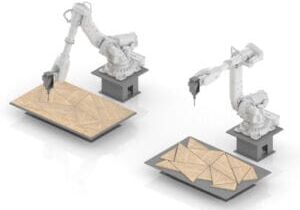
From BIM to Robotic Production: A Digital Workflow for Customized Components in Volumetric Modular Construction
For volumetric modular manufacturers, the value of this workflow is not simply the use of robotics. Its real value is continuity.
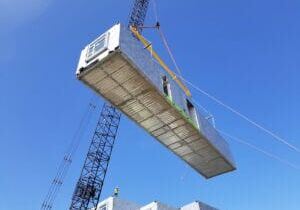
Helping Build a Common Framework for Modular Construction in Canada
Canada’s modular construction sector continues to gain momentum, but scaling it successfully will depend on shared expectations across design, manufacturing, approvals, and project delivery. CSA Z251 helps provide that common foundation.
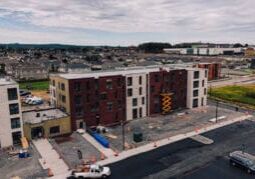
UTILE: Putting Modular Building on a Fast Track
In Quebec, UTILE is taking the lead in creating affordable modular buildings to help decrease the student housing shortage. During the process, the company discovered what it takes to make the transition to modular building a success.
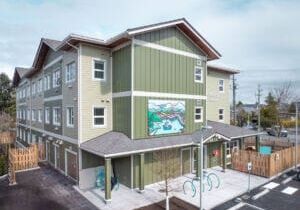
Building Hope: ROC Modular’s Role in the Steveston Highway Affordable Supportive Housing Project
At ROC Modular, we knew this was the kind of project where modular construction could make a real difference. By fabricating the building in modules offsite and assembling them on location, we could cut down construction time significantly while maintaining the high standards required by BC Housing and CMHC Universal
Design Guidelines.

Homes as Essential Infrastructure
The housing crisis is nothing new. Across the world, federal, state, and municipal governments of all sizes are struggling with how to provide more affordable housing—quickly—to those who need it. In Canada, Paul Halucha, Deputy Minister of Housing, Infrastructure, and Communities Canada (HICC), argues that the federal role in housing has shifted from funding at arm’s length to actively shaping outcomes.

Eisa Lee, the “Bilingual” Architect
Now as the founder of XL
Architecture and Modular Design in Ontario, Canada, she applies not just her education as a traditional architect but an entire holistic view on modular design. It’s this expansive view that guides her work on being a true partner that bridges the gap between architects and modular factories as they collaborate on the design process.

Castlegar Student Housing, Selkirk College
Modular construction was chosen as the ideal solution to provide high-quality, fast-track affordable housing for students, delivering a 3-storey, 30-module, 114-student bed building with a mass-timber main common
area for student amenities.
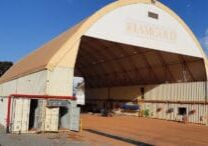
From Toronto to Suriname: A Global Modular Building Story
When I AM Gold – a Canadian gold mining operation based in Toronto, Ontario – wanted to expand its mining operations in Suriname, it knew it would also need to expand its infrastructure. More specifically, they needed to build a mechanical services compound that would allow their local crews to maintain and equipment critical to their mining operations. They also knew that it would be a challenge.
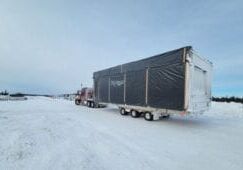
Arctic Security and Sovereignty: The Role of Modular Structures
While the geopolitical challenges in the Arctic are immense, the physical environment of the region presents its own set of obstacles. The harsh climate, extreme weather conditions, and logistical difficulties make it challenging to establish and maintain a sustained presence in the Arctic. In this context, modular structures offer a practical and effective solution, providing the flexibility, speed, and resilience needed for operations in such a remote and hostile environment.
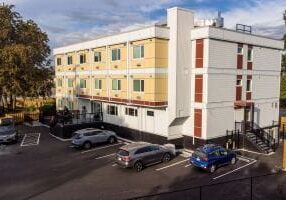
Aster Place by ROC Modular
Aster Place, a supportive housing building in Richmond, British Columbia, Canada, won the Best of Show Award and Honorable Mention for relocatable structures in the social and supportive housing category at this year’s World of Modular conference.
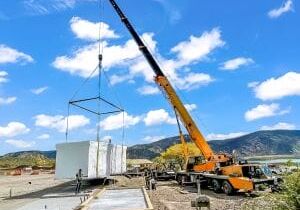
Supply and Demand: Solving Canada’s Housing Crisis One Relocatable Housing Unit at a Time
Not only do Moda Modular’s repurposed employee housing solutions cut the emissions related to construction down to nearly zero, but they also keep building materials that are often not biodegradable from slowly decaying in storage facilities.
It’s the classic environmental mantra of reduce, reuse, and recycle, scaled up and applied to building after building.
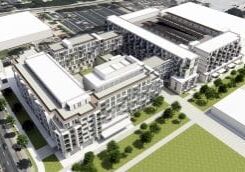
Modular Construction for Financial Viability: The Norwalk Project Case Study
The Norwalk project serves as a prime example of how Offsite Modular Construction, in collaboration with Architects, Consultants/Engineers, General Contractors (GC), and Mechanical, Electrical, Plumbing, and Fire Protection (MEP/FP) Subcontractors, can make projects financially feasible by closely working with the Owner/Developer under an Integrated Project Delivery (IPD) approach.
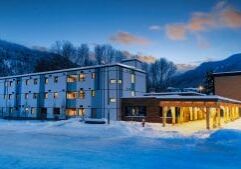
Silverking Student Housing, Selkirk College
ROC Modular was proud to deliver a much-needed new permanent modular Student Housing Residence for Selkirk College, located at the Silverking Campus in Nelson BC. The project is a 3-storey, 12-module 38-student bed building with a mass-timber main common area for student amenities.
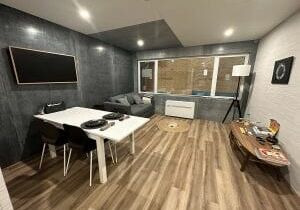
homeD: On a Mission to Improve Affordable Housing in Canada
homeD’s mission is to alleviate homelessness and in British Columbia and they’ve developed unique modular housing products to that end. The company also embraces a strong social justice ethic, providing solutions for marginalized communities who face housing challenges, and is aligned with the UN’s Sustainable Development Goals.
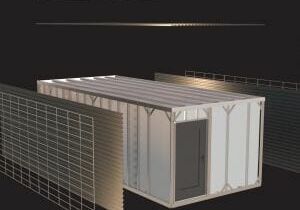
Ingenious System Assembles Buildings with Concrete Superstructure in Weeks
That modular building hasn’t already gained more U.S. market share is a source of bewilderment to many. Though the technology has been around for more than 70 years, modular building in the U.S. has never gained as solid a foothold as it has in other societies. But it’s time may finally be here.
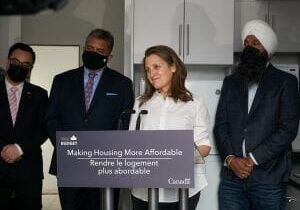
The Rapid Rise of Affordable Modular Housing in Canada
Canada’s Rapid Housing Initiative represents a huge success for the modular construction industry, and MBI members are building modular multifamily homes fast. Here are some examples.