
Housing in the EU: What’s Next for Modular and Offsite?

Alan Milne is the European Membership Director for the Modular Building Institute.
The global housing shortage has been well documented particularly in the EU, where house prices and rents have significantly increased due to high demand and insufficient supply. There is a great opportunity and potential for modular and offsite construction methods to address these challenges by providing efficient and sustainable housing solutions. Despite their advantages, modular construction currently holds a small market share, primarily due to inconsistent workflows, and regulatory hurdles across different EU countries. There is a need for more government support to streamline planning processes and improve awareness among stakeholders about the benefits of modular building, which can lead to increased adoption and innovation in the housing sector.
The big question is what can be done and how will it improve?
The Current Housing Situation within EU Countries
Within the first quarter of 2025, house prices in the EU increased by 5.7%, and rents increased by 3.2% compared with the same quarter the previous year. Overall, house prices across the EU have risen on average by nearly 50% in the last 8-year period. The continued increase in demand and lack of supply is only going to compound the situation.
According to EUROSTAT, the EU averages for housing types in cities is around 70% of people live in apartments and 30% live in houses. The suburbs and towns have around 40% living in apartments and 60% living in houses. Without exception, the modular building industry can provide new build solutions for all of these requirements.
The predicted growth markets for modular construction in Europe are primarily in central and Southern Europe, particularly in countries like Spain and Portugal. Additionally, Sweden is noted for leading the way in modular construction adoption, with approximately 45% of all new housing developments utilizing offsite construction methods.
The main reasons offered for the lack of progress so far in building new homes across the EU are:
- Not enough skilled labor. There is a shortage of skilled workers needed to construct new housing, which hampers progress.
- Time to build and deliver quality housing. The construction process can be time-consuming, making it challenging to rapidly deliver the quality housing necessary to meet demand.
These factors contribute significantly to the slow pace of developing sufficient numbers of new homes in the region.
Disconnect From What’s Familiar to Build Something Better
The option to look at modular building and offsite solutions to assist with solving the housing crisis has been on offer for a number of years and provided a range of accommodation from one-bed units to multifamily homes using materials such as concrete, steel, and timber. While modular building methods can encounter challenges related to logistics and road access, they currently represent about 5% of the market share across EU countries. One concern regarding modular construction is the perception of limited design variety and standardization of housing types. However, as long as the principles of design for manufacture and assembly are implemented, modular building systems can offer an endless number of options for design creativity, indicating that standardizing module types does not restrict variety in design or finishes.
Unfortunately, where there is a closure of a modular factory it is widely reported, less so are the industry successes, of which there are many. There are a number of reasons why modular manufacturers close, although one common theme is lack of consistent work flow. There are examples in the United Kingdom of large, well-funded modular manufacturers closing, not necessarily due to the lack of orders. Part of the issue, and the common theme, is the long delays waiting on planning approvals. A large manufacturer of any product will struggle to survive if it has to keep turning the factory tap on and off due to irregular order frequencies. If industrialised building systems, using modular and other offsite systems, are to be successful, the planning process needs to be streamlined and more consistent, with a time-based accountability.
How Can Governments Assist?
More top-down approach from governments to incentivize the use of modular and offsite building systems alongside a more effective planning process would be a good start. A quicker and less onerous planning timeline will go a long way to assist with the issues of factory workflows, as well as the continued efforts of our industry to meet the demand as the market grows and we continue to keep innovating and developing the product offering.
Other challenges include dealing with the regulatory frameworks throughout Europe, with each country implementing different procedures and compliance codes. Finding a solution to standardizing these frameworks and codes across the EU countries will increase the industry’s potential, making procurement an easier and more straightforward process for both end users and suppliers.
To promote modular and offsite building systems, governments should consider all of the following approaches:
1. Incentives and Subsidies
Provide financial incentives such as grants, tax credits, or subsidies to companies that adopt modular construction methods. This would lower the financial barriers associated with transitioning to these systems.
2. Streamlined Regulations
Simplify and expedite the planning and approval processes for modular and offsite projects. A quicker timeline would encourage developers to choose these methods over traditional construction.
3. Training and Education
Invest in training programs for the workforce to ensure they are skilled in modular construction techniques. Promoting educational initiatives can help overcome labor shortages and enhance productivity.
4. Research and Development Support
Fund research initiatives focused on improving modular building technologies and materials. Supporting innovation can lead to better products and processes.
5. Collaboration with Industry
Foster partnerships between government agencies and the construction industry to share best practices, address challenges, and align policies with operational needs.
6. Standardization of Codes
Develop standardized building codes and regulations specifically for modular construction to create clarity and consistency in how these projects are assessed and approved.
We cannot change a government ‘s approach overnight but we can as an industry, through collective lobbying, improve knowledge and awareness of how modular and offsite can assist in solving the housing crisis.
How Can Governments Assist?
The level of understanding and knowledge that clients, end users and developers have of modular and offsite construction and what it can offer should not be taken for granted. There is always a need to improve the knowledge of all those that can influence the outcomes in a positive way - understanding what modular can deliver in volume, design, quality and timescales.
Funders and insurance providers should also be advised on what our industry can offer. There has been good progress from organizations like BOPAS and NHBC in the UK providing assurance to lenders, developers and housing associations which makes it easier to obtain long term funding/ mortgages on modular build projects.
The Market Potential
The predicted growth markets for modular construction in Europe are primarily in central and southern Europe, particularly in countries like Spain and Portugal. Additionally, Sweden is noted for leading the way in modular construction adoption, with approximately 45% of all new housing developments utilizing offsite construction methods. The biggest growth within the offsite housing sector is expected to be in panelized systems, as experienced in Ireland, and multi-family housing being the fastest growing requirement. These areas are projected to witness significant expansion if governments improve the planning process and drive incentives for modular and offsite construction options.
The housing sector represents significant growth potential. Modular construction is recognized by governments as a solution to the housing crisis, but its market share remains small across most EU countries. Increased knowledge and lobbying efforts are essential for improving perceptions of modular systems, which can easily deliver lower carbon footprints and meet new building code standards. Despite a historical perception of limited design variety in modular housing, when principals of design for manufacture and assembly are applied, these systems can offer diverse design options.
More from Modular Advantage
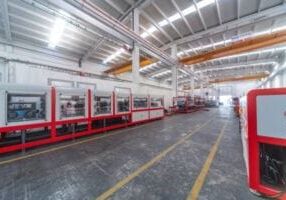
From Model to Machine: Why Modular Scale Is Becoming a Software Problem, not a Material One
For modular manufacturers that have already secured demand and repeatable volume, the next major constraint may no longer be forming capacity itself. Increasingly, it is the continuity of the information feeding that capacity.

Who Will Define Modular Products for AI?
Artificial intelligence is making building configurators easier and less expensive to create. This makes urgent manufacturers’ need portable product definitions, stable identities, and shared interfaces regardless of how others’ software is produced.
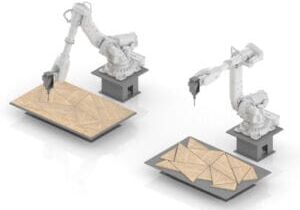
From BIM to Robotic Production: A Digital Workflow for Customized Components in Volumetric Modular Construction
For volumetric modular manufacturers, the value of this workflow is not simply the use of robotics. Its real value is continuity.
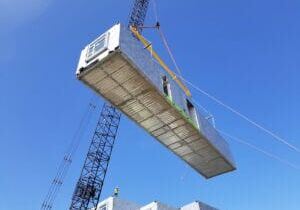
Helping Build a Common Framework for Modular Construction in Canada
Canada’s modular construction sector continues to gain momentum, but scaling it successfully will depend on shared expectations across design, manufacturing, approvals, and project delivery. CSA Z251 helps provide that common foundation.

Edges, Exits & Equipment: A Modular Builder’s Guide to Rooftop Access
Rooftop access belongs in the factory design. Before the modules ship, the project team should identify each route’s users, confirm applicable requirements, coordinate with the roof system and structure, and assign responsibility.
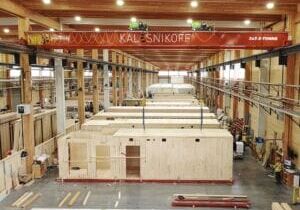
When Timber Production and Modular Construction Share One System
As demand for multifamily and workforce housing continues to outpace what conventional construction timelines can deliver, models that reduce the number of handoffs between structural fabrication and modular assembly are likely to draw more attention.
Your AI Strategy Is an Enablement Strategy
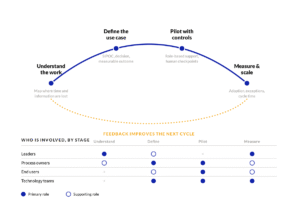
Tools will change. Teaching employees only the steps in one platform creates a narrow capability. Involving them in problem definition, process mapping, data assessment, controls, and measurement gives the organization a way to improve its systems as technology evolves.

By-Right Permitting: The Missing Lever for Scaling Modular Multifamily
Modular has already proven it can outperform traditional building methods on speed and cost per unit. The next frontier is outside the factory in the front end of the process, where projects either clear a path to construction or get stuck in review.

Remote Inspections and The Future of Factory Oversight
Remote inspection is becoming a practical part of modular construction oversight. Its value is greatest when it is used selectively, governed by clear procedures, and supported by complete traceability.
Reimagining Dry-In: How a Temporary-to-Permanent Roofing Strategy Mitigates Risk Between Modular Installation and Final Roof Construction
As volumetric modular projects continue to increase in scale and complexity, the Temporary-to-Permanent FiberTite Roof System represents an example of how traditional trade scopes can be reimagined through Design for Manufacturing and Assembly (DfMA) principles.