From BIM to Execution: Turning a “Pretty Picture” into a Single Source of Truth for Off-Site Construction

Joonas Mauer is the VP of Sales at build.works technologies OÜ.
In today’s off-site and modular construction industry, digitalization has become the decisive factor, separating high-performing prefab companies from those struggling to keep up with the pace. Success no longer depends solely on material availability, machinery or manpower - it depends more on how well your processes are defined, connected and continuously improved.
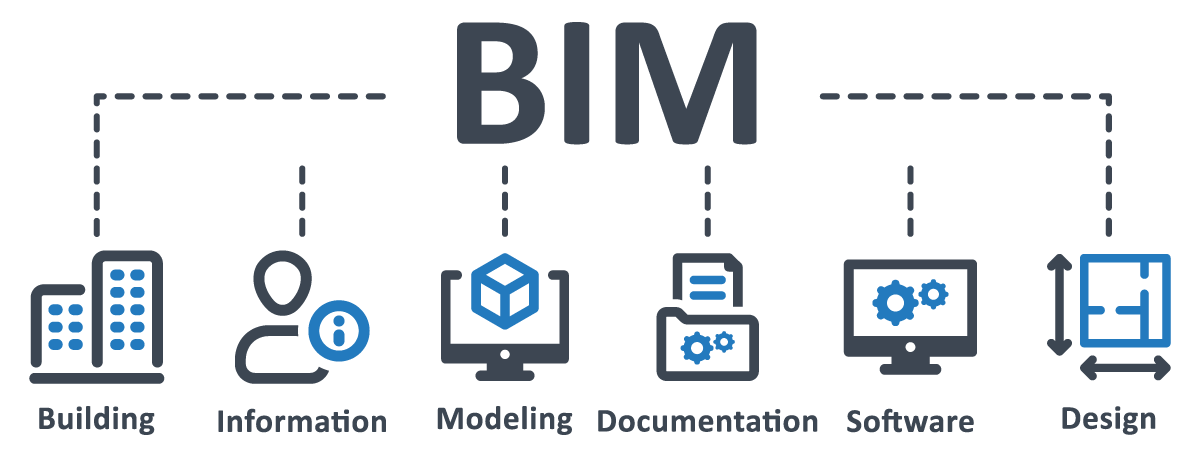
At the core of this transformation is Building Information Modeling (BIM) - not just as a 3D design tool, but as the foundation for companywide Building Information Management. When implemented properly, BIM becomes the company’s digital backbone: connecting teams, standardizing information and transforming data into actionable insights. It is the key to achieving lean, predictable operations where all phases - design, planning, procurement and project execution are empowered by a single source of truth.
The Challenge: Fragmented Processes and Information Flows
Despite the progress in digital design and manufacturing tools, many companies still struggle with fragmented data flows. Design models are exported to spreadsheets, quantities retyped into ERP systems and production schedules generated (and updated!) manually. Every manual transition can produce delays, inconsistencies and is prone to human error.
An old saying, “the chain is as weak as its weakest link.” suits well in this case. When information is not properly validated and standardized, even the most advanced tools fail to deliver their full potential.
Disconnected systems cause rework, inaccurate scheduling and poor predictability of project costs. Putting BIM to use can solve this - but only when dynamically end-to-end integrated to all core processes – creating seamless integrated data flows between design, planning and project execution in factory and on site.
The Transformation: Integrated BIM as the Backbone for Company Operations
Modern BIM workflows go beyond visualizations and clash detection between building elements. A well-structured model now serves as the main engine of the entire process - from concept to project completion.
In a modern off-site project, the process starts with a BIM model, enriched with company-specific parameters, such as classifications, product and work task specifications, instructions and quality assurance checkpoints. From this enriched data, a complete and structured Bill of Materials (BOM) is generated with an ease. This dynamic BOM drives procurement, scheduling and also tasks for workers, all while still maintaining a reference to the model and it’s elements.
For the shop floor and site workers, tasks are directly linked to the single source of truth, so everyone always works with the latest project specifications. Quality checks and progress updates are fed back into the system, forming an efficient two-way flow of information between BIM, ERP and project execution applications.
Companies that integrate BIM with ERP solutions achieve the most measurable benefits - real-time visibility into resources, faster change management and reduced manual work to make this all happen. As many have discovered - this is where design turns into actual beneficial production and construction intelligence.
Lessons Learned: 10 Principles for Digitalizing Off-Site Processes
Digital transformation succeeds only if companies approach it as a process improvement journey, not just a one-time software upgrade. The following ten principles, drawn from years of experience from both the prefabrication and IT industries, help to define what successful digitalization looks like:
- If it’s not in the system, it doesn’t exist. Processes must guide behavior, not the other way around.
- Enter data once; reuse everywhere. Data continuity is the backbone of efficient processes.
- Validated information must be accessible to all. Collaboration thrives on shared project data and easy access.
- No more paper copies. Digital documentation prevents version confusion and saves time.
- Organize and analyze your data. Structured information creates insight and drives R&D.
- Predefine your products and processes. Preparation is the key to consistent, efficient execution.
- Automate repetitive tasks. Let machines handle the routine so people can focus on custom operations.
- Measure and benchmark your progress. Continuous improvement requires visibility and clear goals.
- Train your people and build digital culture. Tools change fast; concepts endure.
- Seek experienced guidance. Learn from those who’ve already navigated digital transformation.
If these principles are applied systematically when digitalizing operations - more predictability, shorter lead times, fewer errors and stronger collaboration across teams are created.
Platforms such as build.works exemplify these concepts in practice by connecting BIM with ERP systems, enabling end-to-end workflows from design to production without breaking data continuity.
The Outcome: A More Predictable and Lean Process
The real impact of BIM-based digitalization lies in controlled data and end-to-end integrated processes. Teams gain the ability to make decisions based on live information, not assumptions or predictions. Resource requirement planning and procurement are always aligned with updated project design and definition. Production and construction planning become proactive and dynamic.
This is where lean principles meet digital workflows: fewer surprises, less waste and a smoother transitions between processes from sales to project delivery. With real-time visibility into costs, schedules and progress, companies can finally run construction projects with the predictability of manufacturing.
In practice, these benefits extend beyond just everyday productivity. Integrated data improves traceability, quality control and also sustainability - subjects where the off-site sector increasingly competes for advantage. By treating information as a valuable resource, it is possible to truly make it work for you, driving analysis and enhancing decision-making.
The Road Ahead: From Data to Intelligent Processes
As digital maturity grows, companies are extending BIM use beyond coordination and design, into actionable and predictive intelligence. Artificial intelligence and rule-based configurators are now capable of automating routine design work, optimizing layouts and simulating production sequences before manufacturing begins.
Meanwhile, lifecycle digital twins (data-rich BIM models) allow for continuous monitoring and improvement of performance and sustainability. These innovations rely on one thing above all: structured, connected and continuously validated BIM data.
The industry’s direction is clear: digitalization is not replacing people. It is empowering them with better information, faster feedback and enabling smarter decisions made throughout processes.
Digitalization as a Continuous Journey
BIM is what you make of it. Used strategically, it becomes the operational basis of a modern construction enterprise - linking project design with execution and turning information use into a competitive advantage.
Digitalization doesn’t happen overnight, but with a clear roadmap, disciplined approach and a commitment to improvement, any company can make it happen. As many off-site manufacturing companies have discovered or are now realizing - fully digital workflows are no longer a distant future - they are the new reality already being adopted across the industry.
More from Modular Advantage
Mind the Gap: The Interface Between Onsite and Offsite Construction
Every design for manufacture and assembly (DfMA) project — modular, mass timber, or panelized — is really two projects joined at a seam. One is built in a controlled factory to millimeter tolerances; the other in the field, in weather, to the looser tolerances of poured concrete and human hands. Between them sits an interface: where the factory’s precision meets the site’s reality.
Rules, Rails & Repeatability: Applying DfMA to Modular Healthcare
DfMA offers several advantages for healthcare projects, with faster delivery among the most valuable. Schedule matters when building new facilities, expanding campuses, renovating existing space or bringing care closer to communities that need it.
Precision and Possibility: Demands of DfMA and What Modular Mass Timber Makes Possible
Mass timber does not automatically create an efficient modular building. Its precision makes early coordination more important: fabricated components will accurately reproduce both the team’s solutions and its mistakes. The material’s advantages are realized only when supported by an equally precise design and delivery process.
Catch It in the Factory, Not in the Field: Smarter Testing for Modular Builds
Integrating watertightness and airtightness testing into factory workflows transforms quality assurance from a reactive process into a proactive commissioning strategy. It ensures that every module shipped is field ready and resilient for transportation while also supporting the ability of the modular construction industry to make buildings better.
Modular Construction Contracts: Key Considerations for Successful Canadian Projects
Starting a modular project with a well-developed contract protects both the owner and the contractor. It will help keep the project on track and on budget, and it will improve quality from the factory floor to final installation on-site.
Modular by Design: Turning Architecture into a Manufacturing System
Modular construction is often presented as a faster way to build. Speed, however, is only one part of its value. The larger opportunity is to create a coordinated design and production system that improves quality, reduces uncertainty, and allows a building to move efficiently from concept design through manufacturing, transportation, installation, and completion.
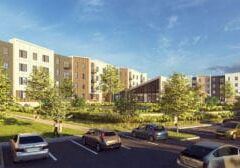
Repeatability Begins with Trust: What Alora at Dry Creek Reveals About Scaling Modular Housing
Alora at Dry Creek, a 329-unit, multifamily community comprising five four-story buildings in Centennial, Colorado, demonstrates how repeatable design, standardized manufacturing and early collaboration can work together to create a model that is not only faster to deliver, but easier to replicate across future projects.

T.R. Arnold: The Art of Third-Party Inspections
T.R. Arnold (TRA), a third-party inspection company in Elkhart, Indiana, contracts with modular manufacturers across the US. Manufacturers register with each state to which they intend to send their modules and may be required to hire a third-party inspection company.
Creating an ‘Ecosystem for Innovation:’ 50+ Years of Modular Construction Oversight in Virginia
Virginia’s modular building program began in 1973, with the implementation of the Virginia Industrialized Building Unit and Mobile Home Safety Regulations. Now it’s leading the country in modular code adoption.
Understanding Thermal Barriers Compliance Methods & Emerging NFPA-275 Foam Plastic Technologies
New fire barrier technologies are improving total costs and margins in major areas of construction, such as commercial, government, union and prevailing wage projects. These benefits translate into other large fringe areas, such as agriculture, commercial cold storage facilities, grow houses, outbuildings, military and aviation hangars.