
Modular Advantage Magazine
Exploring the Role of Modular Integrated Construction (MiC) in Advancing Circular City Principles – A Survey of Stakeholder Perspectives
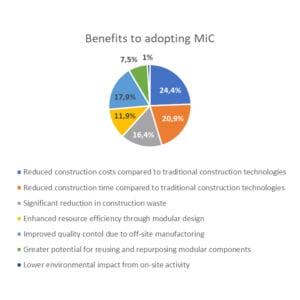
The survey findings highlight the significant potential of Modular integrated Construction (MiC) in advancing the development of circular cities. By reducing costs, accelerating construction timelines, and minimizing waste generation, MiC offers a promising approach to sustainable urban development.
Read MoreThe Use of MS POLYMER™-Based Sealants and Adhesives in Modular Building
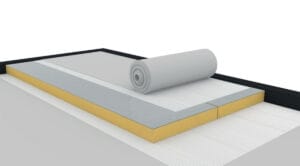
These products combine flexibility and elastic recovery with excellent adhesion to different substrates and have already shown their usefulness in traditional construction. Now it’s time for them to be put to use in the modular construction industry.
Read MoreFrom BIM to Execution: Turning a “Pretty Picture” into a Single Source of Truth for Off-Site Construction

When implemented properly, BIM becomes the company’s digital backbone: connecting teams, standardizing information and transforming data into actionable insights. It is the key to achieving lean, predictable operations where all phases – design, planning, procurement and project execution are empowered by a single source of truth.
Read MoreFive Factors to Consider When Evaluating a Modular Data Center
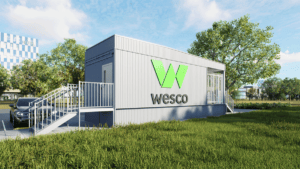
The demand for modular data centers is on the rise as companies seek out more computing power to handle the advancements of artificial intelligence (AI), edge computing and increased security demands. But what factors need to be taken into consideration as you evaluate the next steps? Here are five elements to consider.
Read MoreHomes as Essential Infrastructure

The housing crisis is nothing new. Across the world, federal, state, and municipal governments of all sizes are struggling with how to provide more affordable housing—quickly—to those who need it. In Canada, Paul Halucha, Deputy Minister of Housing, Infrastructure, and Communities Canada (HICC), argues that the federal role in housing has shifted from funding at arm’s length to actively shaping outcomes.
Read MoreBuilding the Future, Offsite
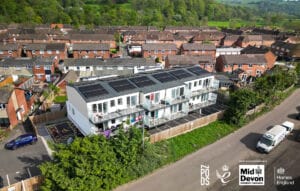
In the face of a national housing crisis, England stands at a critical inflection point where innovation, scale, and public-private partnerships must converge to meet an urgent need: more homes, and fast. Homes England is helping reshape the housing market by actively supporting MMC through a strategic blend of land development, financing, and grants.
Read MoreHow POJI and MOKO Are Industrializing Modular Construction Through Automated Engineering Systems

Working with Scandinavian Industrialized Building System (SIBS), POJI and MOKO helped realize a modular city concept located in Järfälla municipality of Stockholm, Sweden, with 350 apartments, communal areas, restaurants, small shops, and a preschool in a pleasant mix with experiential architecture and greenery.
Read MoreInside Boutique Modern’s Mission to Make First Homes Affordable and Efficient in The U.K.
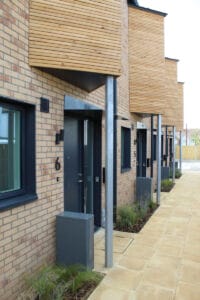
The U.K.-based firm has been in business for 12 years, manufacturing houses for both private clients and local government, with a large chunk of its business coming from “affordable” and social housing. Working in a 32,000 square-foot factory in Newhaven, Sussex, Boutique Modern is changing decades-old thinking about constructing houses, all through the use of modular.
Read MoreBoulderMOD: Producing Affordable Modular Homes While Training the Workforce of the Future
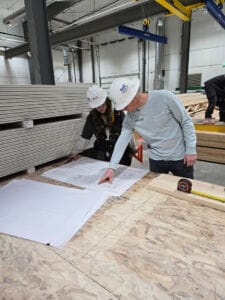
Colorado has been hit with a double whammy—a decline in the number of skilled construction workers and an increased need for affordable housing. BoulderMOD, a partnership among the city of Boulder, Flatirons Habitat for Humanity, and Boulder Valley School District, is tackling both problems and helping others do the same.
Read MoreGuerdon: Seeking the ‘Holy Grail’ of Modular Construction
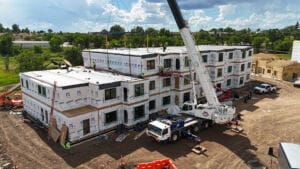
Guerdon, a modular manufacturer in Boise, Idaho, recently won what Laurence (Lad) Dawson, CEO and Managing Partner, describes as the ‘holy grail’ for a modular manufacturer. The RFP calls for a pipeline of six projects, totaling approximately 570
units.