
Guerdon: Seeking the ‘Holy Grail’ of Modular Construction
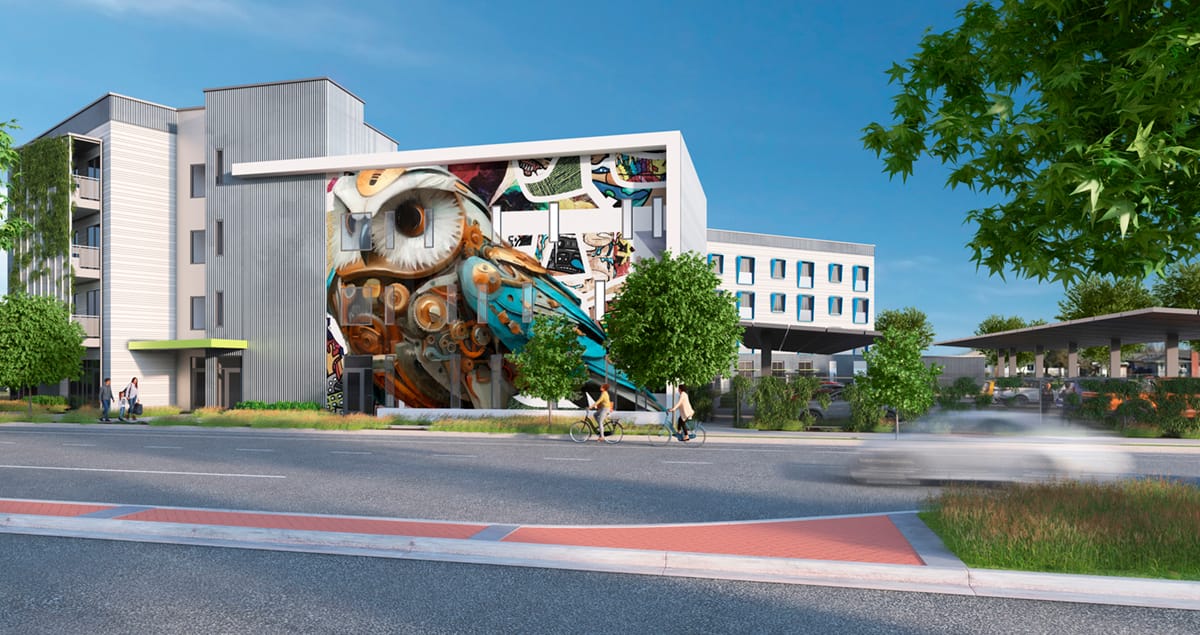
Fairview Terrace, the first of five planned developments under a master agreement between Guerdon and Mutual Housing California, showcasing scalable factory-built affordable housing.
Guerdon, a modular manufacturer in Boise, Idaho, recently won what Laurence (Lad) Dawson, CEO and Managing Partner, describes as the ‘holy grail’ for a modular manufacturer. The contract is for about 570 zero-energy affordable housing units with Mutual Housing California. “They realize what we’ve tried to preach to a lot of our customers: that if you form a team and do a series of projects, and take the learnings from each project to apply to the next, that you continue to get better and better, finding way to be more cost effective, to improve your speed to market.”
The RFP calls for a pipeline of six projects, totaling approximately 570 units. The preconstruction process is three phase: (1) develop a consistent set of design specifications that focus on efficiency, not only for manufacturing, but also for installation and completion on the site; (2) specifying products with the best overall quality, lead time, performance, and cost; and (3) identifying single architectural and general contracting partners, so the whole team can work together over the next two or three years on a series of projects, attempting to get more cost and time effective on each successive one.
Dawson said the owner, Mutual Housing California, “is very much committed to the vision, and it’s fun to work with a group that shares our philosophy for how to harvest the benefits of modular construction best. I think that’s the Holy Grail: you’ve got that collaboration and the expertise, which in this case, Guerdon is able to bring, to work with the client with their expertise in affordable housing. The next piece is getting a GC that’s willing to learn how to utilize modular construction as efficiently as possible.”
Guerdon has gained a reputation in the multi-family sector. Just this year, they’ve taken on several unique projects.
- They were brought in on another housing project in Los Angeles, Sherman Way, that had run into difficulties with another manufacturer. Leveraging their in-house design and engineering staff, they were able to fast-track the design and production drawings, gaining approval in four to five months, compared to the usual six to eight months. The project is now in its final stages and is the first to utilize Guerdon’s Suite Ownership finishing services, which involve finishing everything inside the box, excluding MEP connections. Finishes, door adjustments, and punchlist items are included, and Dawson said that providing these services has helped speed up the installation.
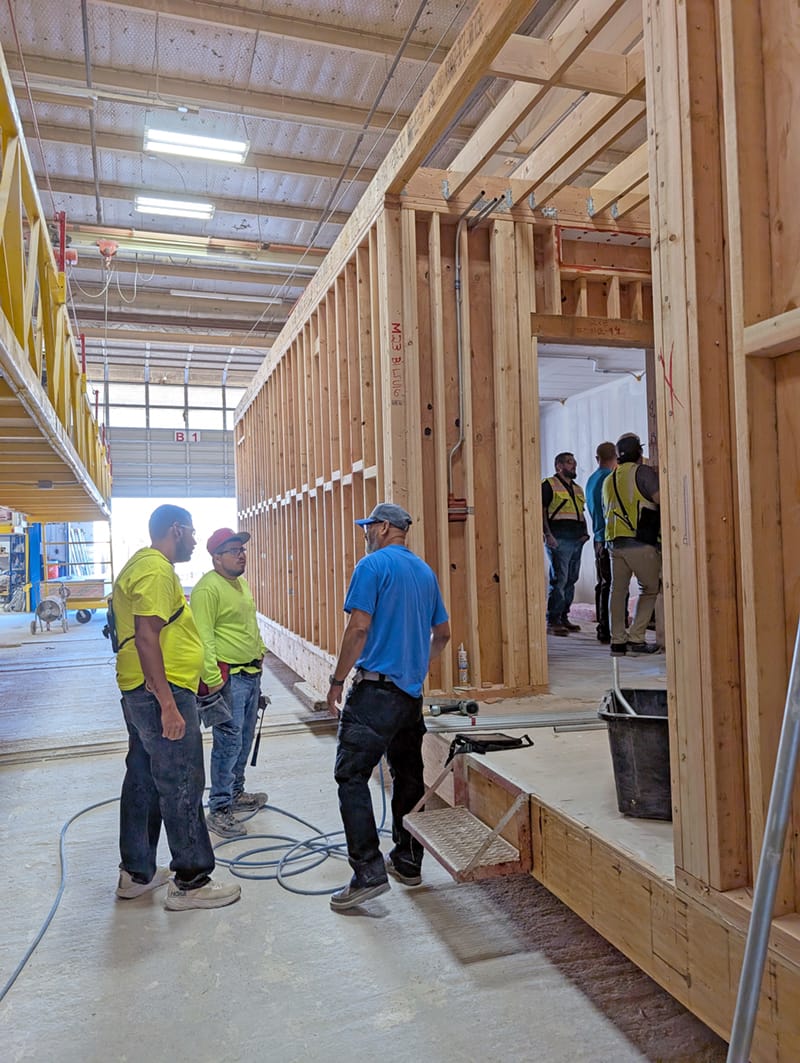
Internal and external Quality Control and Quality Assurance teams inspect one of the first-ever California DSA-approved modular student housing units for Compton College during factory construction. Credit: Guerdon.
- An apartment project called Buckskin Charlie Apartments is being built on a Native American reservation in southern Colorado. The RFP for two three-story buildings housing 90 units was issued in August 2024. Production began in the first quarter of 2025, with installation occurring in the second quarter, and occupancy is expected in the spring.
- In addition, Guerdon is taking on the first-ever California DSA-approved modular project, a student housing project for Compton College. Projects built for the California Department of Education fall under the jurisdiction of a separate state organization, the Division of the State Architect (DSA), which has its own set of rules and regulations. Guerdon will not only complete the pilot project for modular student housing but also a much larger student housing project that will follow in 2026. Dawson said, “We’re excited about this new sector. There are many new things to learn and new procedures, but there’s a significant need. The State has earmarked several billion dollars for the development of increased student housing for its community college system, and we’re looking forward to being the leader in developing this new market.”
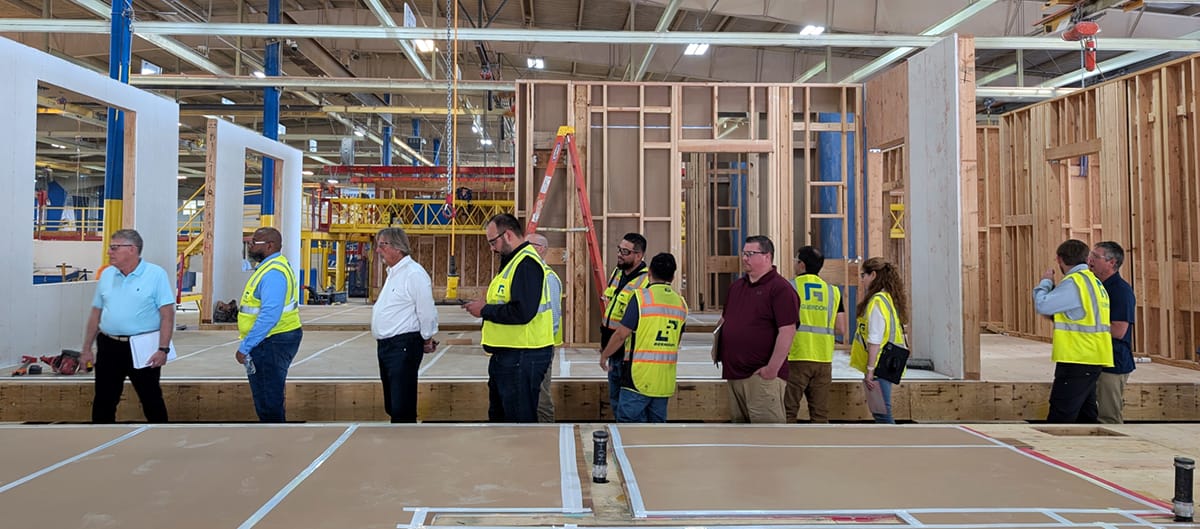
Guerdon CEO Tommy Rakes leads Compton College President Dr. Keith Curry and the construction team through the factory to view the first DSA-approved student housing modules under construction. Credit: Guerdon.
Creating the Most Value
Guerdon’s factory in Boise, Idaho, spans approximately 130,000 square feet and features around 20 line stations that operate five days a week for one shift. Dawson says their production sweet spot is 15 to 20 modular units per week. Their modules are usually larger than most. “If we’re building an apartment project, each module will be like a slice through the building that has one unit or part of a unit on one side, then a six-foot corridor, then another unit on the other side. The boxes that we’re building are typically anywhere from 12 to 16 feet wide and 60 to 76 feet in length. We try to build as much volume of square footage as we can with each line move.”
They self-perform almost all of the factory work, including mechanical, electrical, and plumbing, with licensed tradespeople on staff. The only subcontractors they have are for the fire alarm and fire sprinkler systems. “Our goal is to try to do as much work in the factory as we can, so we’re creating the most value for our clients when the units are installed on site.”
To ensure that all modules meet their rigorous quality standards, they must pass a series of multiple inspections before leaving the factory, including a review by ICC NTA, the GC for the project, and the owner. “We want the client to be one hundred percent happy that the unit is exactly what they’re expecting.” When the modules arrive on site, they are re-inspected to ensure that any issues that arose during transit are addressed promptly.
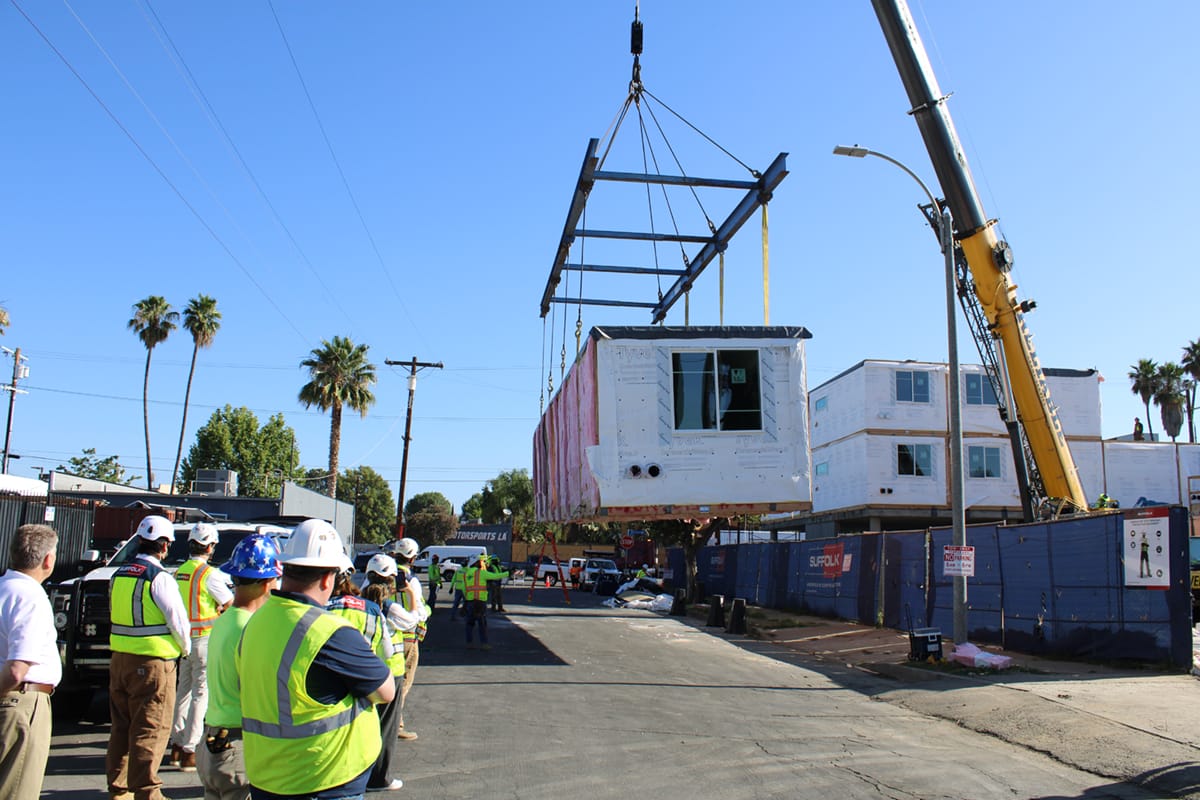
Crane installation at the LAFH Sherman Way project in Los Angeles, just 10 months after the developer pivoted to Guerdon. The 64-unit building will open 15 months after factory start. Credit: Guerdon.
Getting It Right
Dawson cautions those looking to get into the modular multi-family industry to know what they’re getting into. “It’s a rigorous process, whether it’s modular or site-built. There’s a lot of detail. The drawing packages and specifications are very robust and complex. There are numerous requirements and numerous consultants involved. You need to have an organization that possesses expertise, experience, and personnel who truly understand the process and can be rigorous, thorough, and detail-oriented during the preconstruction period.”
Part of Guerdon’s success in this space, according to Dawson, is that they overbuild their units. “A common mistake at new plants is that they focus on trying to strip out every cost that they possibly can. It’s not about trying to save the last dollar. It’s making sure that you’re meeting all the codes, standards, structural requirements, and so forth. We also thoroughly protect our units from weather and water. But there’s a cost associated with that.”
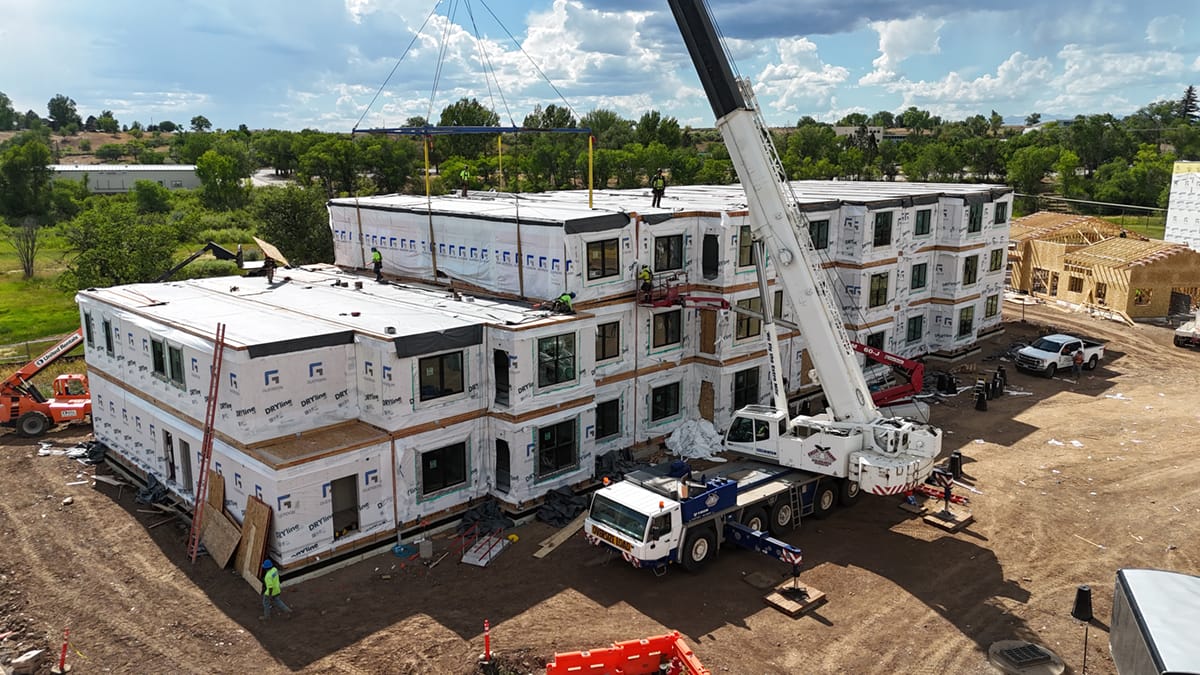
Installation of the Buckskin Charlie Apartments, a 90-unit modular community on tribal land in southern Colorado. Completion is expected within 12 months of factory start, thanks to efficient in-house modular designs. Credit: Guerdon.
He also stresses the importance of getting the design right before production begins. “You’ve got to start with a project that has been properly designed. And if it’s not, say ‘time out’ and go back to revise the design so that it’s something that can be properly built in a factory and easily assembled on site without creating a whole lot of extra work and challenges.”
While it may be an adage, Dawson also believes that the customer is always right, and Guerdon does everything in their power to ensure their customers are happy. “Our founding vision was to make sure every project is successful for our client, whether it’s successful for us or not. So, when we focus on ensuring that the project itself goes well for our GC and client, that’s how we win. If we focus on that and deliver on that promise, then that in itself is going to ensure the success of our company and the repeat business that drives it.”
Not a Commodity
“I’ve always felt that a strong selling point for modular is that, in the hands of the right team, a qualified modular producer can help reduce construction risks, and that’s a major part of our story to our clients. Modular construction is not a commodity. It still comes down to individual companies, and it’s essential to align yourself with those that have the experience, expertise, knowledge, and processes to ensure good execution.”
While the current housing market has slowed somewhat due to high interest rates, Dawson expects it to bounce back relatively quickly. “I think affordable housing in all of its forms is going to continue to be a big driver. Market-rate apartments are going to bounce back. When we look ahead at the industry over the next five years, it has a very bright future. We’re seeing an increased willingness to adopt modular technology.”
“Modular is a good solution for affordable housing, not only because of the reduced costs, but also the speed to market and being able to meet the tight timelines that are often associated with these projects.”
Dawson sees a maturing in the industry. “Between stakeholders, developers, architects, and general contractors, there’s more collaboration, and that is going to lead to outcomes that are more consistent with budget and schedule targets, as well as more successful projects.”
About the Author: Dawn Killough is a freelance construction writer with over 25 years of experience working with construction companies, subcontractors and general contractors. Her published work can be found at dkilloughwriter.com.
More from Modular Advantage
Mind the Gap: The Interface Between Onsite and Offsite Construction
Every design for manufacture and assembly (DfMA) project — modular, mass timber, or panelized — is really two projects joined at a seam. One is built in a controlled factory to millimeter tolerances; the other in the field, in weather, to the looser tolerances of poured concrete and human hands. Between them sits an interface: where the factory’s precision meets the site’s reality.
Rules, Rails & Repeatability: Applying DfMA to Modular Healthcare
DfMA offers several advantages for healthcare projects, with faster delivery among the most valuable. Schedule matters when building new facilities, expanding campuses, renovating existing space or bringing care closer to communities that need it.
Precision and Possibility: Demands of DfMA and What Modular Mass Timber Makes Possible
Mass timber does not automatically create an efficient modular building. Its precision makes early coordination more important: fabricated components will accurately reproduce both the team’s solutions and its mistakes. The material’s advantages are realized only when supported by an equally precise design and delivery process.
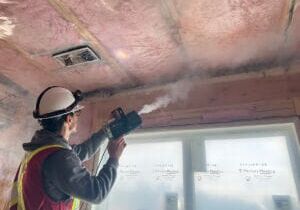
Catch It in the Factory, Not in the Field: Smarter Testing for Modular Builds
Integrating watertightness and airtightness testing into factory workflows transforms quality assurance from a reactive process into a proactive commissioning strategy. It ensures that every module shipped is field ready and resilient for transportation while also supporting the ability of the modular construction industry to make buildings better.
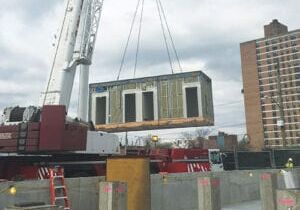
Modular Construction Contracts: Key Considerations for Successful Canadian Projects
Starting a modular project with a well-developed contract protects both the owner and the contractor. It will help keep the project on track and on budget, and it will improve quality from the factory floor to final installation on-site.
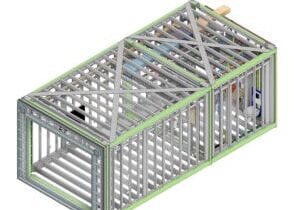
Modular by Design: Turning Architecture into a Manufacturing System
Modular construction is often presented as a faster way to build. Speed, however, is only one part of its value. The larger opportunity is to create a coordinated design and production system that improves quality, reduces uncertainty, and allows a building to move efficiently from concept design through manufacturing, transportation, installation, and completion.
Repeatability Begins with Trust: What Alora at Dry Creek Reveals About Scaling Modular Housing
Alora at Dry Creek, a 329-unit, multifamily community comprising five four-story buildings in Centennial, Colorado, demonstrates how repeatable design, standardized manufacturing and early collaboration can work together to create a model that is not only faster to deliver, but easier to replicate across future projects.

T.R. Arnold: The Art of Third-Party Inspections
T.R. Arnold (TRA), a third-party inspection company in Elkhart, Indiana, contracts with modular manufacturers across the US. Manufacturers register with each state to which they intend to send their modules and may be required to hire a third-party inspection company.

Creating an ‘Ecosystem for Innovation:’ 50+ Years of Modular Construction Oversight in Virginia
Virginia’s modular building program began in 1973, with the implementation of the Virginia Industrialized Building Unit and Mobile Home Safety Regulations. Now it’s leading the country in modular code adoption.
Understanding Thermal Barriers Compliance Methods & Emerging NFPA-275 Foam Plastic Technologies
New fire barrier technologies are improving total costs and margins in major areas of construction, such as commercial, government, union and prevailing wage projects. These benefits translate into other large fringe areas, such as agriculture, commercial cold storage facilities, grow houses, outbuildings, military and aviation hangars.