
Modular Advocacy Program
The Modular Advocacy Program (“MAP”) is MBI's multiyear, multi-million dollar campaign to spur investment in, and promote the greater adoption of, the commercial modular construction industry.
In order to meet the growing needs of its members and the greater modular construction industry, MBI's MAP program will drive industry growth in the following areas:
- Influencing government legislation, regulations, procurement, programs, and codes.
- Creating new business opportunities for the industry.
- Expanding outreach efforts to developers, architects, and code officials.
- Attracting new employees to the industry, including non-traditional workers.
MBI, leveraging its growing international membership, plans to fund this program through a variety of initiatives.

Funding the Modular Industry's Most Important Initiative
Your company can support MBI's Modular Advocacy Program in two ways:
Sponsoring the MAP
Annual sponsorships for the MAP program are available for $1,000. If you're not buying Seals, this is an ideal way to show your support of MBI and contribute to MAP funding.
With your annual sponsorship, your company will receive:
- sponsor recognition and logo inclusion in every MBI printed piece (magazines, annual reports, event brochures),
- a dedicated eblast thanking each sponsor, AND
- a special thanks at the next World of Modular annual conference, including logo inclusion in the opening presentation.
MBI Seals
MBI Seals are 4-inch square stickers that are meant to be affixed inside each module that MBI member manufacturers produce. Each MBI Seal costs $20. These costs are intended to passed along to your customers, which means a net-zero cost to you.
Manufacturers - Order and affix an MBI Seal inside each module you manufacture.
Architects, Contractors, & Developers - Spec the MBI Seal on your future projects.
Fleet Owners – Ensure all new and existing units have the MBI Seal.
SUPPORTED BY


"BT Modular is proud to support MBI's Modular Advocacy Program and contribute to the continued growth of the modular industry. As a supplier of doors and hardware, we want to show support to the customers who have supported us over the years. Within the last 10+ years that I have been involved, I’ve had the privilege of watching this industry evolve and expand. It is exciting to see industry gain momentum and we are committed to playing our part in advancing its future. I encourage all suppliers to donate to this cause and support our friends in the industry."
Cortney Milbourne, VP of BT Modular
Advocating for Commercial Modular Construction
Led by the Modular Building Institute's government affairs director Alex Carmack, MBI's team of government affairs professionals is diverse, experienced, and well-connected on both the state and federal levels.
MBI also boasts a working committee of dozens of modular industry professionals that meets and advises MBI on existing legislative barriers, emerging issues, and opportunities to expand the adoption of modular and offsite construction.
Significant Wins for the Industry
MBI has recently contributed (entirely or in part) to a string of noteworthy victories for the modular building industry, including:
- Colorado is dispersing $40 million in grants to modular manufacturers to support affordable housing construction;
- Oregon passed a $20 million bill to support the use of modular to build affordable housing; I’ve been appointed to their finance committee to disperse the funds
- The International Code Council finalized and published its new MEP-focused building standard, MBI/ICC ANSI 1210;
- The Canadian Mortgage Housing Corporation continues to fund its Rapid Housing Initiative with another $1.5 billion in funding, which includes specific support for modular construction;
- The National Nuclear Security Administration is finalizing recommendations to the US Department of Energy to utilize modular for over $10.5 billion in future projects;
- A New York state bill that would have required NYC-licensed workers to oversee work in modular factories was defeated for the fourth consecutive year;
- Washington state fully adopted the use of third-party inspection agencies for plan reviews;
- Virginia became the first state to formally adopt MBI/ICC ANSI 1200/1205; and
- Utah has just voted in favor of creating a state modular program.
Your company's support of the MAP is crucial to MBI's ability to achieve these results.

Modular Building Institute Defeats Davis-Bacon Act Expansion
The Modular Building Institute, with the support of its members, has defeated the US. Dept. of Labor's Davis-Bacon Act expansion, and the stakes for the modular construction industry could not have been higher.
Creating New Business Opportunites
MBI works with governmental and non-governmental organizations around the world to make connections and highlight the abilities of commercial modular construction. In doing so, MBI routinely engages, supports, and advises state, provincial, and municipal agencies to create opportunities for its members to contribute to well-funded and much-needed modular construction projects. These efforts would not be possible without MBI's involvement, and MBI's involvement wouldn't be possible without support from the industry itself.
Recent efforts by MBI to create opportunities for the industry have included:

FEMA Announces Hawaii Housing Plan Using Modular Construction
The plan marks is a major change for FEMA as it begins to incorporate modular housing into its disaster-relief options.

ICC/MBI Standards 1200 & 1205 Provide Foundation for Utah's First-Ever State Modular Program
Utah becomes the second state in the country, following Virginia, to fully adopt ICC/MBI standards 1200 and 1205.

Colorado Announces Modular Housing Loans to Create Up to 4,755 More Housing Units Per Year
Gov. Jared Polis just announced funding to support the growth of eight modular housing manufacturers across Colorado.
Broadening MBI's Membership with Architects and Engineers
As public and private organizations continue to turn toward modular buildings for the many benefits they provide, architects and engineers are being increasingly called upon to design buildings that will be built using prefabricated or modular construction. As the world's largest trade association for the commercial modular construction industry, MBI is reaching out to design professionals to both bolster its membership and provide these design professionals with the promotion, resources, and connections they need to succeed in modular design and construction.
Recent design-focused resources have included:

From a Basement Office to a Team of Modular Experts
“The modular offsite construction project type actually found EVstudio because of our company’s integrated multidisciplinary approach,” Dalvit said, which led the company to develop a focused design studio around that project type.

Modular Architecture: Thinking Outside of the Box with Sara.Ann Logan
It might seem strange to use the term “out of the box thinking” in the modular construction world, but when you’re talking about Sara.Ann Logan, the VP of design at Volumetric Building Companies, the phrase fits like a glove.

Is Modular + Scattered Sites a Solution to the Affordable Housing Crisis?
By utilizing modular construction, architect Dean Dovolis and his team were able to design houses that fit into their respective neighborhoods while keeping construction costs to a minimum.
Developing Tomorrow's Workforce
The Modular Building Institute (MBI) developed the MBI Learning Center with the goal of introducing learners to the commercial side of modular construction – an innovative and exciting modern method of construction.
The first course, Introduction to Commercial Modular Construction, discusses the modular building process compared to traditional site-built construction and is designed to help learners understand the terminology and concepts of modular building, including client needs, design, fabrication, transportation, and installation.
Other recent workforce development efforts and coverage have included:
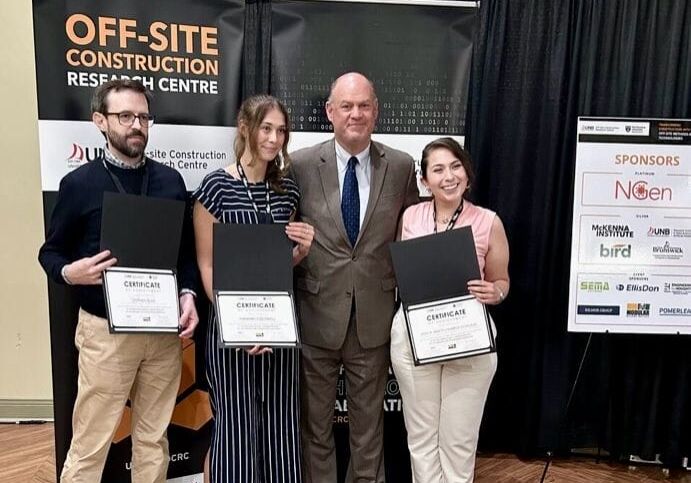
MBI-Sponsored Design Competitions
These annual competitions—hosted by the University of New Brunswick's Off-Site Research Centre and presented by the Modular Building Institute (MBI)—showcase student design innovation in modular, prefabricated, panelized, and other types of off-site construction.
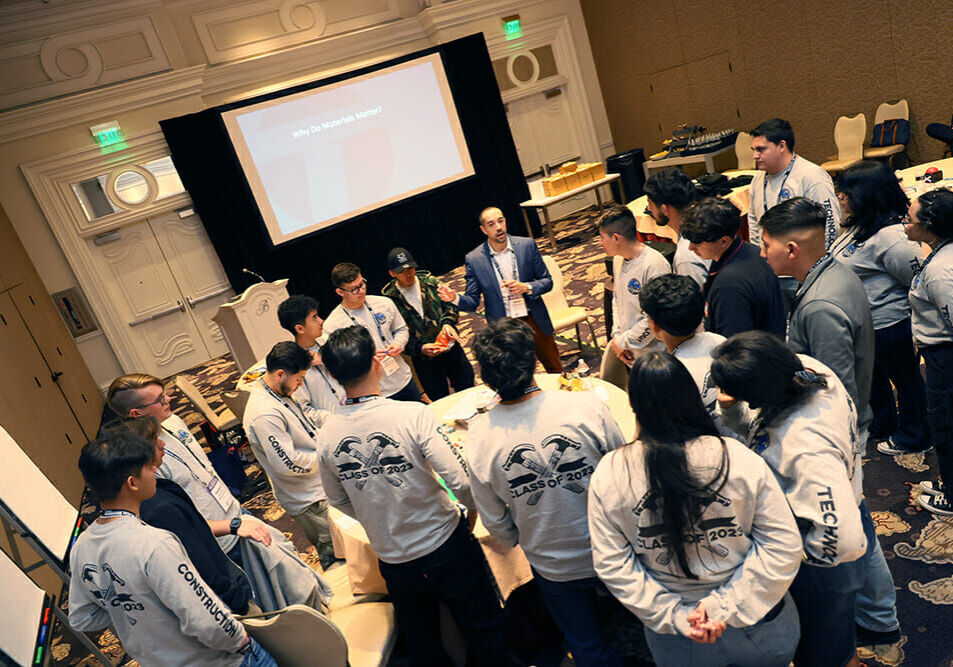
Welcoming the Industry’s Rising Stars to the World of Modular
Each year, MBI hosts dozens of high school students from regional trade-focused schools at its World of Modular conference. Students take part in dedicated workshops, meet with exhibiting companies, and receive instruction from industry leaders.
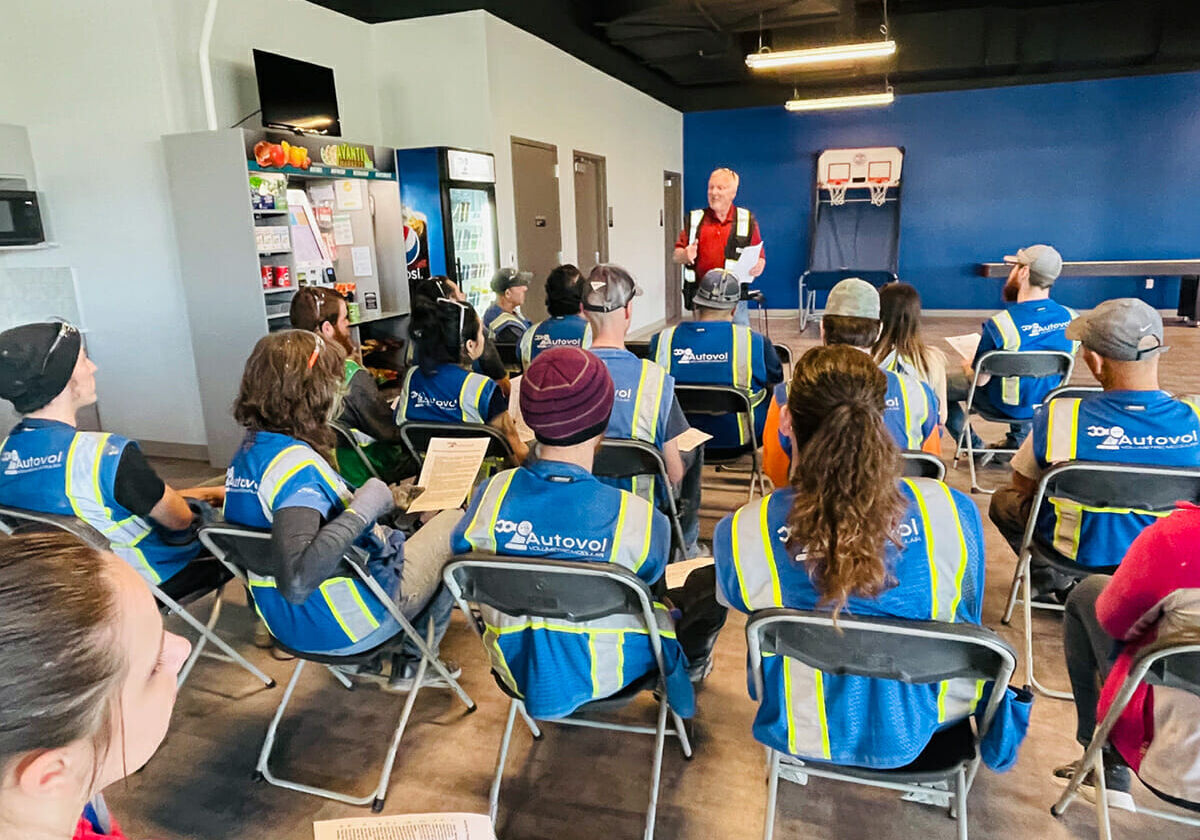
Is Your Company a “Destination Employer?” These Four Are
Autovol, Momentum Innovation Group, Signature Building Systems, and Modern Building Systems have been working hard to attract workers, particularly young workers, to their companies through a combination of culture and actively reaching out to students to make them aware of opportunities.
MBI Needs You to Support the MAP
Full member support of the Modular Advocacy Program will be critical to MBI's goals this year and beyond. And if your company has not yet joined MBI, now is the perfect time. With more resources than ever, the Modular Building Institute is helping to build the future of modular construction. Join us!
More from the Modular Building Institute
MBI Town Halls 2026: Reflections from Boston
By the end of 2026 MBI’s Government Affairs team will have traveled over 6,000 air miles to bring Town Hall events to five different cities in two countries.
Mind the Gap: The Interface Between Onsite and Offsite Construction
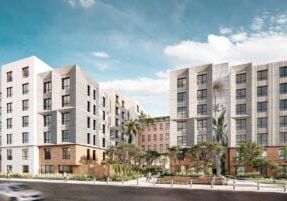
Every design for manufacture and assembly (DfMA) project — modular, mass timber, or panelized — is really two projects joined at a seam. One is built in a controlled factory to millimeter tolerances; the other in the field, in weather, to the looser tolerances of poured concrete and human hands. Between them sits an interface: where the factory’s precision meets the site’s reality.
Rules, Rails & Repeatability: Applying DfMA to Modular Healthcare
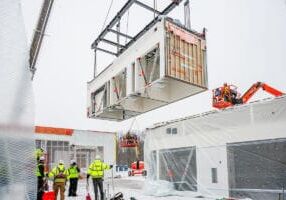
DfMA offers several advantages for healthcare projects, with faster delivery among the most valuable. Schedule matters when building new facilities, expanding campuses, renovating existing space or bringing care closer to communities that need it.
Precision and Possibility: Demands of DfMA and What Modular Mass Timber Makes Possible
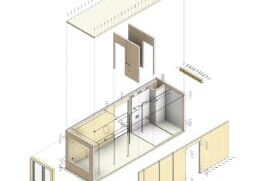
Mass timber does not automatically create an efficient modular building. Its precision makes early coordination more important: fabricated components will accurately reproduce both the team’s solutions and its mistakes. The material’s advantages are realized only when supported by an equally precise design and delivery process.
Catch It in the Factory, Not in the Field: Smarter Testing for Modular Builds
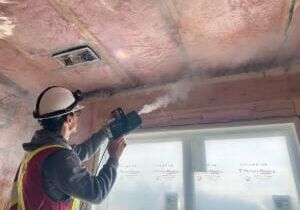
Integrating watertightness and airtightness testing into factory workflows transforms quality assurance from a reactive process into a proactive commissioning strategy. It ensures that every module shipped is field ready and resilient for transportation while also supporting the ability of the modular construction industry to make buildings better.
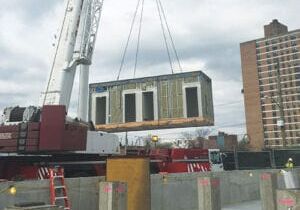
Modular Construction Contracts: Key Considerations for Successful Canadian Projects
Starting a modular project with a well-developed contract protects both the owner and the contractor. It will help keep the project on track and on budget, and it will improve quality from the factory floor to final installation on-site.
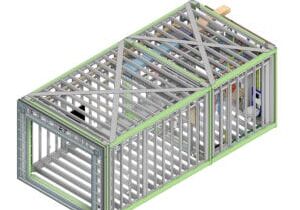
Modular by Design: Turning Architecture into a Manufacturing System
Modular construction is often presented as a faster way to build. Speed, however, is only one part of its value. The larger opportunity is to create a coordinated design and production system that improves quality, reduces uncertainty, and allows a building to move efficiently from concept design through manufacturing, transportation, installation, and completion.

Repeatability Begins with Trust: What Alora at Dry Creek Reveals About Scaling Modular Housing
Alora at Dry Creek, a 329-unit, multifamily community comprising five four-story buildings in Centennial, Colorado, demonstrates how repeatable design, standardized manufacturing and early collaboration can work together to create a model that is not only faster to deliver, but easier to replicate across future projects.

T.R. Arnold: The Art of Third-Party Inspections
T.R. Arnold (TRA), a third-party inspection company in Elkhart, Indiana, contracts with modular manufacturers across the US. Manufacturers register with each state to which they intend to send their modules and may be required to hire a third-party inspection company.

Creating an ‘Ecosystem for Innovation:’ 50+ Years of Modular Construction Oversight in Virginia
Virginia’s modular building program began in 1973, with the implementation of the Virginia Industrialized Building Unit and Mobile Home Safety Regulations. Now it’s leading the country in modular code adoption.