Rules, Rails & Repeatability: Applying DfMA to Modular Healthcare

Scot Lauwasser is Director of DfMA at BILDT
In Industrialized Construction (IC), Design for Manufacturing and Assembly (DfMA) is vital to connecting design intent to manufactured reality. At its best, DfMA brings design, manufacturing, construction, quality, logistics and installation into one coordinated process. The goal is not simply to move work off site; it is to create a more predictable delivery model that can improve quality, reduce waste, compress schedules and help owners make better decisions earlier.
For health systems, that predictability is becoming both critical and expected. Health systems are being required to expand access, modernize facilities and improve patient experience while construction costs, labor constraints, regulatory complexity and reimbursement pressure continue to challenge capital planning. DfMA cannot solve every pressure facing healthcare construction, but it can help teams create more reliable pathways from approved design to operational buildings when applied early and consistently.
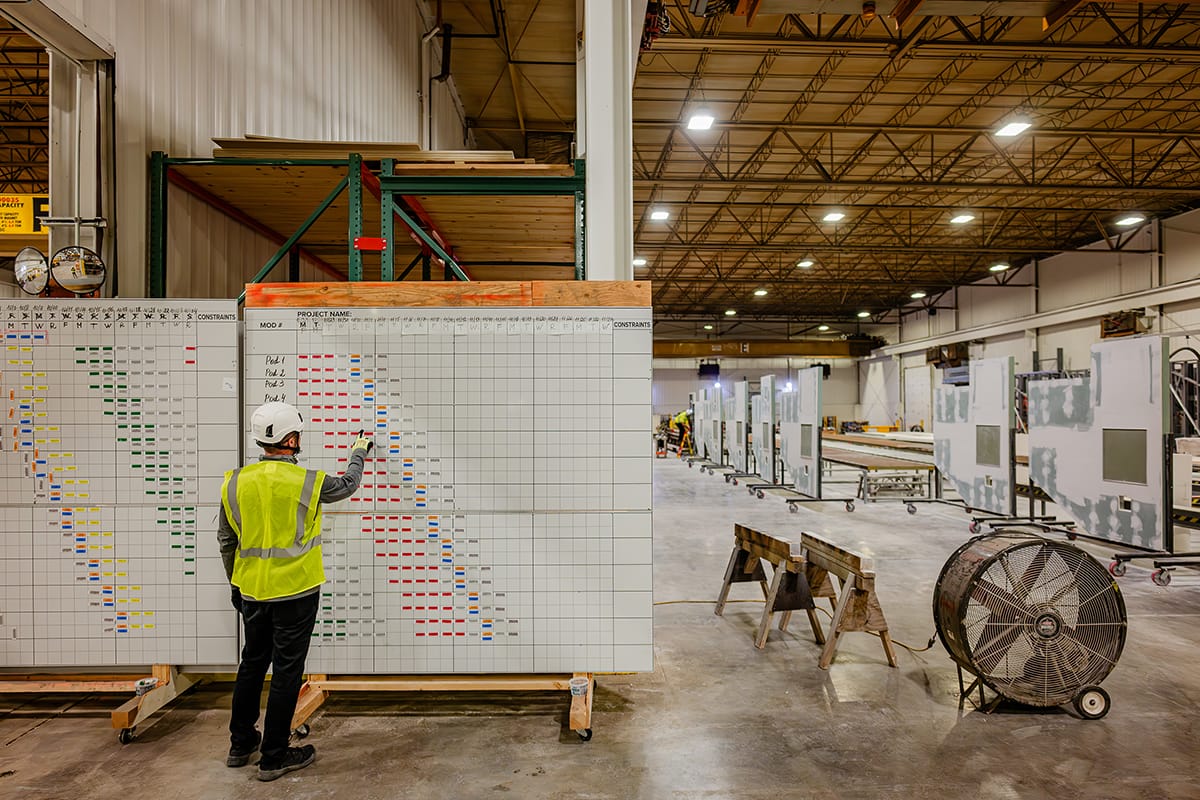
This DfMA workflow graphic shows the connection between design documents, manufacturing documentation, quality checks and work instructions.
DfMA as a Repeatable Delivery Framework
DfMA is often described as a design process, but in modular healthcare it functions more like an operating system. It defines how decisions are made, constraints are communicated, quality is built into the work and how lessons learned are carried forward. Without that structure, teams can unintentionally apply traditional construction habits to a manufacturing environment, creating avoidable rework, coordination gaps, inspection delays and wasteful field dynamics.
Why DfMA Matters in Healthcare
DfMA offers several advantages for healthcare projects, with faster delivery among the most valuable. Schedule matters when building new facilities, expanding campuses, renovating existing space or bringing care closer to communities that need it. Speed to market can affect patient access, operational readiness, revenue generation and the ability to respond to changing care models. Time = People’s Well-Being and/or Lives.
However, speed is only valuable when paired with reliability. Without following clear DfMA Rules and Rails, organizations risk design errors, poor trade coordination, late product decisions, fabrication delays and inspection conflicts. DfMA Rules and Rails translate manufacturing capabilities into clear design, procurement, code, quality, transportation and installation parameters.
Recent modular healthcare projects, including the Aspirus Chippewa Falls Hospital and Clinic and the Indigenous Pact rural clinic program, have reinforced a simple lesson: DfMA is most effective when vertically integrated teams establish decision pathways, inspection expectations and manufacturing constraints before design choices become difficult or expensive to change.
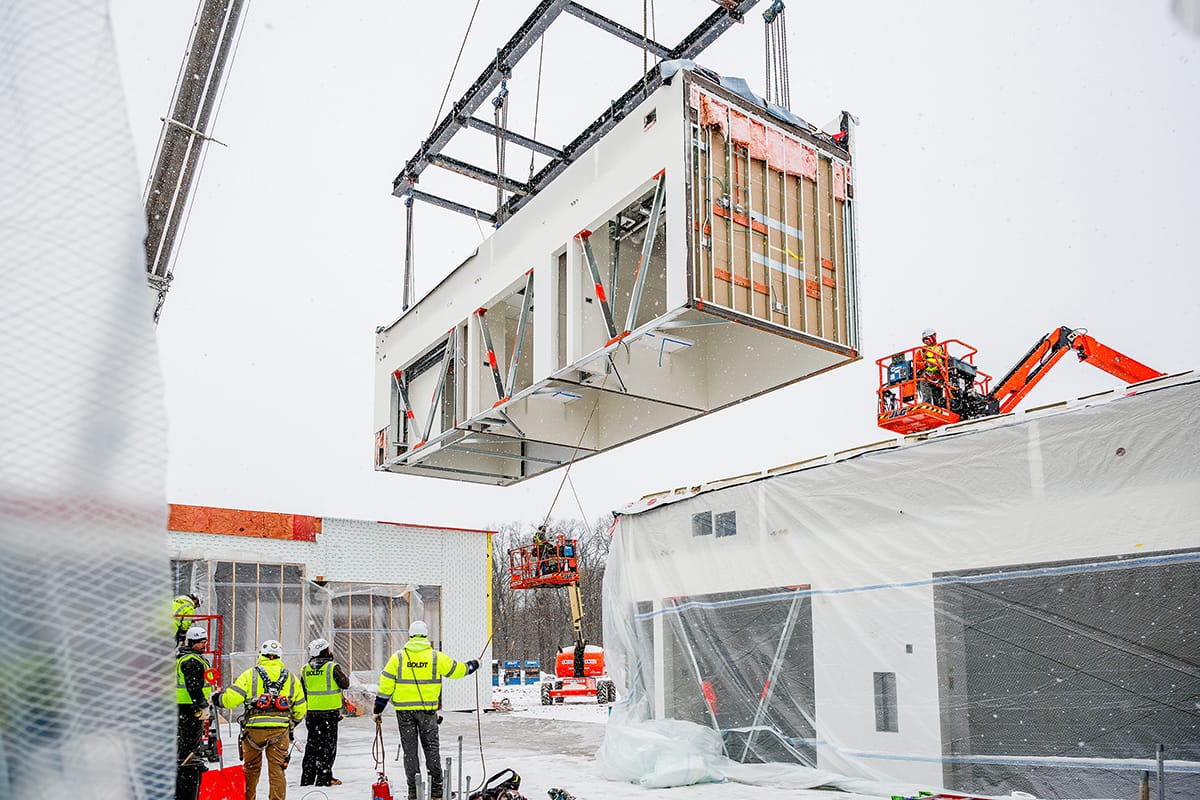
The Aspirus Chippewa Falls Hospital and Clinic incorporated DfMA. About 30% of the building was fabricated off site and was integrated with traditionally built components.
The following takeaways are practical solutions that can help modular teams improve outcomes across many types of healthcare work.
Integrated and transparent collaboration is the foundation of DfMA success
Successful DfMA depends on effective collaboration from the beginning. Architects, engineers, manufacturers, construction managers, trade partners, quality teams, code consultants and installation crews, alongside actively engaged owners, need to understand how their decisions affect one another. In a traditional process, conflicts can be solved later with a “figure it out in the field” mentality. In a manufacturing environment, unresolved decisions tend to show up as production delays, rework or costly changes. Early alignment is necessary for teams to identify constraints, eliminate ambiguity, improve constructability and make cross-functional decisions that are functional, cost-effective and efficient to produce, providing value for all stakeholders, particularly the fabricator.
Early, reliable decisions are critical in IC
Early decisions are needed for everything from product selection to final device placement. The team must understand which decisions are required, who owns them, when they must be made and how they will be finalized. Without that structure, projects can inadvertently stall in decision paralysis, creating delays and rework that are especially difficult to absorb once manufacturing has begun when items have often already been procured or installed.
Designing for manufacturing means designing for inspections and built-in quality from day one
For healthcare modular projects, code compliance and inspection planning cannot be treated as downstream activities. They must be integrated into design and manufacturing from the start. State modular programs, local Authorities Having Jurisdiction (AHJs), health departments and third-party inspection agencies may each have different requirements. A strong DfMA process identifies approval pathways, fabrication versus site work scope, inspection hold points, documentation expectations, material requirements, assembly methods and quality checkpoints early enough to protect manufacturing and installation schedules.
This is especially important in healthcare, where life safety, infection prevention, medical gases, MEP coordination, accessibility and clinical operations can add layers of review. When inspection expectations are designed into the work, quality becomes part of the process rather than a final checkpoint.
The missing link in many construction projects is documentation between construction drawings and work instructions
Traditional construction drawings are often written for permitting and bidding but not for field execution, leaving decisions left to the workforce resulting in RFIs and schedule delays. Modular manufacturing requires another level of translation. The fabricator becomes a primary customer of the documentation, needing clear assemblies, tolerances, sequencing, materials, inspection criteria and work instructions. When that translation is missing, the project relies on interpretation during fabrication, increasing the risk of errors, rework and schedule disruption.
A useful DfMA practice is to define documentation standards that bridge the gap between design documents and manufacturing work instructions. These may include assembly-level drawings, model-based coordination requirements, bill-of-material expectations, inspection checklists, product decision logs and clear ownership for resolving design questions before fabrication.
Full volumetric modular construction delivers the best potential to provide the greatest owner value when design, manufacturing, transportation and assembly are planned as one integrated process
Full volumetric modular construction can create significant owner value when design, manufacturing, procurement, transportation, site readiness and installation are planned as one integrated process. The sequence must account for factory throughput, inspection milestones, logistics constraints, crane and set requirements, site utilities, coordinated tie-ins, near immediate building dry-in and owner operations.
This requires teams to think beyond the module itself. Site conditions, foundations, utility connections, access routes, staging areas, transportation restrictions, temporary protection and installation sequencing all influence early design decisions. A module that is efficient to manufacture but difficult to transport or set is not fully optimized.
For healthcare owners, the value of this integration is measured less by the fact that work happens off site and more by the certainty it creates. Earlier coordination reduces late-stage surprises. Factory-based production improves quality control. Parallel site and manufacturing work compresses the path to timely patient care. An integrated delivery model also gives owners clearer visibility into cost, schedule, procurement, regulatory risk and operational impacts before those risks become project impacts.
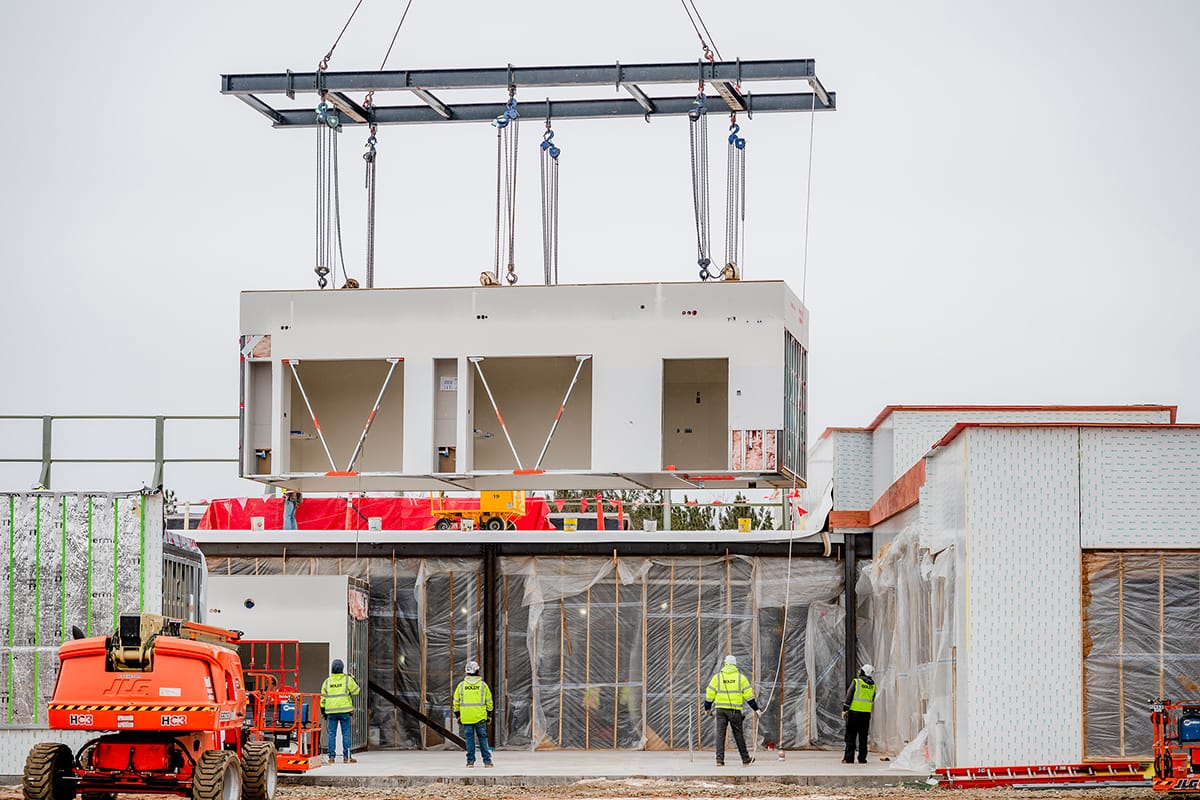
Each prefabricated module in the new Aspirus Chippewa Falls Hospital and Clinic includes installed mechanical, electrical, plumbing and fire protection systems, along with casework and select specialty features.
Turning Lessons Learned into Continuous Improvement
The value of lessons learned is realized only when they become part of the next project’s operating model. For modular healthcare delivery, that means capturing decisions, design constraints, inspection requirements, procurement risks, fabrication feedback, logistics lessons and installation outcomes in a way that can be re-used. These values become baked into the shared, federated model by each trade partner and designer as the starting point for the next production run. Continuous improvement turns each project into a stronger platform for the next one.
A Holistic Strategy for the Future
Healthcare construction is entering a period where traditional delivery models will be increasingly strained by cost escalation, labor shortages, regulatory complexity and the urgent need to expand access to care. DfMA can help, but only when delivered as an integrated system rather than a siloed collection of prefabricated parts. The organizations that lead the next phase of modular healthcare will be those that connect design, manufacturing, quality, procurement, logistics, installation and continuous improvement into one repeatable delivery model. For the modular industry, that is the opportunity ahead: not just to build faster, but to build smarter, learn faster and turn each project into a more reliable foundation for the next.
More from Modular Advantage

MBI Town Halls 2026: Reflections from Boston
By the end of 2026 MBI’s Government Affairs team will have traveled over 6,000 air miles to bring Town Hall events to five different cities in two countries.

Mind the Gap: The Interface Between Onsite and Offsite Construction
Every design for manufacture and assembly (DfMA) project — modular, mass timber, or panelized — is really two projects joined at a seam. One is built in a controlled factory to millimeter tolerances; the other in the field, in weather, to the looser tolerances of poured concrete and human hands. Between them sits an interface: where the factory’s precision meets the site’s reality.
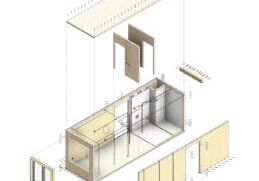
Precision and Possibility: Demands of DfMA and What Modular Mass Timber Makes Possible
Mass timber does not automatically create an efficient modular building. Its precision makes early coordination more important: fabricated components will accurately reproduce both the team’s solutions and its mistakes. The material’s advantages are realized only when supported by an equally precise design and delivery process.
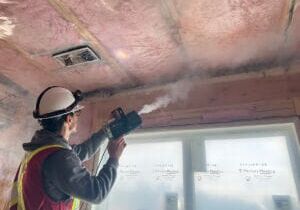
Catch It in the Factory, Not in the Field: Smarter Testing for Modular Builds
Integrating watertightness and airtightness testing into factory workflows transforms quality assurance from a reactive process into a proactive commissioning strategy. It ensures that every module shipped is field ready and resilient for transportation while also supporting the ability of the modular construction industry to make buildings better.
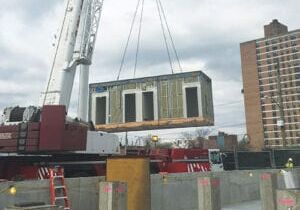
Modular Construction Contracts: Key Considerations for Successful Canadian Projects
Starting a modular project with a well-developed contract protects both the owner and the contractor. It will help keep the project on track and on budget, and it will improve quality from the factory floor to final installation on-site.
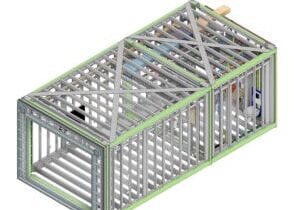
Modular by Design: Turning Architecture into a Manufacturing System
Modular construction is often presented as a faster way to build. Speed, however, is only one part of its value. The larger opportunity is to create a coordinated design and production system that improves quality, reduces uncertainty, and allows a building to move efficiently from concept design through manufacturing, transportation, installation, and completion.

Repeatability Begins with Trust: What Alora at Dry Creek Reveals About Scaling Modular Housing
Alora at Dry Creek, a 329-unit, multifamily community comprising five four-story buildings in Centennial, Colorado, demonstrates how repeatable design, standardized manufacturing and early collaboration can work together to create a model that is not only faster to deliver, but easier to replicate across future projects.

T.R. Arnold: The Art of Third-Party Inspections
T.R. Arnold (TRA), a third-party inspection company in Elkhart, Indiana, contracts with modular manufacturers across the US. Manufacturers register with each state to which they intend to send their modules and may be required to hire a third-party inspection company.

Creating an ‘Ecosystem for Innovation:’ 50+ Years of Modular Construction Oversight in Virginia
Virginia’s modular building program began in 1973, with the implementation of the Virginia Industrialized Building Unit and Mobile Home Safety Regulations. Now it’s leading the country in modular code adoption.
Understanding Thermal Barriers Compliance Methods & Emerging NFPA-275 Foam Plastic Technologies
New fire barrier technologies are improving total costs and margins in major areas of construction, such as commercial, government, union and prevailing wage projects. These benefits translate into other large fringe areas, such as agriculture, commercial cold storage facilities, grow houses, outbuildings, military and aviation hangars.