
Multifamily Housing
732 El Camino Real – A Multifamily Housing Case Study

Each living unit at 732 El Camino Real was built in the Autovol plant by a combination of robots and Autovol’s skilled builders. Work was completed for all 134 units in 51 days. The living units left the factory as fully functioning apartments—approved in factory by California inspectors to meet all applicable codes.
Read MoreFaster, Smarter, Custom-Built: A New Era of Student Housing

Modular Genius delivered a 25,000+ square foot modular student housing complex made up of 22 buildings to Catholic University: 19 cottage-style units and two larger traditional hall-style dormitory buildings, totaling 124 student beds.
Read MoreBuilding Hope: ROC Modular’s Role in the Steveston Highway Affordable Supportive Housing Project

At ROC Modular, we knew this was the kind of project where modular construction could make a real difference. By fabricating the building in modules offsite and assembling them on location, we could cut down construction time significantly while maintaining the high standards required by BC Housing and CMHC Universal
Design Guidelines.
Building the Future, Offsite

In the face of a national housing crisis, England stands at a critical inflection point where innovation, scale, and public-private partnerships must converge to meet an urgent need: more homes, and fast. Homes England is helping reshape the housing market by actively supporting MMC through a strategic blend of land development, financing, and grants.
Read MoreHow POJI and MOKO Are Industrializing Modular Construction Through Automated Engineering Systems

Working with Scandinavian Industrialized Building System (SIBS), POJI and MOKO helped realize a modular city concept located in Järfälla municipality of Stockholm, Sweden, with 350 apartments, communal areas, restaurants, small shops, and a preschool in a pleasant mix with experiential architecture and greenery.
Read MoreInside Boutique Modern’s Mission to Make First Homes Affordable and Efficient in The U.K.

The U.K.-based firm has been in business for 12 years, manufacturing houses for both private clients and local government, with a large chunk of its business coming from “affordable” and social housing. Working in a 32,000 square-foot factory in Newhaven, Sussex, Boutique Modern is changing decades-old thinking about constructing houses, all through the use of modular.
Read MoreGuerdon: Seeking the ‘Holy Grail’ of Modular Construction

Guerdon, a modular manufacturer in Boise, Idaho, recently won what Laurence (Lad) Dawson, CEO and Managing Partner, describes as the ‘holy grail’ for a modular manufacturer. The RFP calls for a pipeline of six projects, totaling approximately 570
units.
Modular Multifamily Housing as a Scalable Solution to the Housing Crisis

GreenStaxx provides a real-world, scalable solution through its standardized library of modular-ready multifamily designs and its innovative triple-decker model. Together, these offerings address the industry’s two greatest needs: efficiency and adaptability. By focusing on quality, repeatability, and collaboration, GreenStaxx is helping move modular construction from niche to mainstream and offering a practical path toward solving the housing shortage.
Read MoreFrom Volume to Velocity: Scaling Multi-Family Projects Without Losing Control
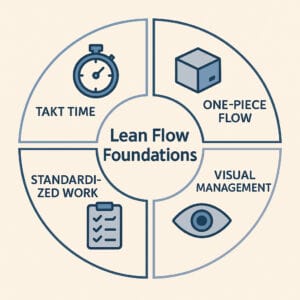
When projects grow too fast without the right systems, factories run into problems. They miss deadlines, crews burn out, and quality drops. Instead of steady progress, chaos takes over. Things slow down, even with more units going through. That’s because building more isn’t enough—you also need to build smarter. That means shifting focus from volume to velocity.
Read MoreUnlocking NYC’s Housing Potential: Scaling Modular Construction for Affordable Living
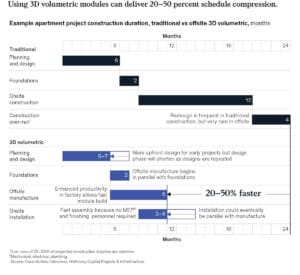
New York City stands at a pivotal moment in its housing history. With over 60,000 individuals in city-funded shelters and soaring construction costs, the city faces a housing shortfall that threatens both its economic competitiveness and social equity. Traditional building methods are proving too slow and expensive to meet demand, but a viable alternative already exists.
Read More