Posts by John
BOXABL (BXBL) Joins Nasdaq Following SPAC Merger Approval, Bringing Factory-Built Housing Model to Public Markets
BOXABL Inc. (NASDAQ: BXBL) Joins Nasdaq Following SPAC Merger Approval, Bringing Factory-Built Housing Model to Public Markets BOXABL, an innovative technology construction company on a mission to solve the global housing crisis, is now trading on Nasdaq under the symbol BXBL. To date, BOXABL has raised over $230 million from more than 50,000 investors, indicating…
Read MoreSunbelt Modular Partners with Titan Modular Systems, Apollo Modular Systems, Spartan Cargo Trailers & Atlas Lumber and Building Supply
Sunbelt Modular Partners with Titan Modular Systems, Apollo Modular Systems, Spartan Cargo Trailers & Atlas Lumber and Building Supply Sunbelt Modular, Inc. a leading producer of high-quality modular building solutions, has announced its merger with Titan Modular Systems, Apollo Modular Systems, Spartan Cargo Trailers, and Atlas Lumber and Building Supply (collectively “Titan”). Titan is a…
Read MoreMODUS Acquires ROC Modular
MODUS Acquires ROC Modular MODUS Structures Inc. (“MODUS”) today announced that it has completed the acquisition of ROC Modular Inc. (“ROC”), bringing together two established Canadian modular construction businesses. The combined company will operate under the MODUS Structures brand and, based on its workforce, manufacturing footprint and breadth of capabilities, will be one of the…
Read MoreProSet Modular Expands National Installation Capabilities
ProSet Modular Expands National Installation Capabilities to Meet Growing Demand for Permanent and Relocatable Modular Construction Expanded field capacity, leadership and operational infrastructure position ProSet to support larger modular projects, workforce housing and relocatable installations nationwide. ProSet Modular is announcing an expansion of its national installation capabilities, reflecting significant investment in equipment, field leadership, team…
Read MoreMind the Gap: The Interface Between Onsite and Offsite Construction
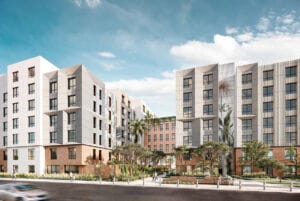
Every design for manufacture and assembly (DfMA) project — modular, mass timber, or panelized — is really two projects joined at a seam. One is built in a controlled factory to millimeter tolerances; the other in the field, in weather, to the looser tolerances of poured concrete and human hands. Between them sits an interface: where the factory’s precision meets the site’s reality.
Read MoreRules, Rails & Repeatability: Applying DfMA to Modular Healthcare
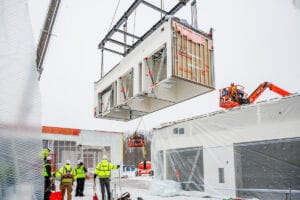
DfMA offers several advantages for healthcare projects, with faster delivery among the most valuable. Schedule matters when building new facilities, expanding campuses, renovating existing space or bringing care closer to communities that need it.
Read MorePrecision and Possibility: Demands of DfMA and What Modular Mass Timber Makes Possible
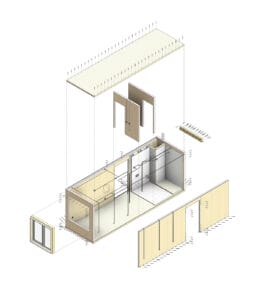
Mass timber does not automatically create an efficient modular building. Its precision makes early coordination more important: fabricated components will accurately reproduce both the team’s solutions and its mistakes. The material’s advantages are realized only when supported by an equally precise design and delivery process.
Read MoreCatch It in the Factory, Not in the Field: Smarter Testing for Modular Builds
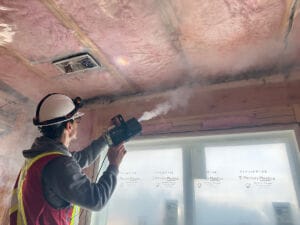
Integrating watertightness and airtightness testing into factory workflows transforms quality assurance from a reactive process into a proactive commissioning strategy. It ensures that every module shipped is field ready and resilient for transportation while also supporting the ability of the modular construction industry to make buildings better.
Read MoreModular Construction Contracts: Key Considerations for Successful Canadian Projects
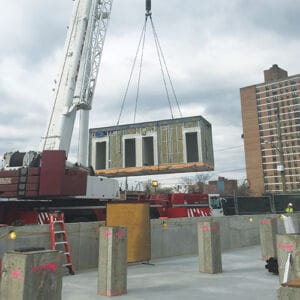
Starting a modular project with a well-developed contract protects both the owner and the contractor. It will help keep the project on track and on budget, and it will improve quality from the factory floor to final installation on-site.
Read MoreModular by Design: Turning Architecture into a Manufacturing System
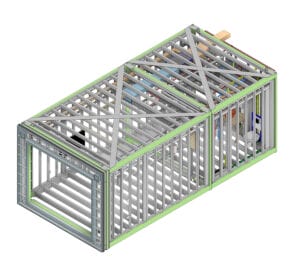
Modular construction is often presented as a faster way to build. Speed, however, is only one part of its value. The larger opportunity is to create a coordinated design and production system that improves quality, reduces uncertainty, and allows a building to move efficiently from concept design through manufacturing, transportation, installation, and completion.
Read More