
Sobha Modular Teaches Developers How to Think Like Manufacturers
At a time when modular is just getting a handle on the market in the GCC, Sobha Modular is blasting past their goals and market value with their singular focus on continuous improvement.
The modular firm, nestled under the umbrella of parent company Sobha Group, is pioneering manufacturing work one bathroom pod at a time.
With its 2.7 million square foot factory in UAE, Sobha Modular is bringing both its high-end bathroom pods to high-end residences in Dubai while developing modular projects for the U.S. and Australia.
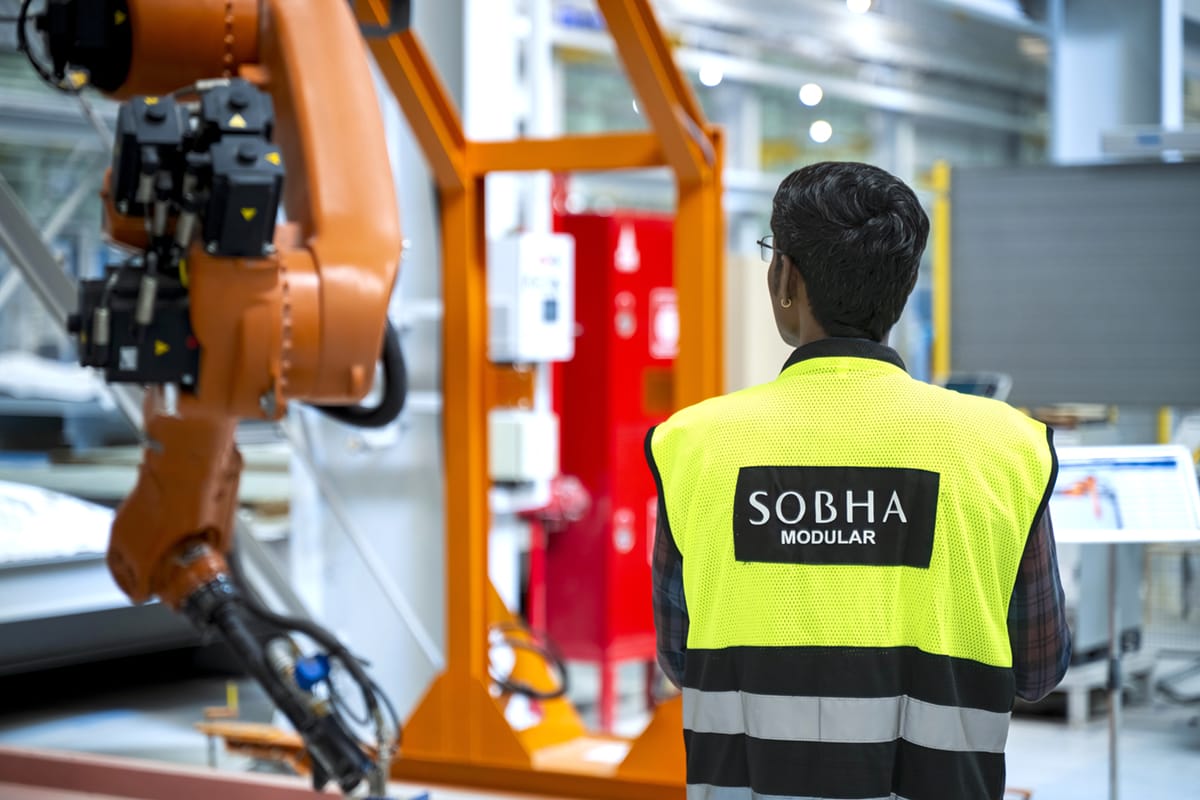
Originally starting off as an interior design business over 50 years in Oman, Sobha Group turned into a real estate company in 1995 in India. The founder, PNC Menon, found that the only way to ensure quality was to own the whole process from design to installation.
As a result, the Founder focused on backwards—or vertical—integration across the whole value chain, according to Sobha Modular CEO Rajaikepin “Raj” Rajamoni. There was also a Harvard Business School case study that showcased their unique ability to be fully vertically integrated, which is rare for construction companies in India and the UAE.
“He started the entire backward integration, starting from the architects and engineers,” he said. “With our own firm and then main general contracting, that’s our own. Then like all factories, we also make modular elements such as bath pods, MEP, facades, joinery, furniture, and many more.”
Sobha Group went public in 2006 in India, and eventually moved over to Dubai in 2010. One of the first projects included the development of Sobha Hartland I, 8 million square feet of mixed-use buildings in Mohammed Bin Rashid City in Dubai. The project was so popular that they sold all properties and are in the process of making a Sobha Hartland II. In addition, they also have over 32,000 residential units under construction across the UAE in various phases.
As owners of the entire value chain, Sobha Modular can both spot and fix specific pain points that can be hard for developers, general contractors, and manufacturers. The company has over seven years of experience developing envelope facades for buildings, on top of both modular and stick-built construction projects. They started developing bathroom pods as a product a little over two and a half years ago.
“We have control of the cost, time, and most important, quality,” said Raj. “Because though these businesses are different profit centers, [they are all] built to serve Sobha as a group.”
The firm’s developments in Dubai helped it grow exponentially since its start in 2018, growing from $100 million to $6 billion in annual revenue in just seven years.
Given the push toward standardization and expansion, modular construction was a “natural step” for the company.
“We wanted every aspect like design, engineering, manufacturing, and installation under one ecosystem...So that we are able to increase efficiency at the same time, on top of increasing our quality and speed,” he said.
With their successes, Sobha Modular decided to diversify their projects by picking one of the toughest modular portions to standardize and deliver: bathrooms for high-end residences.
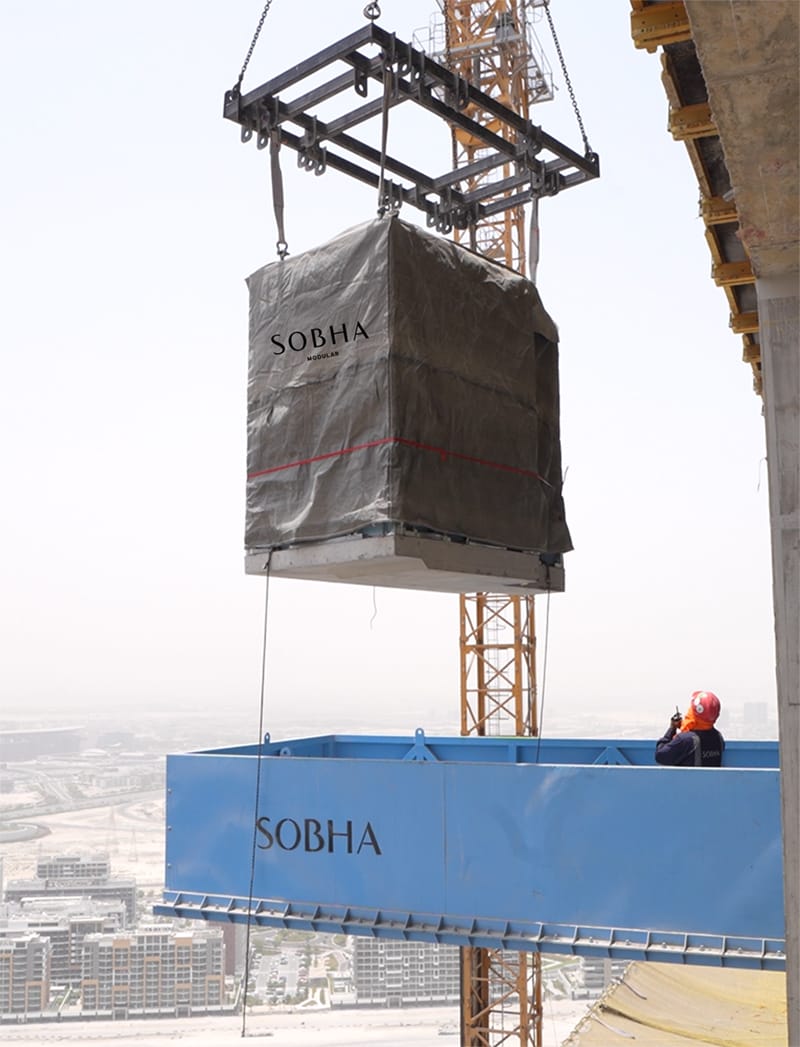
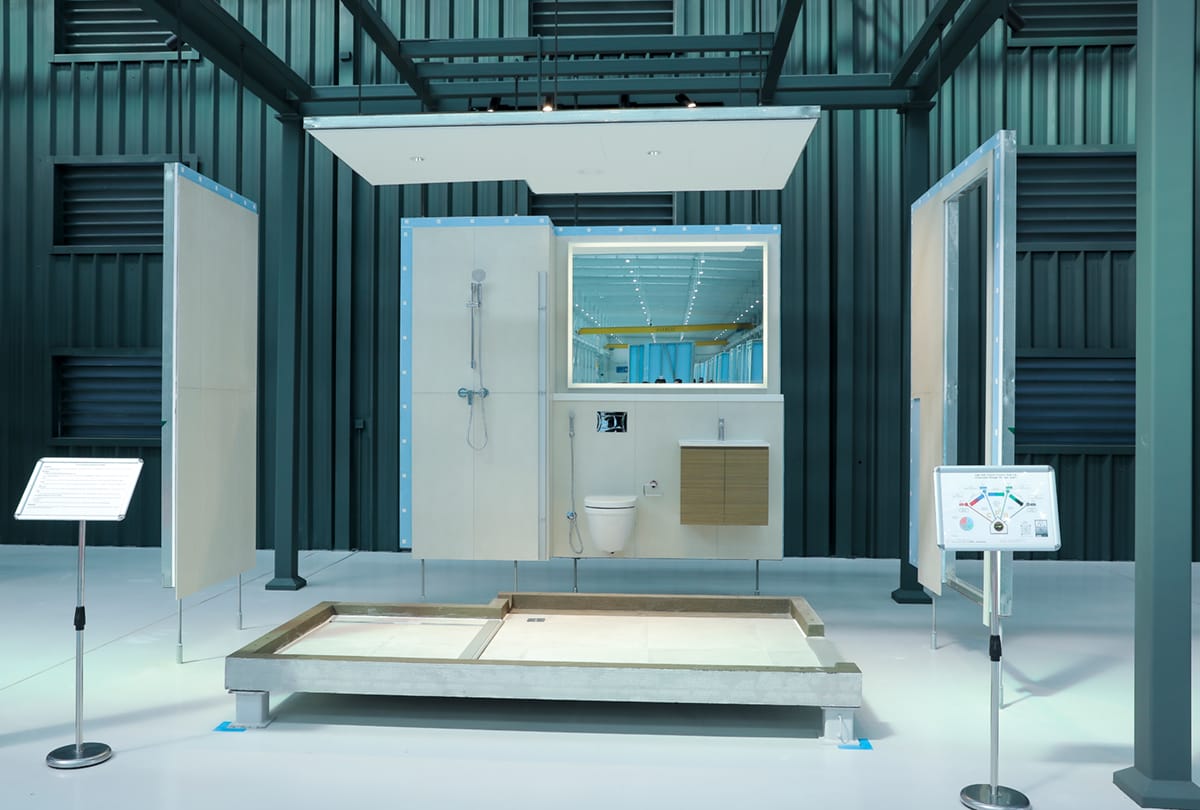
“We picked the most complicated product inside a project,” said Raj. “It’s a more vulnerable area, with at least 15 trades working to complete one bathroom, including waterproofing, plumbing, and electrical connections.”
This expansion into bathroom pods comes with a lot of lessons learned on top of aggressive business goals. One such goal, titled Mission 70/70, aims to bring over 70 percent of site construction into the factory and to automate at least 70 percent of operations over the next few years.
In fact, Sobha Modular takes some pages directly from the automotive industry, specifically Toyota’s Kaizen or “continuous improvement” and Lean Six Sigma practices.
From 1000 Pods in Six Months to 1000 Pods in 16 Days
With the bathroom pods, Sobha Modular was truly targeting continuous improvement, trying to understand the ins and outs of each manufacturing line.
According to Raj, the factory took about one and a half years to refine the pod manufacturing process just to make 1000 pods in six months. However, the bathroom pods are just one portion of the whole operation.
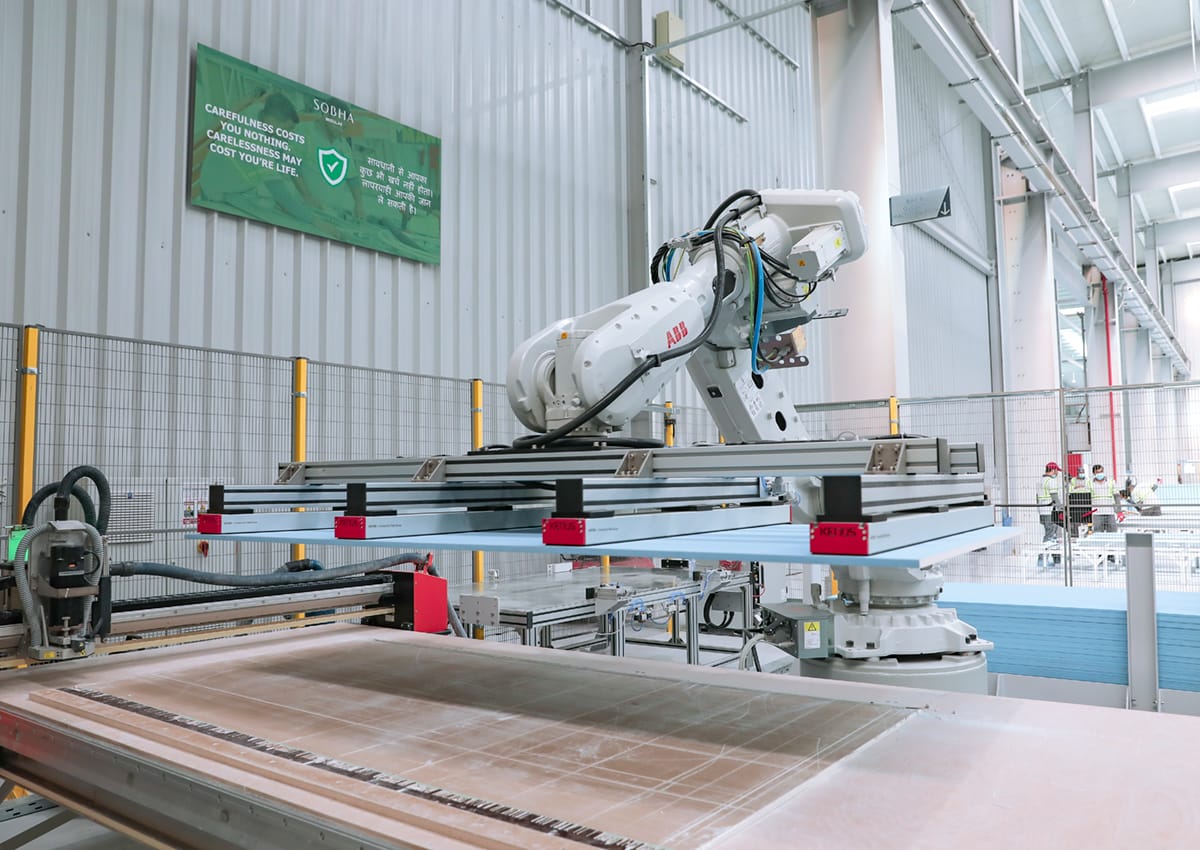
The factory is split up into six different “mini factories” so work can happen in parallel. This decentralized approach helps control waste and production with more efficiency. The Sobha Modular factory caters toward these bathroom pods and more, like MEP systems, laundry pods, and prefabricated partition walls.
Baked into the company’s focus on continuous improvement are three different groups of people that reflect the desire to build efficiently and with quality.
“One is the Sobha DNA, or the people who know about the company’s values and our attention to detail,” said Raj. “Secondly, we also have our subject matter experts from modular industries, and third, more than 40 percent of our employees are from automotive industries. This strategic mix of people brings innovation and that’s how we were able to scale up.”
After building those first 1000 pods, Sobha Modular sped up to 1000 pods in 16 days. The factory’s official goal? Making one bathroom pod every 10 minutes.
“That means in 10 days we will be making over a thousand bathrooms,” said Raj. “So we are keeping a target of one bathroom coming out every 10 minutes per line. That’s a plan which we are confident that we’ll be doing in four to five months.”
Sobha Modular’s goals are not just pie-in-the-sky, but built upon real demand for housing, both in the UAE and abroad.
“Real estate is a cyclical business,” he said. “It can go up and then it can stagnate, it can go down. So our construction is totally reliant on real estate. Not only us, anybody for that matter in the GCC, as it is a very fast-paced and dynamic market. So to compensate or to scale up quickly and at the same time maintain quality, bringing a modular approach is key.”
The Bottlenecks in Modular Manufacturing for Factories and Developers
Even though the company owns the manufacturing process from top to bottom, Raj says that Sobha Modular has also seen how both design and engineering teams can throw obstacles into the fine-tuned process.
He notes that it is important to engage architects and educate them using your company data, particular designs or configurations, and finally, how to design a layout based on said data and “typologies.”
“Because we work in a BIM environment, a small change in one pipe going left to the right, that is considered as one typology,” said Raj. “So we are working closely with architects and engineers to standardize the typologies.”
For developers, it is crucial for them to understand the importance of bringing in the modular factory as early as possible—ideally in the design stage.
If modular companies are onboarded early, according to Raj, they can provide a lot of valuable design insights that match what they can produce in the factory.
Secondly, real estate companies “should not look at the cost comparison" between stick-built and off-site manufacturing, he says.
“There are overheads, even though we are doing modular, there are preliminary site costs and et cetera,” notes Raj. “They should try one or two projects initially to ensure that the learning curve is obtained and that they are able to take the fruits out of modular, which can happen only if they are working in tandem with one or two companies to practice and ensure that it is being successful.”
The Value of Early Involvement
Starting together at the early stages can help smooth out loads of wrinkles as developers coordinate with modular companies, says Raj. Another crucial area for developers to understand about modular? Front-loading cashflow.
If you wanted to build a bathroom, you need to buy all of the products that go inside said bathroom, he said. “The fittings, wash basins, mirrors, ceiling lights, all of it you are buying before your structure is up. So [developers] have to be mindful about their cashflow planning.”
When developers and modular factories synchronize efforts early on, the benefits can be seen clearly, says Raj.
“If a company is adapting to a modular approach and modern methods of construction, then we can start manufacturing in parallel.”
As developers embark on the process of choosing modular companies, ultimately, they have to focus on the modular design and engineering strength of that company, Raj says.
In the end, when a developer and a modular factory build a trusted relationship, they will be able to handle any variations, starting from design all the way through to on-site installation.
“It’s not only how we build the walls and flooring,” said Raj. “If we are not coordinated well with the site and with the codes, you are not able to check until the entire building is commissioned.”
With modular, developers may think they are “limiting their design creativity, but in reality they are enhancing it.”
About the Author: Karen P. Rivera is a freelance writer and editor with a passion for storytelling. She is a former United Nations-based reporter, with experience covering international breaking news, venture capital, emerging healthcare tech, and the video game industry.
More from Modular Advantage
MBI Town Halls 2026: Reflections from Boston
By the end of 2026 MBI’s Government Affairs team will have traveled over 6,000 air miles to bring Town Hall events to five different cities in two countries.
Mind the Gap: The Interface Between Onsite and Offsite Construction
Every design for manufacture and assembly (DfMA) project — modular, mass timber, or panelized — is really two projects joined at a seam. One is built in a controlled factory to millimeter tolerances; the other in the field, in weather, to the looser tolerances of poured concrete and human hands. Between them sits an interface: where the factory’s precision meets the site’s reality.
Rules, Rails & Repeatability: Applying DfMA to Modular Healthcare
DfMA offers several advantages for healthcare projects, with faster delivery among the most valuable. Schedule matters when building new facilities, expanding campuses, renovating existing space or bringing care closer to communities that need it.
Precision and Possibility: Demands of DfMA and What Modular Mass Timber Makes Possible
Mass timber does not automatically create an efficient modular building. Its precision makes early coordination more important: fabricated components will accurately reproduce both the team’s solutions and its mistakes. The material’s advantages are realized only when supported by an equally precise design and delivery process.
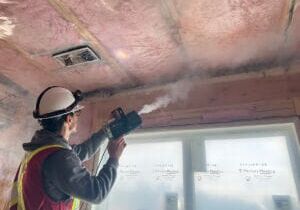
Catch It in the Factory, Not in the Field: Smarter Testing for Modular Builds
Integrating watertightness and airtightness testing into factory workflows transforms quality assurance from a reactive process into a proactive commissioning strategy. It ensures that every module shipped is field ready and resilient for transportation while also supporting the ability of the modular construction industry to make buildings better.
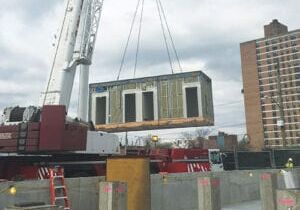
Modular Construction Contracts: Key Considerations for Successful Canadian Projects
Starting a modular project with a well-developed contract protects both the owner and the contractor. It will help keep the project on track and on budget, and it will improve quality from the factory floor to final installation on-site.
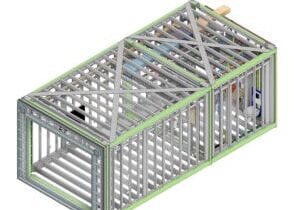
Modular by Design: Turning Architecture into a Manufacturing System
Modular construction is often presented as a faster way to build. Speed, however, is only one part of its value. The larger opportunity is to create a coordinated design and production system that improves quality, reduces uncertainty, and allows a building to move efficiently from concept design through manufacturing, transportation, installation, and completion.
Repeatability Begins with Trust: What Alora at Dry Creek Reveals About Scaling Modular Housing
Alora at Dry Creek, a 329-unit, multifamily community comprising five four-story buildings in Centennial, Colorado, demonstrates how repeatable design, standardized manufacturing and early collaboration can work together to create a model that is not only faster to deliver, but easier to replicate across future projects.
T.R. Arnold: The Art of Third-Party Inspections
T.R. Arnold (TRA), a third-party inspection company in Elkhart, Indiana, contracts with modular manufacturers across the US. Manufacturers register with each state to which they intend to send their modules and may be required to hire a third-party inspection company.
Creating an ‘Ecosystem for Innovation:’ 50+ Years of Modular Construction Oversight in Virginia
Virginia’s modular building program began in 1973, with the implementation of the Virginia Industrialized Building Unit and Mobile Home Safety Regulations. Now it’s leading the country in modular code adoption.