Scalable & Smart EV Charging Containers
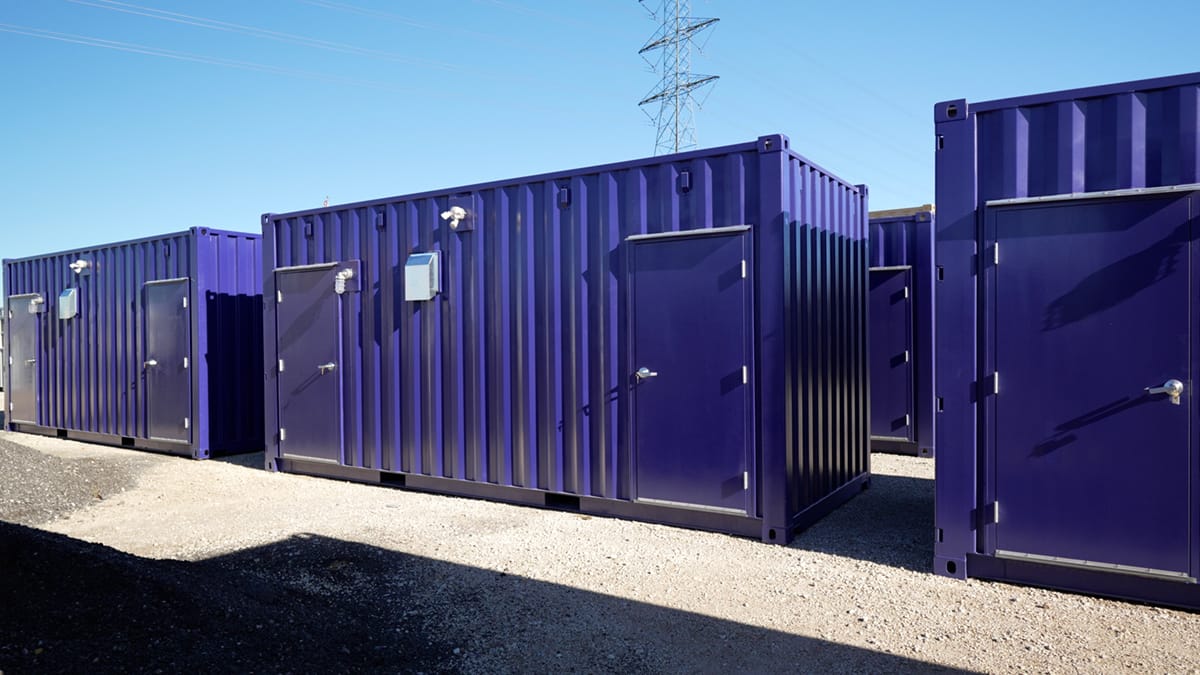
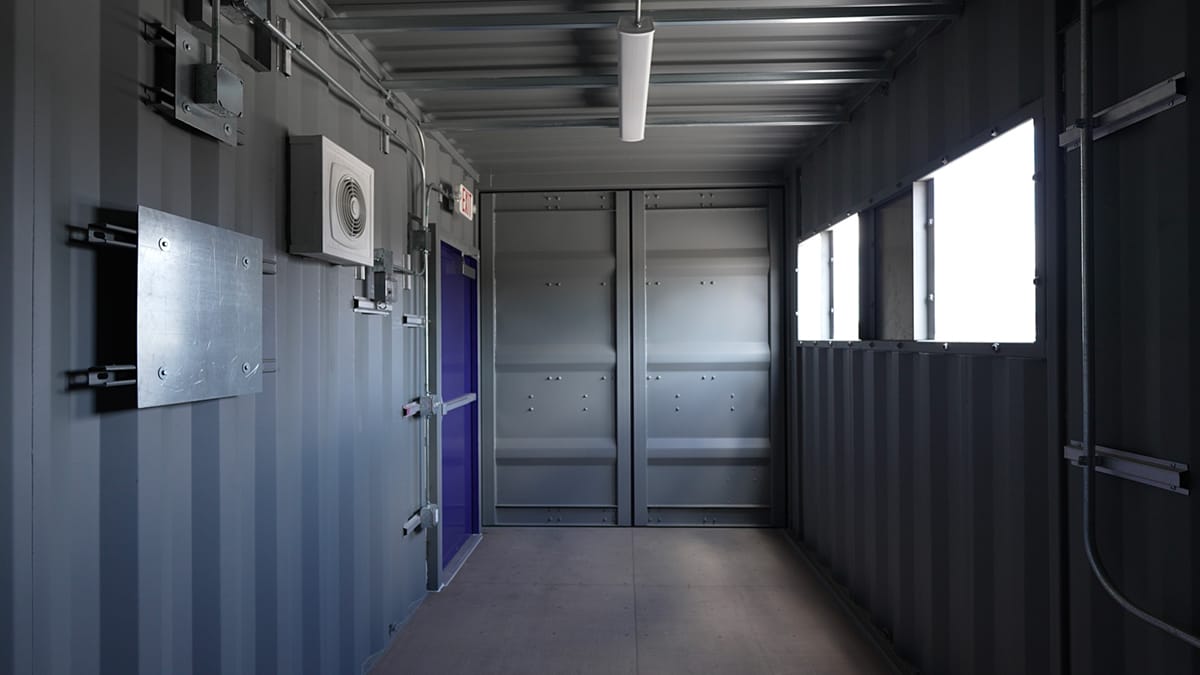
Key features include:
-
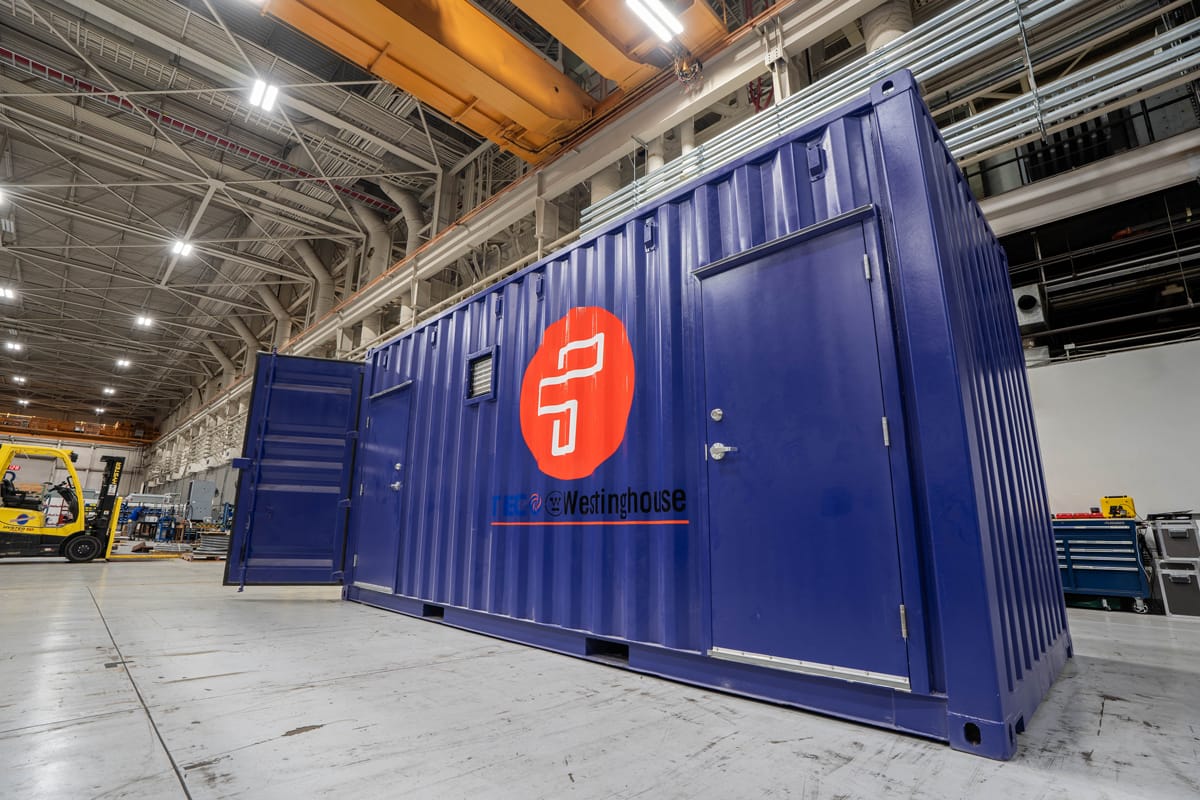
20-foot one-trip standard shipping container
-
Custom paint color
-
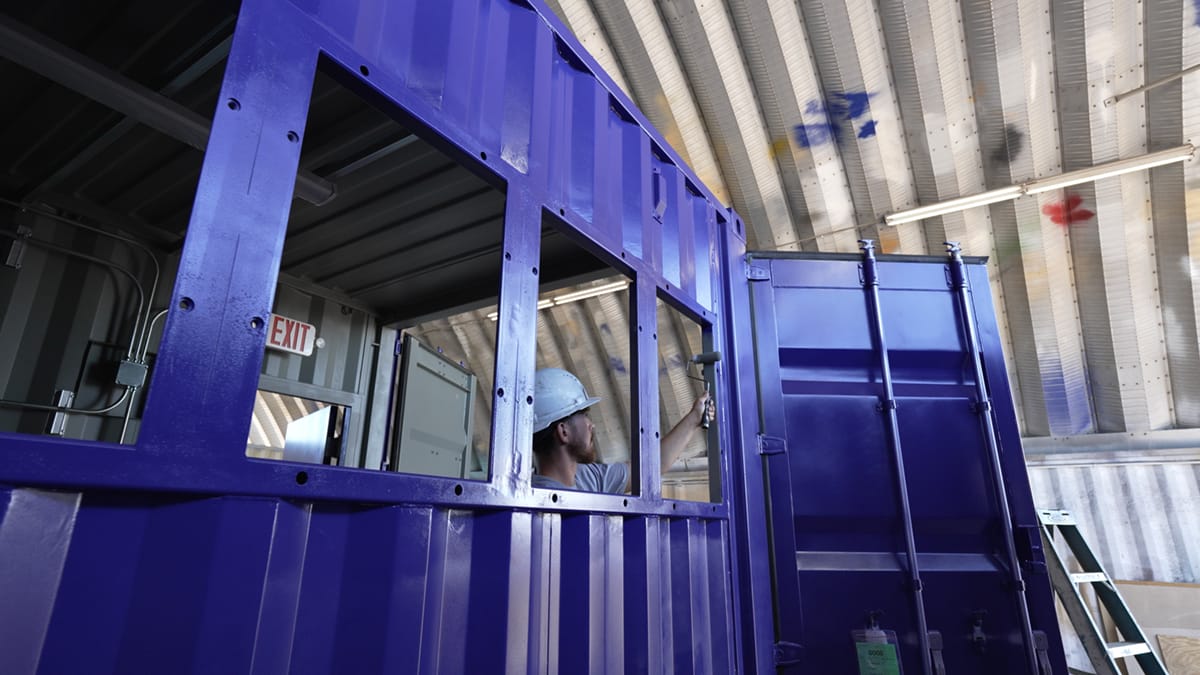
Precision-cut framed openings
-
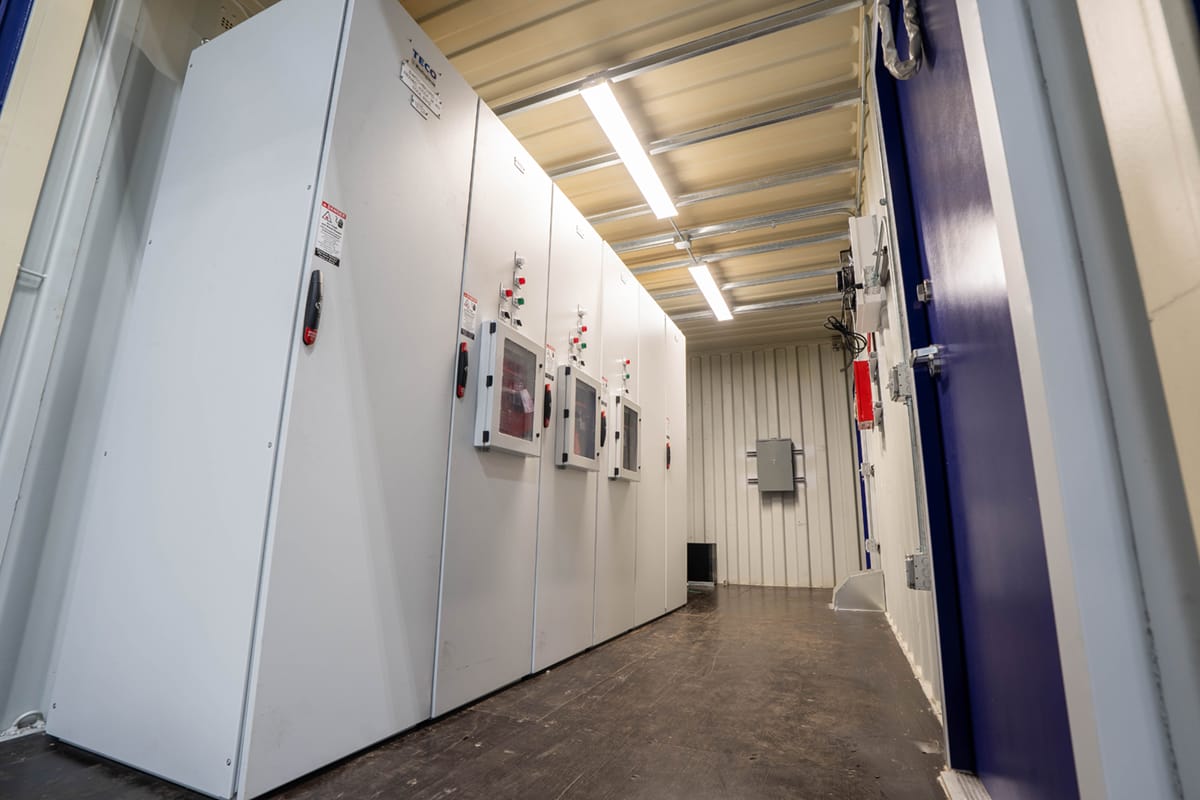
Electrical panels, wiring, and lighting
-
Supplemental ventilation
Powering EV Fleets with NexE Container Enclosures
NexE, the green energy sister company of TECO-Westinghouse, partnered with Falcon Structures to design and build portable enclosures for EV fleet operators interested in re-deployable units that support EV charging depots with significant cost savings. The goal: create durable, relocatable EV infrastructure solutions that sidestep the constraints of traditional construction.
Overcoming Traditional Infrastructure Limits
To meet the growing demands of their fleet customers, NexE needed a robust enclosure that could house all the necessary electrical equipment, deploy quickly, relocate easily, and withstand a wide range of environmental conditions.
Traditional construction wasn’t an option, especially on leased land or in dense urban areas where trenching isn’t feasible. Installation time was another key challenge. For EV fleet operators, pre-assembled, quick-connect solutions are critical to staying on schedule and avoiding costly delays.
Durability was another concern. From Canadian winters to Florida humidity, the enclosure had to protect sensitive equipment in every climate the fleet might operate in.
NexE solves these challenges with a compact, modular system that streamlines deployment without compromising safety, functionality, or code compliance to meet their customer’s needs.
To bring the full solution to life, they needed a reliable partner with proven experience in fabricating durable, customized enclosures. That is where Falcon stepped in, providing a robust container built to NexE’s specifications with precision cutouts and structural modifications to support the electrical design without delay.
“Falcon Structures was an experienced and responsive container expert for this project. From the start, their team was committed to our vision for an EV charging enclosure. They handled structural modifications, openings, and climate control exactly to spec, which made it easy for us to install our equipment without compromise. It was an excellent collaboration.”
- NexE
Container Concept to EV-Ready Prototype
After touring Falcon’s container manufacturing facility outside of Austin, Texas, NexE collaborated with Falcon’s engineering team to design a 20-foot modified container tailored to the project’s exact requirements.
Falcon delivered the prototype container with custom cutouts, framed openings, mounted electrical panels and wiring, lighting, and ventilation. NexE, in collaboration with their partners, engineered the EV infrastructure to fit within the 20-foot container, which is equipped with 2000A switchgear, dual power inputs, and a smart on-site communication system capable of powering up to 50 EV chargers simultaneously.
After its debut at the Advanced Clean Transportation (ACT) Expo, the NexE team was able to ship the container to its first destination in Brooklyn, New York. Nearly turnkey, the partnership between NexE and Falcon Structures delivered a portable and durable prototype for scalable and smart EV charging.
More from Modular Advantage

Mind the Gap: The Interface Between Onsite and Offsite Construction
Every design for manufacture and assembly (DfMA) project — modular, mass timber, or panelized — is really two projects joined at a seam. One is built in a controlled factory to millimeter tolerances; the other in the field, in weather, to the looser tolerances of poured concrete and human hands. Between them sits an interface: where the factory’s precision meets the site’s reality.
Rules, Rails & Repeatability: Applying DfMA to Modular Healthcare
DfMA offers several advantages for healthcare projects, with faster delivery among the most valuable. Schedule matters when building new facilities, expanding campuses, renovating existing space or bringing care closer to communities that need it.
Precision and Possibility: Demands of DfMA and What Modular Mass Timber Makes Possible
Mass timber does not automatically create an efficient modular building. Its precision makes early coordination more important: fabricated components will accurately reproduce both the team’s solutions and its mistakes. The material’s advantages are realized only when supported by an equally precise design and delivery process.
Catch It in the Factory, Not in the Field: Smarter Testing for Modular Builds
Integrating watertightness and airtightness testing into factory workflows transforms quality assurance from a reactive process into a proactive commissioning strategy. It ensures that every module shipped is field ready and resilient for transportation while also supporting the ability of the modular construction industry to make buildings better.
Modular Construction Contracts: Key Considerations for Successful Canadian Projects
Starting a modular project with a well-developed contract protects both the owner and the contractor. It will help keep the project on track and on budget, and it will improve quality from the factory floor to final installation on-site.
Modular by Design: Turning Architecture into a Manufacturing System
Modular construction is often presented as a faster way to build. Speed, however, is only one part of its value. The larger opportunity is to create a coordinated design and production system that improves quality, reduces uncertainty, and allows a building to move efficiently from concept design through manufacturing, transportation, installation, and completion.

Repeatability Begins with Trust: What Alora at Dry Creek Reveals About Scaling Modular Housing
Alora at Dry Creek, a 329-unit, multifamily community comprising five four-story buildings in Centennial, Colorado, demonstrates how repeatable design, standardized manufacturing and early collaboration can work together to create a model that is not only faster to deliver, but easier to replicate across future projects.

T.R. Arnold: The Art of Third-Party Inspections
T.R. Arnold (TRA), a third-party inspection company in Elkhart, Indiana, contracts with modular manufacturers across the US. Manufacturers register with each state to which they intend to send their modules and may be required to hire a third-party inspection company.

Creating an ‘Ecosystem for Innovation:’ 50+ Years of Modular Construction Oversight in Virginia
Virginia’s modular building program began in 1973, with the implementation of the Virginia Industrialized Building Unit and Mobile Home Safety Regulations. Now it’s leading the country in modular code adoption.
Understanding Thermal Barriers Compliance Methods & Emerging NFPA-275 Foam Plastic Technologies
New fire barrier technologies are improving total costs and margins in major areas of construction, such as commercial, government, union and prevailing wage projects. These benefits translate into other large fringe areas, such as agriculture, commercial cold storage facilities, grow houses, outbuildings, military and aviation hangars.