Why Modular Data Centers Are Gaining Momentum

Ron Mann is Vice President of Compu Dynamics Modular.
AI is Driving the Next Frontier for Modular Construction
Modular construction has transformed several industries, including healthcare and education, delivering speed, cost, predictability, and quality through prefabrication. Now, it’s transforming one of the most demanding sectors: IT, or more importantly, data centers.
Artificial intelligence (AI), high-performance computing (HPC), and edge applications push the limits of traditional “stick-built” data centers. They take years build, often struggle with high density workloads, and aren’t optimized for deployments near end users. Modular data center (MDC) platforms are purpose-built to address these challenges, offering flexibility and scalability to adapt to evolving technologies, while opening new opportunities for the modular construction industry.
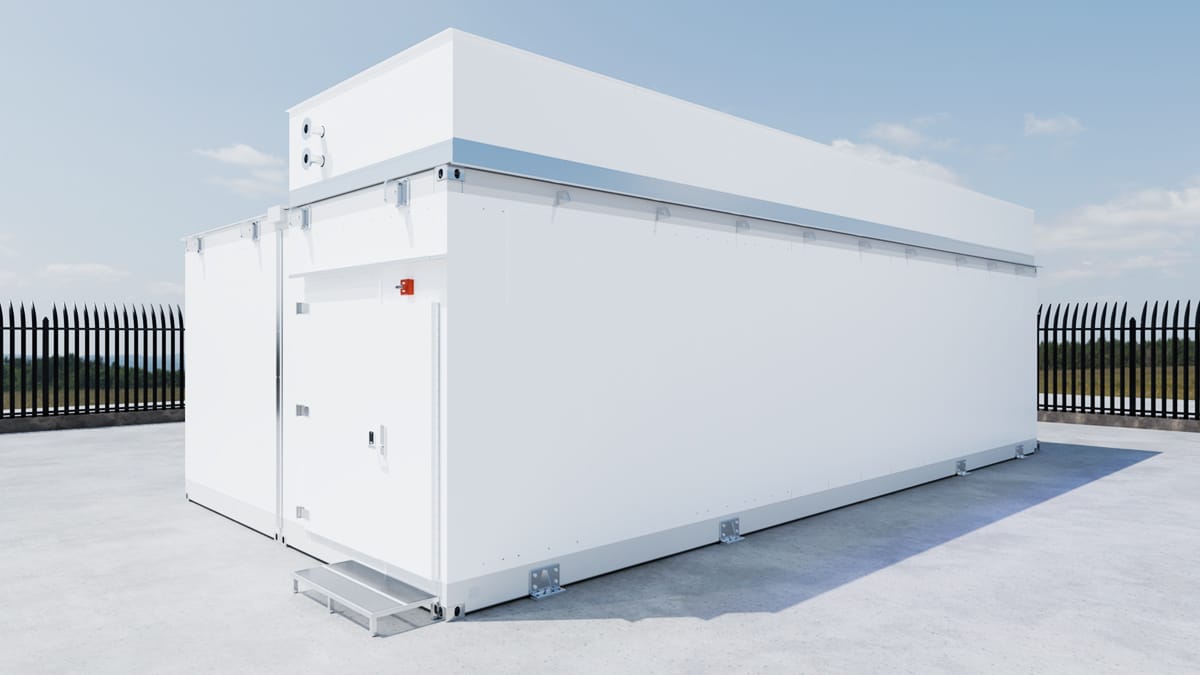
L Series Exterior view (utility, IT module and overhead cooling)
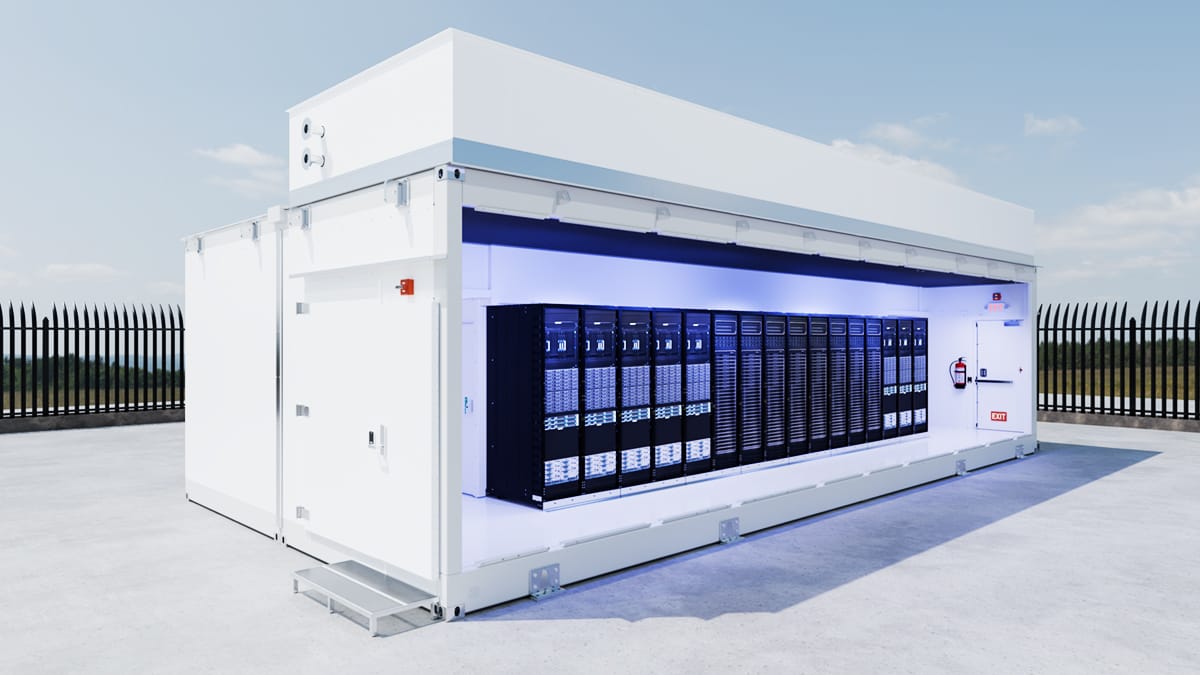
L Series cutaway view
What Makes a Data Center “Modular”?
Early MDCs have come a long way from repurposed shipping containers. While this choice offered a quick path to modularity, it was unable to support the full spectrum of IT infrastructure, especially Tier 3 or higher configurations, which require high availability and reliability.
Today’s MDCs are purpose-built in a factory setting to support specific customer applications. These units can arrive on-site, pre-tested and fully equipped with IT racks, power distribution, and cooling systems—ready for immediate deployment, and future upgrades as technology evolves. Key benefits of modular include:
- Faster schedules: Deployable in months, not years.
- Repeatable quality: Built in controlled, process driven factories, reducing onsite materials waste and workplace accidents.
- Scalable capacity: Units can be expanded, added, or reconfigured as demand grows.
- Optimized design: Modules can be tailored for customer specific applications and use cases.
Market Drivers
The rise of AI is accelerating demand for modular data centers across industries on a global scale. Factors that come into play include:
- Rising density – AI servers can draw 50–250+ kW per rack, exceeding legacy cooling capabilities.
- New cooling needs – Liquid and hybrid systems are essential for heat management.
- Latency demands – Real-time applications require compute closer to users.
- Time-to-market – Organizations can’t wait years for new facilities.
- Infrastructure agility – IT evolves rapidly, and infrastructure must keep pace.
In short, workloads are changing faster than traditional construction timelines can support.
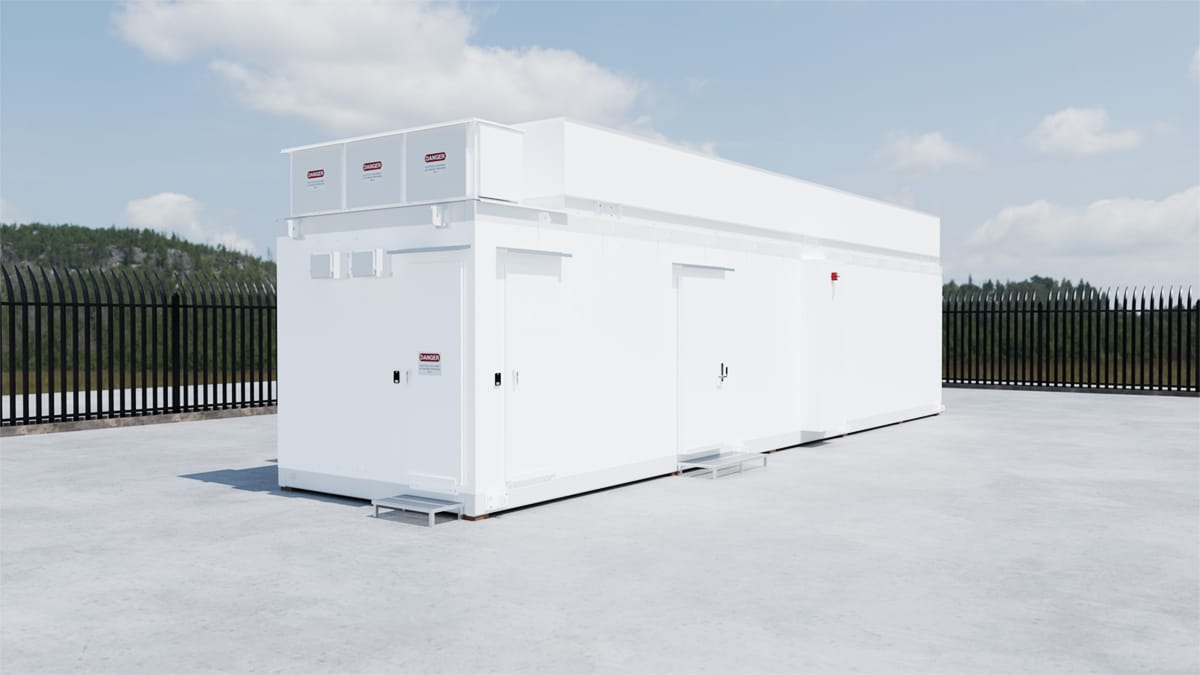
I series exterior view (all in one module with overhead cooling system)
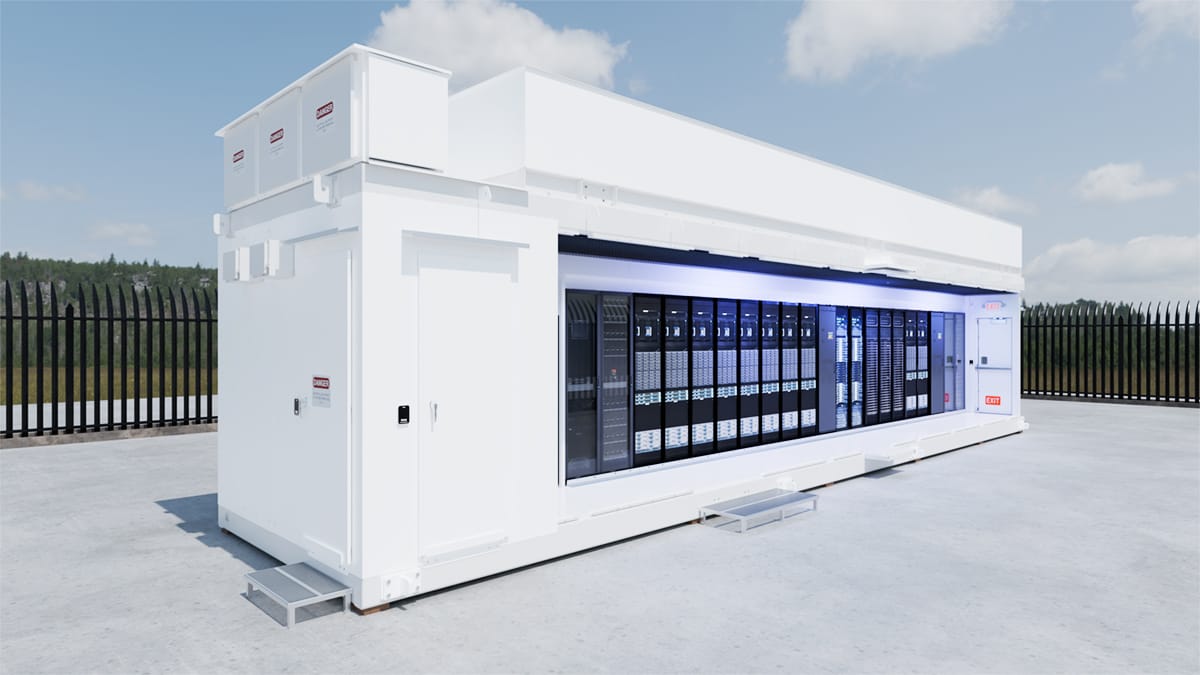
I series cutaway view
Two Platform Types Emerging
Compu Dynamics Modular (CDM) has developed two purpose-built platforms specifically tailored for AI workloads:
- Training/learning platforms are designed for ultra-dense compute clusters used in AI model training or HPC. These multi-megawatt systems often require liquid cooling and advanced power distribution.
- Inference platforms are smaller, self-contained units that can be deployed at the edge offering low latency for real-time decision-making, such as processing video feeds or running applications locally.
This shift reflects a broader trend: modular data centers are evolving from one-size-fits-all into specialized, application-specific solutions.
Use Cases for Modular Data Centers
The versatility of modular platforms is driving adoption in diverse settings. Take inference for example. As AI becomes more integrated into everyday operations, so does the need for compact, high-performance data centers that process information in real time. Inference modules analyze data—like video feeds or sensor inputs—on-site, enabling fast decisions without relying on distant cloud servers.
Here are examples of AI driven use cases where modular data centers can positively impact key industries:
- Autonomous vehicle R&D – Dense training clusters near testing grounds accelerate AI model development.
- Healthcare systems – Edge modules process imaging data (MRI, CT) locally, reducing latency and reliance on distant cloud centers.
- Media and entertainment – Streaming services deploy inference nodes in metro areas to bring content closer to consumers.
- Research and academia – Universities add modular pods to expand HPC capabilities without overhauling entire campuses.
These instances highlight how modular data centers extend the reach of modular construction into high-tech domains.
Key Design Considerations
For modular data center construction, several challenges stand out:
- Thermal management: At densities above 100 kW per rack, liquid cooling becomes essential. Modules must integrate plumbing and heat rejection systems efficiently and economically.
- Power distribution: High-density modules require specialized power distribution approaches and failover strategies.
- Site logistics: Site design and readiness, transport, assembly, and commissioning must be proactively planned to take full advantage of modular construction.
- Codes and standards: Electrical, mechanical, and safety codes vary by location. The UL2755 IT standard helps streamline compliance by reducing certain site-specific requirements used in traditional construction.
- Future growth: Designs must allow for expansion and technology refresh cycles without compromising capacity or uptime.
These issues are familiar to modular builders in other industries—tight tolerances, factory integration, and site coordination—but they take on added complexity in mission-critical environments.
Takeaways for the Modular Industry
Modular data centers are a natural extension of what modular construction already does well: deliver high-performance infrastructure quickly, reliably, and at scale. For firms exploring this market, here are three key insights:
- Speed, not cost, is a key driver. Just as modular schools or hospitals meet urgent needs, modular data centers address fast-moving demands in AI and digital infrastructure.
- Specialization matters. Platforms are evolving into distinct categories—dense training clusters and nimble inference nodes. Understanding these use cases will be key for construction partners.
- Integration is critical. Data centers rely on complex utility hookups (power, fiber, cooling, water). Successful projects hinge on seamless factory-to-site coordination.
Looking Ahead
As AI adoption accelerates and sustainability becomes non-negotiable, modular data centers will only grow in importance. For the broader modular construction industry, they represent both a challenge and an opportunity: a chance to apply prefabrication expertise to one of the most technically demanding infrastructure types working in tandem with IT hardware innovation.
The message is clear: modular construction isn’t just building schools, offices, or housing. It is increasingly building the digital backbone of tomorrow’s economy.
More from Modular Advantage
Mind the Gap: The Interface Between Onsite and Offsite Construction
Every design for manufacture and assembly (DfMA) project — modular, mass timber, or panelized — is really two projects joined at a seam. One is built in a controlled factory to millimeter tolerances; the other in the field, in weather, to the looser tolerances of poured concrete and human hands. Between them sits an interface: where the factory’s precision meets the site’s reality.
Rules, Rails & Repeatability: Applying DfMA to Modular Healthcare
DfMA offers several advantages for healthcare projects, with faster delivery among the most valuable. Schedule matters when building new facilities, expanding campuses, renovating existing space or bringing care closer to communities that need it.
Precision and Possibility: Demands of DfMA and What Modular Mass Timber Makes Possible
Mass timber does not automatically create an efficient modular building. Its precision makes early coordination more important: fabricated components will accurately reproduce both the team’s solutions and its mistakes. The material’s advantages are realized only when supported by an equally precise design and delivery process.
Catch It in the Factory, Not in the Field: Smarter Testing for Modular Builds
Integrating watertightness and airtightness testing into factory workflows transforms quality assurance from a reactive process into a proactive commissioning strategy. It ensures that every module shipped is field ready and resilient for transportation while also supporting the ability of the modular construction industry to make buildings better.
Modular Construction Contracts: Key Considerations for Successful Canadian Projects
Starting a modular project with a well-developed contract protects both the owner and the contractor. It will help keep the project on track and on budget, and it will improve quality from the factory floor to final installation on-site.
Modular by Design: Turning Architecture into a Manufacturing System
Modular construction is often presented as a faster way to build. Speed, however, is only one part of its value. The larger opportunity is to create a coordinated design and production system that improves quality, reduces uncertainty, and allows a building to move efficiently from concept design through manufacturing, transportation, installation, and completion.
Repeatability Begins with Trust: What Alora at Dry Creek Reveals About Scaling Modular Housing
Alora at Dry Creek, a 329-unit, multifamily community comprising five four-story buildings in Centennial, Colorado, demonstrates how repeatable design, standardized manufacturing and early collaboration can work together to create a model that is not only faster to deliver, but easier to replicate across future projects.

T.R. Arnold: The Art of Third-Party Inspections
T.R. Arnold (TRA), a third-party inspection company in Elkhart, Indiana, contracts with modular manufacturers across the US. Manufacturers register with each state to which they intend to send their modules and may be required to hire a third-party inspection company.

Creating an ‘Ecosystem for Innovation:’ 50+ Years of Modular Construction Oversight in Virginia
Virginia’s modular building program began in 1973, with the implementation of the Virginia Industrialized Building Unit and Mobile Home Safety Regulations. Now it’s leading the country in modular code adoption.
Understanding Thermal Barriers Compliance Methods & Emerging NFPA-275 Foam Plastic Technologies
New fire barrier technologies are improving total costs and margins in major areas of construction, such as commercial, government, union and prevailing wage projects. These benefits translate into other large fringe areas, such as agriculture, commercial cold storage facilities, grow houses, outbuildings, military and aviation hangars.