How Caster Concepts Redefined Durability in Modular Construction
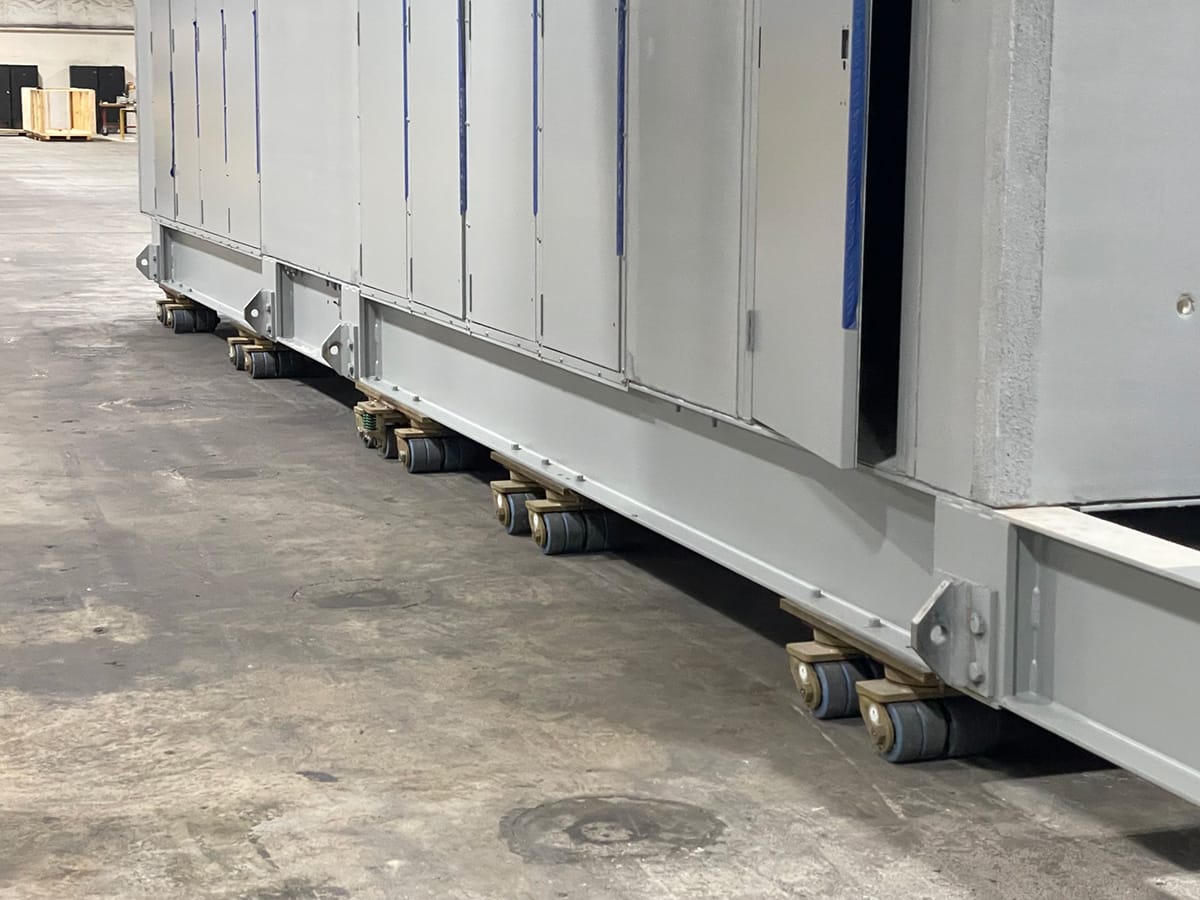
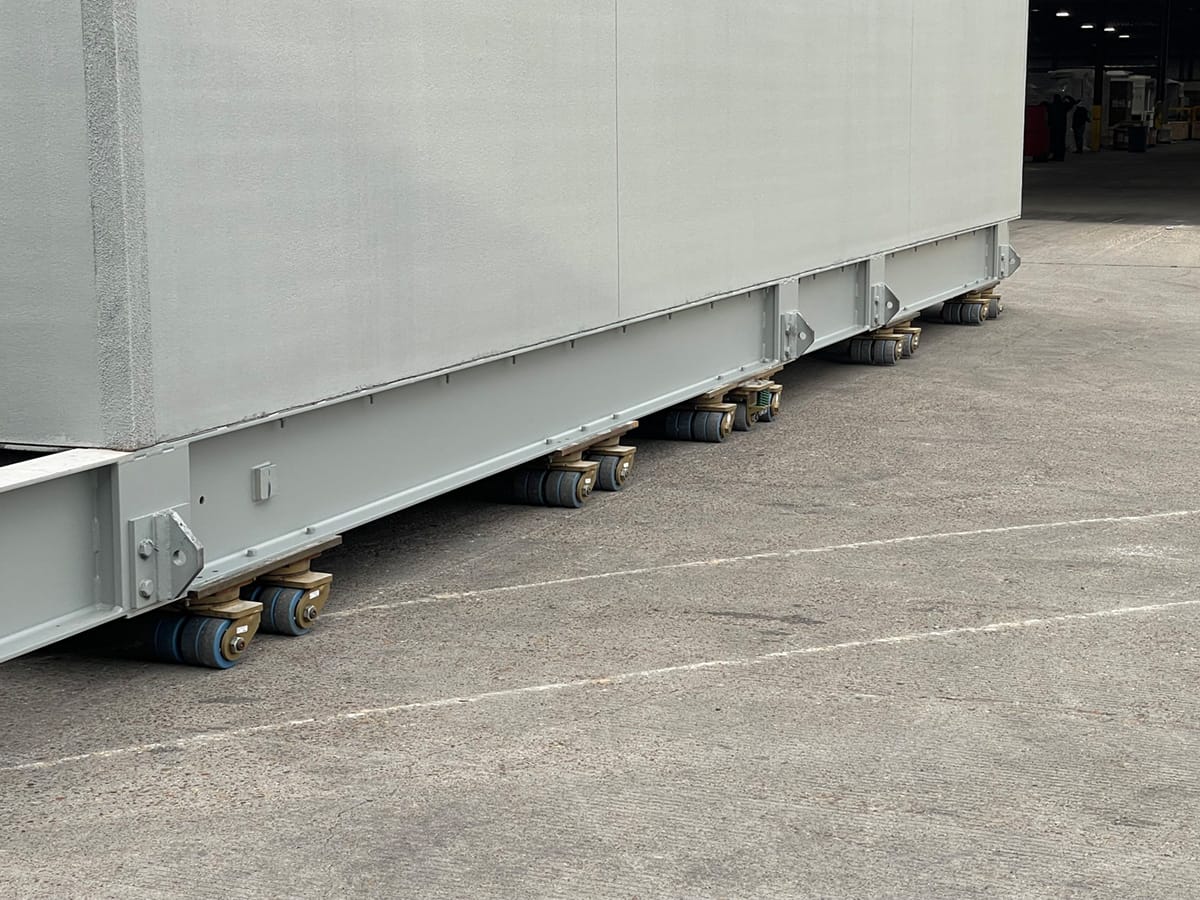
Caster Concepts casters in use at Autovol.
The Challenge: Replacing Casters Was Becoming a Six-Figure Routine
Autovol, a trailblazer in the automated modular housing industry, is known for transforming the way homes are built. But behind the innovation was a costly problem lurking beneath the surface.
Supporting modular units weighing over 50,000 lbs., the casters on their transport platforms were failing at an alarming frequency. Every three years, these casters needed full replacement. Factoring in labor, equipment, and lost productivity, the cost of each replacement approached $50,000 per caster. For a high-tech company focused on efficiency and automation, this recurring downtime was unsustainable.
The root of the issue? Traditional heavy-duty casters simply weren’t engineered for the extreme demands of Autovol’s modular construction loads. Frequent failures, high maintenance, and operational slowdowns became a challenge that Autovol wanted to solve as quickly as possible.
The Solution: Engineering Beyond Industry Standards
Autovol turned to Caster Concepts, a U.S.-based leader in application-specific heavy-duty casters. With a track record of solving industrial- scale challenges that others manufacturers couldn’t or wouldn’t touch, Caster Concepts approached the problem not just as a supplier — but as an engineering partner.
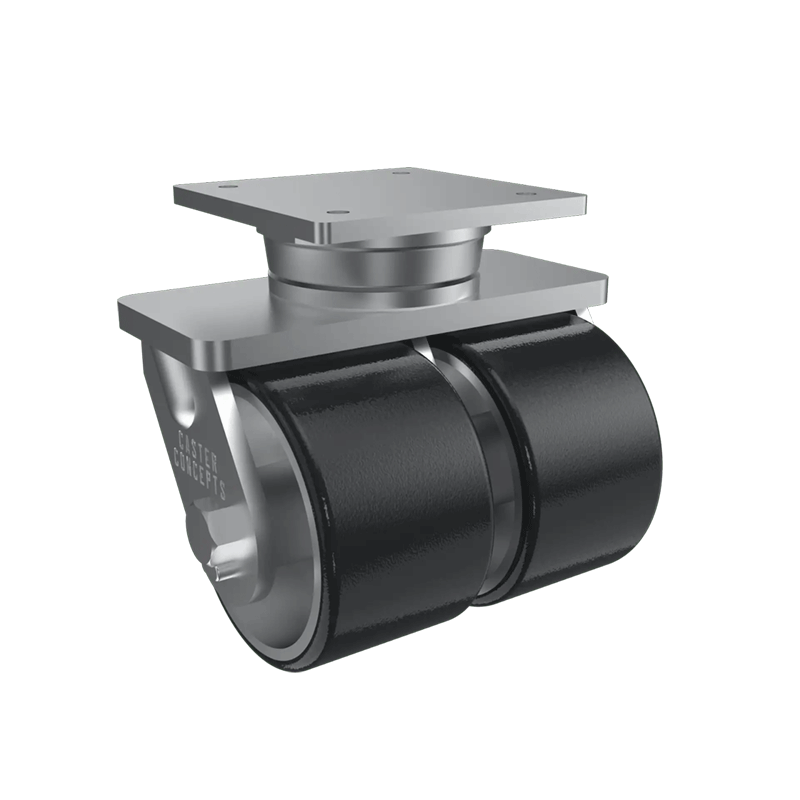
The solution to the problem was ten 81 Series Kingpinless Heavy-Duty Casters, each rated to handle over 10,000 lbs. Built with a single-ball race swivel design, the 81 Series excels in high-impact environments where shock loading, durability, and maneuverability are non-negotiable.
Why it worked:
- Kingpinless Design: Eliminates the most common failure point — ideal for rough modular site terrain and omni-directional loads.
- Shock Load Resistance: Built to withstand vertical and horizontal stresses common in modular applications
- Ergonomic Engineering: Designed to reduce push force and promote smoother movement, contributing to both safety and efficiency.
- Exceptional Materials: Featuring polyurethane wheels with high tear resistance and steel frames designed for extended life
under load.
The Results: From 3-Year Replacements to a 5-Year (and counting) Run
Five years later, not a single caster has needed replacement. Autovol has doubled the lifespan of their previous caster solution and still going strong. The change has saved the company hundreds of thousands of dollars in maintenance, labor, and lost productivity.
Other benefits of the 81 Series Kingpinless Caster:
- Zero Downtime from caster failure since implementation
- Improved Workflow Efficiency with more predictable movement
- Safer Load Transfers with reduced risk of caster collapse
- Lower Total Cost of Ownership — a long-term return on investment
As Greg Sykes put it, these casters are “bulletproof.”
“Caster Concepts casters are, BY FAR, the best, most bulletproof HD casters I have ever seen.”
— Greg Sykes, Maintenance Director, Autovol
Technical Spotlight: The 81 Series Kingpinless Caster
The 81 Series is a staple in Caster Concepts’ extreme-duty portfolio. Designed for continuous use in abusive environments, it’s built for loads starting at 5,000 lbs and up, and is frequently deployed in aerospace, military, and now modular construction sectors. It features a unique single ball race design, which provides a high strength swivel section.
Conclusion: A Case for Smarter, Stronger Casters in Modular Construction
The Autovol partnership demonstrates how engineered caster solutions from Caster Concepts solve problems that others can’t.
In a world where modular construction is scaling rapidly, mobility components matter more than ever. Casters are no longer a commodity — they’re critical to uptime, workflow, and ROI.
Two companies. One solution built to last.
For Autovol, the result has been more than peace of mind — it’s been a measurable performance upgrade.
For more information on any of our heavy duty casters, call 888-781-1470 or visit CasterConcepts.com.
More from Modular Advantage

Mind the Gap: The Interface Between Onsite and Offsite Construction
Every design for manufacture and assembly (DfMA) project — modular, mass timber, or panelized — is really two projects joined at a seam. One is built in a controlled factory to millimeter tolerances; the other in the field, in weather, to the looser tolerances of poured concrete and human hands. Between them sits an interface: where the factory’s precision meets the site’s reality.
Rules, Rails & Repeatability: Applying DfMA to Modular Healthcare
DfMA offers several advantages for healthcare projects, with faster delivery among the most valuable. Schedule matters when building new facilities, expanding campuses, renovating existing space or bringing care closer to communities that need it.
Precision and Possibility: Demands of DfMA and What Modular Mass Timber Makes Possible
Mass timber does not automatically create an efficient modular building. Its precision makes early coordination more important: fabricated components will accurately reproduce both the team’s solutions and its mistakes. The material’s advantages are realized only when supported by an equally precise design and delivery process.
Catch It in the Factory, Not in the Field: Smarter Testing for Modular Builds
Integrating watertightness and airtightness testing into factory workflows transforms quality assurance from a reactive process into a proactive commissioning strategy. It ensures that every module shipped is field ready and resilient for transportation while also supporting the ability of the modular construction industry to make buildings better.
Modular Construction Contracts: Key Considerations for Successful Canadian Projects
Starting a modular project with a well-developed contract protects both the owner and the contractor. It will help keep the project on track and on budget, and it will improve quality from the factory floor to final installation on-site.
Modular by Design: Turning Architecture into a Manufacturing System
Modular construction is often presented as a faster way to build. Speed, however, is only one part of its value. The larger opportunity is to create a coordinated design and production system that improves quality, reduces uncertainty, and allows a building to move efficiently from concept design through manufacturing, transportation, installation, and completion.

Repeatability Begins with Trust: What Alora at Dry Creek Reveals About Scaling Modular Housing
Alora at Dry Creek, a 329-unit, multifamily community comprising five four-story buildings in Centennial, Colorado, demonstrates how repeatable design, standardized manufacturing and early collaboration can work together to create a model that is not only faster to deliver, but easier to replicate across future projects.

T.R. Arnold: The Art of Third-Party Inspections
T.R. Arnold (TRA), a third-party inspection company in Elkhart, Indiana, contracts with modular manufacturers across the US. Manufacturers register with each state to which they intend to send their modules and may be required to hire a third-party inspection company.
Creating an ‘Ecosystem for Innovation:’ 50+ Years of Modular Construction Oversight in Virginia
Virginia’s modular building program began in 1973, with the implementation of the Virginia Industrialized Building Unit and Mobile Home Safety Regulations. Now it’s leading the country in modular code adoption.
Understanding Thermal Barriers Compliance Methods & Emerging NFPA-275 Foam Plastic Technologies
New fire barrier technologies are improving total costs and margins in major areas of construction, such as commercial, government, union and prevailing wage projects. These benefits translate into other large fringe areas, such as agriculture, commercial cold storage facilities, grow houses, outbuildings, military and aviation hangars.