
UrbanBloc—From Passion to Industry Leader
After an extreme career change, the drive for continual improvement leads this shipping container building manufacturer to excellence.
It was quite a career shift for Martha Trela, President and CEO of UrbanBloc – from DNA researcher to modular construction company owner. She partnered with Jerry Jameson, a California architect, to start the shipping container building company in 2014, and their first project had a high-profile client – the San Francisco Giants baseball team.
“It turned out to be a very large project for us,” Trela said, “and we had to really scramble to pull together every aspect of our business while working on a very high-profile project on a very tight timeline. We did it, but in the process, we really learned a lot.” Continual improvement has been Trela’s mantra over her ten years with UrbanBloc, almost a necessity considering her background.
After 25 years in the life sciences, she was ready for a change.
“I ran across a project in San Francisco that really caught my attention. It was in Hayes Valley, which was a transforming neighborhood, and the city owned this piece of land and had a long-term development plan for it, but they wanted to activate the site in the short term to help transform the neighborhood from a kind of sketchy area into much more of a destination area. They put out an RFP for a five-year project bringing in buildings that could be moved in the future that could support new entrepreneurs, in particular underserved women owned businesses. And they were all made out of shipping containers. I was so fascinated by the concept of utilizing little scraps of land in certain areas to affect urban transformation, to support underserved populations, and provide a retail space for new businesses to get launched, and ultimately provide social activation. I just couldn’t shake it.”
The passion born by learning about this project and following up with more research led Trela to take a new path – starting a modular construction company that specialized in using shipping containers. And over 80 projects in, her experience has led her, and others on her team, to some interesting places.
Driving Positive Social Change
UrbanBloc specializes in three main categories or markets – what they call “Phase 0” projects, amenities, and urban infill.
Phase 0 projects are precursors to a long-term development, like the revitalization project that first sparked Trela’s interest. Often temporary buildings are brought in for a defined period of time, 5, 7, or even 10 years, with the plan to remove them when the planned building or development begins construction. This is done for financial or strategic purposes.
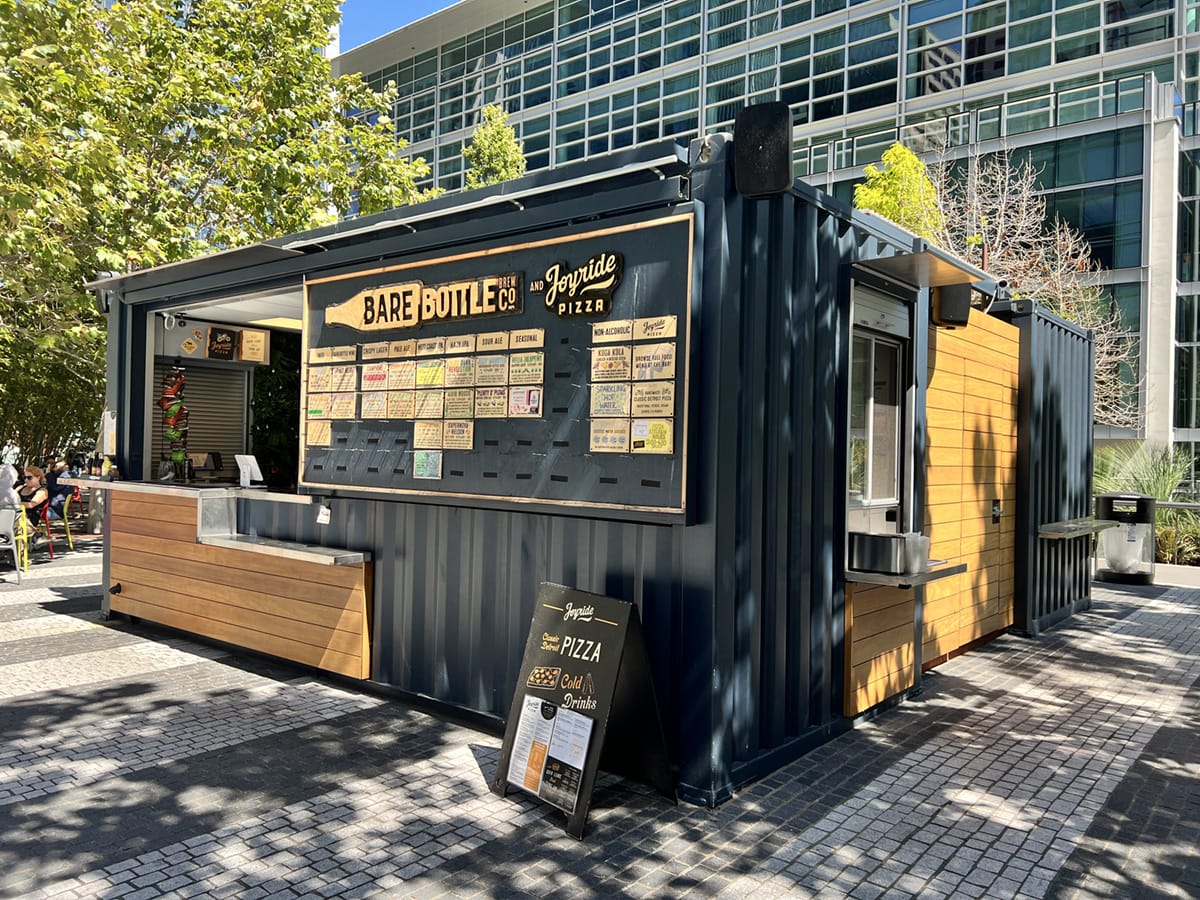
UrbanBloc’s first project for the San Francisco Giants was a phase 0 project that was designed to support local businesses. The project included a space for community education, food, a beer garden, and a dog park. Everything was built using shipping containers, which were assembled off site and then delivered once the site work was completed. When construction of the larger project was set to start, the containers could be easily disconnected and moved or repurposed. “For these types of developments shipping containers are actually a great option because of their transportability and mobility. If someone wants to pick them up, move them to another location, or sell them to a second client, they can,” said Trela.
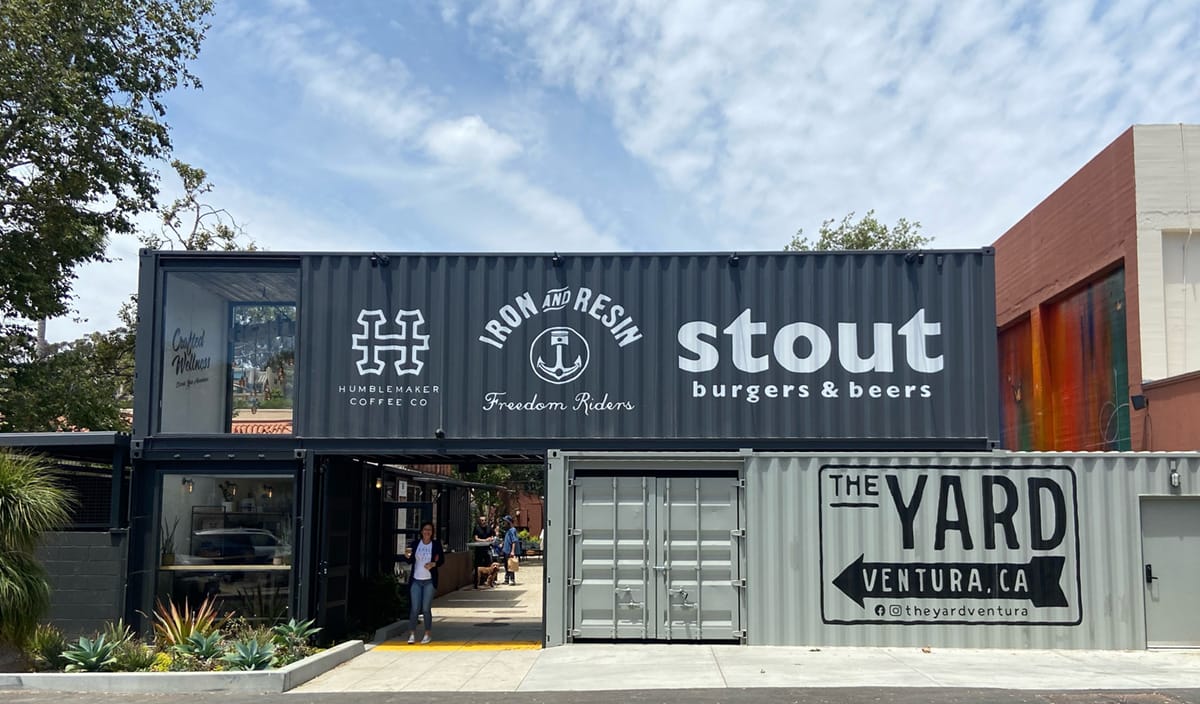
Amenities projects are added to another building or development to fill space, meet jurisdictional requirements, or as an added feature. A developer in southern California hired them to build a combination coffee shop, café, and bar that transitioned from one purpose to the next as the day progressed. The owner used it as an added draw when leasing out space in their office development.
Another high profile UrbanBloc amenity project sits outside the entrance to the BMO soccer stadium in Los Angeles. A shipping container in front of the ticket gates allows visitors to enjoy beer, wine, margaritas, or ice cream as they wait to be let into the stadium. This project was a bit of a challenge because all sides of the container had to be branded, so the team used wood and metal to create a unique look, including a 20-foot sliding wood barn door.
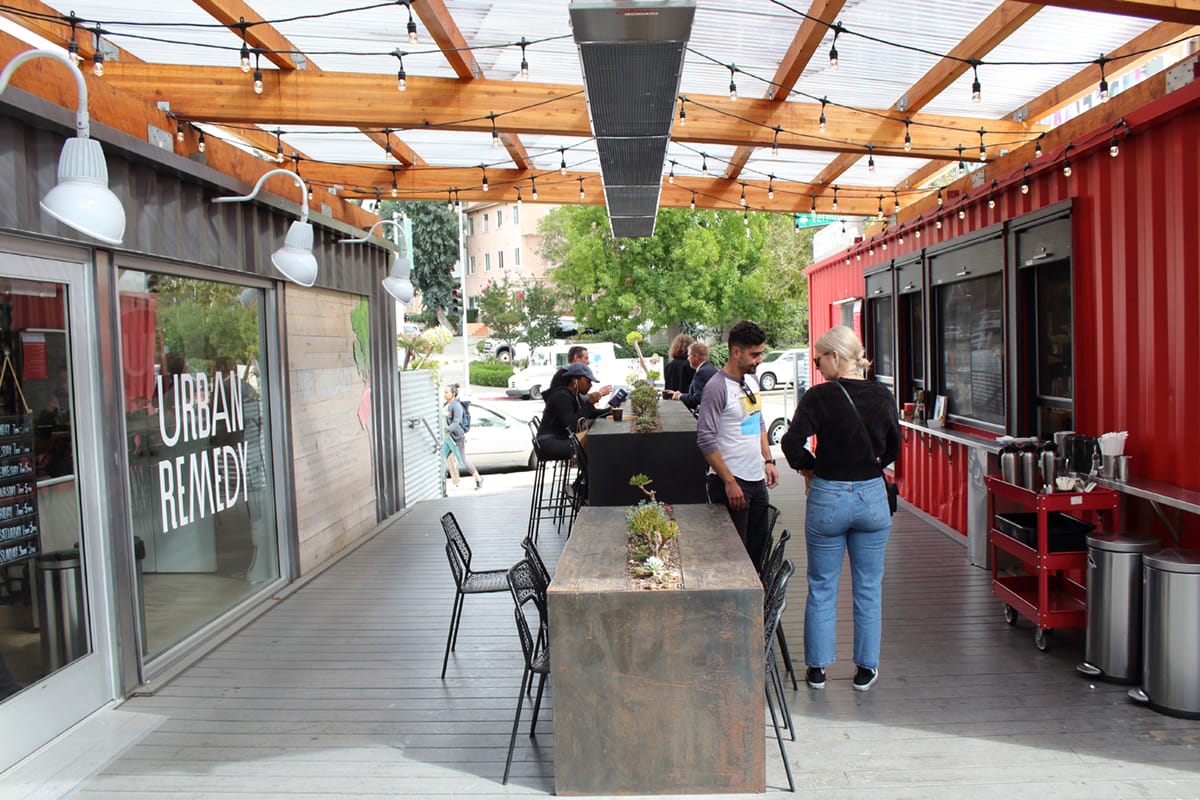
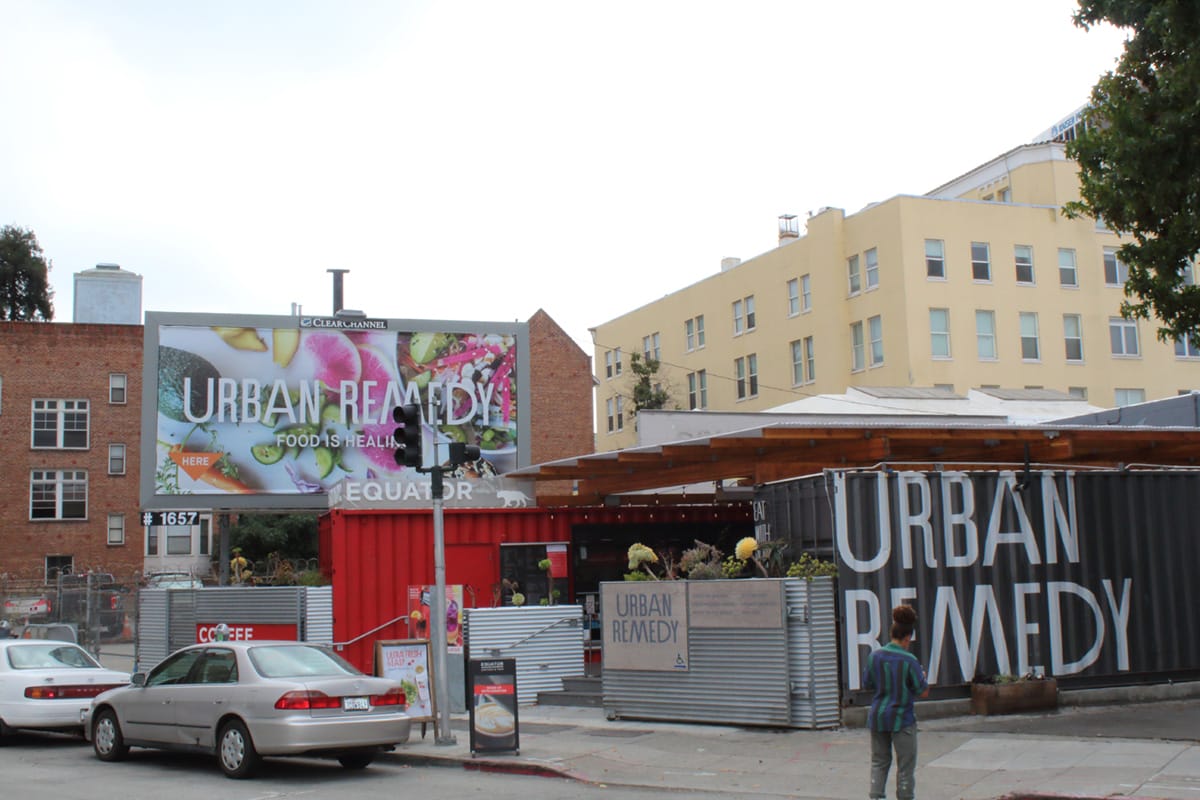
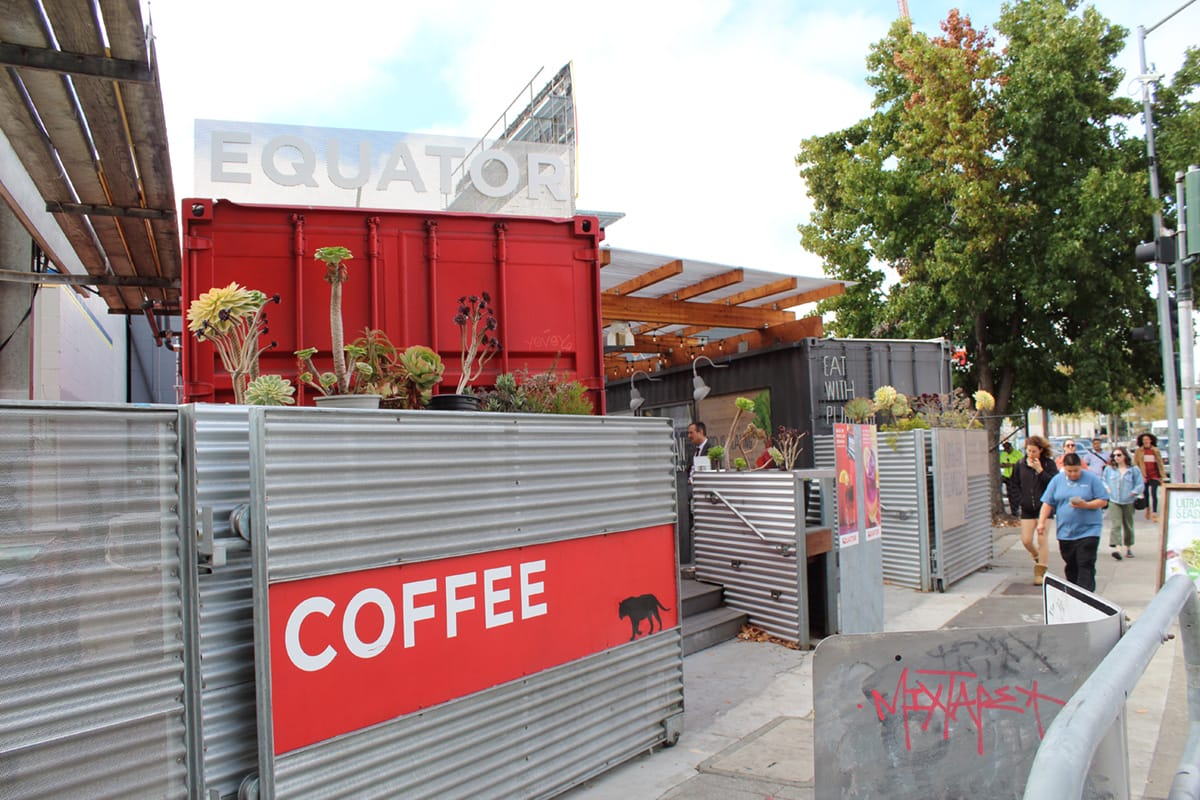
Urban infill projects are meant to help a neighborhood or area transition into a more positive space. In Oakland they built a coffee shop that offered healthy food with a deck and places for people to sit in a parking lot behind a fitness center that used to be a tire store. The area soon became a popular place for people to meet, have coffee, and eat. Many of these infill sites are almost too small for traditional construction methods. “But because we’re building off site, we can bring in an already built building with very little impact to the rest of the community, drop it in, finish up the site work, and voila, you’ve got this little community space.”
The team has also done some work in the supportive housing space, mostly providing the more complicated facilities in these developments, like bathrooms, showers, and laundry and food facilities. “At some deep level, part of our reason for being is to help be a part of positive social change,” said Trela. “So, at our core, those projects are really important to who we are as a company.”
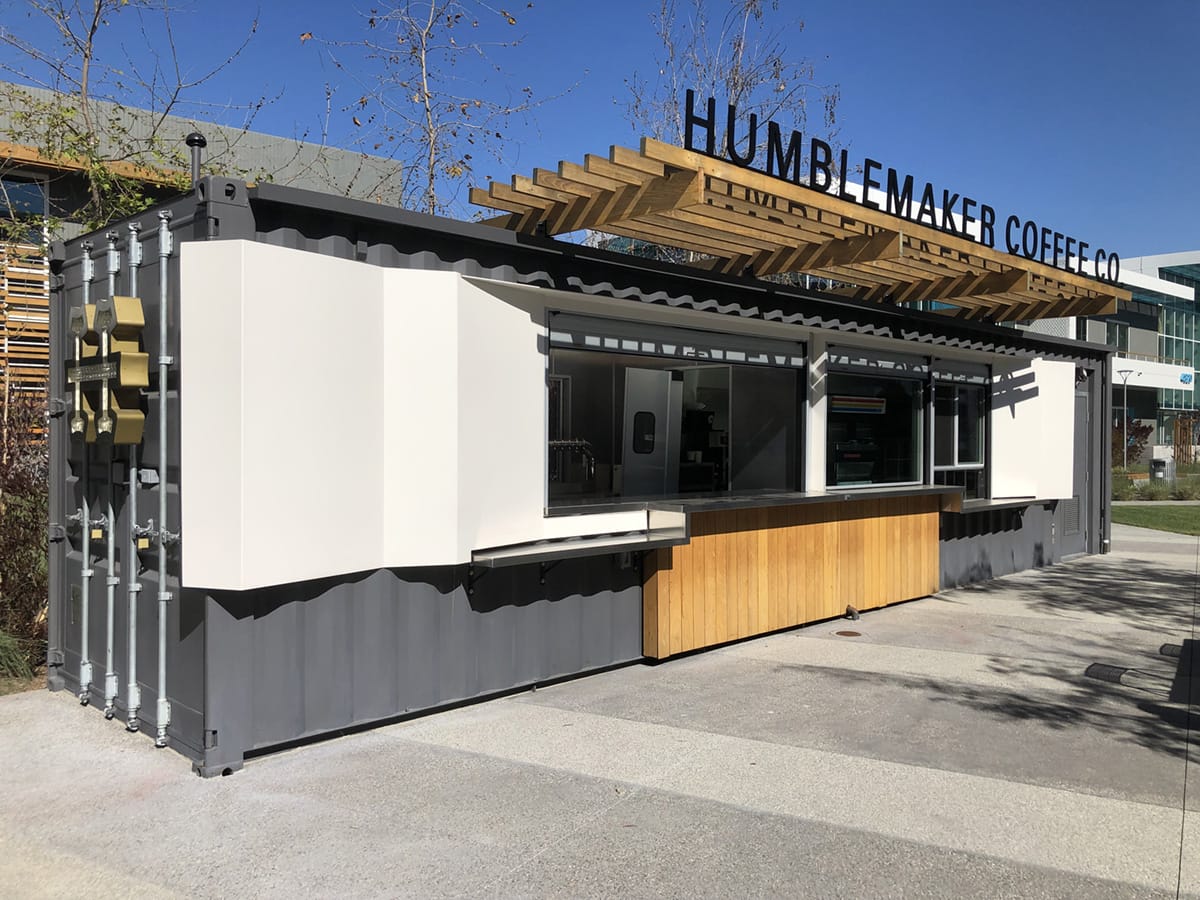
Why Shipping Containers?
While modular companies may dabble in working with shipping containers, not many rely on them solely for their projects. Containers offer quite a few advantages, according to Trela.
“My business partner, Jerry, says that they’re human scale, so they’re approachable and they almost have their own little personalities. There’s something that is very compelling to people about containers and container developments. They tend to take on their own personality and become their own entities.” Secondly, the transportation industry is mostly organized around transporting these containers, so there are no special considerations when moving them from the factory to the site. Trela said, “The entire global transportation industry was organized around this 8'x40' or 8'x20' module to move and distribute goods and services. So, they’re very easy to transport.”
Clients are often attracted to them because from a real estate perspective they are considered an asset. Having the flexibility to move and transport these assets allows owners to respond to different circumstances in a fluid manner that they can’t get with standard construction.
Continual Improvement Drives Excellence
Trela’s team is small, with only ten employees, though they utilize subcontractors to complete most of the trade work in their factory. Many of their contracting partners have been with them since the beginning, learning alongside each other. “Our company has really embraced a constant thirst for evaluating how we can do better in the next project, where we can grow, and where we can learn. And it’s all with the intent of satisfying our customers and meeting their needs.”
Through that experience, they’ve assembled a network of suppliers and other strategic partners that allow them to complete projects under tight timelines. “Our business processes and relationships have really evolved, which gives us the ability to be very nimble and quick.”
“We’ve gained so much more expertise over these years that now we can be a much bigger participant in the larger process. Not just our containers. If we’re brought in early enough, we can be an advisor and a strategist as part of the larger team. We can say, how can we get this project to successful opening and beyond? That’s really rewarding for us because we can give back and help ensure fast, efficient, cost-effective projects throughout the process. I think as a company we’ve developed into a premiere, high-quality, well-respected brand in the industry, and we’re super proud of that.”
What’s Next?
UrbanBloc has several projects on the horizon, including a pizza restaurant in Hayward that will be using a refurbished BART car as the seating area.
“I feel like even though the ten years has gone by fast, we are veterans in the industry in some ways, but we don’t feel that way. Because we’re always learning and always looking at things through new perspectives, we still feel like we’re youngsters, but with a track record.”
About the Author: Dawn Killough is a freelance construction writer with over 25 years of experience working with construction companies, subcontractors and general contractors. Her published work can be found at dkilloughwriter.com.
More from Modular Advantage
Mind the Gap: The Interface Between Onsite and Offsite Construction
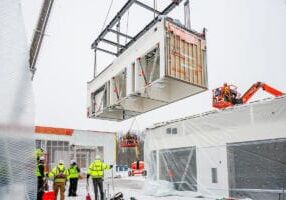
Every design for manufacture and assembly (DfMA) project — modular, mass timber, or panelized — is really two projects joined at a seam. One is built in a controlled factory to millimeter tolerances; the other in the field, in weather, to the looser tolerances of poured concrete and human hands. Between them sits an interface: where the factory’s precision meets the site’s reality.
Rules, Rails & Repeatability: Applying DfMA to Modular Healthcare
DfMA offers several advantages for healthcare projects, with faster delivery among the most valuable. Schedule matters when building new facilities, expanding campuses, renovating existing space or bringing care closer to communities that need it.
Precision and Possibility: Demands of DfMA and What Modular Mass Timber Makes Possible
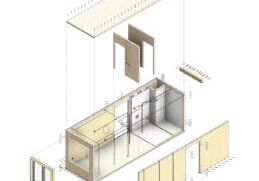
Mass timber does not automatically create an efficient modular building. Its precision makes early coordination more important: fabricated components will accurately reproduce both the team’s solutions and its mistakes. The material’s advantages are realized only when supported by an equally precise design and delivery process.
Catch It in the Factory, Not in the Field: Smarter Testing for Modular Builds
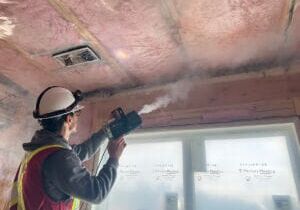
Integrating watertightness and airtightness testing into factory workflows transforms quality assurance from a reactive process into a proactive commissioning strategy. It ensures that every module shipped is field ready and resilient for transportation while also supporting the ability of the modular construction industry to make buildings better.
Modular Construction Contracts: Key Considerations for Successful Canadian Projects
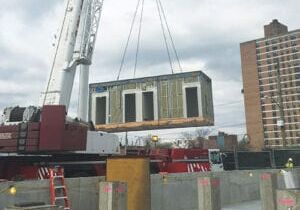
Starting a modular project with a well-developed contract protects both the owner and the contractor. It will help keep the project on track and on budget, and it will improve quality from the factory floor to final installation on-site.
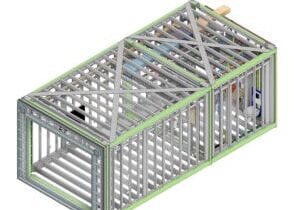
Modular by Design: Turning Architecture into a Manufacturing System
Modular construction is often presented as a faster way to build. Speed, however, is only one part of its value. The larger opportunity is to create a coordinated design and production system that improves quality, reduces uncertainty, and allows a building to move efficiently from concept design through manufacturing, transportation, installation, and completion.
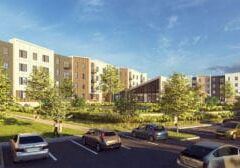
Repeatability Begins with Trust: What Alora at Dry Creek Reveals About Scaling Modular Housing
Alora at Dry Creek, a 329-unit, multifamily community comprising five four-story buildings in Centennial, Colorado, demonstrates how repeatable design, standardized manufacturing and early collaboration can work together to create a model that is not only faster to deliver, but easier to replicate across future projects.

T.R. Arnold: The Art of Third-Party Inspections
T.R. Arnold (TRA), a third-party inspection company in Elkhart, Indiana, contracts with modular manufacturers across the US. Manufacturers register with each state to which they intend to send their modules and may be required to hire a third-party inspection company.
Creating an ‘Ecosystem for Innovation:’ 50+ Years of Modular Construction Oversight in Virginia
Virginia’s modular building program began in 1973, with the implementation of the Virginia Industrialized Building Unit and Mobile Home Safety Regulations. Now it’s leading the country in modular code adoption.
Understanding Thermal Barriers Compliance Methods & Emerging NFPA-275 Foam Plastic Technologies
New fire barrier technologies are improving total costs and margins in major areas of construction, such as commercial, government, union and prevailing wage projects. These benefits translate into other large fringe areas, such as agriculture, commercial cold storage facilities, grow houses, outbuildings, military and aviation hangars.