Eliyah Ryals: Finding the Perfect Fit
It’s not common for people to find their perfect career fit straight out of college. It’s even less common to find it in the town you grew up in. But that’s exactly what happened when Eliyah Ryals was told about vacancies at Panel Built and made the decision to apply.
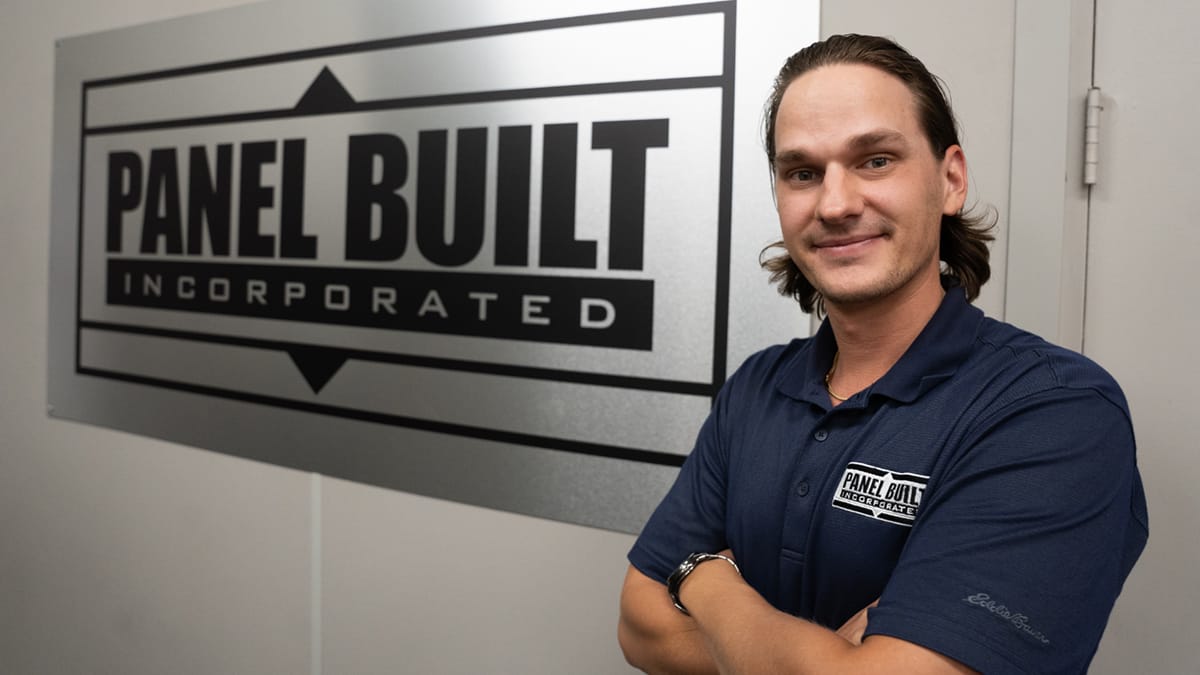
It’s been eight years since Eliyah started working for the Blairsville, GA, modular building manufacturer, but it hasn’t always been a straight line to his current role as sales manager.
Excelling as an Installer
When Eliyah first applied for a job at Panel Built, the vacancies were available on the factory floor. Specifically, Eliyah was hired to oversee the installation process.
However, as a company that values hands-on experience, Eliyah was first assigned to work alongside the installers, building and installing a variety of mezzanine offices, guardhouses, prefabricated offices and more.
However, while the role was meant to be a temporary one, Eliyah performed so well that it became permanent. For the next four years, Eliyah worked on the installation team, travelling from coast to coast, delivering and installing modular structures for some of the largest companies in the United States.
A Move Into Engineering
After gaining invaluable, hands-on experience building and assembling the range of modular buildings and structures Panel Built created for several years, an opportunity to work in the engineering department came up.
True to form, Eliyah embraced the new challenge, and for the next couple of years, he used his detailed product knowledge to help Panel Built develop custom solutions for their clients.
Born for Sales
While Eliyah Ryals might have accepted every opportunity that came his way at Panel Built, his goal was always to work in sales.
Raised by parents who both work in the sales field, Eliyah always knew that’s what he wanted to do. But he was willing to do what was necessary to prove himself on the way there.
Often, his approach has been a little different from what most of us would do.
Like when he requested a meeting with Dave Arnold, the general manager of Panel Built, only to tell him about his dream to work in sales. Or when he dove right in and made every other role along the way his own, even when it wasn’t in sales.
Many of us would not spend more than a year or two in a role that wasn’t our ideal. Eliyah has stayed focused on his for over eight years, and now that he’s reached the position of sales manager, he’s not changing his approach. He’s always maintained his focus on his goals, and so far, it’s a winning strategy.
A Growing Force In Modular Structures
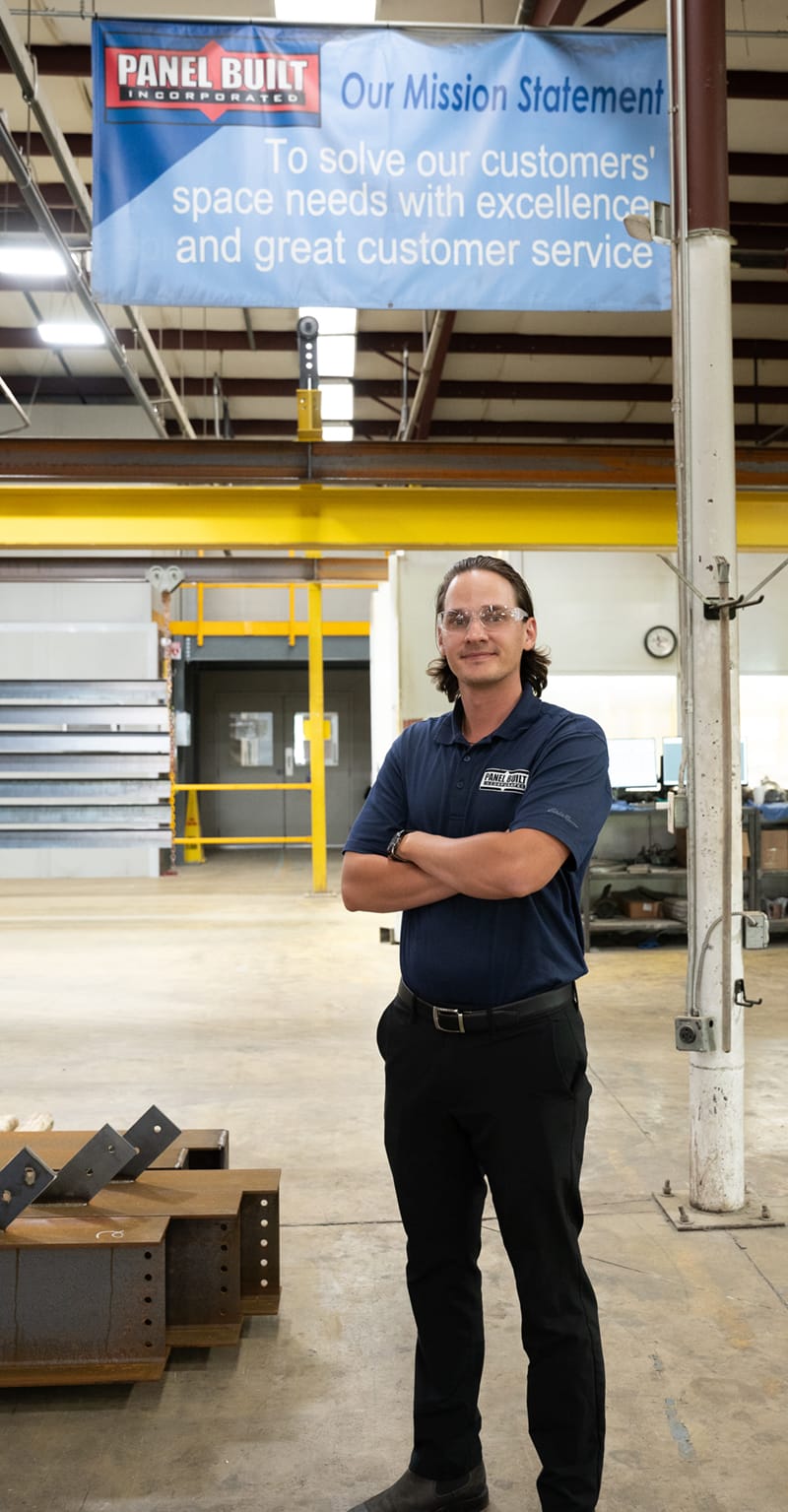
When Eliyah Ryals started his career at Panel Built, the company employed less than 100 people. Today, the Panel Built team is at 350, and there’s no sign of anything slowing down.
Eliyah and his sales team often field over 60 leads per day, and they routinely handle projects well over $1 million in value.
Looking back on the time he spent getting his hands dirty as an installer, Eliyah acknowledges the value of that kind of hands-on training. It allows him to answer every question his customers might pose, but it also allows him to provide another level of technical mentorship to his own sales team.
“While I wouldn’t have chosen this path to where I am today, now that I’m here, I wouldn’t change a thing.”
What's Next?
You could say that the fast pace of our modern world is a big part of the rapid growth Panel Built has seen so far. Instead of taking weeks or months to create the structures their clients need to operate at optimal levels, Panel Built can deliver them in weeks or even days.
“We’ve had clients ask us to complete and install over a weekend,” says Ryals, “and we find a way to make it happen.”

In fact, the company prides itself on tackling jobs that many others would consider impossible, and Eliyah Ryals and his can-do attitude backed by flexibility, adaptability, and the willingness to make decisions when they need to be made are a big part of that.
“I’m fully committed to helping Panel Built grow. Whether that means developing new products or opening new manufacturing facilities, or anything else we need to do."
When you consider how far the company and Ryals have come over the past few years, there’s very little doubt that they’ll both meet those goals.
About the Author: Tamara Aspeling is a published author and freelance writer who specializes in construction and writes for print and web. She’s also a trained estimator and project manager with over 20 years of industry experience. You can reach her at www.theconstructionwriter.ca or words@theconstructionwriter.ca.
More from Modular Advantage
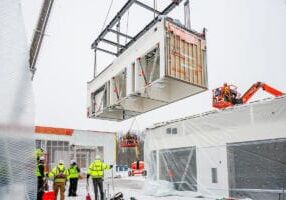
Mind the Gap: The Interface Between Onsite and Offsite Construction
Every design for manufacture and assembly (DfMA) project — modular, mass timber, or panelized — is really two projects joined at a seam. One is built in a controlled factory to millimeter tolerances; the other in the field, in weather, to the looser tolerances of poured concrete and human hands. Between them sits an interface: where the factory’s precision meets the site’s reality.
Rules, Rails & Repeatability: Applying DfMA to Modular Healthcare
DfMA offers several advantages for healthcare projects, with faster delivery among the most valuable. Schedule matters when building new facilities, expanding campuses, renovating existing space or bringing care closer to communities that need it.
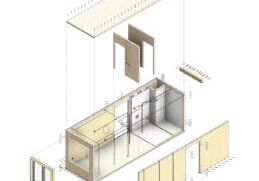
Precision and Possibility: Demands of DfMA and What Modular Mass Timber Makes Possible
Mass timber does not automatically create an efficient modular building. Its precision makes early coordination more important: fabricated components will accurately reproduce both the team’s solutions and its mistakes. The material’s advantages are realized only when supported by an equally precise design and delivery process.
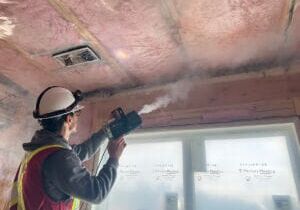
Catch It in the Factory, Not in the Field: Smarter Testing for Modular Builds
Integrating watertightness and airtightness testing into factory workflows transforms quality assurance from a reactive process into a proactive commissioning strategy. It ensures that every module shipped is field ready and resilient for transportation while also supporting the ability of the modular construction industry to make buildings better.
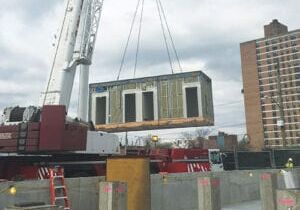
Modular Construction Contracts: Key Considerations for Successful Canadian Projects
Starting a modular project with a well-developed contract protects both the owner and the contractor. It will help keep the project on track and on budget, and it will improve quality from the factory floor to final installation on-site.
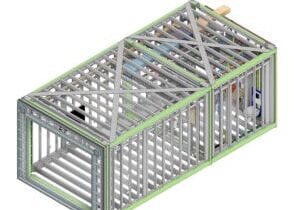
Modular by Design: Turning Architecture into a Manufacturing System
Modular construction is often presented as a faster way to build. Speed, however, is only one part of its value. The larger opportunity is to create a coordinated design and production system that improves quality, reduces uncertainty, and allows a building to move efficiently from concept design through manufacturing, transportation, installation, and completion.
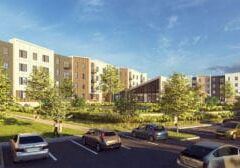
Repeatability Begins with Trust: What Alora at Dry Creek Reveals About Scaling Modular Housing
Alora at Dry Creek, a 329-unit, multifamily community comprising five four-story buildings in Centennial, Colorado, demonstrates how repeatable design, standardized manufacturing and early collaboration can work together to create a model that is not only faster to deliver, but easier to replicate across future projects.

T.R. Arnold: The Art of Third-Party Inspections
T.R. Arnold (TRA), a third-party inspection company in Elkhart, Indiana, contracts with modular manufacturers across the US. Manufacturers register with each state to which they intend to send their modules and may be required to hire a third-party inspection company.
Creating an ‘Ecosystem for Innovation:’ 50+ Years of Modular Construction Oversight in Virginia
Virginia’s modular building program began in 1973, with the implementation of the Virginia Industrialized Building Unit and Mobile Home Safety Regulations. Now it’s leading the country in modular code adoption.
Understanding Thermal Barriers Compliance Methods & Emerging NFPA-275 Foam Plastic Technologies
New fire barrier technologies are improving total costs and margins in major areas of construction, such as commercial, government, union and prevailing wage projects. These benefits translate into other large fringe areas, such as agriculture, commercial cold storage facilities, grow houses, outbuildings, military and aviation hangars.