Art²Park – A Creative Application of Modular and Conventional Construction

George W. Runkle III, MS, PE, SE, is the president of Runkle Consulting, Inc.
In the heart of downtown Orlando, an innovative project called Art²Park is redefining how modular and conventional construction methods can be integrated to create dynamic, community-driven spaces.
What is Art²Park?
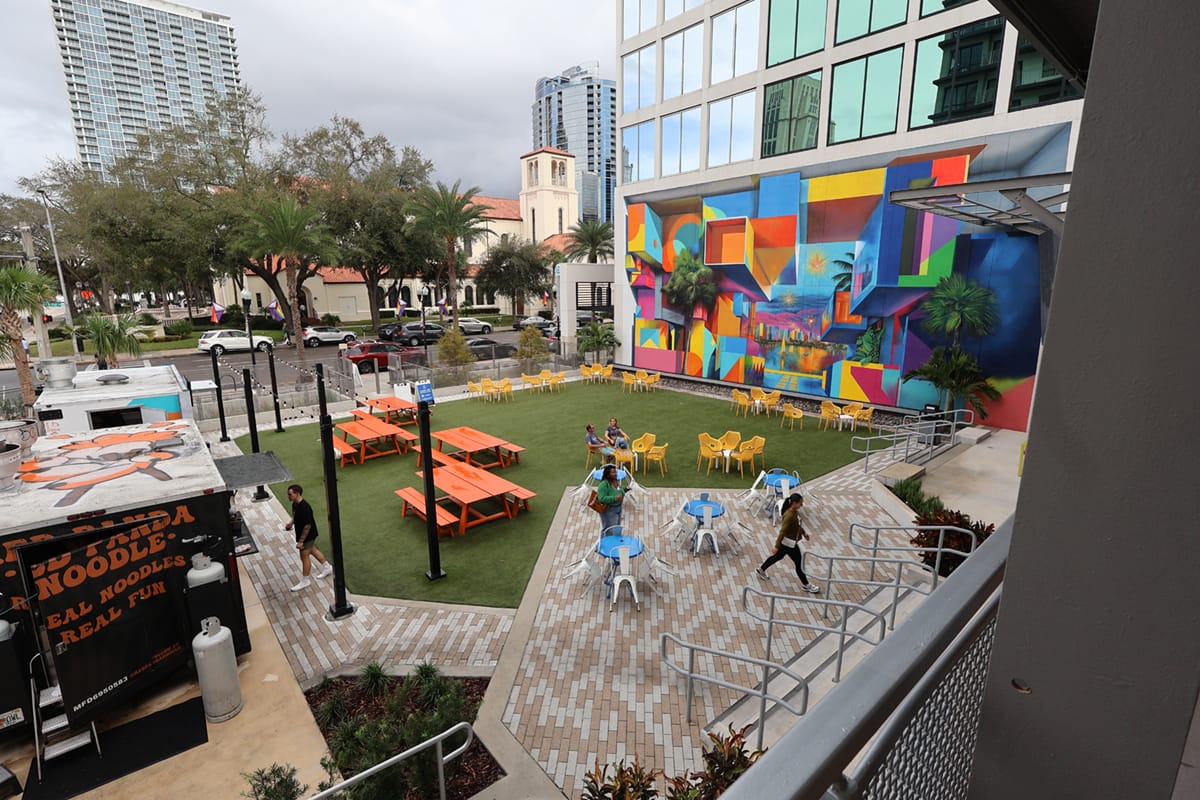
As described on the Downtown Orlando website, “Art² is an urban pocket park in downtown Orlando featuring food vendors, craft beverages, outdoor seating, and murals celebrating local art.”
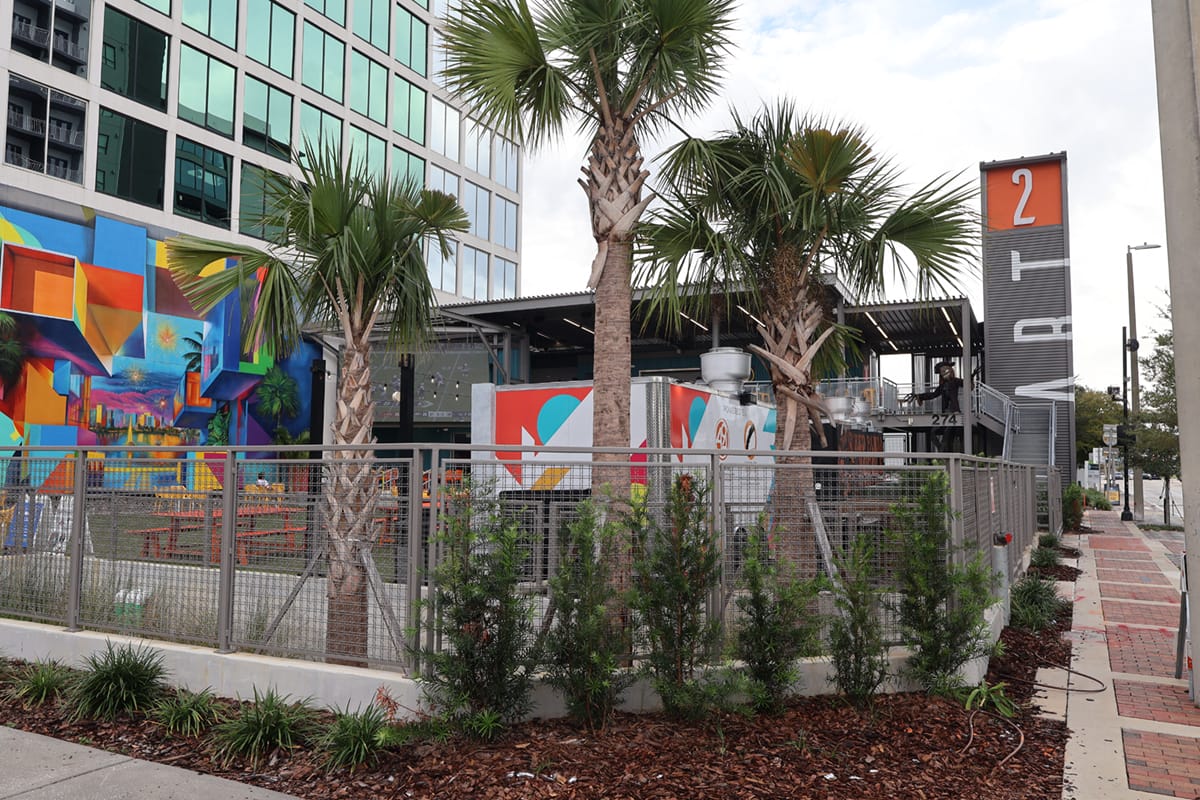
The project serves as both a destination and a statement piece—combining art, food, and social gathering within a compact, efficiently designed space. What makes Art²Park unique is not just its program, but its construction: it fuses repurposed modular shipping containers with traditional structural steel and concrete systems, creating a visually striking and structurally robust urban park building.
How It Was Constructed
The design and construction of Art²Park reflect a sophisticated blending of modular and conventional techniques, demonstrating how the two can complement each other in both form and function.
Modular Core
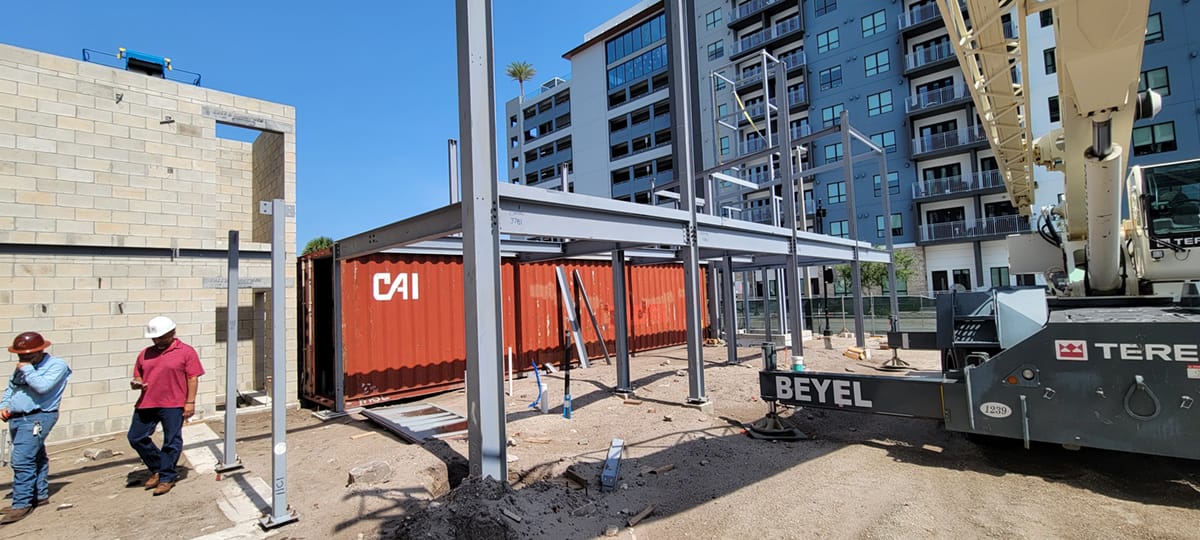
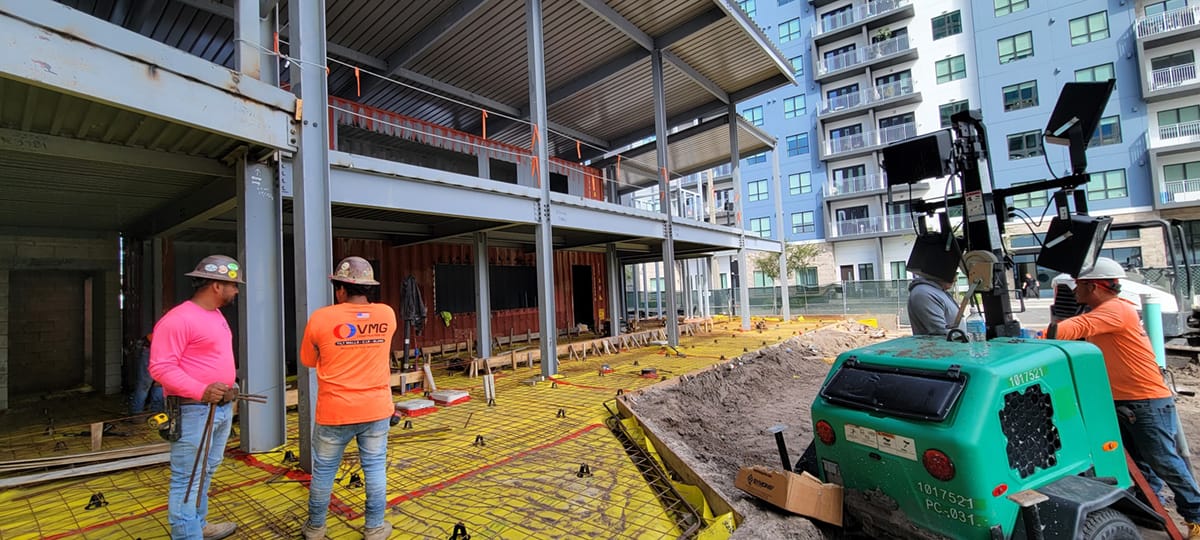
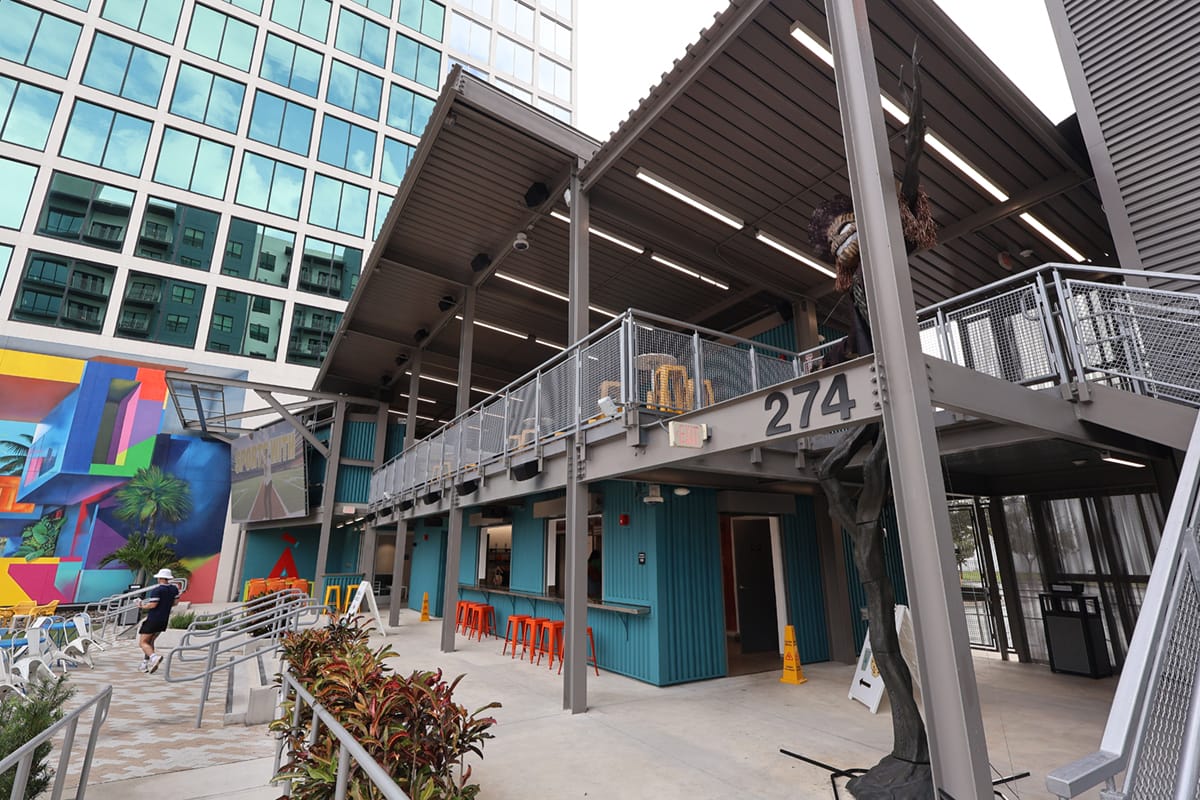
At the heart of the project lies the modular core, built from repurposed shipping containers. These containers form the central portion of the two-story structure, housing concession spaces and other service areas. More than just functional enclosures, the containers serve as the structural backbone of the entire complex.
Conventional Framing and Decks
The building features expansive decks that create open, elevated gathering spaces:
- The upper deck is framed in structural steel with a composite concrete/steel deck system, providing both strength and stiffness.
- The lower level consists of a slab-on-grade foundation supporting open seating and circulation areas.
- A CMU stairwell provides enclosed access, while an open stairwell maintains visual openness.
- A steel-framed elevator shaft with light-gauge steel panel enclosures provides vertical circulation and accessibility.
Program and Layout
First Floor Enclosures:
- Concession/dining area
- Restrooms
- Art store
- Stairs and utility rooms
Second Floor Enclosures:
- Concession area
- Storage
- Restroom
- Stairs
- Audio-visual room
A distinctive feature is the large outdoor screen, suspended from a cantilevered steel frame, which anchors the park’s entertainment and event space.
Structural Synergy Between Modular and Conventional Systems
One of the most significant engineering achievements of Art²Park is how the modular portion of the structure contributes to the performance of the entire building. The shipping containers provide critical lateral resistance, acting as the primary wind-resisting system for the complex.
The second-floor deck functions as a rigid diaphragm, transferring lateral forces efficiently to the container walls. This approach allowed the design team to eliminate the need for conventional cross bracing or moment frames, substantially reducing steel tonnage and foundation demands. The result was a more open, cost-effective, and visually appealing design.
Even though the modular portion represents a relatively small share of the building’s overall footprint, it provides nearly all of the lateral stability—demonstrating the structural advantages of integrating container modules strategically within hybrid construction.
Why Containers?
For this project, the City chose modular/container construction due to the perceived temporary nature of the construction type. Because this project is located in the heart of Downtown on a site suited to a high-rise, it was meant to be temporary, with the understanding that temporary could last up to 20 + years. Containers were the logical vessel; they provided the durability and character the project deserved.
“For us,” said Max Brito, project architect at Rhodes + Brito Architects in Orlando, “the most significant benefit was the industrial aesthetic inherent to the material, along with the cost savings that come with a fully intact structural shell.”
Had traditional construction been chosen, “it would have been a challenge to match the containers' character. The building's size would probably have grown, and unfortunately, taken more space from the adjacent urban park. The park creates an outdoor living room that can morph into other uses, such as a concert space. So, the space is very valuable.”
Advice for Developers
“It's imperative that you hire a structural engineer with experience with container construction,” says Brito. “This will ensure that the designers take into account the nuances of container construction and understand its limitations. Efficiency comes from accommodating the nature of the container rather than trying to make it into something it is not. Also, the developer needs to be mindful of the spatial limitations and ensure the project's programming can adapt to those parameters.”
A New Model for Urban Design
Art²Park is more than a park building—it’s a demonstration of what modular construction can achieve when thoughtfully integrated with traditional materials. The use of shipping containers provided not only speed and sustainability benefits but also a powerful structural core that simplified and strengthened the rest of the building.
By combining engineering efficiency, architectural creativity, and community purpose, Art²Park stands as a model for the future of modular-conventional hybrid design in urban environments.
More from Modular Advantage
How Stack Modular Is Using AI to De-Risk Mid- to High-Rise Modular Construction
Artificial intelligence is no longer a future concept in modular construction—it is already reshaping how complex buildings are evaluated, designed, and delivered.

Gearing Up for the 2026 World of Modular
The Modular Building Institute (MBI) is bringing its global World of Modular (WOM) conference and tradeshow back to Las Vegas in April, and with it comes some of the industry’s best opportunities for networking, business development, and education.
New High-Rise Modular Apartment in Abu Dhabi Points Toward the Future of Multifamily Construction
Eagle Hills International Properties chose the BROAD Holon Building for a 16-story market rate apartment building in Zayed City, a central business district of Abu Dhabi. The project highlights the potential of the Holon system of volumetric modular construction to accelerate housing delivery.
MBI Announces First Ever Industry Apprenticeship Program in Collaboration with Marshall Advanced Manufacturing Center
MBI recently agreed to partner with Marshall Advanced Manufacturing Center (MAMC) to provide bona fide USDOL-approved apprenticeship programs for the industry.
AoRa Development Aims for New York’s First Triple Net Zero Building Using Modular Methods
More cities are providing funding for newer infrastructure projects as long as they meet sustainability requirements. This is how modular can fit the bill, thanks to its lower waste production.
Developers and Designers: Lessons Learned with Modular Design
Modular construction is attractive to many developers because sitework and module construction can occur simultaneously, shortening the schedule and reducing additional costs.
UTILE: Putting Modular Building on a Fast Track
In Quebec, UTILE is taking the lead in creating affordable modular buildings to help decrease the student housing shortage. During the process, the company discovered what it takes to make the transition to modular building a success.
Sobha Modular Teaches Developers How to Think Like Manufacturers
With its 2.7 million square foot factory in UAE, Sobha Modular is bringing both its high-end bathroom pods to high-end residences to Dubai while developing modular projects for the U.S. and Australia.
RoadMasters: Why Early Transport Planning is Make-or-Break in Modular Construction
In modular construction, transportation is often called the “missing link.” While it rarely stops a project outright, poor planning can trigger costly delays, rerouting, and budget overruns.
Navigating Risk in Commercial Real Estate and Modular Construction: Insights from a 44-Year Industry Veteran
Modular projects involve manufacturing, transportation, and on-site assembly. Developers must understand exactly what they are responsible for versus what they subcontract. Risk advisors should research the developer’s contractors, subcontractors, and design-build consultants—especially the modular manufacturer.