
Scalable & Smart EV Charging Containers
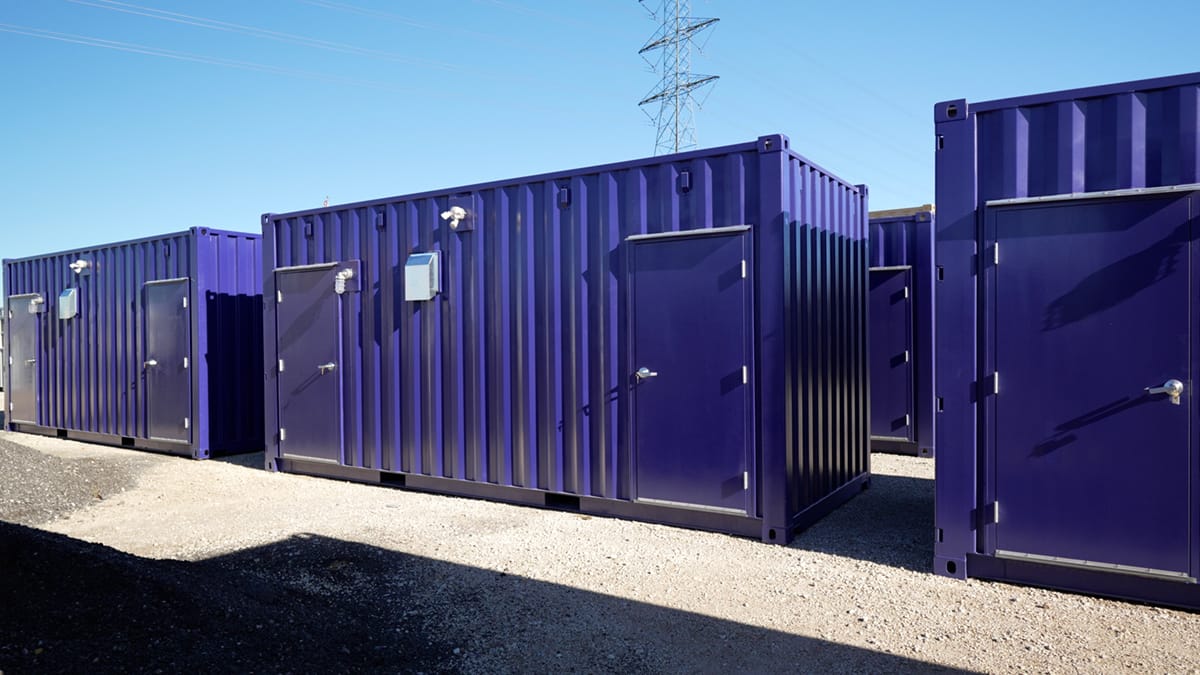
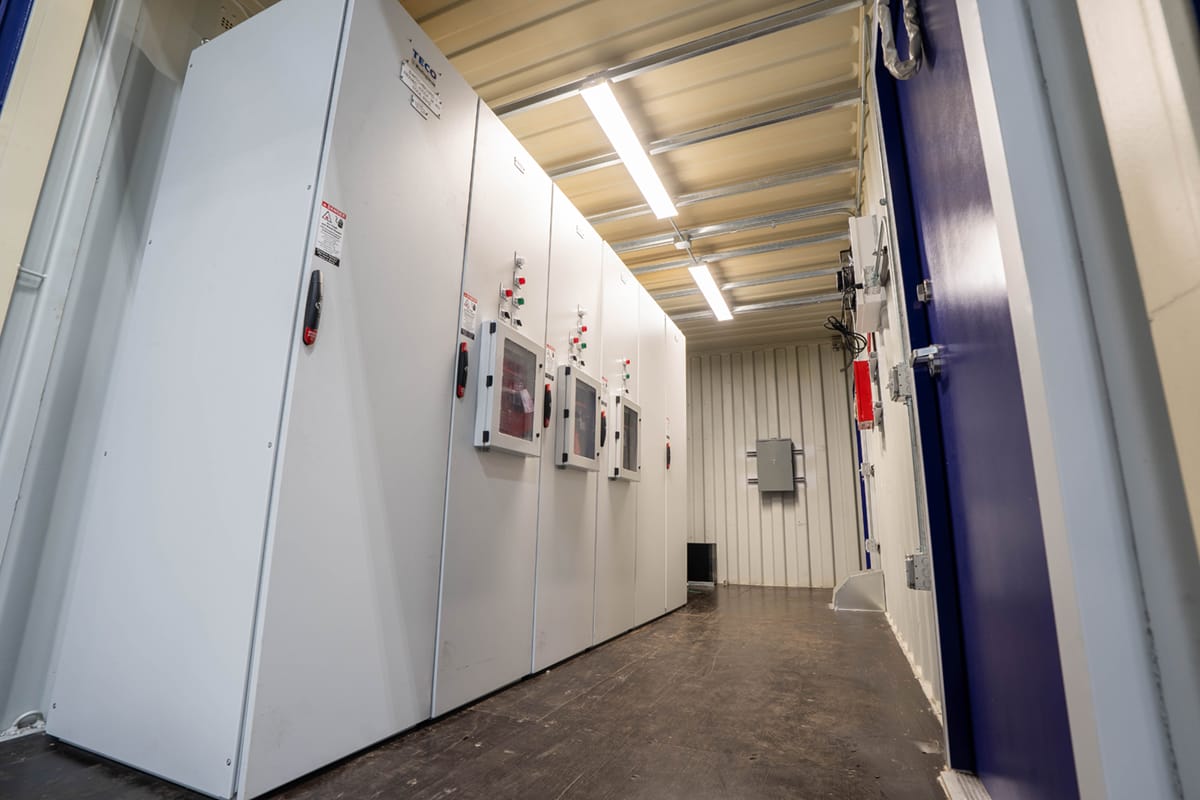
Key features include:
-
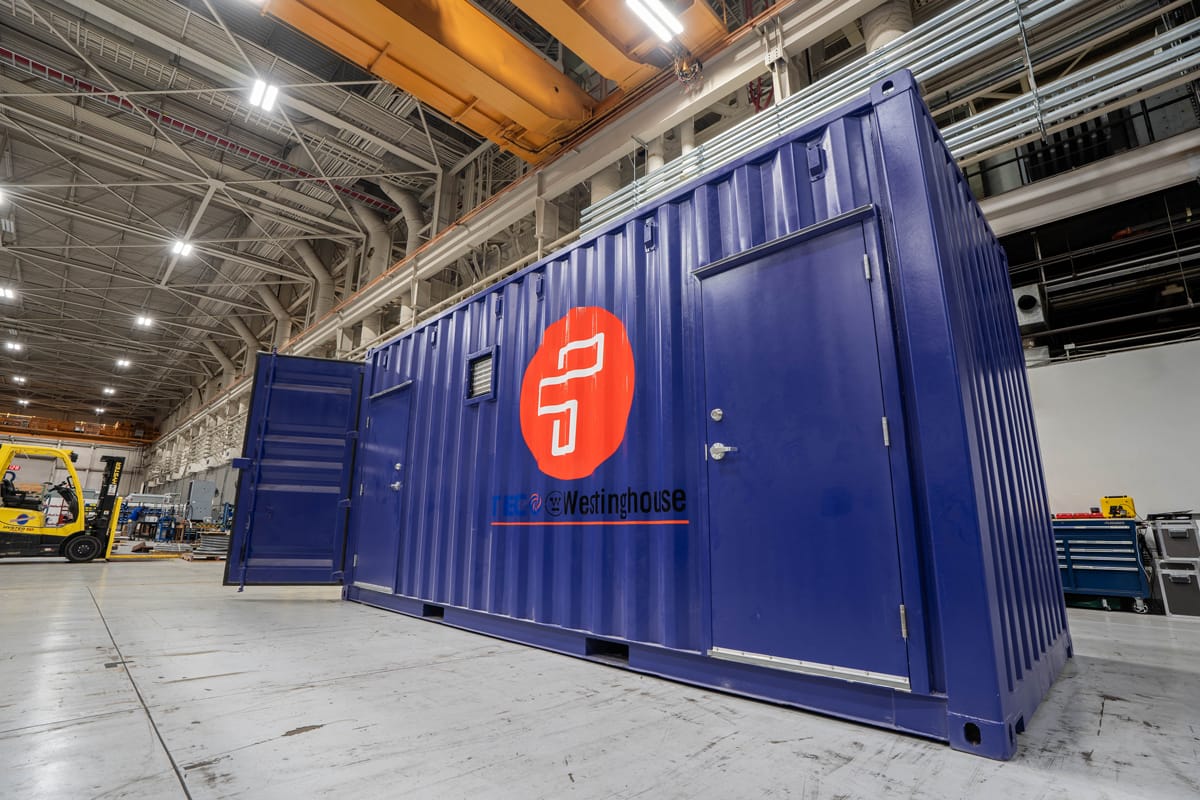
20-foot one-trip standard shipping container
-
Custom paint color
-
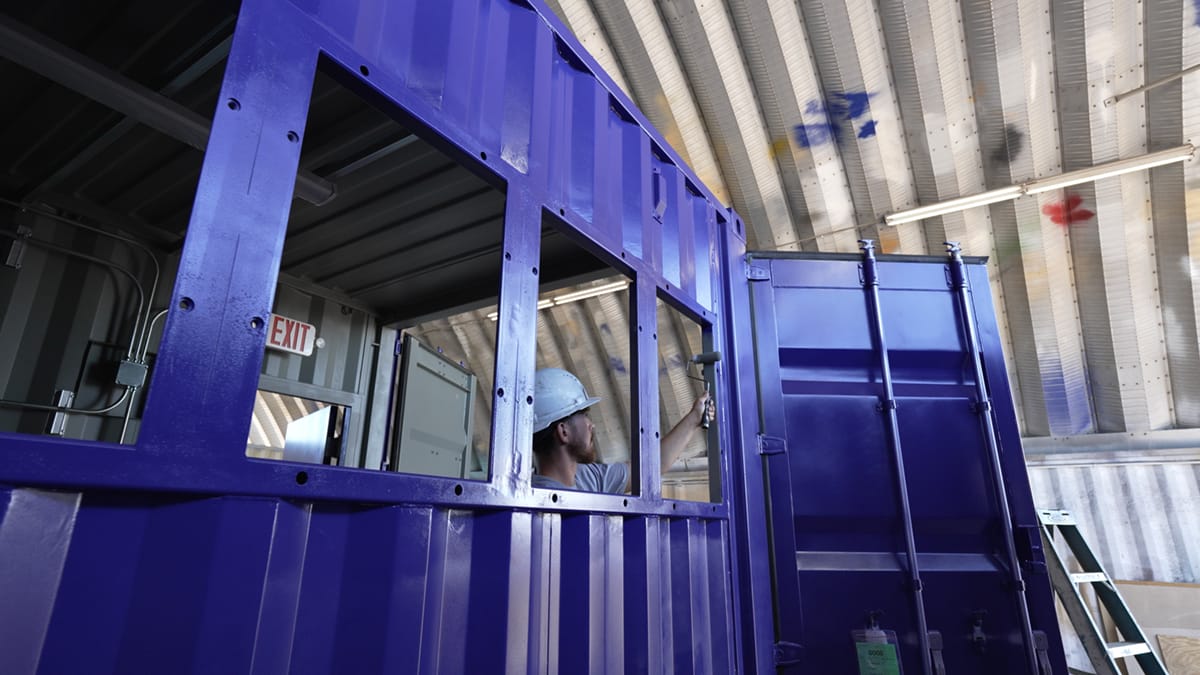
Precision-cut framed openings
-
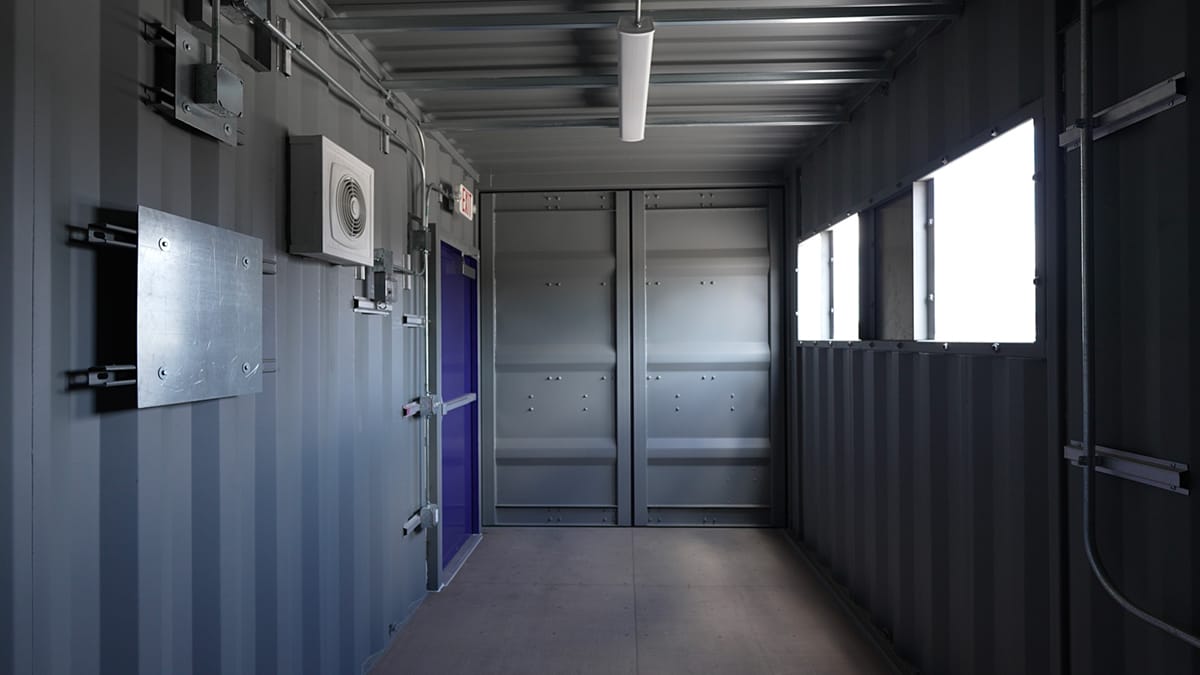
Electrical panels, wiring, and lighting
-
Supplemental ventilation
Powering EV Fleets with NexE Container Enclosures
NexE, the green energy sister company of TECO-Westinghouse, partnered with Falcon Structures to design and build portable enclosures for EV fleet operators interested in re-deployable units that support EV charging depots with significant cost savings. The goal: create durable, relocatable EV infrastructure solutions that sidestep the constraints of traditional construction.
Overcoming Traditional Infrastructure Limits
To meet the growing demands of their fleet customers, NexE needed a robust enclosure that could house all the necessary electrical equipment, deploy quickly, relocate easily, and withstand a wide range of environmental conditions.
Traditional construction wasn’t an option, especially on leased land or in dense urban areas where trenching isn’t feasible. Installation time was another key challenge. For EV fleet operators, pre-assembled, quick-connect solutions are critical to staying on schedule and avoiding costly delays.
Durability was another concern. From Canadian winters to Florida humidity, the enclosure had to protect sensitive equipment in every climate the fleet might operate in.
NexE solves these challenges with a compact, modular system that streamlines deployment without compromising safety, functionality, or code compliance to meet their customer’s needs.
To bring the full solution to life, they needed a reliable partner with proven experience in fabricating durable, customized enclosures. That is where Falcon stepped in, providing a robust container built to NexE’s specifications with precision cutouts and structural modifications to support the electrical design without delay.
“Falcon Structures was an experienced and responsive container expert for this project. From the start, their team was committed to our vision for an EV charging enclosure. They handled structural modifications, openings, and climate control exactly to spec, which made it easy for us to install our equipment without compromise. It was an excellent collaboration.”
- NexE
Container Concept to EV-Ready Prototype
After touring Falcon’s container manufacturing facility outside of Austin, Texas, NexE collaborated with Falcon’s engineering team to design a 20-foot modified container tailored to the project’s exact requirements.
Falcon delivered the prototype container with custom cutouts, framed openings, mounted electrical panels and wiring, lighting, and ventilation. NexE, in collaboration with their partners, engineered the EV infrastructure to fit within the 20-foot container, which is equipped with 2000A switchgear, dual power inputs, and a smart on-site communication system capable of powering up to 50 EV chargers simultaneously.
After its debut at the Advanced Clean Transportation (ACT) Expo, the NexE team was able to ship the container to its first destination in Brooklyn, New York. Nearly turnkey, the partnership between NexE and Falcon Structures delivered a portable and durable prototype for scalable and smart EV charging.
More from Modular Advantage
How Stack Modular Is Using AI to De-Risk Mid- to High-Rise Modular Construction
Artificial intelligence is no longer a future concept in modular construction—it is already reshaping how complex buildings are evaluated, designed, and delivered.

Gearing Up for the 2026 World of Modular
The Modular Building Institute (MBI) is bringing its global World of Modular (WOM) conference and tradeshow back to Las Vegas in April, and with it comes some of the industry’s best opportunities for networking, business development, and education.

New High-Rise Modular Apartment in Abu Dhabi Points Toward the Future of Multifamily Construction
Eagle Hills International Properties chose the BROAD Holon Building for a 16-story market rate apartment building in Zayed City, a central business district of Abu Dhabi. The project highlights the potential of the Holon system of volumetric modular construction to accelerate housing delivery.
MBI Announces First Ever Industry Apprenticeship Program in Collaboration with Marshall Advanced Manufacturing Center
MBI recently agreed to partner with Marshall Advanced Manufacturing Center (MAMC) to provide bona fide USDOL-approved apprenticeship programs for the industry.
AoRa Development Aims for New York’s First Triple Net Zero Building Using Modular Methods
More cities are providing funding for newer infrastructure projects as long as they meet sustainability requirements. This is how modular can fit the bill, thanks to its lower waste production.
Developers and Designers: Lessons Learned with Modular Design
Modular construction is attractive to many developers because sitework and module construction can occur simultaneously, shortening the schedule and reducing additional costs.
UTILE: Putting Modular Building on a Fast Track
In Quebec, UTILE is taking the lead in creating affordable modular buildings to help decrease the student housing shortage. During the process, the company discovered what it takes to make the transition to modular building a success.

Sobha Modular Teaches Developers How to Think Like Manufacturers
With its 2.7 million square foot factory in UAE, Sobha Modular is bringing both its high-end bathroom pods to high-end residences to Dubai while developing modular projects for the U.S. and Australia.
RoadMasters: Why Early Transport Planning is Make-or-Break in Modular Construction
In modular construction, transportation is often called the “missing link.” While it rarely stops a project outright, poor planning can trigger costly delays, rerouting, and budget overruns.
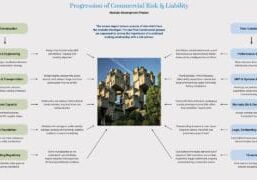
Navigating Risk in Commercial Real Estate and Modular Construction: Insights from a 44-Year Industry Veteran
Modular projects involve manufacturing, transportation, and on-site assembly. Developers must understand exactly what they are responsible for versus what they subcontract. Risk advisors should research the developer’s contractors, subcontractors, and design-build consultants—especially the modular manufacturer.