
Arctic Security and Sovereignty: The Role of Modular Structures

Ali Salman is the Director of Strategic Growth Marketing & Sales at Northgate Industries.
The Arctic, once considered a remote and largely inaccessible region, has now emerged as a critical geopolitical hotspot. As climate change accelerates the melting of ice, the Arctic is revealing new navigational routes and vast untapped natural resources, making it a focal point of global strategic interest. This article delves into the geopolitical dynamics of Arctic security, particularly for Canada and NATO, while also exploring how modular structures can play a pivotal role in enhancing security and sovereignty in this increasingly contested region.
The Strategic Significance of the Arctic
The Arctic holds approximately 13% of the world’s undiscovered oil and 30% of its undiscovered natural gas reserves, according to the United States Geological Survey (USGS). The melting ice has made these resources more accessible, sparking interest and competition from Arctic and non-Arctic states alike. For Canada, the Arctic is not only a resource-rich area but also a critical component of its national sovereignty. The Canadian government’s Arctic policy framework underscores the importance of asserting sovereignty and maintaining a strong presence in the region to safeguard its national interests.
NATO has similarly recognized the growing importance of the Arctic in its strategic concept. The alliance’s recent focus on the Arctic comes in response to the increasing military activities of Russia, which has been fortifying its Arctic presence with new bases, icebreakers, and advanced weapons systems. Russia’s ambitions in the Arctic, particularly its control over the Northern Sea Route (NSR), pose significant challenges to the security of the region, raising concerns among NATO members about the potential for conflict.
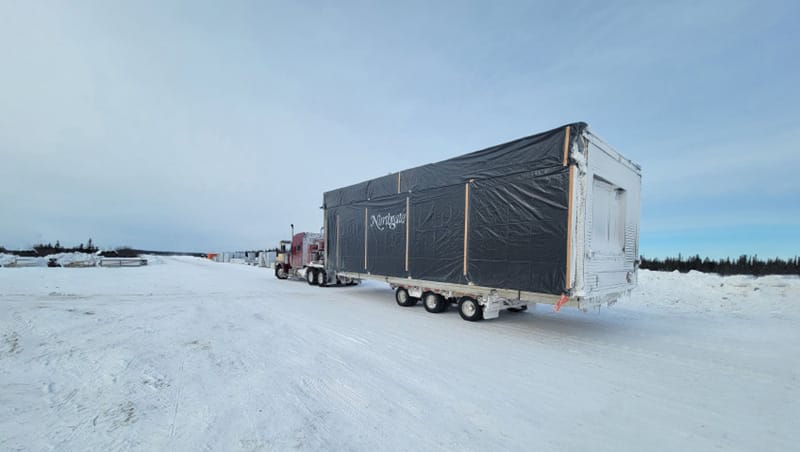
Northgate Industries transports modular units through Arctic terrain.
China, although a non-Arctic state, has also expressed interest in the Arctic, framing itself as a “near-Arctic state” and seeking to expand its influence through initiatives like the Polar Silk Road. China’s growing presence in the Arctic, including investments in infrastructure and partnerships with Arctic states, has added another layer of complexity to the region’s security dynamics.
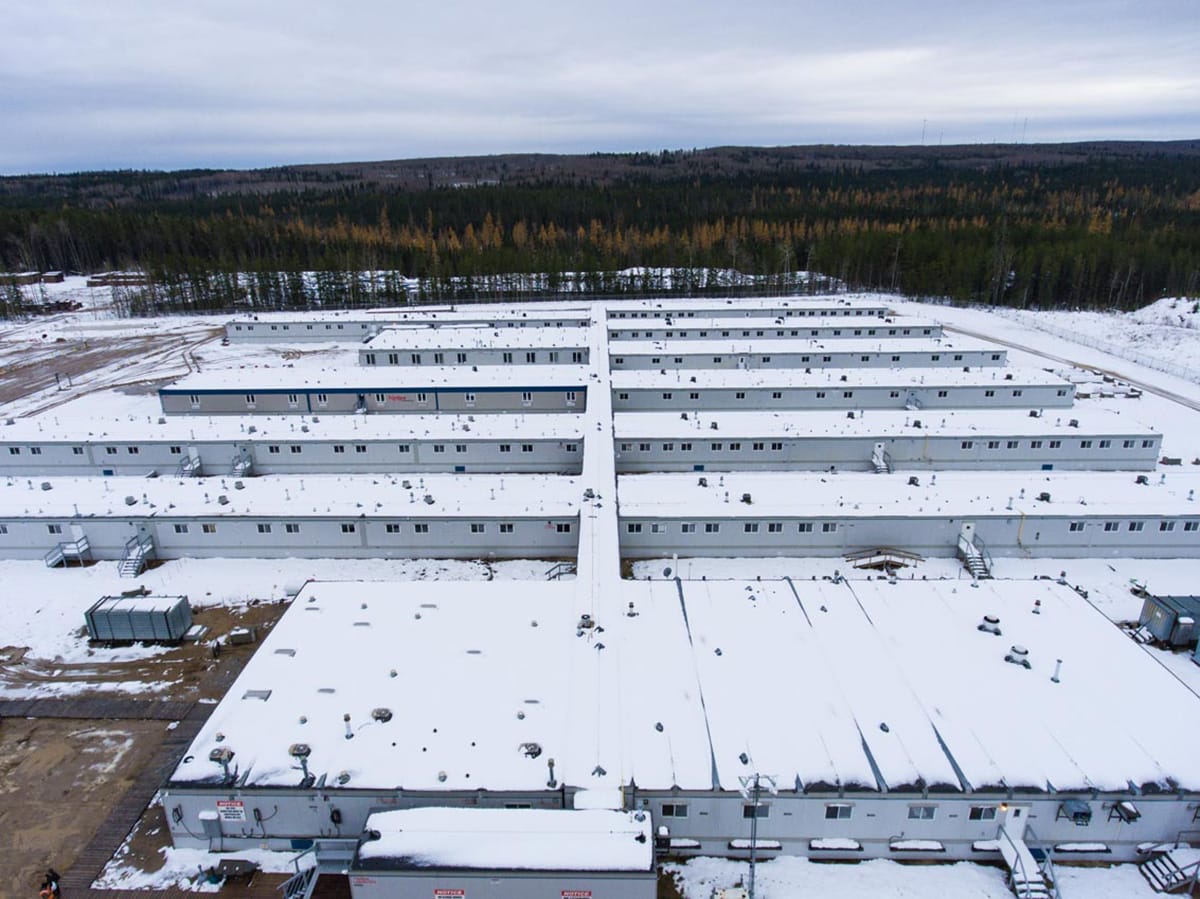
During the Trident Juncture 2018 exercise, NATO employed modular units to provide logistical support in the challenging Norwegian Arctic environment.
The Strategic Significance of the Arctic
While the geopolitical challenges in the Arctic are immense, the physical environment of the region presents its own set of obstacles. The harsh climate, extreme weather conditions, and logistical difficulties make it challenging to establish and maintain a sustained presence in the Arctic. In this context, modular structures offer a practical and effective solution, providing the flexibility, speed, and resilience needed for operations in such a remote and hostile environment.
Rapid Deployment and Flexibility
Modular structures are prefabricated and can be rapidly deployed to remote locations, a crucial advantage in the Arctic, where traditional construction is hampered by extreme weather and limited building seasons. Northgate Modular, a leader in modular construction, has demonstrated that modular units can be assembled 30-50% faster than traditional methods, making them ideal for quickly establishing a presence in the Arctic.
Scalability and Adaptability
Modular structures are inherently scalable, allowing for the gradual expansion of facilities as needed. This flexibility is particularly beneficial for military and security operations, where the size and scope of missions can change rapidly. The ability to reconfigure or relocate modular units with relative ease ensures that operations can adapt to shifting geopolitical and environmental conditions.
Sustainability and Efficiency
The Arctic environment necessitates sustainable practices, and modular structures can be designed with energy-efficient systems that reduce the carbon footprint of operations. The use of insulated panels and renewable energy sources can significantly lower heating costs, which is a major consideration in the Arctic. According to the Arctic Institute, these energy-efficient designs can reduce energy consumption by up to 40%, making modular structures both economically and environmentally viable.
Cost-Effectiveness
The cost savings associated with modular construction are substantial, especially in the Arctic, where the logistical challenges of transporting materials and labor can drive up costs. A study by McKinsey & Company found that modular construction can reduce costs by up to 20% compared to traditional methods. These savings are particularly important for military and security agencies operating in the Arctic, where budgets are often constrained by the high costs of logistics and infrastructure.
Case Studies: Modular Structures in Action
Canadian Armed Forces (CAF)
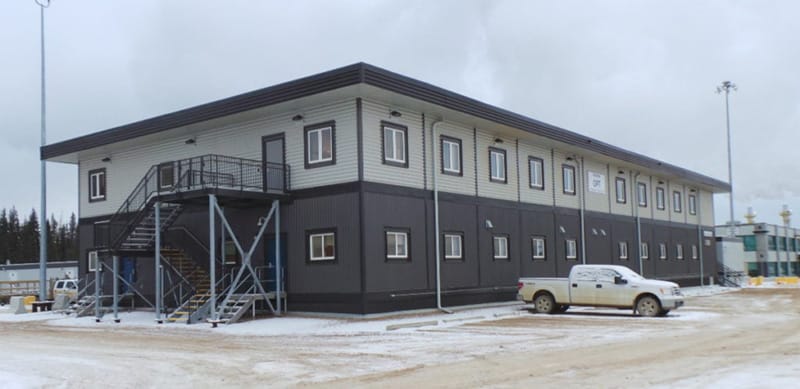
The Canadian Armed Forces have utilized modular structures in several Arctic operations, demonstrating their practical benefits. The Nanisivik Naval Facility on Baffin Island is a key example. This facility, which supports the Royal Canadian Navy’s Arctic operations, was constructed using modular methods, allowing for rapid deployment and ensuring that the structure could withstand the harsh Arctic conditions. The facility serves as a critical logistics hub, enabling Canada to maintain a continuous presence in the region.
NATO Operations
NATO has also recognized the potential of modular structures in enhancing its operational capabilities in the Arctic. During the Trident Juncture 2018 exercise, NATO employed modular units to provide logistical support in the challenging Norwegian Arctic environment. This exercise highlighted the adaptability and resilience of modular construction, showcasing its value in supporting NATO’s strategic objectives in the region.
Security Agencies
Beyond military applications, modular structures are invaluable for other security agencies tasked with monitoring and responding to threats in the Arctic. The Canadian Coast Guard, for example, has used modular units to support search and rescue operations across the Arctic. These structures provide reliable, quickly deployable shelters, ensuring that personnel have the infrastructure needed to respond effectively to emergencies.
Geopolitical Implications of Arctic Security
The Arctic is becoming an increasingly contested region, with significant implications for global security. The growing interest from Russia and China, combined with the region’s vast natural resources and strategic maritime routes, has transformed the Arctic into a potential flashpoint for international conflict. For Canada and NATO, the challenge is to develop a security strategy that can effectively counter these threats while maintaining stability in the region.
The role of modular structures in this strategy is clear: they provide the infrastructure necessary to establish and sustain a presence in the Arctic. However, modular structures are just one component of a broader security framework that must also include military preparedness, diplomatic engagement, and international cooperation.
As the Arctic continues to warm and its resources become more accessible, the need for a coordinated and comprehensive approach to security in the region will only grow.
Modular structures, with their ability to rapidly deploy and adapt to changing conditions, will be a key element of this strategy, enabling Canada and NATO to maintain a strong and adaptable presence in the Arctic.
Conclusion
The Arctic’s evolving geopolitical landscape demands innovative solutions to complex security challenges. For Canada and NATO, maintaining sovereignty and security in the Arctic is not just a matter of national interest but a critical component of global stability.
More from Modular Advantage
How Stack Modular Is Using AI to De-Risk Mid- to High-Rise Modular Construction
Artificial intelligence is no longer a future concept in modular construction—it is already reshaping how complex buildings are evaluated, designed, and delivered.

Gearing Up for the 2026 World of Modular
The Modular Building Institute (MBI) is bringing its global World of Modular (WOM) conference and tradeshow back to Las Vegas in April, and with it comes some of the industry’s best opportunities for networking, business development, and education.

New High-Rise Modular Apartment in Abu Dhabi Points Toward the Future of Multifamily Construction
Eagle Hills International Properties chose the BROAD Holon Building for a 16-story market rate apartment building in Zayed City, a central business district of Abu Dhabi. The project highlights the potential of the Holon system of volumetric modular construction to accelerate housing delivery.

MBI Announces First Ever Industry Apprenticeship Program in Collaboration with Marshall Advanced Manufacturing Center
MBI recently agreed to partner with Marshall Advanced Manufacturing Center (MAMC) to provide bona fide USDOL-approved apprenticeship programs for the industry.
AoRa Development Aims for New York’s First Triple Net Zero Building Using Modular Methods
More cities are providing funding for newer infrastructure projects as long as they meet sustainability requirements. This is how modular can fit the bill, thanks to its lower waste production.
Developers and Designers: Lessons Learned with Modular Design
Modular construction is attractive to many developers because sitework and module construction can occur simultaneously, shortening the schedule and reducing additional costs.

UTILE: Putting Modular Building on a Fast Track
In Quebec, UTILE is taking the lead in creating affordable modular buildings to help decrease the student housing shortage. During the process, the company discovered what it takes to make the transition to modular building a success.

Sobha Modular Teaches Developers How to Think Like Manufacturers
With its 2.7 million square foot factory in UAE, Sobha Modular is bringing both its high-end bathroom pods to high-end residences to Dubai while developing modular projects for the U.S. and Australia.
RoadMasters: Why Early Transport Planning is Make-or-Break in Modular Construction
In modular construction, transportation is often called the “missing link.” While it rarely stops a project outright, poor planning can trigger costly delays, rerouting, and budget overruns.
Navigating Risk in Commercial Real Estate and Modular Construction: Insights from a 44-Year Industry Veteran
Modular projects involve manufacturing, transportation, and on-site assembly. Developers must understand exactly what they are responsible for versus what they subcontract. Risk advisors should research the developer’s contractors, subcontractors, and design-build consultants—especially the modular manufacturer.