
UNB OCRC Student Off-Site Design Competition Crowns 2023 Winners
For the third year in a row, the University of New Brunswick’s Off-Site Construction Research Centre (OCRC), a research group dedicated to optimizing alternate solutions to on-site construction, presented its Off-site Construction Student Design Competition. This competition—presented again by the Modular Building Institute (MBI)—showcased student design innovation in modular, prefabricated, panelized, and other types of off-site construction and featured entries from dozens of interdisciplinary collegiate teams across Canada.
The objective of the competition was simple: to introduce students to offsite construction and to encourage interdisciplinary collaboration. It was also an opportunity to showcase how offsite construction’s many benefits, including reduced construction timelines, improved safety, and improved construction quality, can benefit the construction industry.
The Challenge
For this most recent competition, teams were tasked with developing a modular design for a housing unit that will be ‘open source’ and be used by manufacturers to meet the demand for affordable housing in New Brunswick. The design needed to focus on a repeatable volumetric module that could be used to combat the “missing middle housing” problem.
The Winners
First Place: Transition
Team members: Kateryna Stokoz, Luke De Bartolo, Stefan Giro (Toronto Metropolitan University)
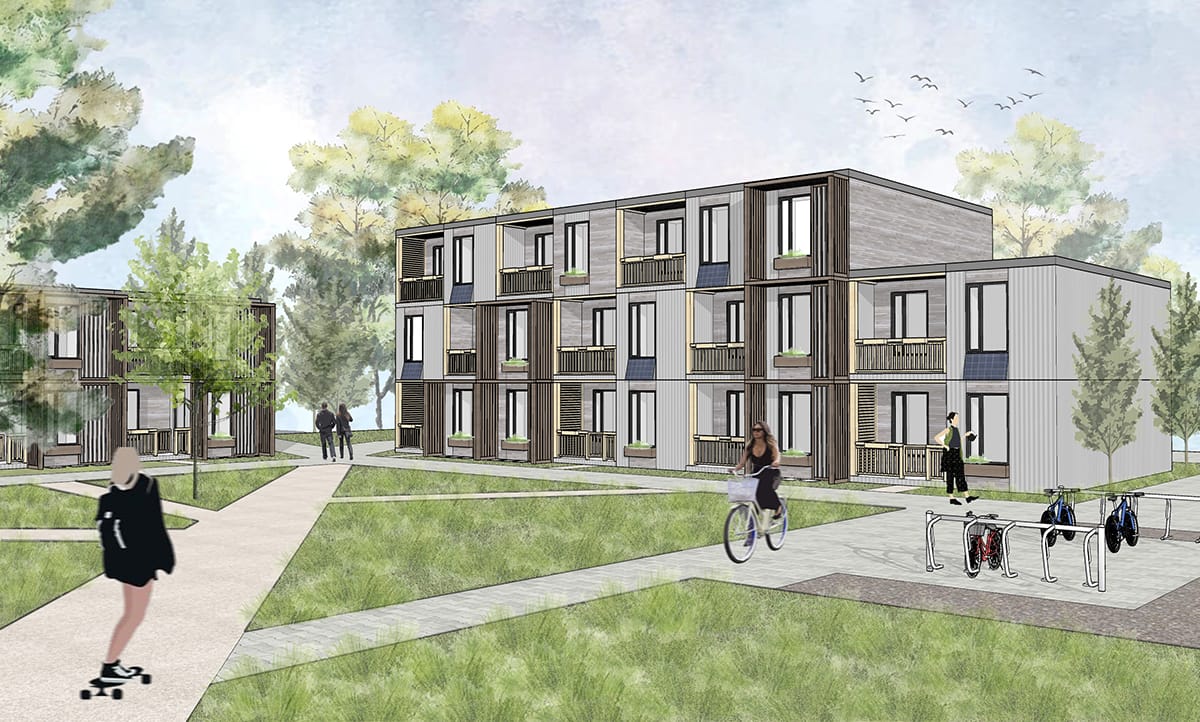
The first-place prize in 2023 went to Transition, a project from a three-student team from Toronto Metropolitan University. The team’s idea aims to revolutionize the concept of transitional housing for youth leaving the child welfare system. It goes beyond traditional social housing models, offering young individuals a nurturing space to grow and thrive.
“Our approach started with a thorough understanding of New Brunswick's specific needs for affordable housing – aiming for a tailored solution that also aligned with the principles of open-source development,” said team member Kateryna Stokoz. “When we learned about young adults' struggles leaving the child welfare system, it became clear that our focus should be on designing affordable housing specifically for this demographic.”
“We approached the design process in two parts: the individual units and the building complex,” continued team member Luke De Bartolo. “From the beginning, our vision for the building complex revolved around fostering a diverse community where different groups could coexist and mutually benefit from each other. We're talking about families next to older folks, doctors living near patients, and teachers among their students. Imagine a young adult who grew up in the foster system living among successful adults in this modular community. It's a setup where they can feel more included and have role models to look up to. For us, it was about creating a community where everyone benefits.”
“Participating in this competition was a great learning experience for our team,” said team member Stefan Giro. “It helped us gain a deeper understanding of modular housing. While developing our design, we discovered various logistical challenges and opportunities for creative problem-solving, from the initial stages to the on-site construction of modules.
“One significant lesson we've taken away is the crucial role of off-site modular construction in addressing housing shortages,” concluded Giro. “Our focus on New Brunswick highlighted the potential for adaptability of modular housing to be used in other areas facing housing needs more efficiently than traditional construction methods.”
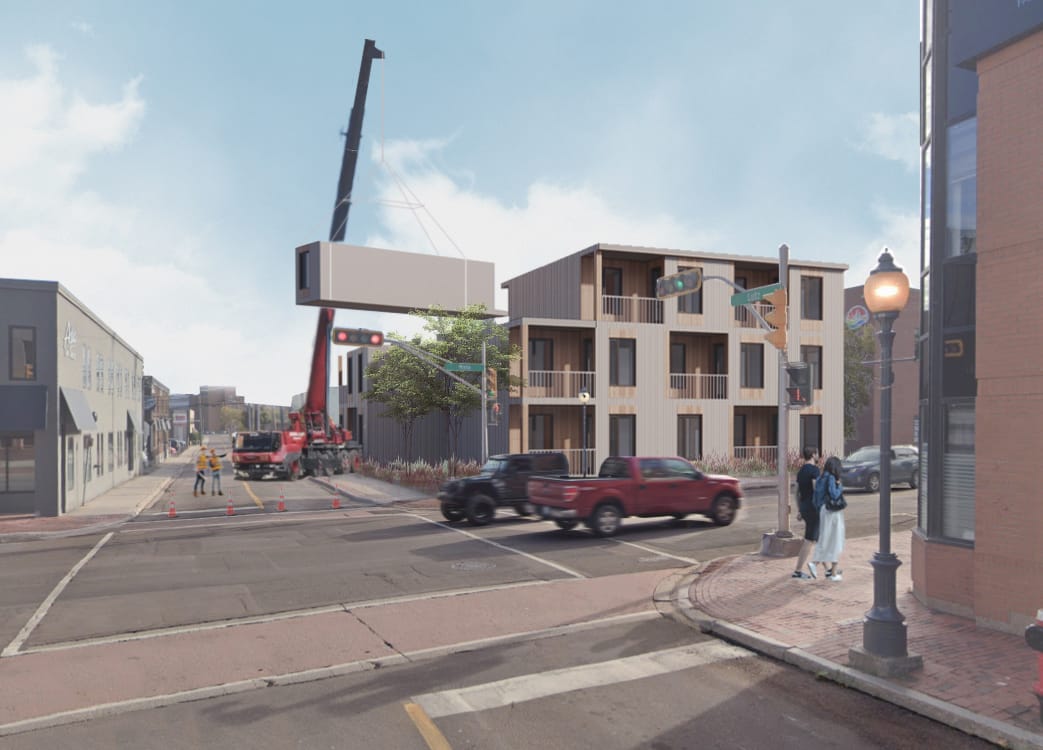
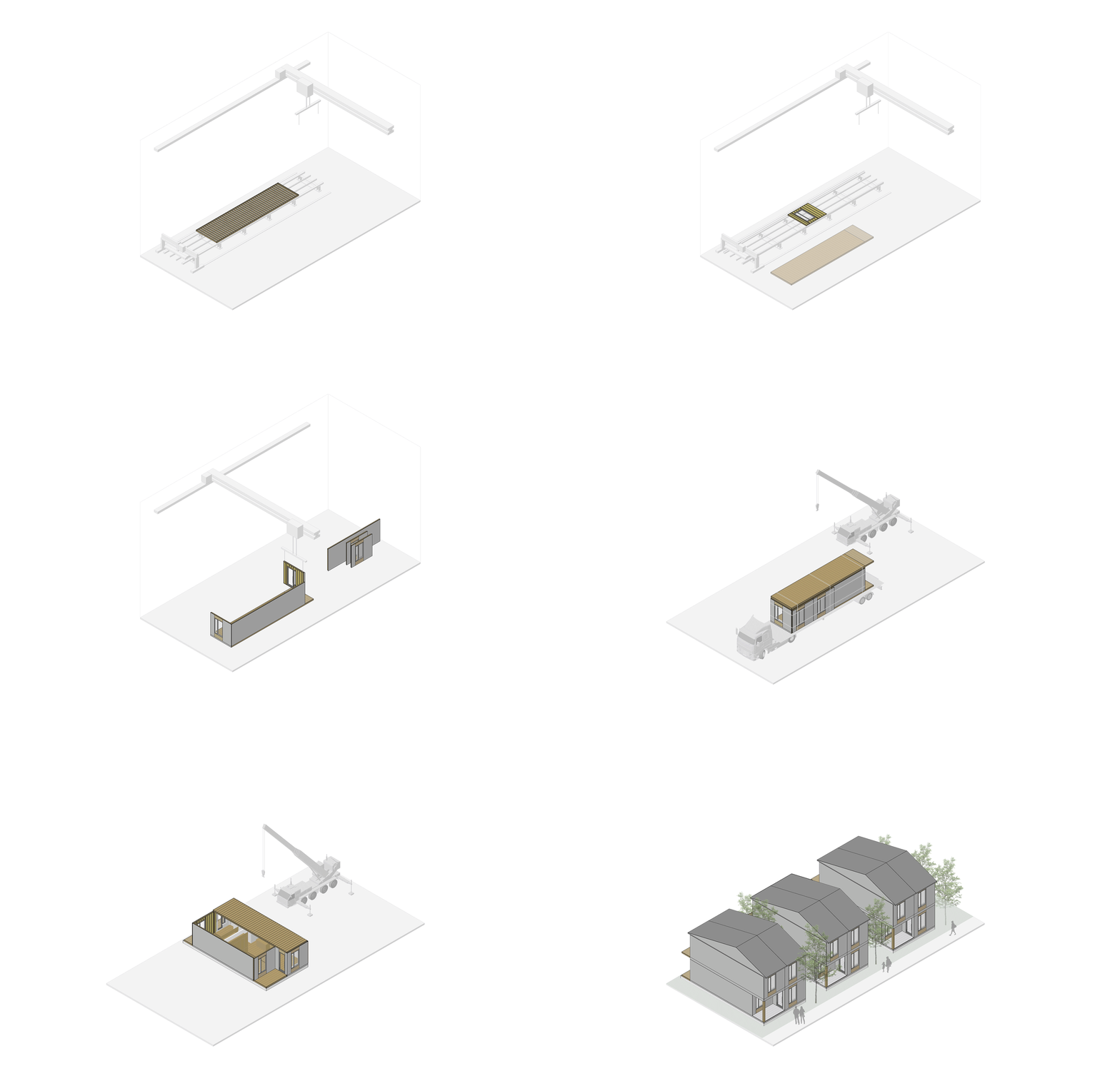
Second Place: Simplex
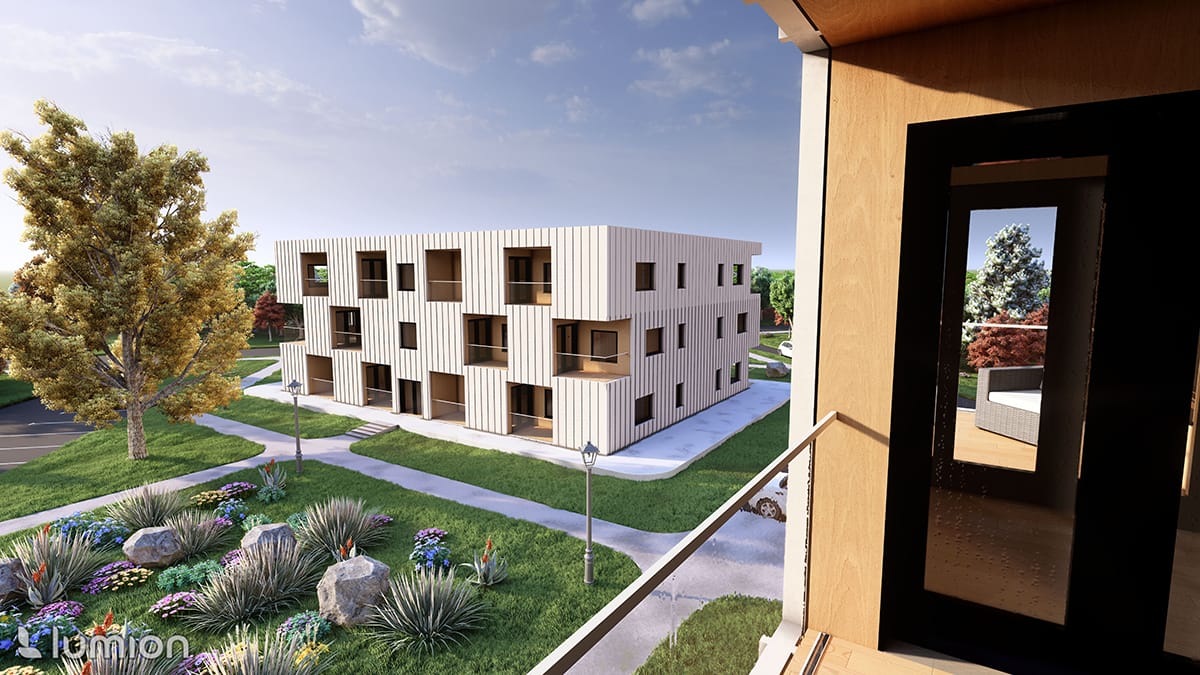
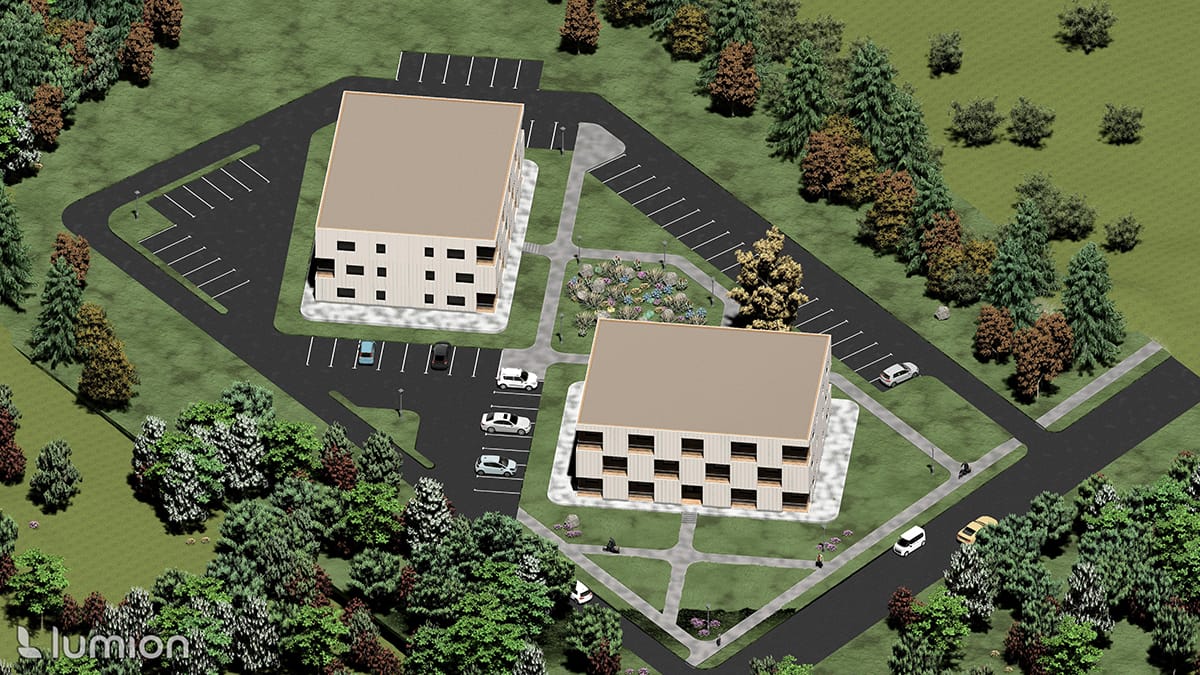
Team members: Til Schmitt-Ulms, Aryan Star, Gashtiyar Fathullah (University of New Brunswick)
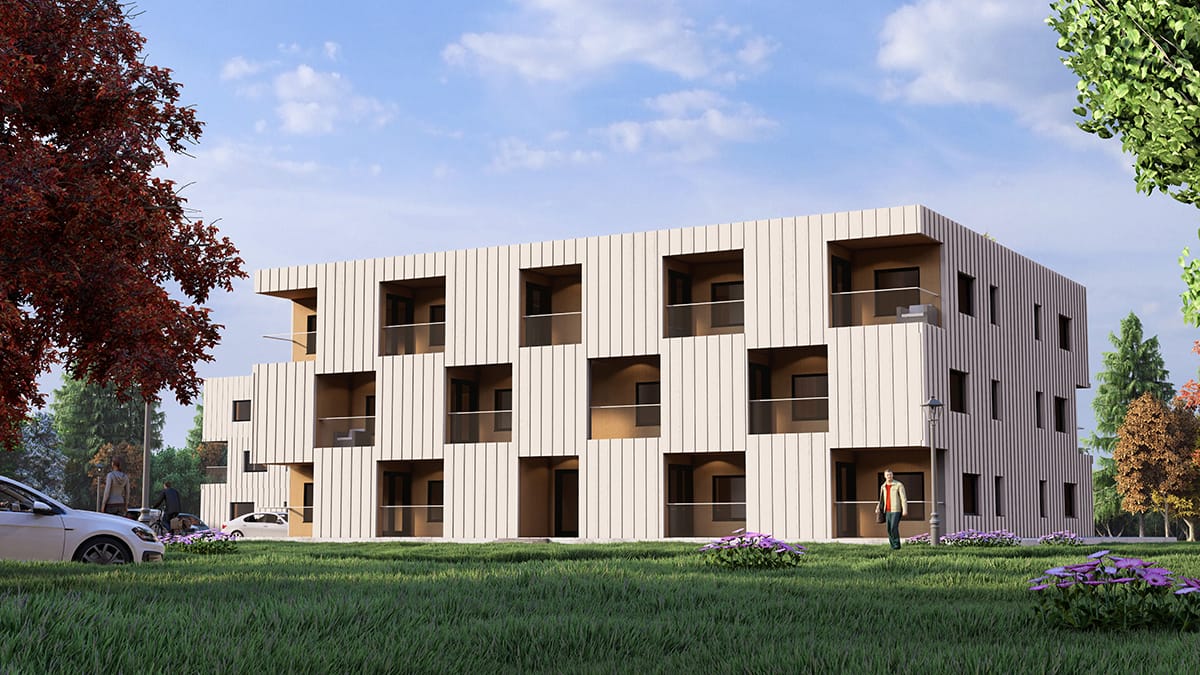
With perhaps the most professional experience of the participating teams, this three-student group brought diverse experiences to the table. Gashtiyar Fathullah and Aryan Star, both recent graduates of the University of New Brunswick and now involved in Kent Homes, have direct experience in modular construction and automation. Til Schmitt-Ulms, a civil engineering student at University of British Colombia, contributed a fresh academic perspective and hands-on experience from Stack Modular.
“The focus for this project,” said team member Til Schmitt-Ulms, “was on reducing transportation costs and enabling modular manufacturers to access a larger market by developing standardized modules (wet modules with MEPs and normal modules) with shipping container sizes so that they can be transported by trucks, trains, and ships.”
“We believe affordability comes by creating more units on a smaller piece of land rather than independent unit on each plot of land,” continued team member Aryan Star. “We tried to design a multiplex with 12 apartments to show our beliefs, each apartment has one wet modules for kitchen and bathroom with multiple bedrooms and in suit laundry with access to two private balconies acting as terrace on the roof of your neighbor downstairs.”
“I think the future of housing lies in modular construction,” concluded team member Gashiyar Fathullah, “especially in cold climates which makes business sense because of the lack of workers. I see a future where you can order your house on your mobile and it updates you on how it’s going, just like a car.”
Presenting the Industry's Future
MBI is proud of its continued sponsorship of the University of New Brunswick's Off-Site Construction Research Centre's annual Off-site Construction Student Design Competition. Besides the opportunity to share exciting new ideas about how to implement modular and offsite construction to address current needs, the contest is chance to showcase the industry's rapidly growing pool of young talent.
"We look forward to this contest every year," said John McMullen, PCM, marketing director at MBI. "It's great to work with UNB to showcase these projects, and we love the opportunity to support students and young professionals interested in modular construction. It's a huge win-win."
Congratulations again to all of 2023 Competition entrants!
About the Author: John McMullen, PCM, is the marketing director for the Modular Building Institute. You can reach him directly at mcmullen@modular.org or on LinkedIn.
More from Modular Advantage
MBI Town Halls 2026: Reflections from Boston
By the end of 2026 MBI’s Government Affairs team will have traveled over 6,000 air miles to bring Town Hall events to five different cities in two countries.
Mind the Gap: The Interface Between Onsite and Offsite Construction
Every design for manufacture and assembly (DfMA) project — modular, mass timber, or panelized — is really two projects joined at a seam. One is built in a controlled factory to millimeter tolerances; the other in the field, in weather, to the looser tolerances of poured concrete and human hands. Between them sits an interface: where the factory’s precision meets the site’s reality.
Rules, Rails & Repeatability: Applying DfMA to Modular Healthcare
DfMA offers several advantages for healthcare projects, with faster delivery among the most valuable. Schedule matters when building new facilities, expanding campuses, renovating existing space or bringing care closer to communities that need it.
Precision and Possibility: Demands of DfMA and What Modular Mass Timber Makes Possible
Mass timber does not automatically create an efficient modular building. Its precision makes early coordination more important: fabricated components will accurately reproduce both the team’s solutions and its mistakes. The material’s advantages are realized only when supported by an equally precise design and delivery process.
Catch It in the Factory, Not in the Field: Smarter Testing for Modular Builds
Integrating watertightness and airtightness testing into factory workflows transforms quality assurance from a reactive process into a proactive commissioning strategy. It ensures that every module shipped is field ready and resilient for transportation while also supporting the ability of the modular construction industry to make buildings better.
Modular Construction Contracts: Key Considerations for Successful Canadian Projects
Starting a modular project with a well-developed contract protects both the owner and the contractor. It will help keep the project on track and on budget, and it will improve quality from the factory floor to final installation on-site.
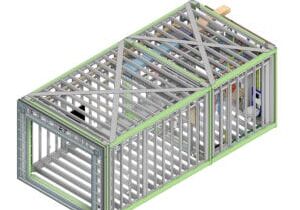
Modular by Design: Turning Architecture into a Manufacturing System
Modular construction is often presented as a faster way to build. Speed, however, is only one part of its value. The larger opportunity is to create a coordinated design and production system that improves quality, reduces uncertainty, and allows a building to move efficiently from concept design through manufacturing, transportation, installation, and completion.
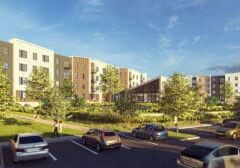
Repeatability Begins with Trust: What Alora at Dry Creek Reveals About Scaling Modular Housing
Alora at Dry Creek, a 329-unit, multifamily community comprising five four-story buildings in Centennial, Colorado, demonstrates how repeatable design, standardized manufacturing and early collaboration can work together to create a model that is not only faster to deliver, but easier to replicate across future projects.

T.R. Arnold: The Art of Third-Party Inspections
T.R. Arnold (TRA), a third-party inspection company in Elkhart, Indiana, contracts with modular manufacturers across the US. Manufacturers register with each state to which they intend to send their modules and may be required to hire a third-party inspection company.
Creating an ‘Ecosystem for Innovation:’ 50+ Years of Modular Construction Oversight in Virginia
Virginia’s modular building program began in 1973, with the implementation of the Virginia Industrialized Building Unit and Mobile Home Safety Regulations. Now it’s leading the country in modular code adoption.