Former Modular Owner, Now Principal Insurance Executive, Helps Modular Company Owners Navigate Insurance
“Simply stated, the Property/Casualty insurance industry does not understand the modular construction industry,” says Nick Ververis, Principal at OneDigital Insurance.
As the founder of a modular manufacturing company in 1998, American Modular, Ververis knows what he’s talking about. His unique blending of experience in both the insurance and modular construction industries has proven to be invaluable to his many clients across the U.S. “Over the past 14 years Nick has not only provided the best insurance values but has directed our risk mitigation program, and he is absolutely unreplaceable. There is not another individual in the U.S. that has his combination of expertise, says Mike Wilmot.
Ververis started in insurance industry in 1990, and by 1993 had started his own insurance company in Connecticut named Religious Benefit Services, his focus was on religious institutional insurance. A connection on the development team of the Hartford Archdiocese asked him whether he knew anything about modular construction, given the church had a 50-year initiative to construct and provide affordable housing. He said, “No.”, but the seed of interest was planted in him.
Soon after, that same contact let him know about an opportunity to acquire a modular factory and partner with modular veteran, Gregg Kelly, the former president of Arthur Industries, one of the largest integrated modular companies in the country in the 80-90’s; just prior Arthur Industries had sold the assets and closed the factory. In addition, Kelly was interested getting back into the business. So, Ververis sold his insurance company, and jumped into commercial modular manufacturing business, retaining Kelly and a number of the former Arthur management staff to start American Modular Corporation.
The company grew fast by providing high-end mobile offices and modular buildings on a wholesale basis to companies such as Resun, Vanguard, Triumph, Wilmot, Nadler, GE, and William-Scotsman. Unfortunately, the company in 2002 took on a major private project that went bad while the industry hit a slowdown. “Suddenly, it’s how do we make payroll this week?” said Ververis. He sold his interest in the company in 2004 and jumped back into insurance.
In 2004, he co-founded a risk management and claims company named Alternative Risk Administrators in Scottsdale, Arizona. Acting as a a consultative risk manager, the focus was on Fortune 5000 level companies with a specific strategic focus on the modular industry, from factories to distributors. “Building on my insurance background, I recognized from my years as a modular owner that the insurance industry fails to properly underwrite modular risks, so my two careers of insurance and modular became a fantastic opportunity to greatly assist many of my modular colleagues across the US with their risk management and insurance needs.” Most of his modular clients today have been with Nick for 10+ years.
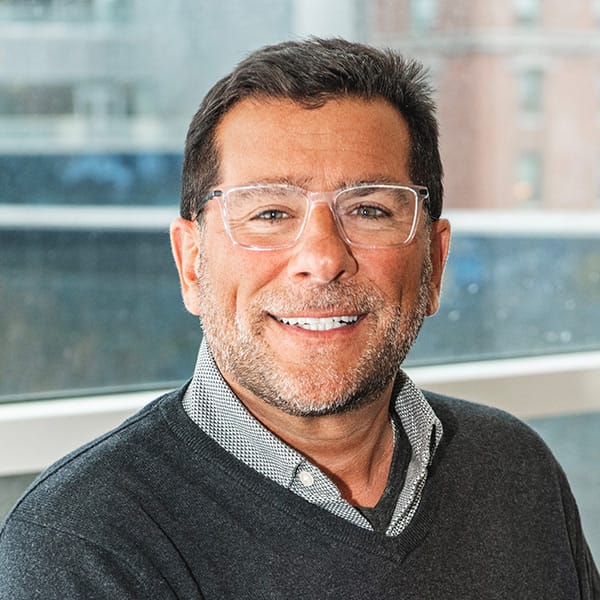
Nick Ververis, principal at OneDigital.
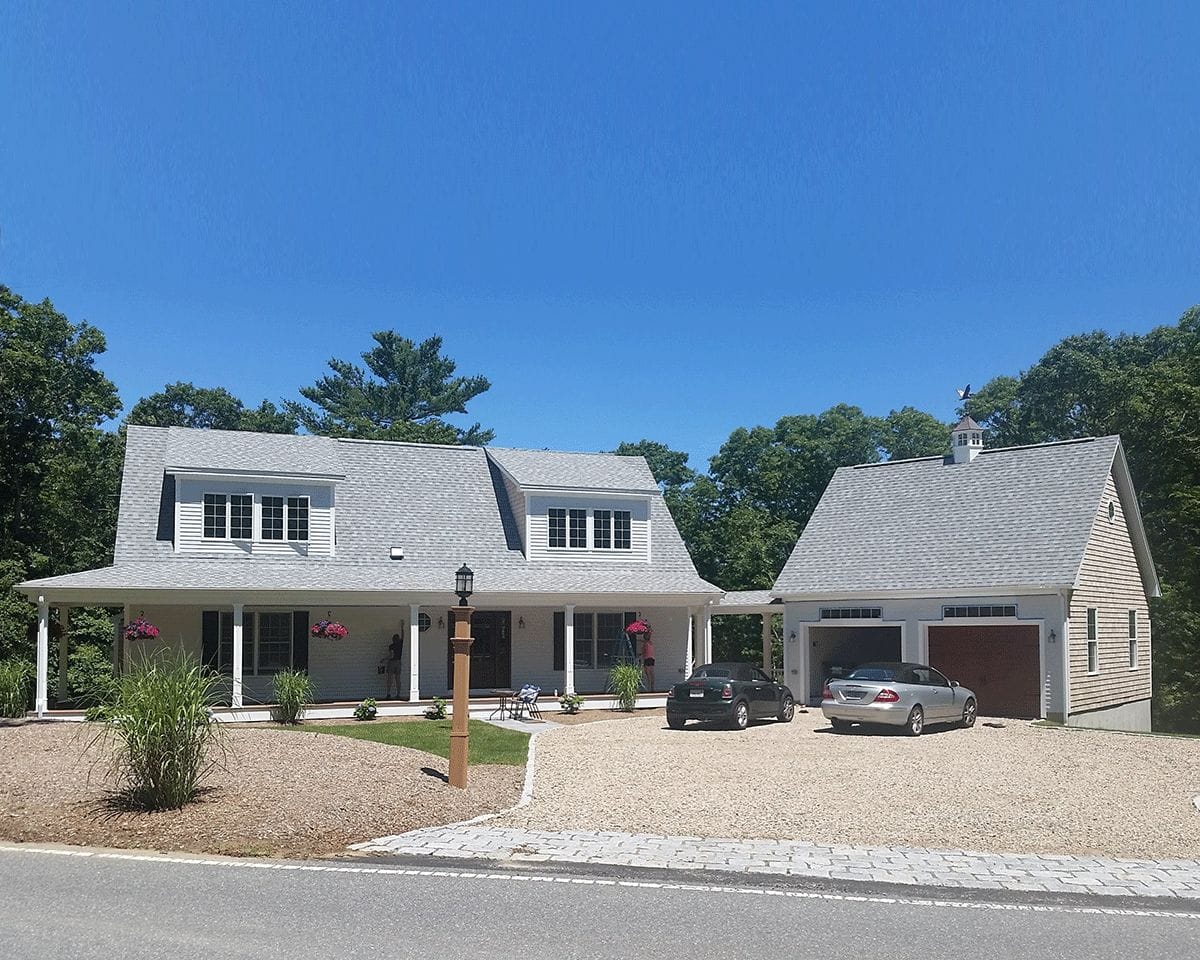
Modular home built by Nick Ververis' American Modular building company.
In 2011, he had the opportunity to acquire a smaller commercial insurance agency, Irongate Insurance in Connecticut, under his leadership the company grew twenty-fold in ten years. At the end of 2022, Nick merged his company into national powerhouse, OneDigital, a nationwide “power of one” orientation providing health benefits coverage, financial planning, human resources, property/casualty, and 401k products. “With OneDigital I now have the backing of close to 200 offices across the U.S. and thousands of colleagues who are as passionate as I am about driving results for our customers, the timing is perfect to outreach throughout the US. Now more than ever, given this historic hard insurance market, can we deliver significant results” says Ververis.
But he cannot seem to get enough of the modular business, so in 2017 he started a high-end modular development company in Cape Cod named Starboard Development, developing high-end ($1 mil+) modular homes, the first of which he and his wife purchased for their own use and as a vacation rental.
Related Listening:
Dual Perspectives on the Importance of Insurance Crafted Specifically for Modular Builders w/ OneDigital & Wilmot Modular
Nick Ververis, Principal at OneDigital, and Mike Wilmot, CEO and co-founder of Wilmot Modular, discuss the advantages of having specially-designed insurance policies so that modular builders and manufacturers can best manage risk. Nick speaks to his past experience as both a modular manufacturer and his current role as an insurance professional while Mike shares his experiences as a builder, dealer, and business owner.
A History of Success
“I have clients who have saved millions of premium dollars with my help through the years, modular company owners simply do not know the in’s and out’s of insurance; and then coupled with the typical insurance veteran not understanding the nuances of the industry, the scenario can make for a tough road. Underwriters are stuck with images of buildings swaying on cranes and oversized loads traveling at high speeds down the road, and it scares them; and when the insurance industry doesn’t understand something, it takes a very conservative approach on pricing and product offerings. My underwriters understand and respect my modular background, so my credibility in breaking down the risk is very effective for my clients” says Ververis.
Ververis is a very hands-on agent, participating in every audit, developing risk transfer programs, consulting with clients on claims, offering potential self-funded options, and finding the perfect balance between risk and financial benefit. Nick directly provides property/casualty/workers’ compensation and all of the related coverages, while the rest of the OneDigital team provides the balance of employee benefits, 401k, financial planning, and human resources. In addition to his modular companies, his clients include many organizations that cater to the industry, i.e. contractors, transporters, etc.
Knowing how to cover the exposures for any type of specific operation is important. For example, “when crane/rigging involved in a set of a unit/building, there’s a specific type of liability insurance that captures that specific operation, it is called riggers liability. Many modular companies hire subcontractors that include this operation in their scope of work, without asking specifically for the proper coverage requirement, and further being additionally protected on that subcontractor’s policy. I have seen many claims through the years involving the setting of buildings, the outcomes would have been difficult without the proper risk management well in advance.
Another item that I see quite a bit involves transportation companies. If a loss occurs while a modular unit is in transit, the modular company relies on the transporter to cover the lost unit and replace it. But some transporters carry a form of coverage which will only covers damages if the driver is found negligent in causing the loss, which may not be the case. If there is a gust of wind or other cause which isn’t the driver’s fault, there may be no coverage for that lost unit. Also, it is imperative that the modular company be additionally insured on the transporters auto policy, every time, without question. Bad things can happen on the road, and whoever owns the unit will be a big target in a lawsuit.
Contracts Are Just as Important as Insurance Policies
Ververis counsels his clients to ensure that their contracts provide the type of protection they think they are providing. Both the subcontractor and lease contracts need to capture all the proper indemnification/hold harmless language and insurance requirements, those terms need to then be carried over to the insurance certificate, which always needs to be verified.
“When a claims adjuster receives a claim, the very first thing they ask is, ‘I want to see your written contract, its language, and then I want to see the insurance certificate provided. If this information cannot be provided, there is a strong basis for not extending coverage to the modular company, so they would have to rely on their own.” Insurance is purchased to cover risk, which is totally appropriate, but much of the risk can be transferred through proper contracts.” This is especially important for modular companies, who subcontract out the majority of their work.
Ververis doesn’t just work for anybody in the modular industry. “I need to know that they’re fully committed and willing to use best practices. I can assist with putting together a great risk management program and make them close to bulletproof, but they have to be willing to implement and manage the procedures.”
Upcoming Trends
Like everything else these days, the cost of insurance is going up. “Property insurance is going through the roof, it’s all happening in the reinsurance market. Reinsurance companies are companies that insure insurance companies. All the natural disasters over the last few years have crushed the market, so everyone is paying the price today. The reinsurance market is doubling and tripling the rates they charge to insurance companies, which are then passed on to consumers.”
Luckily, he says, the workers compensation insurance market has been consistent.
Ververis invites companies in the modular industry to give him a call if they would like to discuss specific issues they are dealing with and/or submit their current coverage profile for a review. If there are questions or issues relating to group benefits and other related lines, he will make a connection for you to one of his counterparts at OneDigital. They’ll give an honest opinion about how much they can help, “We only want to be involved if we feel we could substantially help my peers in the modular business.”
Contact information – nick.ververis@onedigital.com; 860-658-6500 ext50003; cell 860-463-5125.
About the Author: Dawn Killough is a freelance construction writer with over 25 years of experience working with construction companies, subcontractors and general contractors. Her published work can be found at dkilloughwriter.com.
More from Modular Advantage
How Stack Modular Is Using AI to De-Risk Mid- to High-Rise Modular Construction
Artificial intelligence is no longer a future concept in modular construction—it is already reshaping how complex buildings are evaluated, designed, and delivered.

Gearing Up for the 2026 World of Modular
The Modular Building Institute (MBI) is bringing its global World of Modular (WOM) conference and tradeshow back to Las Vegas in April, and with it comes some of the industry’s best opportunities for networking, business development, and education.
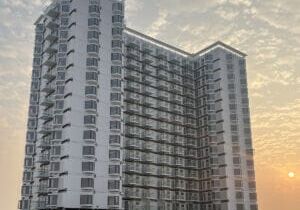
New High-Rise Modular Apartment in Abu Dhabi Points Toward the Future of Multifamily Construction
Eagle Hills International Properties chose the BROAD Holon Building for a 16-story market rate apartment building in Zayed City, a central business district of Abu Dhabi. The project highlights the potential of the Holon system of volumetric modular construction to accelerate housing delivery.
MBI Announces First Ever Industry Apprenticeship Program in Collaboration with Marshall Advanced Manufacturing Center
MBI recently agreed to partner with Marshall Advanced Manufacturing Center (MAMC) to provide bona fide USDOL-approved apprenticeship programs for the industry.
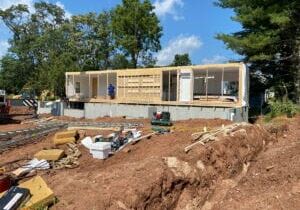
AoRa Development Aims for New York’s First Triple Net Zero Building Using Modular Methods
More cities are providing funding for newer infrastructure projects as long as they meet sustainability requirements. This is how modular can fit the bill, thanks to its lower waste production.
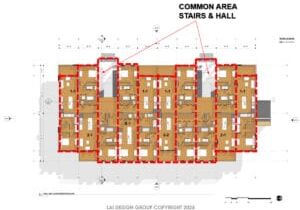
Developers and Designers: Lessons Learned with Modular Design
Modular construction is attractive to many developers because sitework and module construction can occur simultaneously, shortening the schedule and reducing additional costs.
UTILE: Putting Modular Building on a Fast Track
In Quebec, UTILE is taking the lead in creating affordable modular buildings to help decrease the student housing shortage. During the process, the company discovered what it takes to make the transition to modular building a success.
Sobha Modular Teaches Developers How to Think Like Manufacturers
With its 2.7 million square foot factory in UAE, Sobha Modular is bringing both its high-end bathroom pods to high-end residences to Dubai while developing modular projects for the U.S. and Australia.
RoadMasters: Why Early Transport Planning is Make-or-Break in Modular Construction
In modular construction, transportation is often called the “missing link.” While it rarely stops a project outright, poor planning can trigger costly delays, rerouting, and budget overruns.
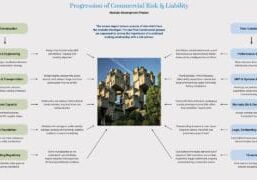
Navigating Risk in Commercial Real Estate and Modular Construction: Insights from a 44-Year Industry Veteran
Modular projects involve manufacturing, transportation, and on-site assembly. Developers must understand exactly what they are responsible for versus what they subcontract. Risk advisors should research the developer’s contractors, subcontractors, and design-build consultants—especially the modular manufacturer.