
Modular Multifamily Housing as a Scalable Solution to the Housing Crisis
Snapshot of the Modular Housing Sector and the GreenStaxx Solution

Amelia Rono is a Research & Communications Intern at GreenStaxx and a Growth and Structure of Cities student at Bryn Mawr College.
The Productivity Crisis
The construction sector has faced mounting challenges over the past several decades, with the COVID-19 pandemic further exposing deep infrastructure inefficiencies. According to a 2025 McKinsey & Company report by partners Jan Mischke, Kevin Stokvis, and Koen Vermeltfoort, global construction productivity advanced only 10 % over 22 years, which was only one-fifth of the growth seen in other economic sectors1.
A separate McKinsey report from 2024 found further details that productivity within the construction sector actually declined 8% from 2020 to 2022, with no productivity gains in advanced economies like the U.S. and Europe2. This lack of productivity has resulted in a $ 40 trillion global productivity shortfall, which has only been exacerbated by the reduction of skilled labor. Compounding the issue is the labor shortage: job vacancies in U.S. construction nearly doubled between 2017 and 2023, and 41% of skilled workers are expected to retire by 20312.
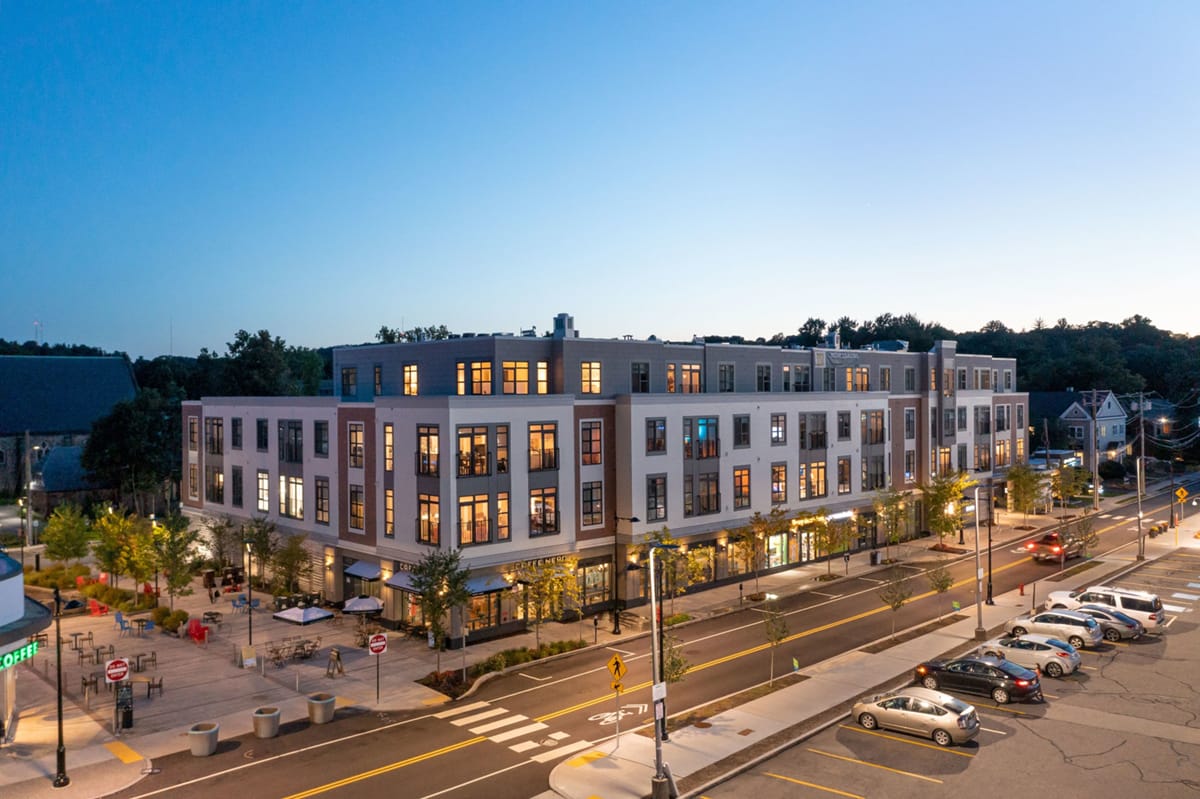
28 Austin Street, Newton, MA, designed by GreenStaxx with RCM as the Modular manufacturer.
Modular Housing as the Response
While these statistics paint a grim picture, they also highlight an opportunity: modular construction. Prefabricated and modular methods offer a practical, scalable path to increase productivity in housing.
A report by Emily Gallagher from Propmodo identifies prefab modular multifamily housing as an effective solution to meet the increased demand for housing. The housing crisis in the US has only increased post-pandemic, with the US currently dealing with an apartment shortage of 600,000 units3. 4.3 million apartments should be built by 2035 to meet current demand, but due to the labor shortage and lack of productivity within the construction sector, time constraints threaten progress. Quality standards should not be sacrificed in order to meet these demands.
Despite being unfairly portrayed in the past, the modular housing industry could be the solution. Gallagher identifies time efficacy as one of the biggest roadblocks to meeting ongoing housing demand. The MBI 2024 annual report highlights research conducted about the modular industry that reveals how modular housing is not only time-effective, but cost-effective as well4. McGraw-Hill’s 2020 research demonstrates overwhelming contractor support for modular construction, with 91% citing favorable budget outcomes in the SmartMarket report “Prefabrication and Modularization: Increasing Productivity in the Construction Industry”. Furthermore, 48% of contractors indicated that costs decreased by 10%, and 68% reported a positive budget impact of greater than 5%.
The 2023 study “Modular Multi-family Construction: A Field Study of Energy Code Compliance and Performance through Offsite Prefabrication” from the University of Nebraska’s Durham School of Architectural Engineering and Construction demonstrates the economic advantages of prefab and modular construction. The study highlighted that the cost for modular projects averaged $243 per square foot, compared to the $251 per square foot for site-built projects.
Beyond cost efficiency, modular building also offers time efficiency, with the 2019 McKinsey and Company report “Modular construction: From projects to products,” outlining how modular projects accelerate timelines by 20-50%. Since 60-90 % of modular construction is conducted within factories, weather delays are reduced, resulting in a quicker return on investment, which is critical for developers trying to match the rising demand for housing.
Yet, despite these advantages, modular construction only accounts for 4% of new housing in the U.S.5. Modular construction has the capacity to compress project schedules by 20-50% while achieving cost reductions of up to 20%. Regardless of its potential, installation, capital requirements, and stakeholder resistance, particularly from developers and general contractors unfamiliar with the process, continue to hold the sector back.
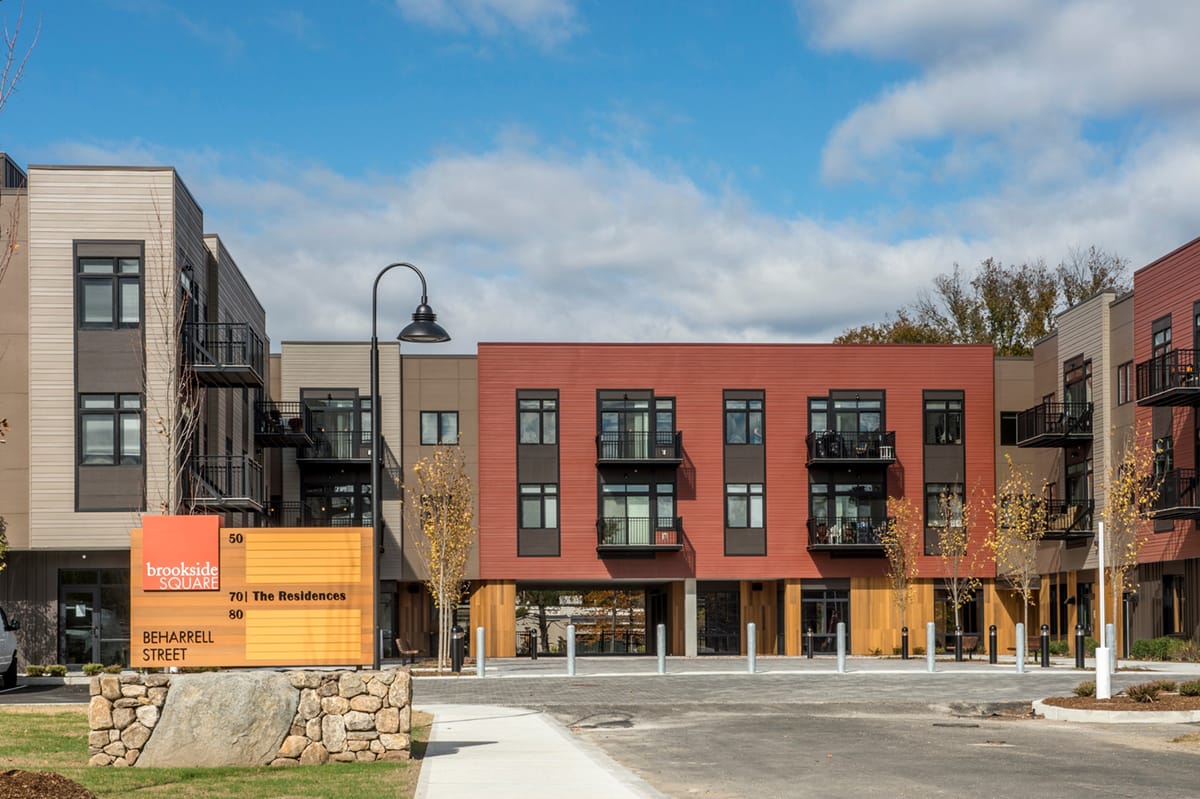
Brookside Square, 70 Beharrell Street, Concord, MA designed by GreenStaxx.
GreenStaxx: A Scalable, Developer-Focused Solution
GreenStaxx is actively working to overcome these limitations with innovative methods to increase efficiency in modular construction.
The 2023 McKinsey and Co. report highlights how modular construction is inefficient when the stakeholders (e.g., developers and general contractors) are unable to collaborate. GreenStaxx is working to address this inefficiency. Their patented process is built for developers by architects/developers who understand the industry and its needs. GreenStaxx is focused on building long-term partnerships with general contractors and modular manufacturers to improve coordination and reduce delays, which has proven to enhance profitability and consistency of outcomes within modular construction5.
Greenstaxx uses a standardized design process that allows for greater efficiency, reduced risk, improved quality, and lower costs. Standardization is key to avoiding the inefficiencies of the traditional construction industry. Traditional construction and most modular projects work on a custom basis, adding complexity and cost. GreenStaxx provides a library of standard unit designs with detailed specs. This gives developers clarity upfront and creates a repeatable process, allowing developers to build smarter, faster, and with more confidence.
The Triple-Decker: A Smaller-Scale, High-Impact Model
In addition to their scalable multifamily product library, GreenStaxx offers a more compact solution: the triple-decker. This three-unit building typology, typical within the northeast, has been redesigned for modular construction and optimized for passive house standards.
In Massachusetts alone, where GreenStaxx is based, there is a shortage of 222,000 housing units6. The triple-decker delivers much needed, quality, energy efficient housing on smaller urban lots. It can also be adapted into a two-family configuration, or “double-decker” and built with repeatable modular components. For modular manufacturers, the triple-decker design is ideal: compact, efficient, and built for rapid construction.
Furthermore, permitting and construction timelines are shorter, making the triple-decker an excellent option for infill development and small-lot strategies in cities struggling to meet housing demand.
Conclusion
The U.S. housing crisis won’t be solved with conventional methods alone. Modular construction has proven advantages, but without a shift in how projects are designed and delivered, the sector’s growth will remain limited.
GreenStaxx provides a real-world, scalable solution through its standardized library of modular-ready multifamily designs and its innovative triple-decker model. Together, these offerings address the industry’s two greatest needs: efficiency and adaptability.
By focusing on quality, repeatability, and collaboration, GreenStaxx is helping move modular construction from niche to mainstream and offering a practical path toward solving the housing shortage.
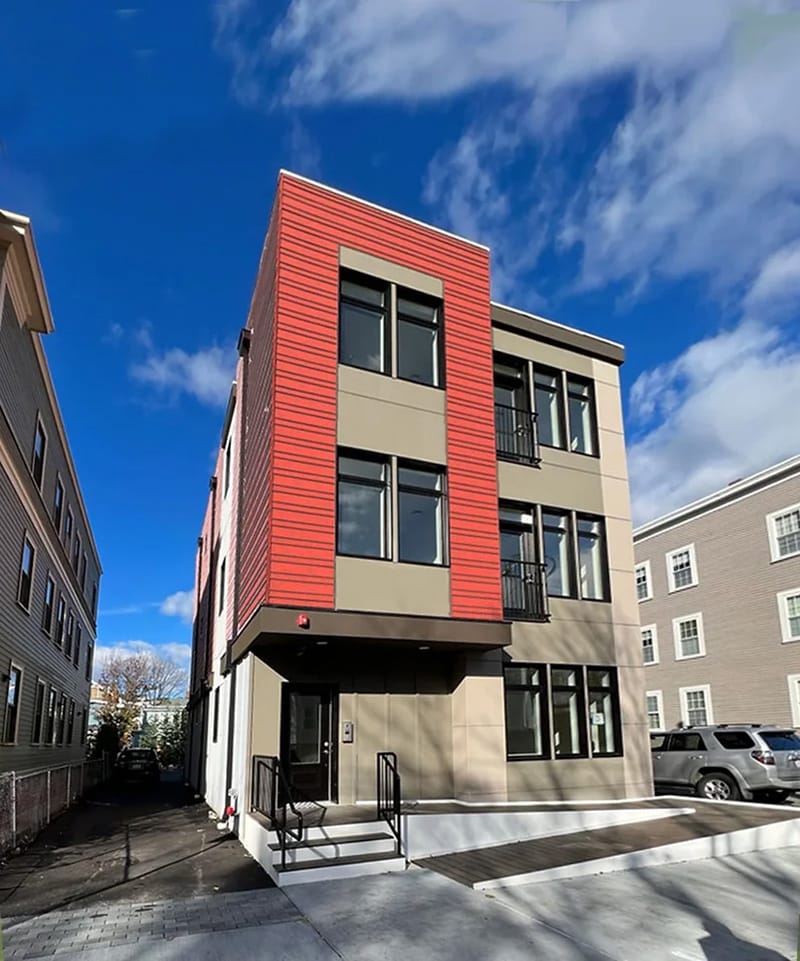
Triple-Decker Passive House Modular, 159 Allston Street, Cambridge, MA
References
1 Mischke, Jan, Stokvis, Kevin and Vermeltfoort, Koen. “Why Construction Productivity Growth Is Lagging — and What to Do About It.” Construction Dive, January 2, 2025. https://www.constructiondive.com/news/why-construction-productivity-lags-mckinsey/736082/.
2 Mischke, Jan, Kevin Stokvis, and Koen Vermeltfoort. “Delivering on Construction Productivity Is No Longer Optional.” McKinsey & Company, August 9, 2024. https://www.mckinsey.com/capabilities/operations/our-insights/delivering-on-construction-productivity-is-no-longer-optional.
3 Gallagher, Emily. “Can Prefab Construction in Multifamily Overcome the Technology’s Image Problem?” Propmodo, January 25, 2025. https://propmodo.com/can-prefab-construction-in-multifamily-overcome-the-technologys-image-problem/.
4 Modular Building Institute. “2024 Permanent Modular Construction Report: The Modular Building Institute’s Key Findings and Best Practices for Successful Modular Projects.” Modular Building Institute, 2024. https://www.modular.org/industry-analysis/.
5 Blanco, Jose Luis, Dave Dauphinais, Garo Hovnanian, and Rob Palter. “Making Modular Construction Fit.” McKinsey & Company, May 10, 2023. https://www.mckinsey.com/capabilities/operations/our-insights/making-modular-construction-fit.
6 Taylor, Sri. “Massachusetts Needs 222,000 Housing Units by 2035 to Ease Crisis.” Bloomberg, February 6, 2025. https://www.bloomberg.com/news/articles/2025-02-06/massachusetts-needs-222-000-housing-units-by-2035-to-ease-crisis.
More from Modular Advantage
Mind the Gap: The Interface Between Onsite and Offsite Construction
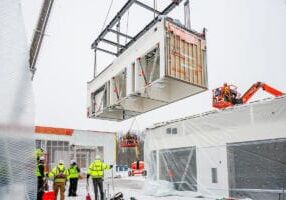
Every design for manufacture and assembly (DfMA) project — modular, mass timber, or panelized — is really two projects joined at a seam. One is built in a controlled factory to millimeter tolerances; the other in the field, in weather, to the looser tolerances of poured concrete and human hands. Between them sits an interface: where the factory’s precision meets the site’s reality.
Rules, Rails & Repeatability: Applying DfMA to Modular Healthcare
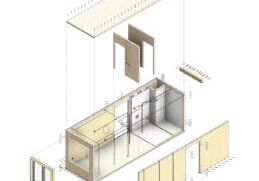
DfMA offers several advantages for healthcare projects, with faster delivery among the most valuable. Schedule matters when building new facilities, expanding campuses, renovating existing space or bringing care closer to communities that need it.
Precision and Possibility: Demands of DfMA and What Modular Mass Timber Makes Possible
Mass timber does not automatically create an efficient modular building. Its precision makes early coordination more important: fabricated components will accurately reproduce both the team’s solutions and its mistakes. The material’s advantages are realized only when supported by an equally precise design and delivery process.
Catch It in the Factory, Not in the Field: Smarter Testing for Modular Builds
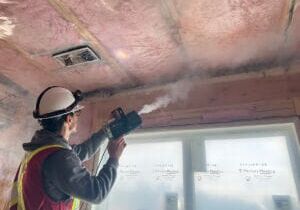
Integrating watertightness and airtightness testing into factory workflows transforms quality assurance from a reactive process into a proactive commissioning strategy. It ensures that every module shipped is field ready and resilient for transportation while also supporting the ability of the modular construction industry to make buildings better.
Modular Construction Contracts: Key Considerations for Successful Canadian Projects
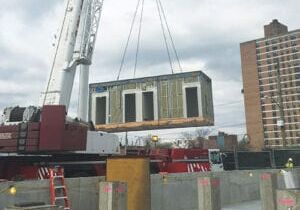
Starting a modular project with a well-developed contract protects both the owner and the contractor. It will help keep the project on track and on budget, and it will improve quality from the factory floor to final installation on-site.
Modular by Design: Turning Architecture into a Manufacturing System
Modular construction is often presented as a faster way to build. Speed, however, is only one part of its value. The larger opportunity is to create a coordinated design and production system that improves quality, reduces uncertainty, and allows a building to move efficiently from concept design through manufacturing, transportation, installation, and completion.
Repeatability Begins with Trust: What Alora at Dry Creek Reveals About Scaling Modular Housing
Alora at Dry Creek, a 329-unit, multifamily community comprising five four-story buildings in Centennial, Colorado, demonstrates how repeatable design, standardized manufacturing and early collaboration can work together to create a model that is not only faster to deliver, but easier to replicate across future projects.

T.R. Arnold: The Art of Third-Party Inspections
T.R. Arnold (TRA), a third-party inspection company in Elkhart, Indiana, contracts with modular manufacturers across the US. Manufacturers register with each state to which they intend to send their modules and may be required to hire a third-party inspection company.
Creating an ‘Ecosystem for Innovation:’ 50+ Years of Modular Construction Oversight in Virginia
Virginia’s modular building program began in 1973, with the implementation of the Virginia Industrialized Building Unit and Mobile Home Safety Regulations. Now it’s leading the country in modular code adoption.
Understanding Thermal Barriers Compliance Methods & Emerging NFPA-275 Foam Plastic Technologies
New fire barrier technologies are improving total costs and margins in major areas of construction, such as commercial, government, union and prevailing wage projects. These benefits translate into other large fringe areas, such as agriculture, commercial cold storage facilities, grow houses, outbuildings, military and aviation hangars.