
Top Five Benefits of Modular Office Space

Joshua Nabb, PE, is the Vice President & General Manager at ATCO Structures & Logistics (USA), Inc.
Modular office spaces are transforming how businesses think about their work environments. These innovative structures offer a mix of flexibility, efficiency, and sustainability, making them a smart choice for companies looking to gain an advantage.
Here are five benefits of choosing modular office spaces:

1. Speed to Market: Quick Installation
Modular construction can significantly speed up project timelines. According to the McKinsey Modular Construction Report 2019, modular projects are completed 20-50 per cent faster than traditional construction. This speed is a result of factory-based construction, avoiding weather and site-related delays.
2. Lower Costs: Save Time and Money
Modular construction can potentially lower costs by streamlining three key areas:
Shortening Construction Timelines
Modular buildings are prefabricated in a controlled factory environment, which fast-tracks the overall construction process. This expedited timeline means quicker project completion, enabling businesses to commence operations sooner.
Lowering Labor Expenses
Modular construction requires less labor to get the job done, decreasing the number of workers required onsite, making the building process both more economical and faster, especially in areas governed by prevailing wages.
Minimizing Material Waste
The repeatable, factory-controlled production process for modular buildings allows for more precise material usage and reduces over-ordering. Materials are kept and used in ideal conditions, reducing waste or damage.
3. Flexibility: Easy Reconfiguration
Modular offices are designed for adaptability, making it easy to modify floorplans according to changing business needs. In the ever-evolving business landscape, being able to quickly expand, downsize, or modify your office space without major construction is a key advantage.
Another standout feature of modular offices is their portability. If you need to move your business, your office space can move with you. This mobility ensures that your office space investment continues to pay off, no matter where your business takes you.
4. Smooth Integration: Minimal Disruption
Modular building installation minimizes workplace interference, ensuring daily operations remain largely undisturbed during the installation process.
5. Sustainable
Modular offices are environmentally friendly, use materials more efficiently, and generate less waste than conventional office building construction.
At ATCO Structures, our site offices are built to local building codes, come in a variety of shapes and sizes, and can be installed in any climate or terrain. Learn more about our durable and portable mobile offices.
Case Study: Gross Reservoir, Colorado Project

ATCO successfully designed, manufactured, and installed a leased temporary office compound for a major General Contractor involved in a long-term reservoir infrastructure project in Colorado’s Rocky Mountains. The modular units were specifically designed to endure high winds, wildfires, and rugged terrain.
The office compound comprised of 12x60 office units, 12x60 restroom units, and modular office complexes ranging from 3 units (36x60) to 12 units (144x60) in size. In total, 39 units (13 separate office complexes) were designed, manufactured, and installed for the project.
Upon the contractor’s request, ATCO swiftly completed fully engineered and compliant drawing packages, securing Colorado Division of Housing (DOH) approval within four weeks. ATCO’s in-house design and engineering capabilities, with experience across nearly all 50 states, enable ATCO to expediently design modular spaces for any application and geographic location.
Key design features of this project included:
- 170mph wind rating for all units and complexes
- Impact-resistant 3M film on all windows
- 90-minute fire rating throughout the entire building
- 60psf snow load capacity
- Construction with 100% fire-retardant lumber
- Seismic Class D compliance
- 60ft steel clear span roof truss construction
- Metal exterior cladding
- White 60 mil EPDM roof membrane
- Bluetooth LED lighting throughout
Following state design package approval, ATCO manufactured the custom units within eight weeks at our 100,000 sq-ft East Texas manufacturing facility. Our facility, capable of delivering up to 500 units annually, ensures no project is too big or too small.
ATCO’s turnkey modular services enabled the completion of this project from inception to fully installed and occupiable complexes within four months. ATCO’s ability to design modular products to meet any requirements, combined with fully owned and operated manufacturing plants and locally staffed sales and operations branches across the US, positions ATCO uniquely to deliver high-quality, compliant, and timely modular solutions for any application or location.
More from Modular Advantage
MBI Town Halls 2026: Reflections from Boston
By the end of 2026 MBI’s Government Affairs team will have traveled over 6,000 air miles to bring Town Hall events to five different cities in two countries.
Mind the Gap: The Interface Between Onsite and Offsite Construction
Every design for manufacture and assembly (DfMA) project — modular, mass timber, or panelized — is really two projects joined at a seam. One is built in a controlled factory to millimeter tolerances; the other in the field, in weather, to the looser tolerances of poured concrete and human hands. Between them sits an interface: where the factory’s precision meets the site’s reality.
Rules, Rails & Repeatability: Applying DfMA to Modular Healthcare
DfMA offers several advantages for healthcare projects, with faster delivery among the most valuable. Schedule matters when building new facilities, expanding campuses, renovating existing space or bringing care closer to communities that need it.
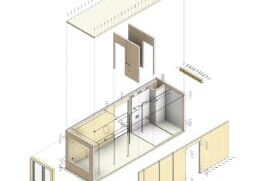
Precision and Possibility: Demands of DfMA and What Modular Mass Timber Makes Possible
Mass timber does not automatically create an efficient modular building. Its precision makes early coordination more important: fabricated components will accurately reproduce both the team’s solutions and its mistakes. The material’s advantages are realized only when supported by an equally precise design and delivery process.
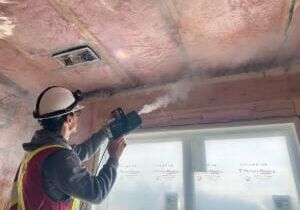
Catch It in the Factory, Not in the Field: Smarter Testing for Modular Builds
Integrating watertightness and airtightness testing into factory workflows transforms quality assurance from a reactive process into a proactive commissioning strategy. It ensures that every module shipped is field ready and resilient for transportation while also supporting the ability of the modular construction industry to make buildings better.
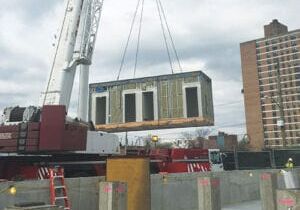
Modular Construction Contracts: Key Considerations for Successful Canadian Projects
Starting a modular project with a well-developed contract protects both the owner and the contractor. It will help keep the project on track and on budget, and it will improve quality from the factory floor to final installation on-site.
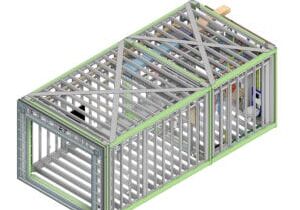
Modular by Design: Turning Architecture into a Manufacturing System
Modular construction is often presented as a faster way to build. Speed, however, is only one part of its value. The larger opportunity is to create a coordinated design and production system that improves quality, reduces uncertainty, and allows a building to move efficiently from concept design through manufacturing, transportation, installation, and completion.
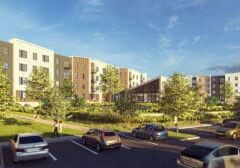
Repeatability Begins with Trust: What Alora at Dry Creek Reveals About Scaling Modular Housing
Alora at Dry Creek, a 329-unit, multifamily community comprising five four-story buildings in Centennial, Colorado, demonstrates how repeatable design, standardized manufacturing and early collaboration can work together to create a model that is not only faster to deliver, but easier to replicate across future projects.

T.R. Arnold: The Art of Third-Party Inspections
T.R. Arnold (TRA), a third-party inspection company in Elkhart, Indiana, contracts with modular manufacturers across the US. Manufacturers register with each state to which they intend to send their modules and may be required to hire a third-party inspection company.
Creating an ‘Ecosystem for Innovation:’ 50+ Years of Modular Construction Oversight in Virginia
Virginia’s modular building program began in 1973, with the implementation of the Virginia Industrialized Building Unit and Mobile Home Safety Regulations. Now it’s leading the country in modular code adoption.