
Modular Construction for Financial Viability: The Norwalk Project Case Study

by Konstatin Daskalov, VP of US Operations, Stack Modular
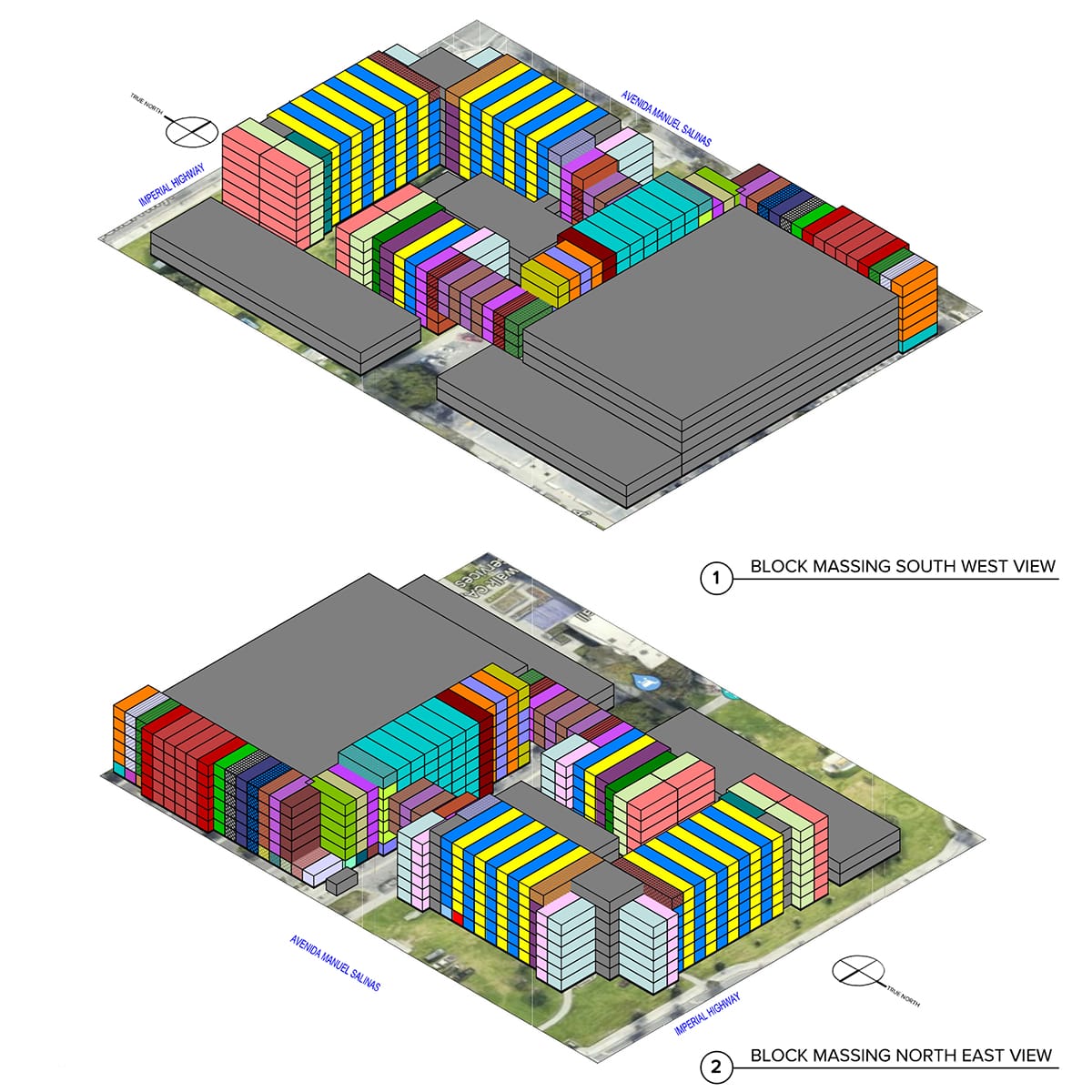
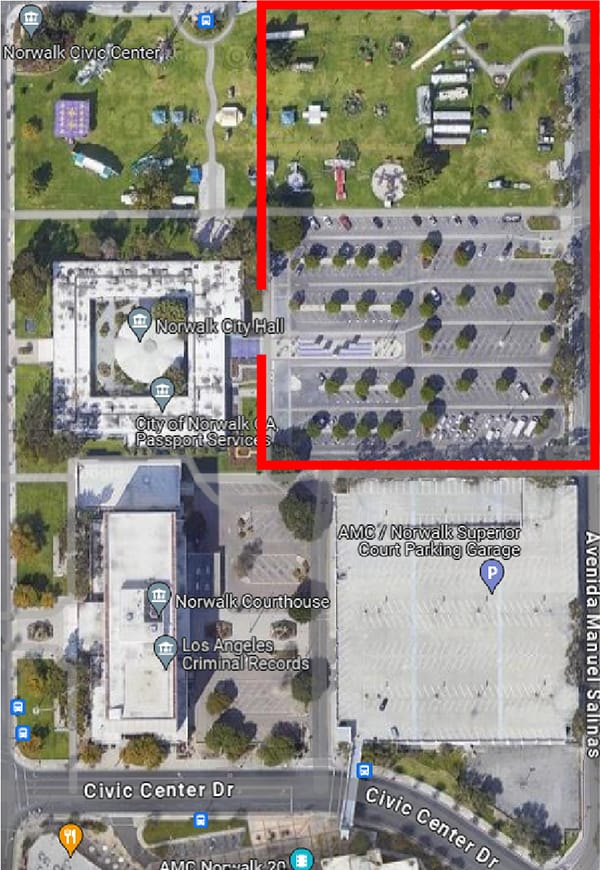
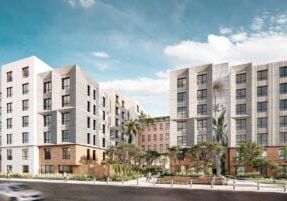
In April 2023, Primestor, a real estate owner, and developer, along with their General Contractor, approached Stack Modular to evaluate their project, named “the Walk.” This multi-family residential complex is situated in Norwalk, California, and comprises two buildings with a combined footprint of 139,150 sq. ft. The development includes 58 dedicated affordable housing units and is slated to be the largest residential modular construction project in North America to date.
The initial on-site construction pricing provided to Primestor exceeded their budget by 25%, making the project financially unfeasible. Primestor enlisted Stack to assess the original project design and explore the benefits of Stack’s modular construction approach.
Stack’s Design team conducted a comprehensive review and Modular Design Analysis (MDA) of the project. They determined that a complete redesign for modular construction was necessary and recommended engaging Assemblage-Works Inc (AWI), specifically Michael Mathews, for the modular redesign.

Stack Modular provided preliminary modular pricing, proving to be significantly more cost-effective than the initial on-site construction estimate. Additionally, they presented a detailed Scope Delineation Matrix for the original General Contractor. Despite this, the updated estimate from the original project’s General Contractor remained higher than Primestor’s target budget. Primestor then sought new competitive bids for a general contractor and selected Bernards Construction based on their modular experience and collaborative approach.
Recognizing the need for an Integrated Project Delivery (IPD) approach, Stack Modular organized a 3-day Design Charette in August 2023, fostering collaboration among AWI Architects, Primestor, and Bernards. The combined team of consultants and engineers collaborated in an open forum discussion, preserving the original design intent, and addressing factors like Unit Mix, Retail spaces, open space, and entitlement restrictions. After multiple iterations, a new concept design was finalized in June 2023.
Project Snapshot
Owner: Primestor
Type: Multi-family residential
Modules: 516
Buildings: 2
New Housing Units: 373
Floors: 7 / 5
Total Gross Area: 681,129 sq.ft.
Modular Gross Area: 356,129 sq.ft

The IPD collaborative approach resulted in an additional 20% reduction in pricing for both on-site and modular components, making the Norwalk project financially viable. Since then, all team members have been actively engaged in pre-construction efforts.
Stack Modular is set to build a full 1BR / 2 Module Unit for review by the end of May 2024. This will allow Primestor and the development team to assess the modular structure, MEP systems, and finishes, providing a valuable tool to identify any issues before Stack proceeds with full fabrication in October 2024.
The Norwalk project serves as a prime example of how Off-site Modular Construction, in collaboration with Architects, Consultants/Engineers, General Contractors (GC), and Mechanical, Electrical, Plumbing, and Fire Protection (MEP/FP) Subcontractors, can make projects financially feasible by closely working with the Owner/Developer under an Integrated Project Delivery (IPD) approach.
More from Modular Advantage
MBI Town Halls 2026: Reflections from Boston
By the end of 2026 MBI’s Government Affairs team will have traveled over 6,000 air miles to bring Town Hall events to five different cities in two countries.
Mind the Gap: The Interface Between Onsite and Offsite Construction
Every design for manufacture and assembly (DfMA) project — modular, mass timber, or panelized — is really two projects joined at a seam. One is built in a controlled factory to millimeter tolerances; the other in the field, in weather, to the looser tolerances of poured concrete and human hands. Between them sits an interface: where the factory’s precision meets the site’s reality.
Rules, Rails & Repeatability: Applying DfMA to Modular Healthcare
DfMA offers several advantages for healthcare projects, with faster delivery among the most valuable. Schedule matters when building new facilities, expanding campuses, renovating existing space or bringing care closer to communities that need it.
Precision and Possibility: Demands of DfMA and What Modular Mass Timber Makes Possible
Mass timber does not automatically create an efficient modular building. Its precision makes early coordination more important: fabricated components will accurately reproduce both the team’s solutions and its mistakes. The material’s advantages are realized only when supported by an equally precise design and delivery process.
Catch It in the Factory, Not in the Field: Smarter Testing for Modular Builds
Integrating watertightness and airtightness testing into factory workflows transforms quality assurance from a reactive process into a proactive commissioning strategy. It ensures that every module shipped is field ready and resilient for transportation while also supporting the ability of the modular construction industry to make buildings better.
Modular Construction Contracts: Key Considerations for Successful Canadian Projects
Starting a modular project with a well-developed contract protects both the owner and the contractor. It will help keep the project on track and on budget, and it will improve quality from the factory floor to final installation on-site.
Modular by Design: Turning Architecture into a Manufacturing System
Modular construction is often presented as a faster way to build. Speed, however, is only one part of its value. The larger opportunity is to create a coordinated design and production system that improves quality, reduces uncertainty, and allows a building to move efficiently from concept design through manufacturing, transportation, installation, and completion.
Repeatability Begins with Trust: What Alora at Dry Creek Reveals About Scaling Modular Housing
Alora at Dry Creek, a 329-unit, multifamily community comprising five four-story buildings in Centennial, Colorado, demonstrates how repeatable design, standardized manufacturing and early collaboration can work together to create a model that is not only faster to deliver, but easier to replicate across future projects.

T.R. Arnold: The Art of Third-Party Inspections
T.R. Arnold (TRA), a third-party inspection company in Elkhart, Indiana, contracts with modular manufacturers across the US. Manufacturers register with each state to which they intend to send their modules and may be required to hire a third-party inspection company.

Creating an ‘Ecosystem for Innovation:’ 50+ Years of Modular Construction Oversight in Virginia
Virginia’s modular building program began in 1973, with the implementation of the Virginia Industrialized Building Unit and Mobile Home Safety Regulations. Now it’s leading the country in modular code adoption.