FRAMECAD: Innovating for Faster Construction and Better Built Environments
The modular sector is leading the way in an industry that has seen little change in the past 100 years. To paraphrase the good people at modular.org, building in a controlled environment delivers multiple benefits, improved quality, sustainability, efficiency, cost-effectiveness, and shorter time to completion.
Innovation in process and thinking has created a flexible, modern construction methodology at the forefront of rejuvenating global construction. Well, yes, that is why we’re here, you say. So tell us something we don’t already know.
But what if we could take the benefits that modular building, prefabrication, and offsite construction deliver and amplify them even more? At the risk of coming across all click-baity, you can.
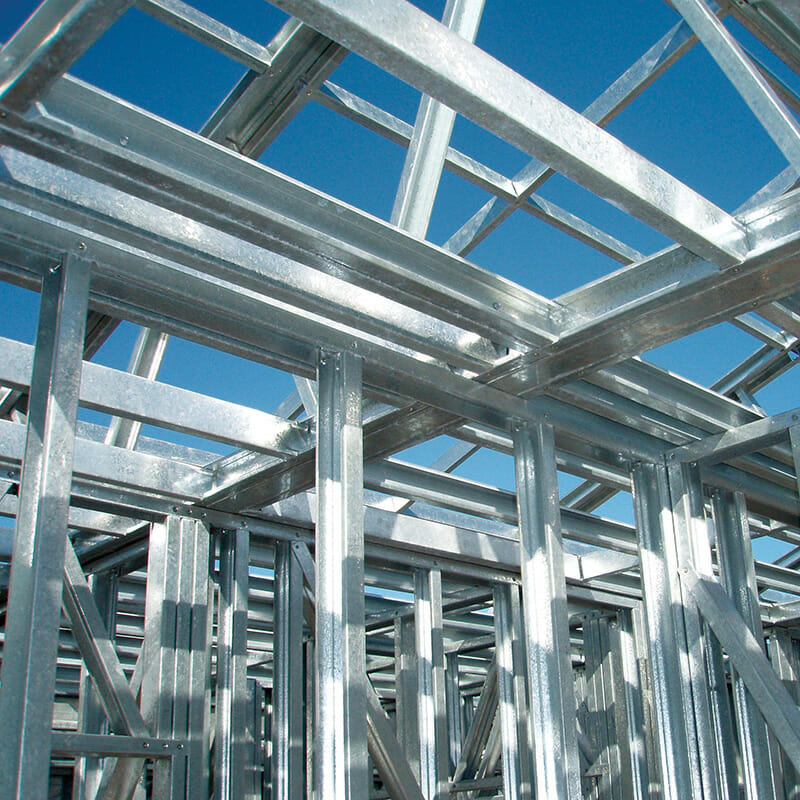
Construction automation technology company, FRAMECAD®, has spent the past 30 years developing, innovating, and refining its cold-formed steel (CFS) construction system. An integrated end-to-end engineering design-and-build system with the technical tools to accelerate the construction process, increase productivity & accuracy, and reduce labor costs.
Innovating for faster construction and better built environments
FRAMECAD’s General Manager Global Marketing, Michelle Haynes, says, “At FRAMECAD®, innovation is everything. It’s a catalyst for growth – whether it’s enabling clients to construct buildings quickly and safely through an integrated system or supporting communities to achieve a better standard of living - we’ve spent 30 years researching and testing a platform that people can rely on. We have a constant focus on continuous improvement and innovation – in our software, our manufacturing equipment, our services, and our support.”
FRAMECAD’s innovation philosophy is simple; to explore and implement continuous improvements that improve every step of the building process. Both significant and incremental innovations can have a direct impact on the efficiency and ROI of building projects.
The company’s design-and-build system is built on a design-led approach to construction, using software and manufacturing technology to produce highly accurate building components. This approach reduces the input required from engineers and the need for skilled construction labor, which significantly reduces onsite errors and material wastage.
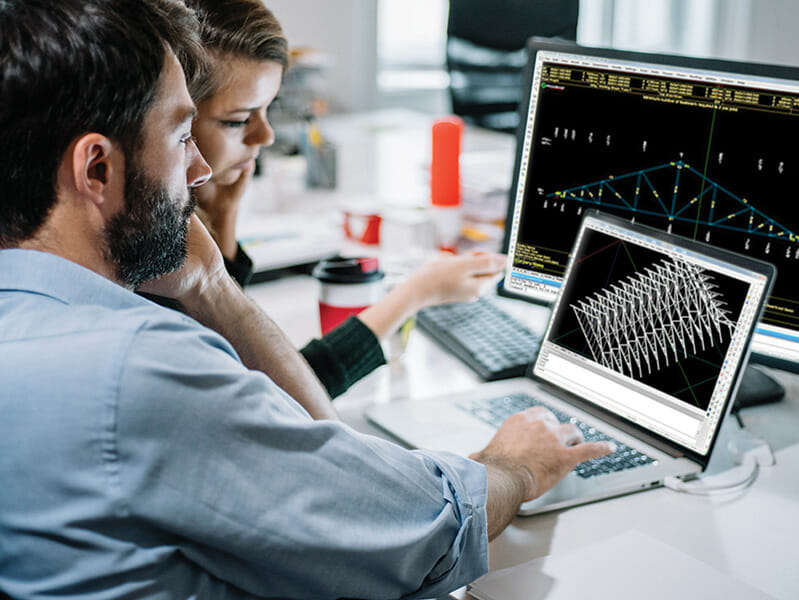
The FRAMECAD® system incorporates sophisticated, integrated software platforms that automate the design, engineering, manufacturing, and construction processes, combined with technologically advanced roll forming equipment.
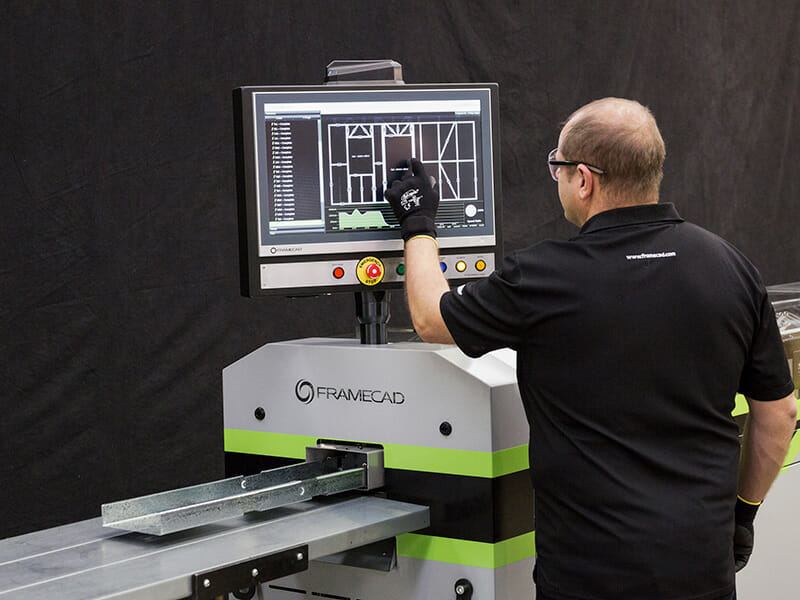
Further increases in efficiency for modular processes
With offsite or modular construction, the downstream efficiencies are evident: pre-assembling in controlled conditions speeds up installation onsite and drastically reduces rework. The process and technology innovations in the FRAMECAD system provide further improvements at these later stages while contributing additional benefits across the end-to-end process.
Design & Engineering: Increased flexibility and speed
Design-led construction removes additional time earlier in the project timeline. FRAMECAD’s advanced integrated software helps speed up the design and engineering processes. The fully compliant software has building codes built-in, ensuring all designs and engineering meets local codes and regulations. Compliance removes lengthy delays in approvals and redesign processes. Focusing on the complete design upfront, you ensure all service requirements are included at the design stage, allowing for production planning and any subassemblies requirements.
According to McKinsey, the construction industry is moving towards a manufacturing-like system of mass production, relying on smart technologies, such as the Internet of Things (IoT), big data analytics, and cloud computing to conduct end-to-end design and build automation. The use of these techniques could boost the industry’s productivity by five to tenfold.
BIM (Building Information Modelling)-enabled, fully-integrated construction is set to drive the complete process from design to manufacture, fabrication, and installation. Therefore, the construction process must be seamlessly integrated to take full advantage of the benefits BIM offers, ensuring the final building model is reflective of all changes.
The FRAMECAD software suite offers streamlined building information modeling integration with its latest software developments.
Ms. Haynes confirms all FRAMECAD® software releases include planned upgrades from a comprehensive product development road map. In addition, direct customer feedback and requirements further refine and update this plan.
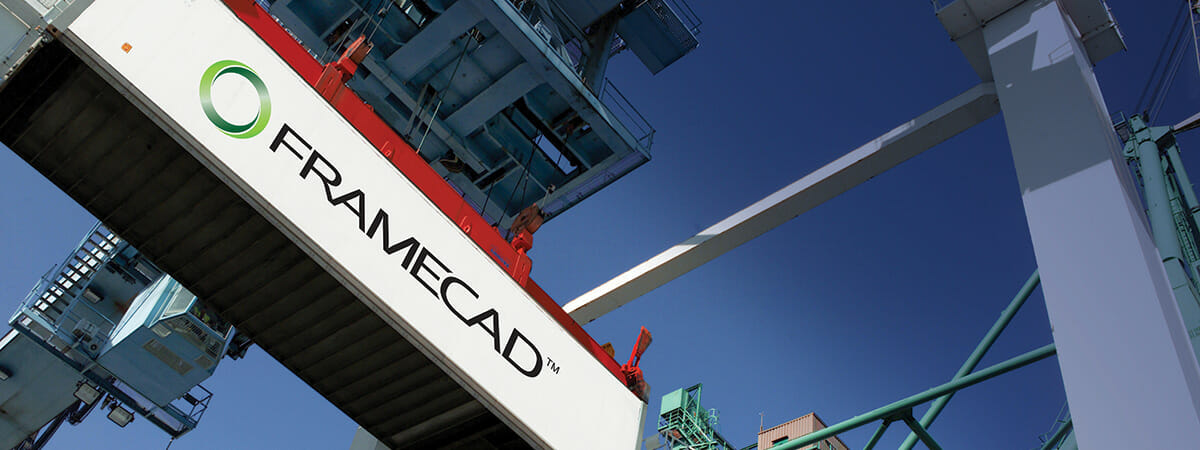
Manufacturing & Production: Precision, accuracy & control
FRAMECAD’s integrated machine control software speeds up the manufacturing process. The control software utilizes high contrast, touch-operational screens operated from the production floor, allowing complete control of the manufacturing process.
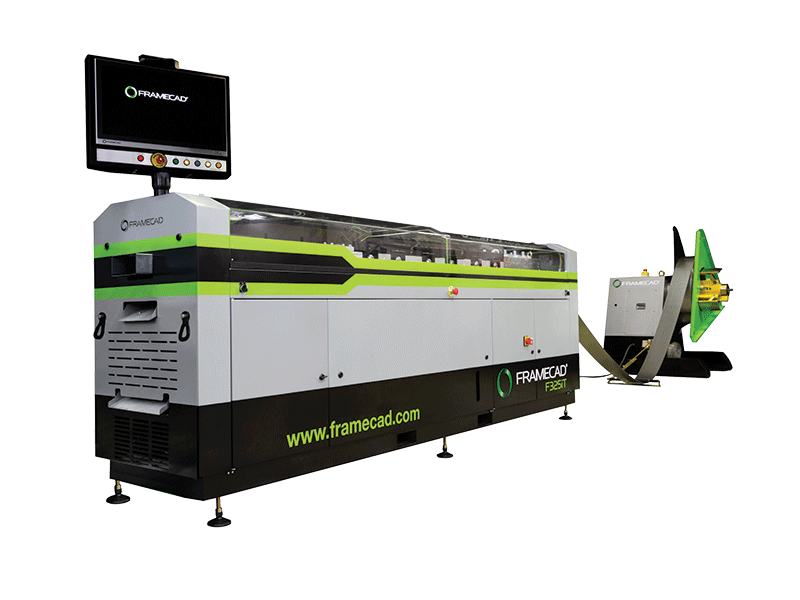
Technologically advanced roll-forming equipment produces millimeter-precise frames precisely as designed. FRAMECAD® manufacturing systems utilize a specialized servo-drive motor combined with a world-leading encoder system, creating punches, cuts, and chamfers with less than 0.01mm tolerance for perfectly accurate frames assembled quickly and efficiently, removing the need for costly rework.
Each manufacturing system is designed and built for the individual customer’s requirements, often driving new improvements that work their way across the product line. For example, a recent customer request required additional non-standard tooling, which led to the comprehensive F325iT-L manufacturing system. As with its software, FRAMECAD has a complete product development program that runs alongside any customer-driven enhancements.
Construction: Rapid construction, the smart way
In line with modular construction principles, FRAMECAD’s system enables simple construction onsite, reducing the need for skilled labor, simplifying logistics, and virtually eliminating material wastage on site.
For situations where site conditions make access challenging or in remote locations, FRAMECAD® has reimagined traditional production, developing a mobile factory solution. The FRAMECAD Mobile Factory is a completely secure, self-contained steel frame roll-forming production facility able to be located anywhere needed, especially in remote areas with little or no infrastructure. It offers a perfect solution for disaster-relief and humanitarian situations. Organizations like the US Navy use this innovative solution to provide more effective and efficient disaster relief and humanitarian assistance.
Business Systems & Support services: Better visibility for real-time decision making
WiFi-enabled, the innovative technology of FRAMECAD Factory 2 control software enables real-time data to be uploaded to My Production, a tool within the exclusive MyFRAMECAD customer portal. As a result, FRAMECAD customers can turn this production data into powerful business insights, gain better control of output and results, and optimize production from anywhere in the world.
MyFRAMECAD is constantly updated to deliver a better customer experience. The platform currently includes an online shop for software licenses renewal and purchasing
of parts and other services. It also houses Knowledge Center, a unique information library full of thousands of resources to help FRAMECAD customers optimize their FRAMECAD software and roll forming equipment and build better using cold-formed steel.
Plans are underway for several technology developments for the MyFRAMECAD platform through late 2021 and into 2022.
Innovation thinking is driving the global growth of modular construction. Modular and offsite methodologies are creating positive waves across the construction industry, forcing a rethinking of processes and outputs, challenging conventions, and pushing the boundaries of traditional thinking. FRAMECAD’s constant focus on innovation mirrors this growth. By looking at each step in the process and delivering additional value, the potential improvements are exponential.
Mark Taylor, FRAMECAD’s Founder and CEO, sums up the company’s innovation ethos: “The speed of change in the world demands a new approach to construction… At FRAMECAD®, we look towards modern approaches to construction, and for more than 30 years, we have been so excited about innovation in Cold-Formed Steel construction to meet these needs.”
More from Modular Advantage
Mind the Gap: The Interface Between Onsite and Offsite Construction
Every design for manufacture and assembly (DfMA) project — modular, mass timber, or panelized — is really two projects joined at a seam. One is built in a controlled factory to millimeter tolerances; the other in the field, in weather, to the looser tolerances of poured concrete and human hands. Between them sits an interface: where the factory’s precision meets the site’s reality.
Rules, Rails & Repeatability: Applying DfMA to Modular Healthcare
DfMA offers several advantages for healthcare projects, with faster delivery among the most valuable. Schedule matters when building new facilities, expanding campuses, renovating existing space or bringing care closer to communities that need it.
Precision and Possibility: Demands of DfMA and What Modular Mass Timber Makes Possible
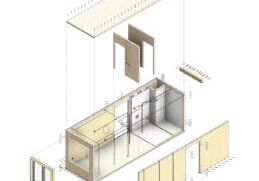
Mass timber does not automatically create an efficient modular building. Its precision makes early coordination more important: fabricated components will accurately reproduce both the team’s solutions and its mistakes. The material’s advantages are realized only when supported by an equally precise design and delivery process.
Catch It in the Factory, Not in the Field: Smarter Testing for Modular Builds
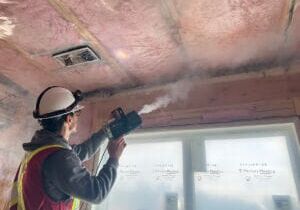
Integrating watertightness and airtightness testing into factory workflows transforms quality assurance from a reactive process into a proactive commissioning strategy. It ensures that every module shipped is field ready and resilient for transportation while also supporting the ability of the modular construction industry to make buildings better.
Modular Construction Contracts: Key Considerations for Successful Canadian Projects
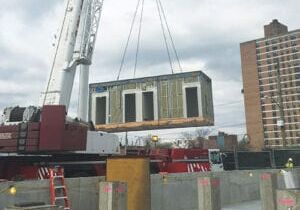
Starting a modular project with a well-developed contract protects both the owner and the contractor. It will help keep the project on track and on budget, and it will improve quality from the factory floor to final installation on-site.
Modular by Design: Turning Architecture into a Manufacturing System
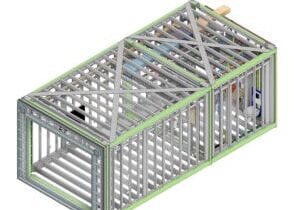
Modular construction is often presented as a faster way to build. Speed, however, is only one part of its value. The larger opportunity is to create a coordinated design and production system that improves quality, reduces uncertainty, and allows a building to move efficiently from concept design through manufacturing, transportation, installation, and completion.
Repeatability Begins with Trust: What Alora at Dry Creek Reveals About Scaling Modular Housing
Alora at Dry Creek, a 329-unit, multifamily community comprising five four-story buildings in Centennial, Colorado, demonstrates how repeatable design, standardized manufacturing and early collaboration can work together to create a model that is not only faster to deliver, but easier to replicate across future projects.
T.R. Arnold: The Art of Third-Party Inspections
T.R. Arnold (TRA), a third-party inspection company in Elkhart, Indiana, contracts with modular manufacturers across the US. Manufacturers register with each state to which they intend to send their modules and may be required to hire a third-party inspection company.
Creating an ‘Ecosystem for Innovation:’ 50+ Years of Modular Construction Oversight in Virginia
Virginia’s modular building program began in 1973, with the implementation of the Virginia Industrialized Building Unit and Mobile Home Safety Regulations. Now it’s leading the country in modular code adoption.
Understanding Thermal Barriers Compliance Methods & Emerging NFPA-275 Foam Plastic Technologies
New fire barrier technologies are improving total costs and margins in major areas of construction, such as commercial, government, union and prevailing wage projects. These benefits translate into other large fringe areas, such as agriculture, commercial cold storage facilities, grow houses, outbuildings, military and aviation hangars.