Victor Masso: Expanding Modular in Puerto Rico
The best piece of professional advice that Victor Masso, Vice President of Operations at 2 Go Storage in Puerto Rico, received has been passed down through three generations in his family: ‘Si no lo vas hacer bien, para eso no lo hagas,’ which means, ‘If you aren’t going to do it right, then don’t do it at all.’ Masso has certainly taken this principle to heart. “It has guided me throughout my career, instilling a commitment to excellence and ensuring that every project we undertake at 2 Go Storage is completed to the highest standards.”
Masso joined the company, that was started by his grandfather and father, in 2018 to develop a modular building division in the wake of the devastation caused by Hurricane Maria in 2017. Prior to joining the company, he had worked in the industry for about four years focusing on pharmaceutical, commercial, and government projects. He leveraged that experience to find new opportunities to expand their modular business. Masso remembered, “Schools were affected, businesses were affected, and modular buildings offered a fast, easy, and effective solution.”
2 Go Storage’s manufacturing facility is strategically located in San Lorenzo, a small town in the heart of Puerto Rico. It’s centrally located, allowing them to serve clients across the island. The 30-person team serves a variety of market sectors, including family-owned businesses and small companies, larger pharmaceuticals, hospitals, institutional clients, and events. They specialize in module assembly, customization, refurbishment, and cleaning.
Running a modular assembly company on an island is certainly a challenge. “You have to anticipate what things you’ll need and sometimes you have to be brave and buy more than you can handle.” 2 Go assembles modules that are built overseas, which means it can take three to four months for them to arrive. This requires a lot of preplanning, especially when it comes to finances. “We continue to invest in our inventory to ensure we are prepared to serve our clients in any situation. It’s a cash-intensive process, but it allows us to respond quickly and efficiently to our clients’ needs.”
Viewing the Competition as Collaborators
Since the 2017 hurricane, the island has embraced renewable energy, temporary building options, and non-traditional space solutions. This has led to an increase in competition, which Masso doesn’t mind at all. “We don’t view other companies in the market as mere competitors, but rather as collaborators in our shared mission to contribute to the island’s reconstruction efforts. Each one brings their own expertise and solutions to the table.”

Victor Masso joined 2 Go Storage, a compnay started by his grandfather and father, in 2018 to develop a modular building division in the wake of the devastation caused by Hurricane Maria in 2017.
Initially, they provided only 8’x20’ modular offices. Their offerings have expanded over the years and now the team has the capability to design and build two-story modular structures equipped with amenities such as bathrooms, interconnecting rooms, and terraces. Masso calls this evolution “a quantum leap from our beginnings. It enables us to offer solutions tailored to our clients’ various applications, from educational facilities to corporate offices and hospitality suites.”
One of their more high-profile projects involved partnering with the PGA Tour Puerto Rico Open, where they provided setup of temporary offices, including media facilities, tour official offices, volunteer offices, hospitality suites, and food and beverage stands. Overall, they orchestrated the movement and assembly of over 60 modular units within a short timeframe to accommodate the event’s requirements.
On another recent project, they collaborated with Palmas Academy, a private school in Humacao, to construct modular classrooms. They provided various 32’x20’modular classrooms and a larger 48’x20’ modular classroom, helping to contribute to enhancing the educational environment for the students and faculty.
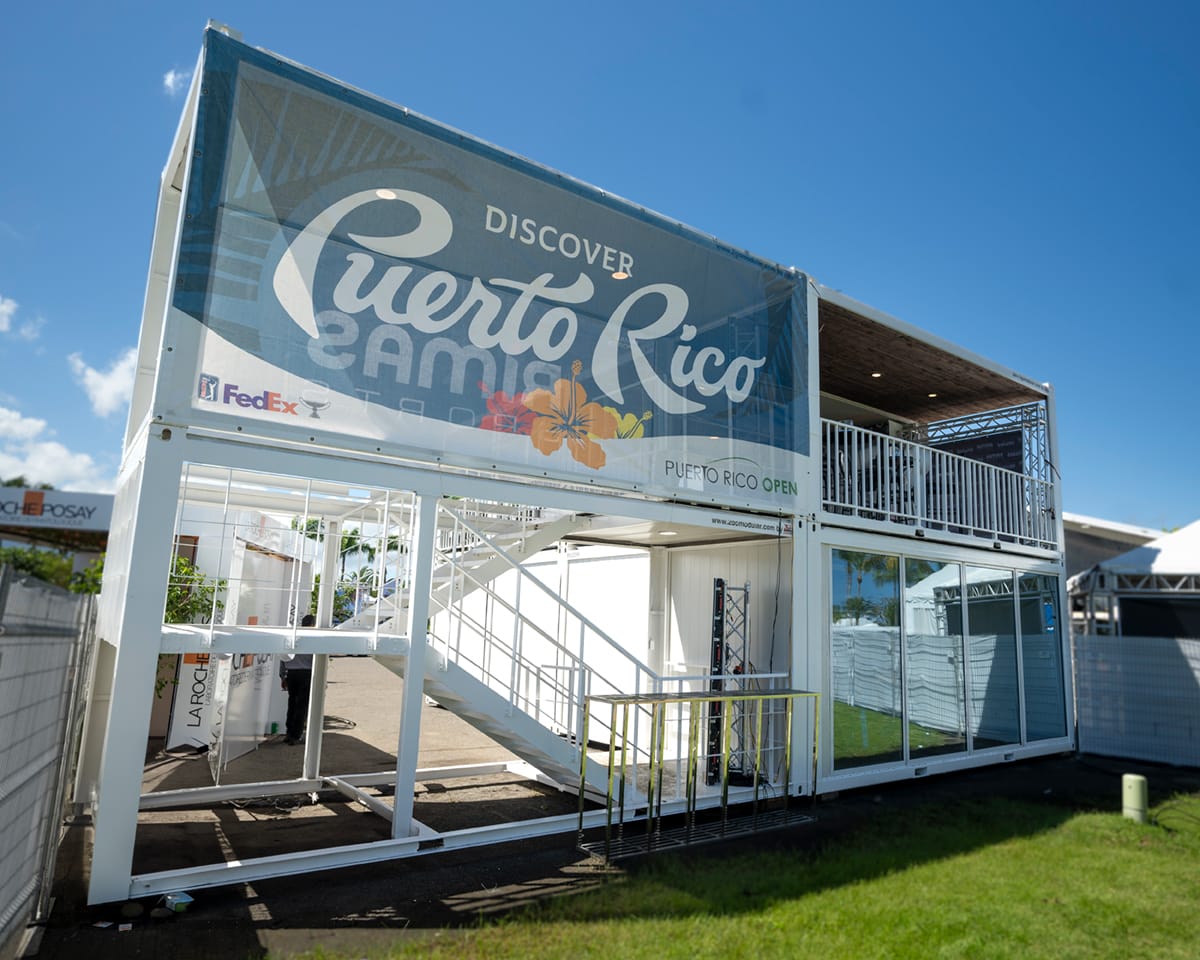
2 Go Storage provides modular and containerized buildings in Puerto Rico.
Three Keys to Success
Masso credits the success of 2 Go to three things: relentless innovation, unwavering commitment to customer service, and a culture of transparency.
“First, we continuously strive to push the boundaries of what’s possible, embracing innovation as a driving force behind our product and services. Second, our dedication to providing exceptional customer service ensures that every client receives personalized attention and tailored solutions that exceed their expectations. Last, transparency lies at the core of our operations, fostering trust and accountability in every interaction with our clients. These three principles collectively form the foundation of our success and guide us in our mission to deliver excellence in every aspect of our business.”
Masso hopes their current success continues into the future, with plans to continue the evolution of their products and services, expand beyond Puerto Rico to other Caribbean islands and potentially the mainland US, and to solidify 2 Go Storage’s position as a leader in modular construction and storage solutions.
For those just entering the field, he advises: “Remember that a company’s success is primarily fueled by its team and the people who work there—it comes from the ground up, not always from the top. Also, viewing challenges as opportunities for growth will help you succeed in this dynamic field.”
About the Author: Dawn Killough is a freelance construction writer with over 25 years of experience working with construction companies, subcontractors and general contractors. Her published work can be found at dkilloughwriter.com.
More from Modular Advantage

Mind the Gap: The Interface Between Onsite and Offsite Construction
Every design for manufacture and assembly (DfMA) project — modular, mass timber, or panelized — is really two projects joined at a seam. One is built in a controlled factory to millimeter tolerances; the other in the field, in weather, to the looser tolerances of poured concrete and human hands. Between them sits an interface: where the factory’s precision meets the site’s reality.
Rules, Rails & Repeatability: Applying DfMA to Modular Healthcare
DfMA offers several advantages for healthcare projects, with faster delivery among the most valuable. Schedule matters when building new facilities, expanding campuses, renovating existing space or bringing care closer to communities that need it.
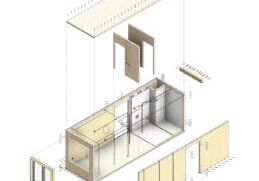
Precision and Possibility: Demands of DfMA and What Modular Mass Timber Makes Possible
Mass timber does not automatically create an efficient modular building. Its precision makes early coordination more important: fabricated components will accurately reproduce both the team’s solutions and its mistakes. The material’s advantages are realized only when supported by an equally precise design and delivery process.
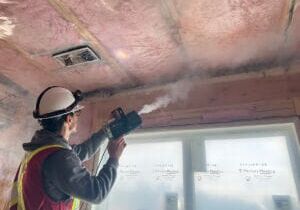
Catch It in the Factory, Not in the Field: Smarter Testing for Modular Builds
Integrating watertightness and airtightness testing into factory workflows transforms quality assurance from a reactive process into a proactive commissioning strategy. It ensures that every module shipped is field ready and resilient for transportation while also supporting the ability of the modular construction industry to make buildings better.
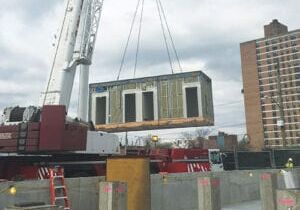
Modular Construction Contracts: Key Considerations for Successful Canadian Projects
Starting a modular project with a well-developed contract protects both the owner and the contractor. It will help keep the project on track and on budget, and it will improve quality from the factory floor to final installation on-site.
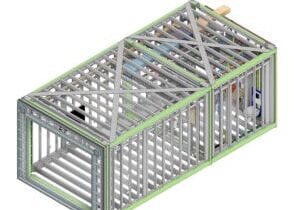
Modular by Design: Turning Architecture into a Manufacturing System
Modular construction is often presented as a faster way to build. Speed, however, is only one part of its value. The larger opportunity is to create a coordinated design and production system that improves quality, reduces uncertainty, and allows a building to move efficiently from concept design through manufacturing, transportation, installation, and completion.

Repeatability Begins with Trust: What Alora at Dry Creek Reveals About Scaling Modular Housing
Alora at Dry Creek, a 329-unit, multifamily community comprising five four-story buildings in Centennial, Colorado, demonstrates how repeatable design, standardized manufacturing and early collaboration can work together to create a model that is not only faster to deliver, but easier to replicate across future projects.

T.R. Arnold: The Art of Third-Party Inspections
T.R. Arnold (TRA), a third-party inspection company in Elkhart, Indiana, contracts with modular manufacturers across the US. Manufacturers register with each state to which they intend to send their modules and may be required to hire a third-party inspection company.
Creating an ‘Ecosystem for Innovation:’ 50+ Years of Modular Construction Oversight in Virginia
Virginia’s modular building program began in 1973, with the implementation of the Virginia Industrialized Building Unit and Mobile Home Safety Regulations. Now it’s leading the country in modular code adoption.
Understanding Thermal Barriers Compliance Methods & Emerging NFPA-275 Foam Plastic Technologies
New fire barrier technologies are improving total costs and margins in major areas of construction, such as commercial, government, union and prevailing wage projects. These benefits translate into other large fringe areas, such as agriculture, commercial cold storage facilities, grow houses, outbuildings, military and aviation hangars.