
Maceo May
Maceo May is a six-story, all-electric modular construction, affordable housing development located on Treasure Island in San Francisco Bay. The climate-responsive design provides 104 homes for formerly homeless veterans and their families with a strong focus on decarbonization, resilience and wellness. The apartment building offers 1 on-site manager’s unit, and a mix of 24 studio, 47 one-bedroom and 34 two-bedroom units.
This structure marks the first residential and 100% affordable housing development on Treasure Island. Amenities include on-site residential services, property management offices, a community room, shared laundry room, parking, bicycle storage, outdoor common areas, a barbeque, a forested healing garden, a playground, and a roof deck.


Project Name: Maceo May
Location: 55 Cravath Street, Treasure Island, San Francisco
Square Footage: 104,500 on 0.74 acres
Architect: Mithun
General Contractor/Builder: Cahill Contractors
Developers: Swords to Plowshares, Chinatown Community Development Center
Photography: Bruce Damonte
Product Featured: All Weather Series 6000 casement fixed and multi lite configurations. Custom colors and custom shadow box.
Resilience Strategies
Net zero capable, Maceo May features All Weather Architectural Aluminum Series 6000 windows to maximize energy efficiency. Passive design strategies and superior ventilation also limit energy use, create good air quality, and support the thermal comfort of residents The operable All Weather Series 6000 windows are oriented to take advantage of San Francisco Bay breezes. The Series 6000 windows are thermally broken, have a u-value of 0.34 and a solar-heat gain resistance of 0.19, and the double-pane low-E glazing is argon filled for a high level of insulation and resistance to heat transfer. South- and west-facing windows are shaded. In residential units, ceiling fans and operable windows located at different heights maximize airflow.
Modular Construction
Designed by Mithun and constructed by Cahill Contractors, Maceo May’s overall design is thoughtful, colorful, and detail oriented. The white facade is amplified by red casings that surround each All Weather window. The volume is broken up between a series of townhouses and a mid-rise. This punctuation further embeds the building within its urbanizing landscape.
Mithun chose volumetric stick-frame modular construction to reduce construction cost and duration, speeding the delivery of this much needed housing. While construction work was occurring on the Treasure Island site, 176 wood frame ‘mod boxes’ were being fabricated in a factory. The fully finished units were craned into place atop a concrete podium structure which had been under construction in parallel to factory production Once the mods were set, site work proceeded by connecting MEPS systems, and installing roofing and exterior cladding.
The volumetric modular approach produced an estimated 8% cost savings and reduced construction lead time by four months. Delivering much-needed housing in a faster and more cost effective construction method provided significant social impact on the lives of low-income communities, where the need for high quality, healthy, sustainable housing was the greatest.


Awards and Certification
Pursuing Fitwell certification, Maceo May emphasizes social cohesion and wellness with active design principles within the building to connect residents to each other and the natural environment via the adjacent shared public way, community park and island trail network.
On track to earn a GreenPoint Gold certification, the project prioritizes resilience and sustainability by utilizing healthy and durable materials throughout to withstand natural disasters and the effects of climate change. As such, the development is designed to be protected from sea level rise and to continue operations and remain safe and comfortable during periods of extreme heat, power outages, wildfire smoke, and seismic events.
More from Modular Advantage
MBI Town Halls 2026: Reflections from Boston
By the end of 2026 MBI’s Government Affairs team will have traveled over 6,000 air miles to bring Town Hall events to five different cities in two countries.
Mind the Gap: The Interface Between Onsite and Offsite Construction
Every design for manufacture and assembly (DfMA) project — modular, mass timber, or panelized — is really two projects joined at a seam. One is built in a controlled factory to millimeter tolerances; the other in the field, in weather, to the looser tolerances of poured concrete and human hands. Between them sits an interface: where the factory’s precision meets the site’s reality.
Rules, Rails & Repeatability: Applying DfMA to Modular Healthcare
DfMA offers several advantages for healthcare projects, with faster delivery among the most valuable. Schedule matters when building new facilities, expanding campuses, renovating existing space or bringing care closer to communities that need it.
Precision and Possibility: Demands of DfMA and What Modular Mass Timber Makes Possible
Mass timber does not automatically create an efficient modular building. Its precision makes early coordination more important: fabricated components will accurately reproduce both the team’s solutions and its mistakes. The material’s advantages are realized only when supported by an equally precise design and delivery process.
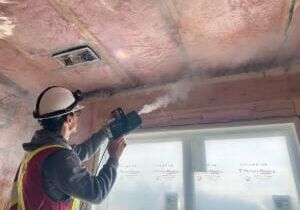
Catch It in the Factory, Not in the Field: Smarter Testing for Modular Builds
Integrating watertightness and airtightness testing into factory workflows transforms quality assurance from a reactive process into a proactive commissioning strategy. It ensures that every module shipped is field ready and resilient for transportation while also supporting the ability of the modular construction industry to make buildings better.
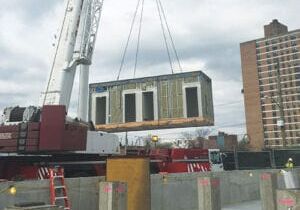
Modular Construction Contracts: Key Considerations for Successful Canadian Projects
Starting a modular project with a well-developed contract protects both the owner and the contractor. It will help keep the project on track and on budget, and it will improve quality from the factory floor to final installation on-site.
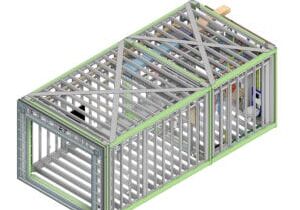
Modular by Design: Turning Architecture into a Manufacturing System
Modular construction is often presented as a faster way to build. Speed, however, is only one part of its value. The larger opportunity is to create a coordinated design and production system that improves quality, reduces uncertainty, and allows a building to move efficiently from concept design through manufacturing, transportation, installation, and completion.
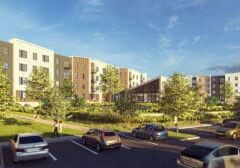
Repeatability Begins with Trust: What Alora at Dry Creek Reveals About Scaling Modular Housing
Alora at Dry Creek, a 329-unit, multifamily community comprising five four-story buildings in Centennial, Colorado, demonstrates how repeatable design, standardized manufacturing and early collaboration can work together to create a model that is not only faster to deliver, but easier to replicate across future projects.

T.R. Arnold: The Art of Third-Party Inspections
T.R. Arnold (TRA), a third-party inspection company in Elkhart, Indiana, contracts with modular manufacturers across the US. Manufacturers register with each state to which they intend to send their modules and may be required to hire a third-party inspection company.
Creating an ‘Ecosystem for Innovation:’ 50+ Years of Modular Construction Oversight in Virginia
Virginia’s modular building program began in 1973, with the implementation of the Virginia Industrialized Building Unit and Mobile Home Safety Regulations. Now it’s leading the country in modular code adoption.