
The Sphere Made Possible with Exterior Wall Panels
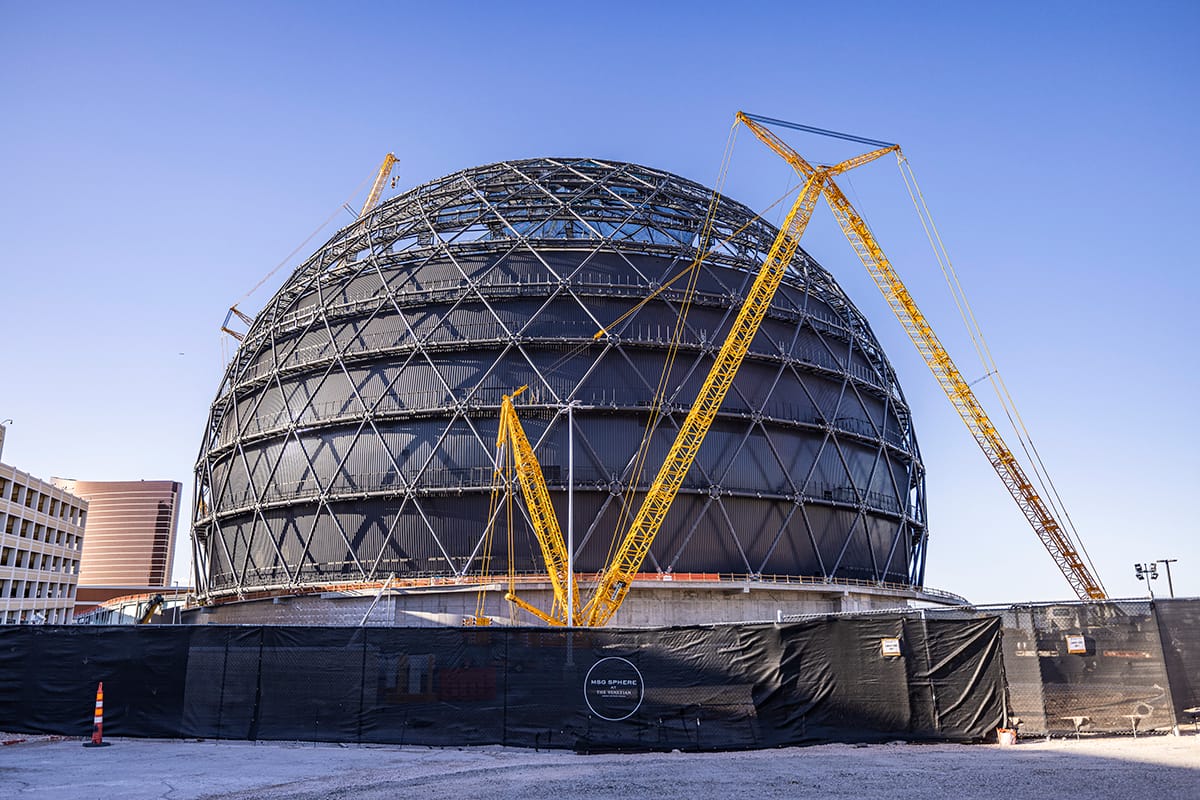
Have you heard the buzz? The Sphere, noted as the world’s largest spherical structure, is the hottest new entertainment venue in Las Vegas that opened in the fall of 2023. It seats almost 18,000 people and touts 4D immersive technology that take live shows to the next level.
This one-of-a-kind structure required one-of-a-kind building materials and exterior cladding that could accommodate the atypical geometries, project timelines, and significant daily foot traffic. Offsite construction, in the form of Dryvit’s Outsulite prefabricated panels of continuous insulation (CI), was the key method for streamlining the façade installation and ensuring quality control for the difficult building connections.
Efficiencies in Exterior Wall Panelization
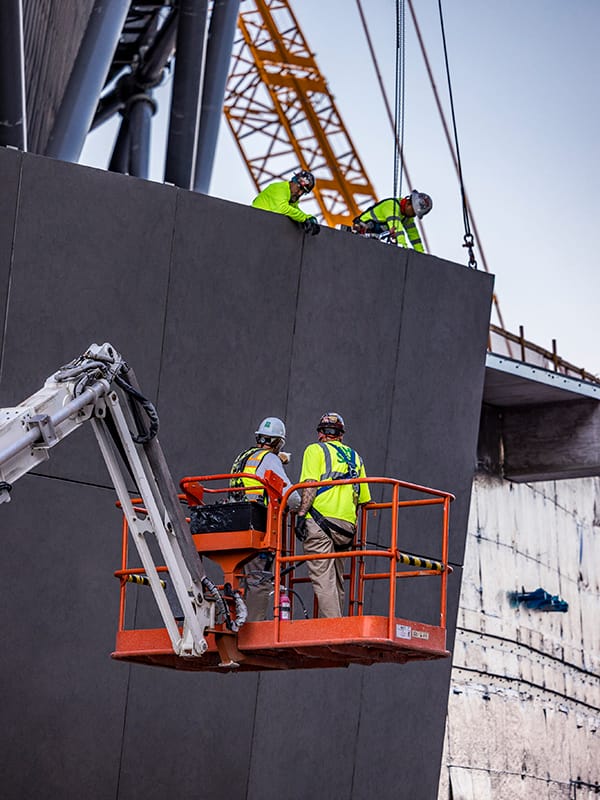
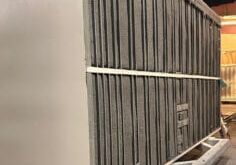
For the base of the Sphere, an angled collar was designed using uniquely angled prefabricated EIFS wall panels from Dryvit. To speed the panelization process even further, an offsite fabrication yard was set up just two miles from the construction site. There, they received the metal stud frames, and the 142 CI panels were assembled with Dryvit insulation and finishes.
While the EIFS panels were being prefabricated, crews worked on-site to install the layout and clip system. Placement had to be exact for the multi-angled walls to fit precisely. Detailed plans and drawings during the pre-construction ensured the accuracy of panel prefabrication and installation.
The Challenge
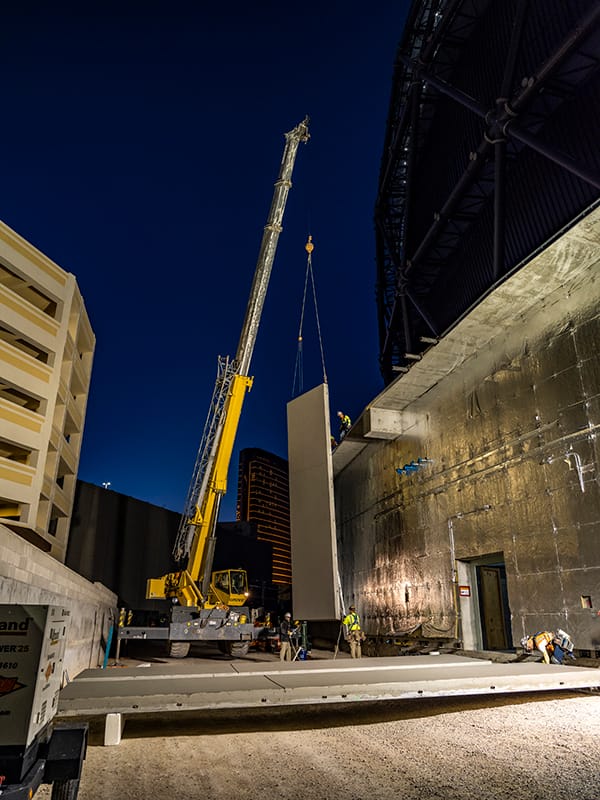
To install the CI panels, a 40-ton crane flew the numbered panels into place. The trapezoidal exterior wall assemblies were positioned at varying angles to make the flat panels form a curved shape. The EIFS panels were a single story tall and started with a 16-foot panel at the base and increased up to 37 feet for an upward slope that leaned out to form the middle of the sphere. Panels then reversed in length from 37 feet to 16 feet to the top of the sphere.
The exterior wall panelization approach with Dryvit streamlined construction and enabled the Sphere to have a sturdy base that is highly insulated and durable enough to withstand the consistent pedestrian traffic.
Introductory Guide to Off-Site Construction
Click the button below to learn more about the benefits and various applications of prefabrication and modular building in this Introductory Guide to Off-Site Construction.
More from Modular Advantage
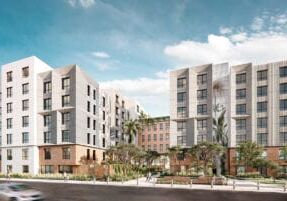
Mind the Gap: The Interface Between Onsite and Offsite Construction
Every design for manufacture and assembly (DfMA) project — modular, mass timber, or panelized — is really two projects joined at a seam. One is built in a controlled factory to millimeter tolerances; the other in the field, in weather, to the looser tolerances of poured concrete and human hands. Between them sits an interface: where the factory’s precision meets the site’s reality.
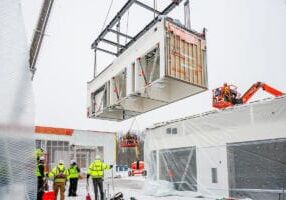
Rules, Rails & Repeatability: Applying DfMA to Modular Healthcare
DfMA offers several advantages for healthcare projects, with faster delivery among the most valuable. Schedule matters when building new facilities, expanding campuses, renovating existing space or bringing care closer to communities that need it.
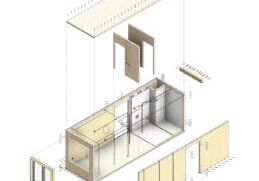
Precision and Possibility: Demands of DfMA and What Modular Mass Timber Makes Possible
Mass timber does not automatically create an efficient modular building. Its precision makes early coordination more important: fabricated components will accurately reproduce both the team’s solutions and its mistakes. The material’s advantages are realized only when supported by an equally precise design and delivery process.
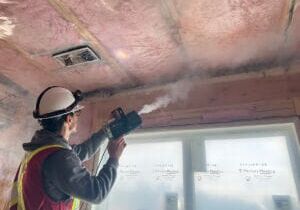
Catch It in the Factory, Not in the Field: Smarter Testing for Modular Builds
Integrating watertightness and airtightness testing into factory workflows transforms quality assurance from a reactive process into a proactive commissioning strategy. It ensures that every module shipped is field ready and resilient for transportation while also supporting the ability of the modular construction industry to make buildings better.
Modular Construction Contracts: Key Considerations for Successful Canadian Projects
Starting a modular project with a well-developed contract protects both the owner and the contractor. It will help keep the project on track and on budget, and it will improve quality from the factory floor to final installation on-site.
Modular by Design: Turning Architecture into a Manufacturing System
Modular construction is often presented as a faster way to build. Speed, however, is only one part of its value. The larger opportunity is to create a coordinated design and production system that improves quality, reduces uncertainty, and allows a building to move efficiently from concept design through manufacturing, transportation, installation, and completion.
Repeatability Begins with Trust: What Alora at Dry Creek Reveals About Scaling Modular Housing
Alora at Dry Creek, a 329-unit, multifamily community comprising five four-story buildings in Centennial, Colorado, demonstrates how repeatable design, standardized manufacturing and early collaboration can work together to create a model that is not only faster to deliver, but easier to replicate across future projects.

T.R. Arnold: The Art of Third-Party Inspections
T.R. Arnold (TRA), a third-party inspection company in Elkhart, Indiana, contracts with modular manufacturers across the US. Manufacturers register with each state to which they intend to send their modules and may be required to hire a third-party inspection company.
Creating an ‘Ecosystem for Innovation:’ 50+ Years of Modular Construction Oversight in Virginia
Virginia’s modular building program began in 1973, with the implementation of the Virginia Industrialized Building Unit and Mobile Home Safety Regulations. Now it’s leading the country in modular code adoption.
Understanding Thermal Barriers Compliance Methods & Emerging NFPA-275 Foam Plastic Technologies
New fire barrier technologies are improving total costs and margins in major areas of construction, such as commercial, government, union and prevailing wage projects. These benefits translate into other large fringe areas, such as agriculture, commercial cold storage facilities, grow houses, outbuildings, military and aviation hangars.