Reimagining Temporary Infrastructure: Hilo Wastewater Treatment Plant Project
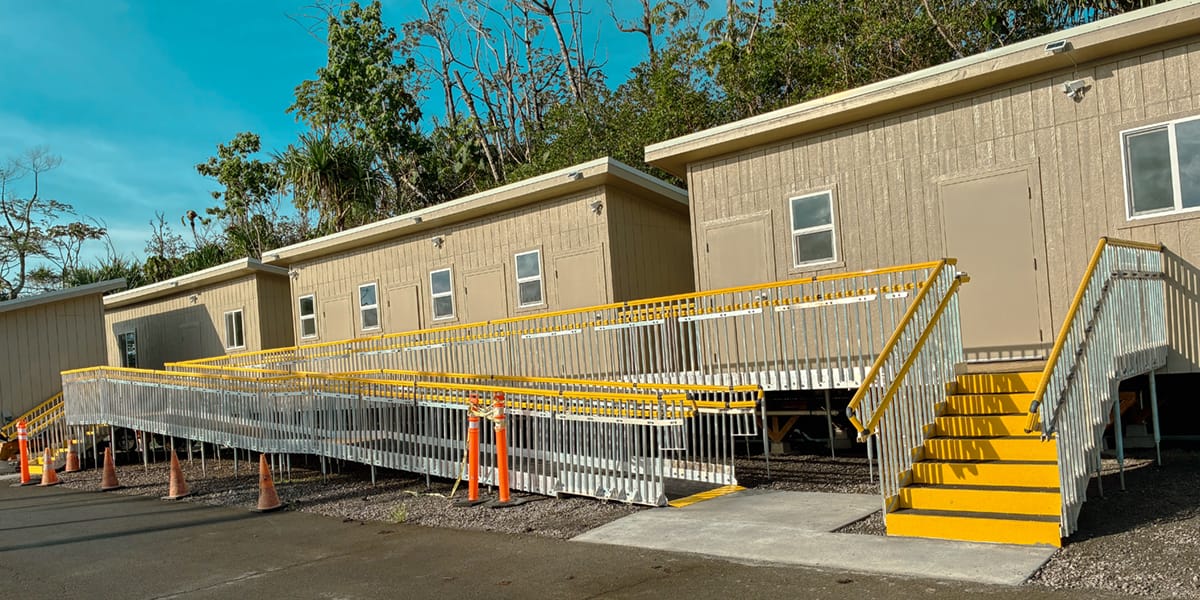

When Hawaiʻi County launched its ambitious $337 million rehabilitation of the Hilo Wastewater Treatment Plant, the project demanded thoughtful solutions to maintain safe, reliable access for staff throughout ongoing construction. Nan Inc, Hawaii’s largest locally owned general contractor, addressed this challenge with modular solutions to ensure compliance, consistent quality, and rapid deployment to deliver a highly time sensitive result. Modular construction was key to sustaining operations during a major municipal infrastructure upgrade.
Hilo, Infrastructure, and the Need for Continuity
Hilo is known for its cultural richness and dramatic landscapes, but behind the scenes, its wastewater infrastructure performs the critical task of treating roughly 3 million gallons of water each day for about 30,000 residents. Nan Inc had to develop a plan to relocate essential personnel to a temporary campus without derailing operations during rehabilitation efforts.
These temporary structures - modular buildings arranged to support administrative and operational continuity - needed to be quickly deployed and relocatable for future use throughout the course of rehabilitation. Nan Inc adopted modular techniques to quickly design, build, and deliver for immediate use. That’s when they encountered a major problem - establishing accessibility in a rapidly deployed temporary environment that required expertise well outside of their capabilities.
Traditional site‑built access solutions, such as poured‑in‑place concrete or custom‑fabricated steel ramps, were immediately ruled out due to cost, long lead times, and the difficulty of adjusting them as the project evolved. Likewise, the team noted that light duty aluminum ramps lacked stability, slip resistance, and reliability needed for daily, long‑term use in a wet coastal climate, let alone the durability to relocate with the buildings down the road.
The Challenge: A Compliance‑Driven, Fast‑Moving Environment
Nan Inc required an access system that was fully ADA and building code compliant, structurally robust, and flexible enough to integrate seamlessly with the modular buildings planned for the site. The system also needed to be assembled efficiently by onsite personnel with minimal disruption. The challenge was not only technical, but also logistical. Nan needed to deliver:
- A complete, code compliant access route between modular units.
- A solution that could be rapidly engineered, approved, shipped to Hilo, and installed with only limited on‑island support.
- A design that would withstand environmental exposure and heavy use.
- A system flexible enough to change along with the construction phasing.
The Approach: Modular Access as Infrastructure
Nan Inc. required an access system that mirrored the benefits of the modular buildings themselves: pre-engineered, scalable, and rapidly deployable. The chosen solution was RightWay Pro, a modular walkway, stair, and ramp system engineered for rapid deployment and long-term durability. Though modular access systems are often associated with simple temporary use cases, the Hilo project illustrates how they can act as strategic infrastructure - bridging the gap between permanent and temporary construction.
The design process focused on clarity and adaptability. Using pre-engineered components, the access system was configured to match site elevations, distances between structures, and required turning space. These elements were refined in days rather than weeks, critical in an active construction environment where schedules shift quickly.
Once approved, the full system was shipped to Hilo and installed with onsite personnel. No specialized subcontractors or complex fabrication steps were necessary. The universal modules arrived ready to assemble into walkway, ramp, and stair structures, providing predictable installation timeframes that fit the project’s tight schedule.
Field Experience: A One‑Week Transformation
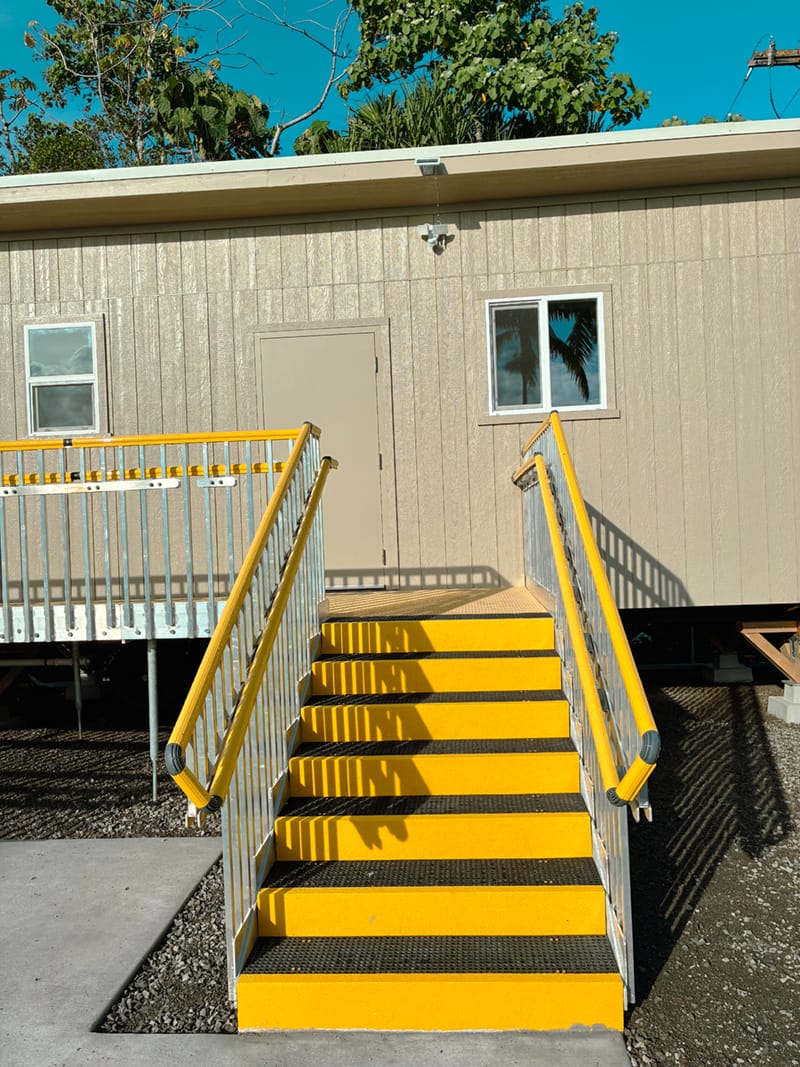
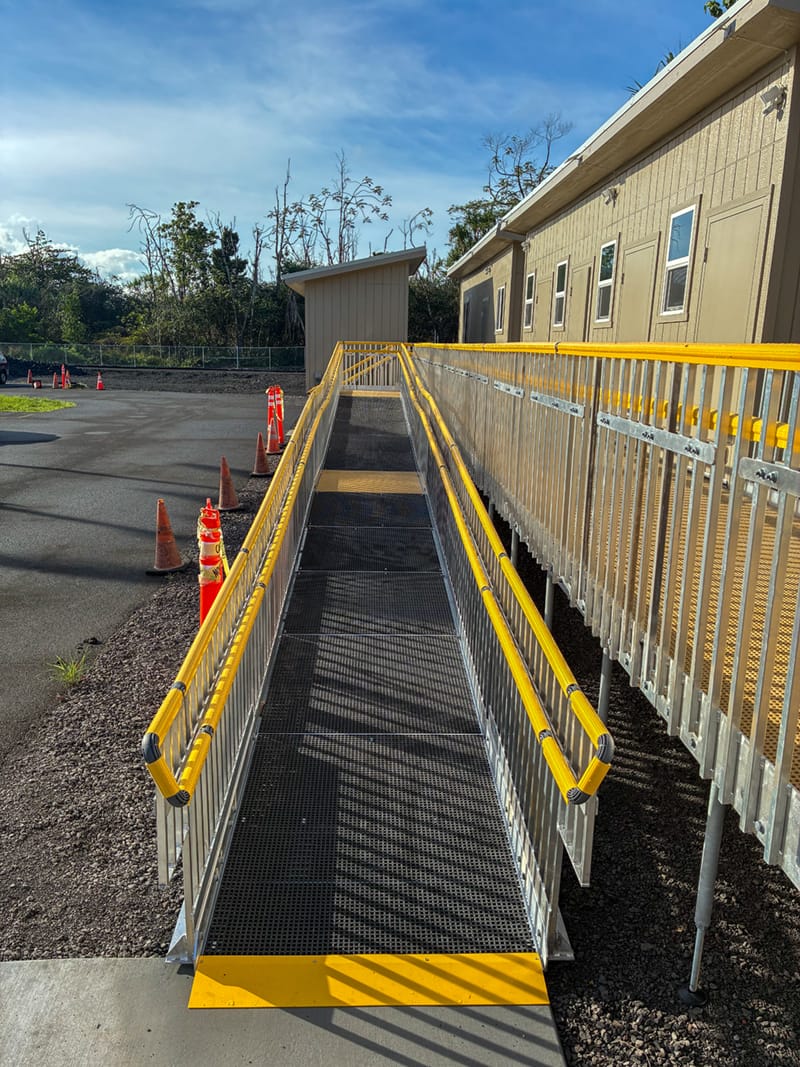
One of the most defining characteristics of this project was speed. Within just one week of starting installation, the temporary campus had a fully functional access system connecting multiple modular buildings. Crews were able to continue their work without navigating unsafe or improvised walkways, improving safety even during construction.
The system’s slip‑resistant FRP grating proved particularly important in Hilo’s rainy climate. Workers noted the increased stability underfoot compared to aluminum alternatives, which can become slick when wet or degrade more quickly in coastal environments.
Equally important was the non‑penetrating design, with the access system secure through weight and geometry alone. The adaptive leg system allowed for adjustments in the field for a reliable, level walking surface. This supported the need for rapid deployment by avoiding extensive, time consuming concrete work underneath the system.
Benefits to the Project Team
By treating the access system as a modular component of the total solution instead of a site-built afterthought, Nan Inc. realized several strategic advantages:
- Compressed Timelines: Design revisions took days, ensuring the campus was operational without delaying the broader rehabilitation schedule.
- Self-Performance Efficiency: The system’s "ready-to-assemble" nature allowed the onsite team to handle installation, eliminating the need for specialized subcontractors.
- Dynamic Adaptability: As the plant rehabilitation moves through different phases, the modular components can be disassembled and reconfigured, turning a project expense into a relocatable asset.
- Military-Grade Durability: Built to exceed the lifespan of the temporary project, the hardware remains available for reuse across future municipal sites.
Lessons for Modular Construction Practitioners
The Hilo project underscores the growing role of modular infrastructure. Not only for buildings, but for the systems that make those buildings usable.
Key takeaways include:
- Temporary does not mean low‑performance. Modular access delivers performance comparable to permanent construction.
- Pre‑engineered systems accelerate timelines. Where traditional design cycles can cause delay, modular repetition and predictability enable fast movement.
- Modularity supports adaptive phasing. As projects evolve, access systems that can move with them enable more efficient workflows.
- Safety should remain central, even in temporary conditions. The ability to meet ADA and building code standards quickly is critical in municipal and industrial environments. There is no provision for avoiding these requirements in temporary applications.
As municipalities modernize critical infrastructure, projects like the Hilo Wastewater Treatment Plant rehabilitation reveal how temporary environments must rise to the same standards of accessibility, safety, and reliability as permanent facilities. Nan Inc’s approach to constructing a safe, flexible, and rapidly deployable access campus demonstrates how modular systems can function as essential infrastructure during long-term upgrades.
This project illustrates a larger shift taking place across the construction industry, where modularity, speed, and resilience increasingly shape the way temporary and permanent environments are designed, built, and experienced.
More from Modular Advantage
MBI Town Halls 2026: Reflections from Boston
By the end of 2026 MBI’s Government Affairs team will have traveled over 6,000 air miles to bring Town Hall events to five different cities in two countries.
Mind the Gap: The Interface Between Onsite and Offsite Construction
Every design for manufacture and assembly (DfMA) project — modular, mass timber, or panelized — is really two projects joined at a seam. One is built in a controlled factory to millimeter tolerances; the other in the field, in weather, to the looser tolerances of poured concrete and human hands. Between them sits an interface: where the factory’s precision meets the site’s reality.
Rules, Rails & Repeatability: Applying DfMA to Modular Healthcare
DfMA offers several advantages for healthcare projects, with faster delivery among the most valuable. Schedule matters when building new facilities, expanding campuses, renovating existing space or bringing care closer to communities that need it.
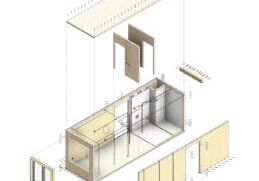
Precision and Possibility: Demands of DfMA and What Modular Mass Timber Makes Possible
Mass timber does not automatically create an efficient modular building. Its precision makes early coordination more important: fabricated components will accurately reproduce both the team’s solutions and its mistakes. The material’s advantages are realized only when supported by an equally precise design and delivery process.
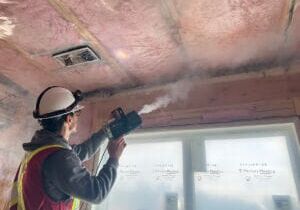
Catch It in the Factory, Not in the Field: Smarter Testing for Modular Builds
Integrating watertightness and airtightness testing into factory workflows transforms quality assurance from a reactive process into a proactive commissioning strategy. It ensures that every module shipped is field ready and resilient for transportation while also supporting the ability of the modular construction industry to make buildings better.
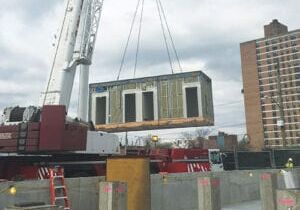
Modular Construction Contracts: Key Considerations for Successful Canadian Projects
Starting a modular project with a well-developed contract protects both the owner and the contractor. It will help keep the project on track and on budget, and it will improve quality from the factory floor to final installation on-site.
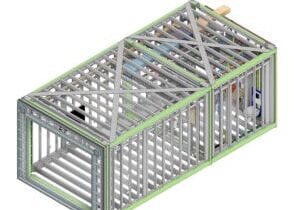
Modular by Design: Turning Architecture into a Manufacturing System
Modular construction is often presented as a faster way to build. Speed, however, is only one part of its value. The larger opportunity is to create a coordinated design and production system that improves quality, reduces uncertainty, and allows a building to move efficiently from concept design through manufacturing, transportation, installation, and completion.
Repeatability Begins with Trust: What Alora at Dry Creek Reveals About Scaling Modular Housing
Alora at Dry Creek, a 329-unit, multifamily community comprising five four-story buildings in Centennial, Colorado, demonstrates how repeatable design, standardized manufacturing and early collaboration can work together to create a model that is not only faster to deliver, but easier to replicate across future projects.

T.R. Arnold: The Art of Third-Party Inspections
T.R. Arnold (TRA), a third-party inspection company in Elkhart, Indiana, contracts with modular manufacturers across the US. Manufacturers register with each state to which they intend to send their modules and may be required to hire a third-party inspection company.
Creating an ‘Ecosystem for Innovation:’ 50+ Years of Modular Construction Oversight in Virginia
Virginia’s modular building program began in 1973, with the implementation of the Virginia Industrialized Building Unit and Mobile Home Safety Regulations. Now it’s leading the country in modular code adoption.