
Building Customized Technical Containers for Data Centers and the Energy Sector
KAN-BUD Sp. z o.o., based in Poland, was founded by Sid Braaksma, owner of Northgate Industries in Edmonton.
The dynamic digitization of the economy, the rapid development of cloud services, and the ongoing energy transition are driving an unprecedented demand for reliable, scalable, and rapidly deployable technical infrastructure. Modular solutions, including specialized technical containers manufactured by KAN-BUD Sp. z o.o. from Poland, are the direct answer to these modern needs.
Kan-Bud was founded by Sid Braaksma, who is also the owner of Northgate Industries in Edmonton. For over 30 years, the company has been setting benchmarks in the field of advanced steel structures, providing high-end solutions for sectors with the most stringent requirements, including the military, energy, and IT industries.

Technical Containers for Data Centers: Mobile Computing Power
Modern data centers must not only be highly efficient but also flexible and secure. The definitive answer to these core challenges is modular data centers housed in containers. KAN-BUD specializes in delivering the made to order container solutions tailored specifically for the data center infrastructure industry. This solution is dedicated to companies that require scalable IT infrastructure that can be quickly implemented and, if necessary, seamlessly expanded or relocated to another site.
Key Features of KAN-BUD Data Centre Containers
- Advanced Thermal Insulation and Ventilation: Servers generate enormous amounts of heat. KAN-BUD containers are equipped with professional precision air conditioning systems and high-grade thermal insulation that maintains constant environmental parameters regardless of external weather conditions.
- Tightness and Protection Against External Factors: KAN-BUD containers are precisely engineered to withstand a wide range of adverse environmental conditions. For projects located in high-risk areas, the company offers reinforced structures specifically designed to maintain structural integrity during earthquakes and seismic activity.
- Fire Protection Systems: Integrated fire protection systems, often utilizing gas extinguishing systems that are completely safe for sensitive electronic equipment, are an essential element of every build.
- Integration with Power Supply Infrastructure: Server containers are designed from the ground up to work seamlessly with both external and internal power sources. This perfectly complements KAN-BUD's other key product line containers for power generators.
Every technical container is manufactured to the highest quality standards and delivered on time, reaching key customers who demand absolute reliability. Each container has confirmation of the static calculations for the given region of use and certificates.

Best Practices for Delivering Containerized Data Centers: The Enclosure Perspective
When delivering containerized data centers, the final operational performance relies heavily on the precision, durability, and specialized engineering of the physical shell. As a dedicated B2B partner providing custom modular enclosures for companies that manufacture data center infrastructure, KAN-BUD emphasizes several key best practices for seamless equipment integration:
- Early-Stage Co-Engineering: Infrastructure producers should collaborate with the enclosure manufacturer from the initial design phase to accurately map out internal space utilization, precision ventilation paths, and necessary structural reinforcements for heavy components like transformers.
- Strict Ingress Protection and Microclimate Control: The structural shell must feature advanced thermal insulation and certified IP sealing to guarantee that the partner's sensitive electronic and power infrastructure remains completely protected from dust, moisture, and extreme external weather conditions.
- Compliance-First Manufacturing: To ensure global reliability, enclosures must be built according to rigid structural and welding certifications (such as ISO 3834-2 and EN 1090-1), with the option for reinforced engineering to withstand seismic risks before any internal hardware is installed.
- Design for Standardized Scalability: Developing structural hulls with modularity in mind allows data center equipment manufacturers to deliver "plug-and-play" solutions that systems integrators can easily expand, interconnect, or relocate according to client needs.
Containers for Power Generators and Energy Banks (BESS): Independence and Security
Another vital area of KAN-BUD's activity is the production of technical containers designed for energy storage and power generation. In an era marked by unstable electricity prices and the critical need to ensure continuity of operation, especially in hospitals, data centers, and production plants, professional housing for power supply systems is absolutely essential.
Containers for Power Generators
KAN-BUD offers containers specifically designed for the installation of power generators. Far from being ordinary "sheds," these units are advanced acoustic and ventilation structures.
- Noise Reduction: One of the main challenges with generators is excessive noise. KAN-BUD containers are equipped with high-performance soundproof enclosures that allow noisy power units to be located even near noise-sensitive residential or office areas. The design allows for the seamless integration of additional, secure fuel tanks, which significantly extends the generator's operating time without the need for frequent manual intervention.
Containers for Energy Banks (Energy Storage)
The rapid development of renewable energy sources (RES) has created a surging demand for robust energy storage facilities. KAN-BUD expertly adapts its containers to accommodate massive lithium-ion batteries or other cutting-edge electricity storage technologies.
- Fire Safety: Energy storage facilities carry an inherent risk of fire, such as thermal runaway. To mitigate this, KAN-BUD containers can be equipped with advanced gas and temperature detection alongside automated extinguishing systems.
- Microclimate Control: Much like servers, batteries require optimal operating temperatures to perform efficiently and safely, which are consistently maintained by heavy-duty HVAC systems integrated directly into the container.
- Modularity and Scalability: Battery Energy Storage Systems (BESS) housed in these containers can be easily connected to one another, enabling the creation of high-capacity energy storage farms.
Engineering Without Compromise: Parameters and Certification
What truly sets KAN-BUD apart in the marketplace is the complete customization of each individual project to meet specific, highly technical client requirements:
- Floor Load Capacity: The structural frame can be heavily reinforced to support internal equipment weighing up to several tons, such as heavy transformers.
- Sealing (IP): Superior ingress protection guarantees total defense against dust and water penetration in harsh, demanding terrain conditions.
- Compliance with Standards: All production processes are carried out in strict accordance with globally recognized quality standards, certified under ISO 3834-2 (welding quality) and EN 1090-1 (steel structures).
Synergies and Cross-Continental Collaboration: Learning Across Borders
As both KAN-BUD and Northgate Industries operate under the same corporate ownership, the continuous exchange of knowledge and expertise between the Polish and Canadian teams has become a cornerstone of their shared success.
By actively sharing experiences regarding regional technical requirements, compliance standards, and client expectations across both continents, the workforce has developed a more versatile and comprehensive approach to project design. The requirements and certifications for buildings and containers on the European and American markets are different, and therefore consultations between both teams are necessary to avoid costly mistakes. This mutual transfer of insights and consistent inter-company support directly enhances workflow efficiency, enabling both organizations to execute complex projects more smoothly and deliver optimized, globally-informed solutions.

Conclusion: The Partner of Choice for Critical Infrastructure
KAN-BUD from Poland (EU) consistently proves that a container is much more than a metal box; it is an advanced, engineered enclosure protecting the most valuable resources of the modern economy: data and energy. Thanks to its strategic membership in the global Northgate group and 33 years of deep industry experience, the company stands as the partner of choice for international investors seeking mobility and uncompromised reliability.
More from Modular Advantage
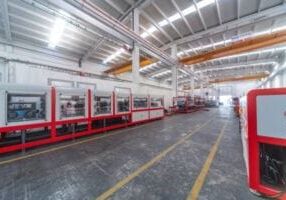
From Model to Machine: Why Modular Scale Is Becoming a Software Problem, not a Material One
For modular manufacturers that have already secured demand and repeatable volume, the next major constraint may no longer be forming capacity itself. Increasingly, it is the continuity of the information feeding that capacity.
Who Will Define Modular Products for AI?
Artificial intelligence is making building configurators easier and less expensive to create. This makes urgent manufacturers’ need portable product definitions, stable identities, and shared interfaces regardless of how others’ software is produced.
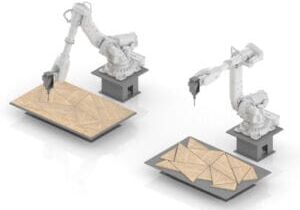
From BIM to Robotic Production: A Digital Workflow for Customized Components in Volumetric Modular Construction
For volumetric modular manufacturers, the value of this workflow is not simply the use of robotics. Its real value is continuity.
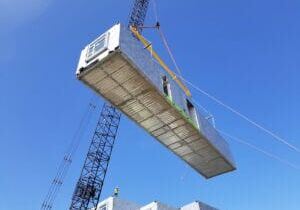
Helping Build a Common Framework for Modular Construction in Canada
Canada’s modular construction sector continues to gain momentum, but scaling it successfully will depend on shared expectations across design, manufacturing, approvals, and project delivery. CSA Z251 helps provide that common foundation.
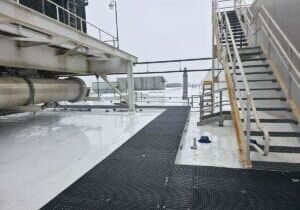
Edges, Exits & Equipment: A Modular Builder’s Guide to Rooftop Access
Rooftop access belongs in the factory design. Before the modules ship, the project team should identify each route’s users, confirm applicable requirements, coordinate with the roof system and structure, and assign responsibility.
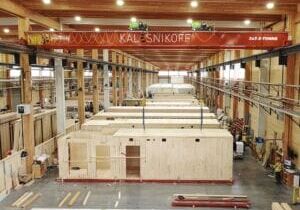
When Timber Production and Modular Construction Share One System
As demand for multifamily and workforce housing continues to outpace what conventional construction timelines can deliver, models that reduce the number of handoffs between structural fabrication and modular assembly are likely to draw more attention.
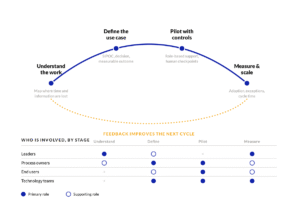
Your AI Strategy Is an Enablement Strategy
Tools will change. Teaching employees only the steps in one platform creates a narrow capability. Involving them in problem definition, process mapping, data assessment, controls, and measurement gives the organization a way to improve its systems as technology evolves.
By-Right Permitting: The Missing Lever for Scaling Modular Multifamily
Modular has already proven it can outperform traditional building methods on speed and cost per unit. The next frontier is outside the factory in the front end of the process, where projects either clear a path to construction or get stuck in review.
Remote Inspections and The Future of Factory Oversight
Remote inspection is becoming a practical part of modular construction oversight. Its value is greatest when it is used selectively, governed by clear procedures, and supported by complete traceability.
Reimagining Dry-In: How a Temporary-to-Permanent Roofing Strategy Mitigates Risk Between Modular Installation and Final Roof Construction
As volumetric modular projects continue to increase in scale and complexity, the Temporary-to-Permanent FiberTite Roof System represents an example of how traditional trade scopes can be reimagined through Design for Manufacturing and Assembly (DfMA) principles.