Modular Childcare for One Client in Two Locations
Adapting Modular Childcare Design in Indiana and Mississippi
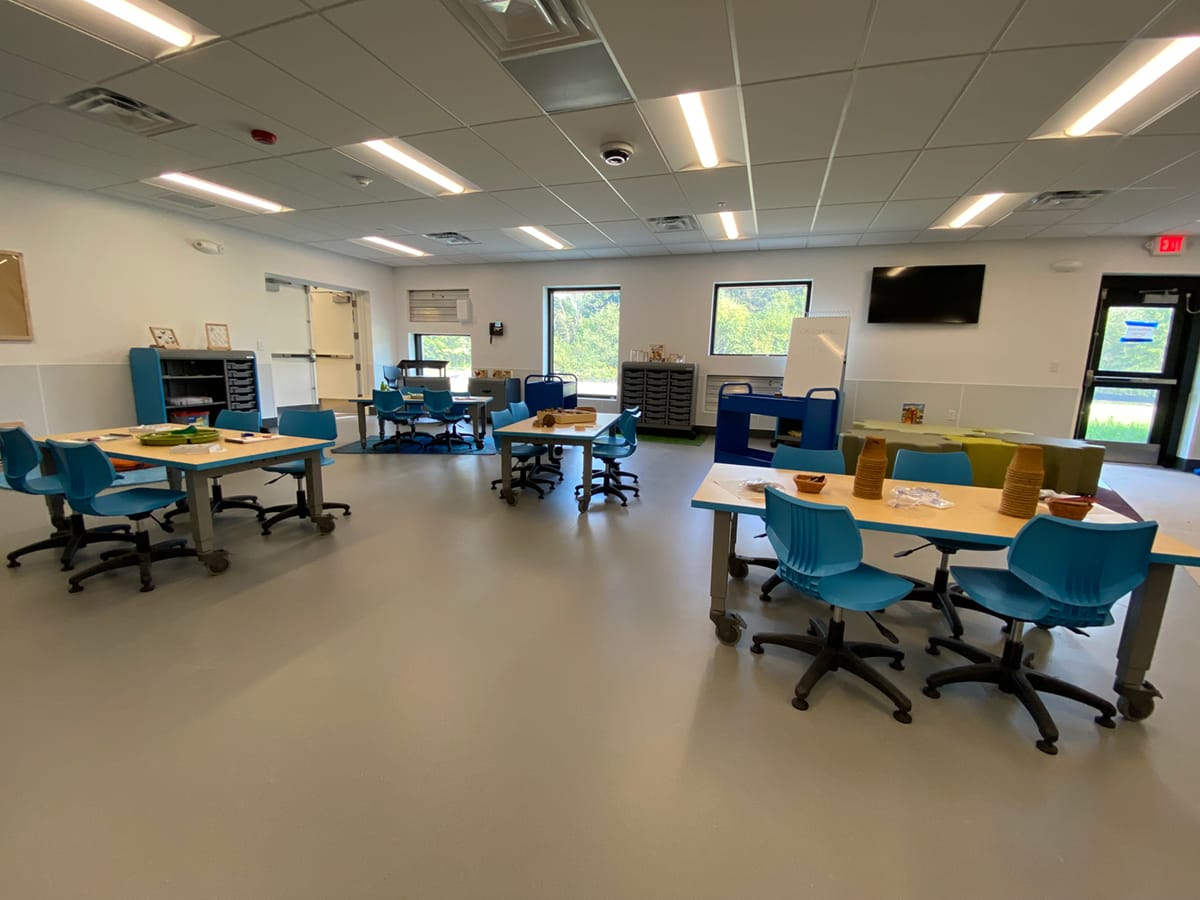

Each facility includes classrooms, a Movement Matters studio, a STEAM-focused learning lab, and a fully electric commercial kitchen.
For manufacturers operating large-scale production campuses, adding new facilities is rarely straightforward. Strict safety protocols, limited site access, and local workforce constraints often make traditional construction difficult to execute. Those challenges played a central role in a major automotive manufacturer’s decision to pursue permanent modular construction for two new childcare projects in Indiana and Mississippi, each with different site conditions, but the same operational priorities. Modular Genius, Inc. was awarded a contract for both locations, leveraging experience working within highly complex site environments.
At both locations, the client faced stringent safety requirements associated with active manufacturing environments. Construction activity had to be tightly controlled, with specific certification requirements for anyone performing work within the plant perimeter. Compounding the issue was a shortage of local tradespeople holding the appropriate credentials to operate in compliance on these campuses. These constraints made conventional stick-built construction an unappealing option.
Modular construction offered a clear alternative. With the majority of labor off site into a controlled manufacturing environment, Modular Genius was able to significantly reduce on-site trade exposure while maintaining strict safety standards. Modules arrived largely complete, minimizing the number of workers required on campus and shortening the duration of site activity, an important factor in both Indiana and Mississippi.
Speed was another critical driver. In both cases, the manufacturer needed childcare facilities operational as quickly as possible to support its workforce. Traditional construction schedules would have delayed occupancy, while modular construction allowed building fabrication and site work to occur in parallel. This approach accelerated delivery timelines and helped bring each childcare center online sooner than would have been possible with stick-built methods. By coordinating production, logistics, and site sequencing, Modular Genius was able to support the client’s accelerated schedule at both locations.
While the motivations for choosing modular were consistent, the execution differed by location.
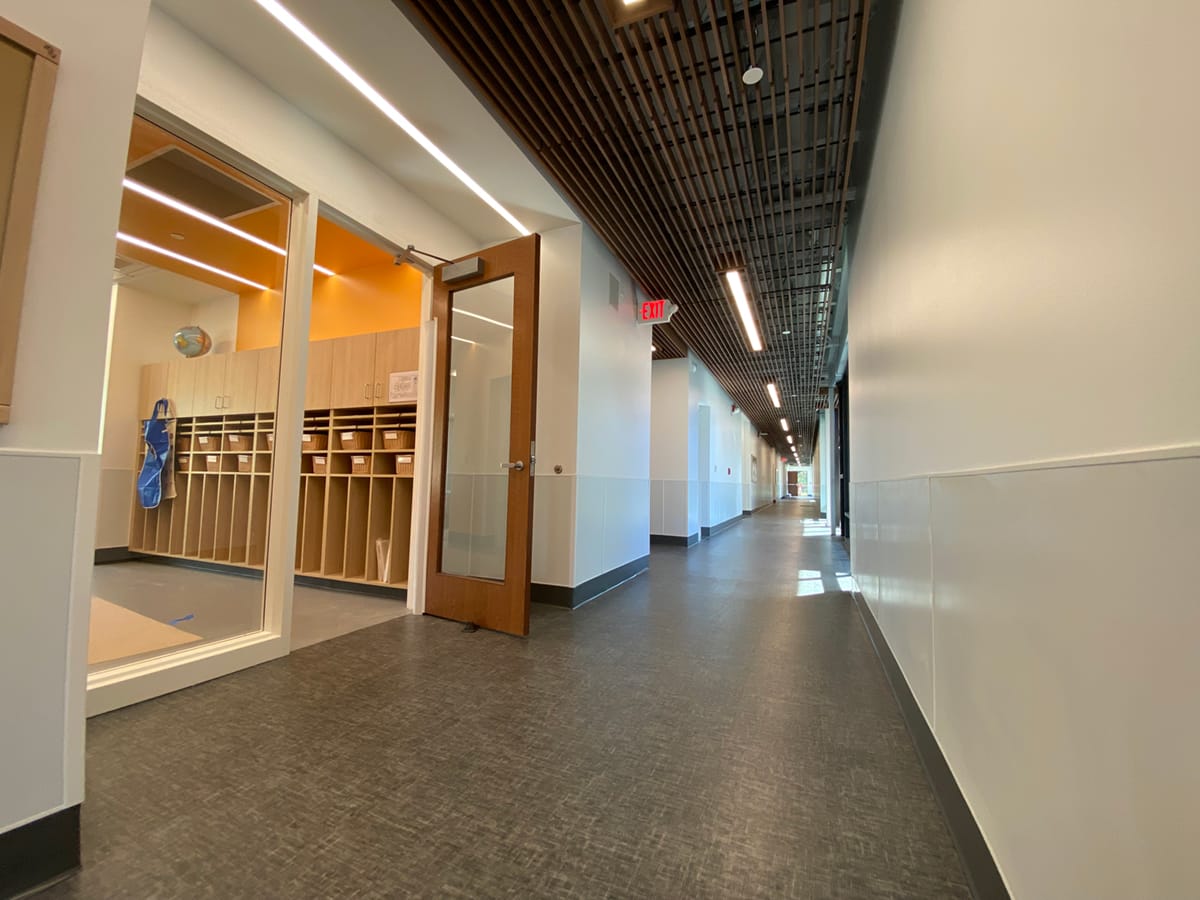
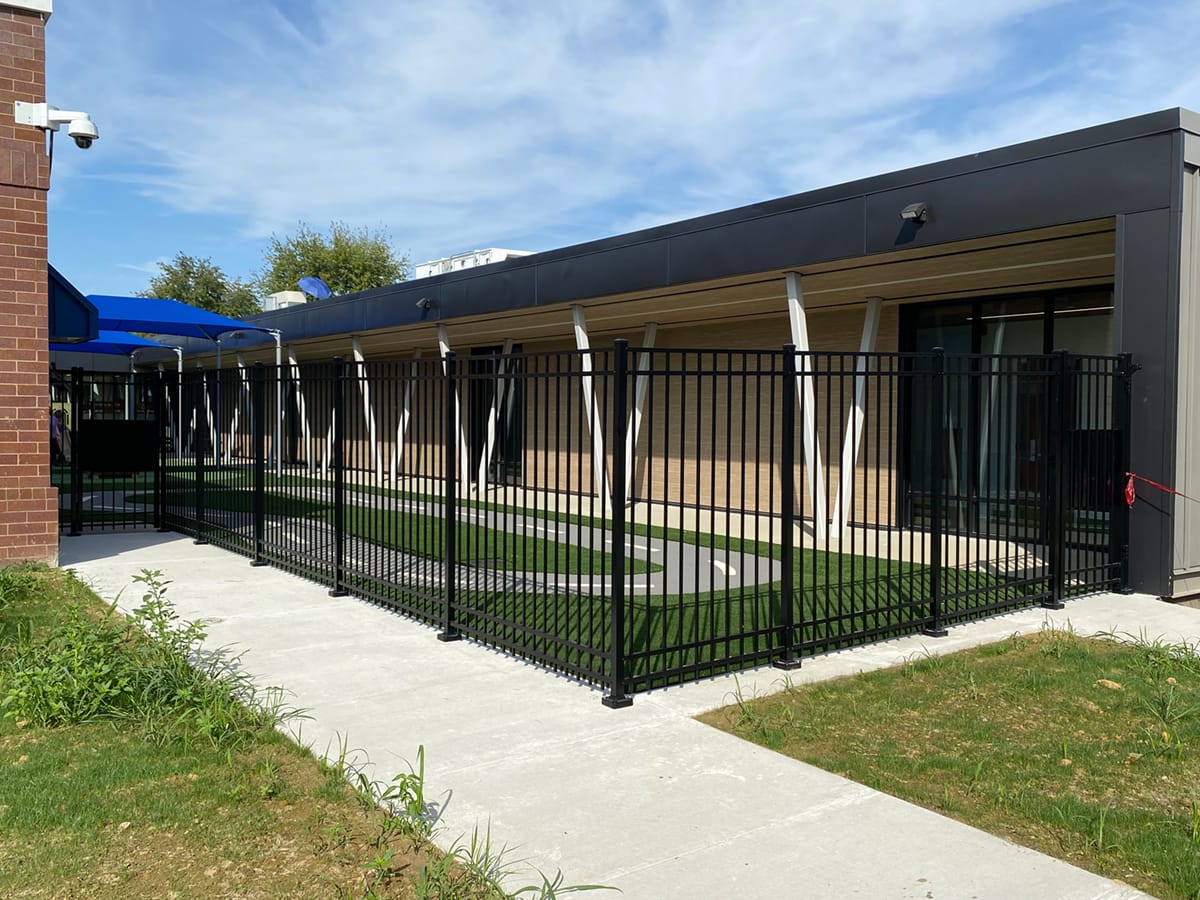
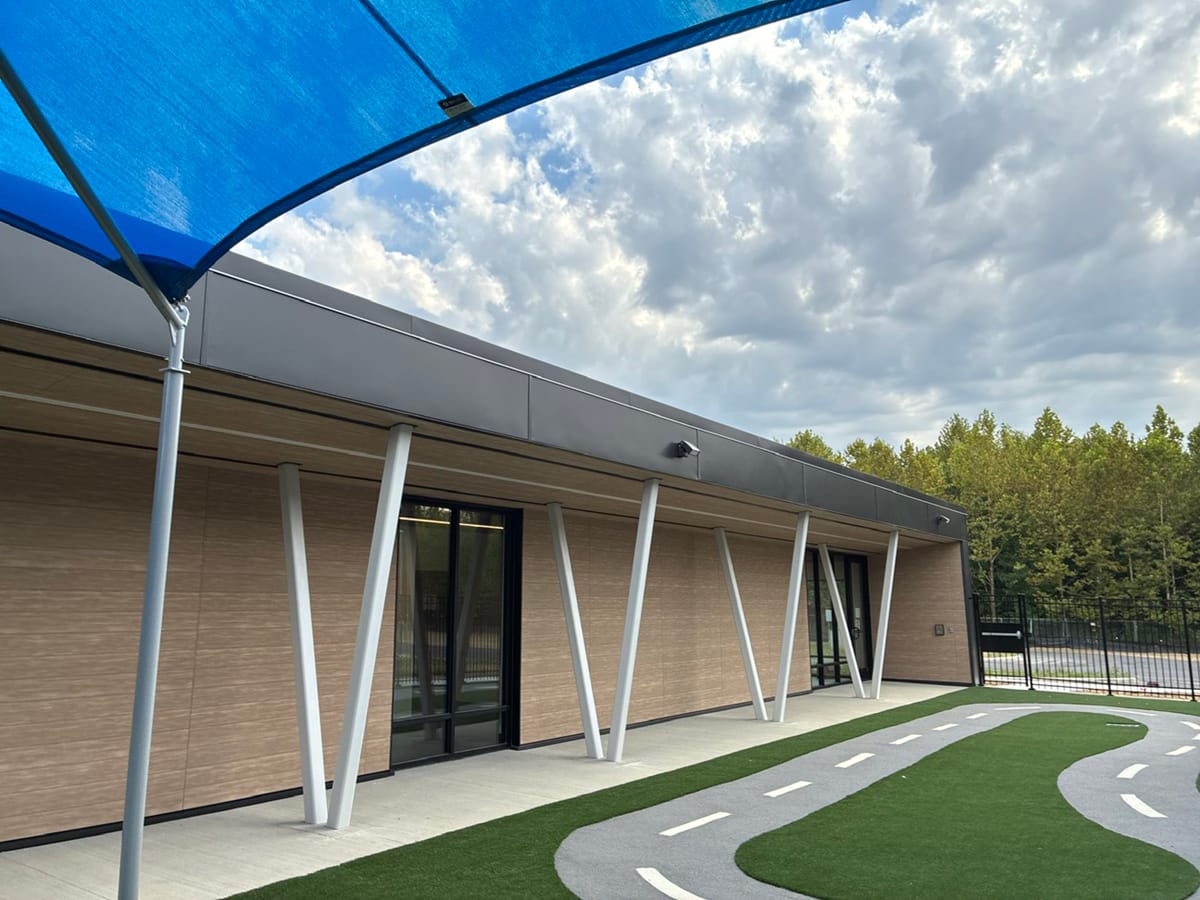
In Indiana, the project involved expanding an existing childcare center that remained operational throughout construction. The solution was a permanent modular addition, adding more than 10,000 square feet through a one-story modular wing, connected via a glass-enclosed corridor. Careful planning and off-site fabrication allowed the expansion to move forward with minimal disruption to daily childcare operations. Modular Genius coordinated closely with campus stakeholders to ensure continuity of childcare operations throughout installation.
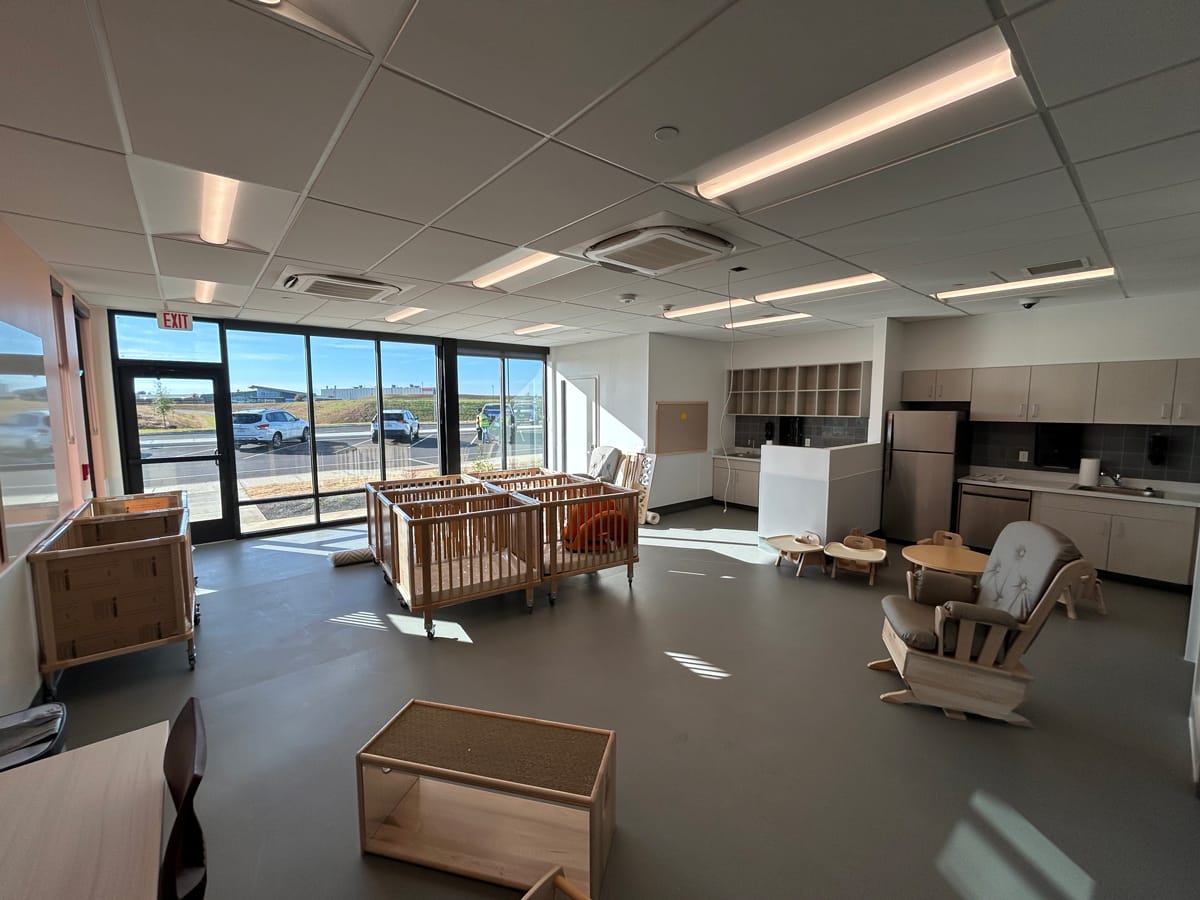
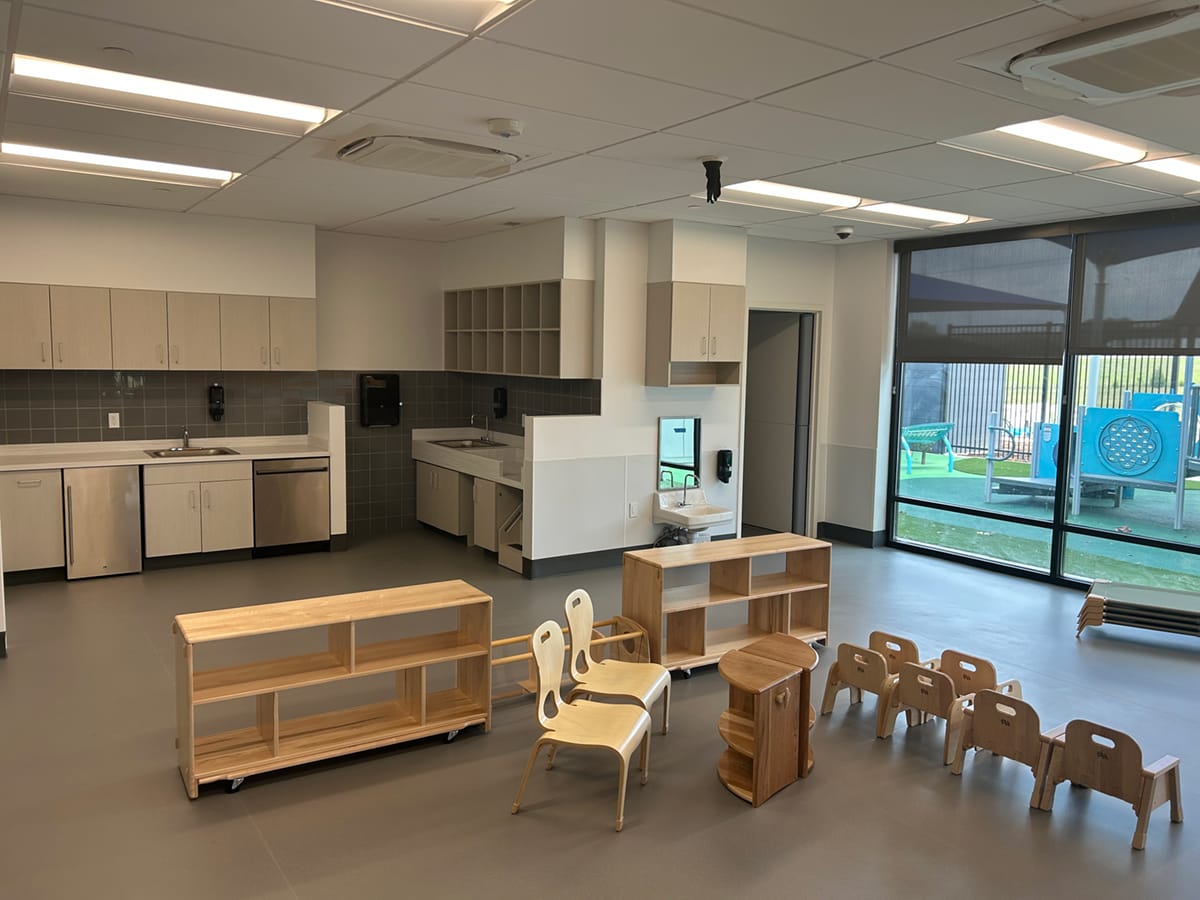
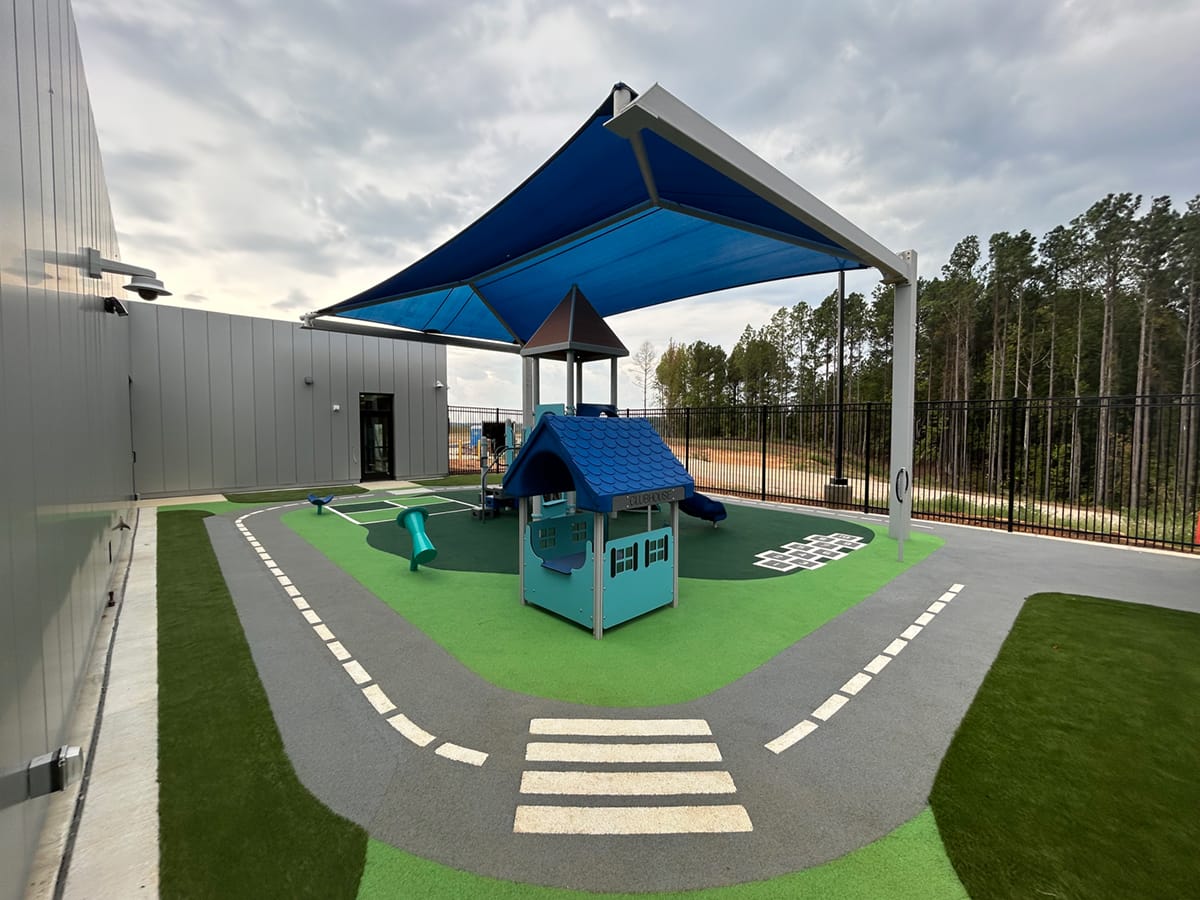
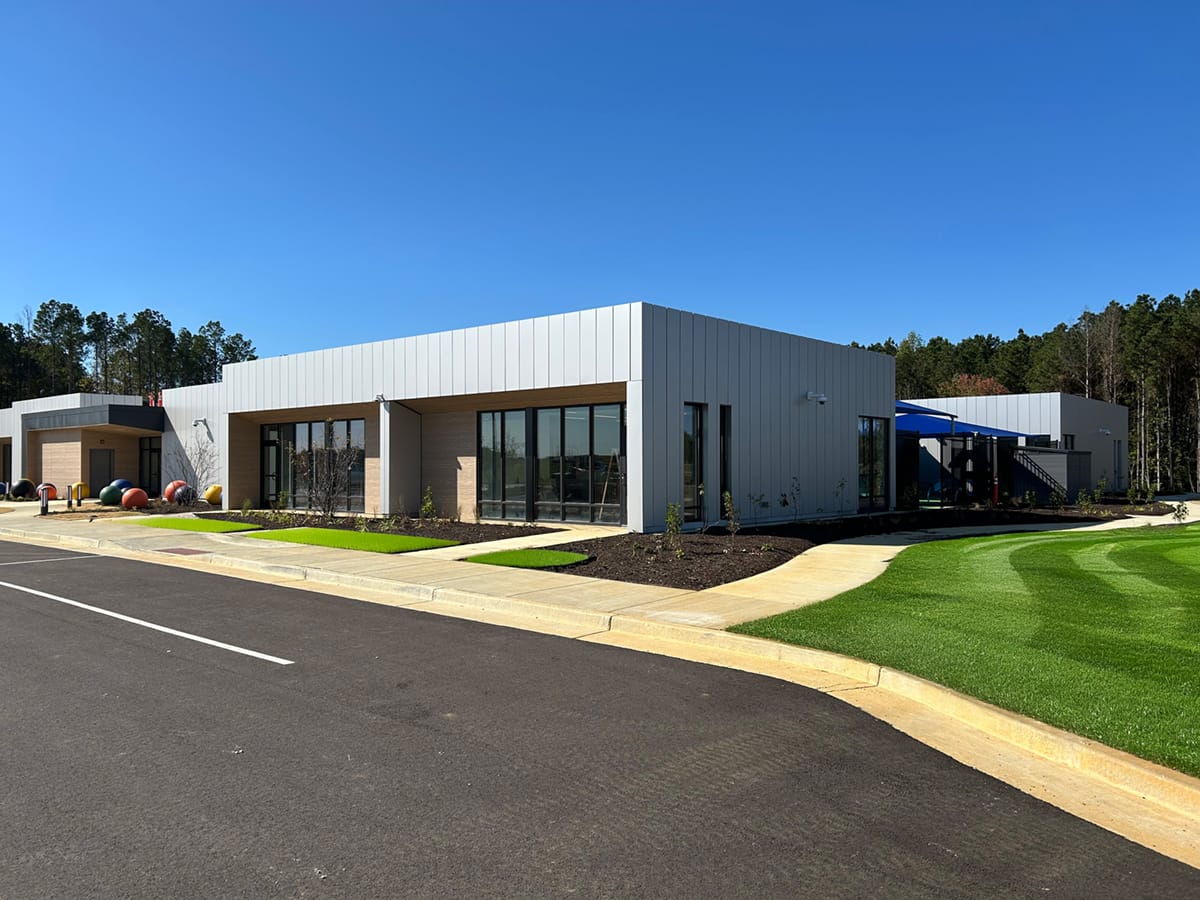
In Mississippi, the client took a different approach. With no existing childcare facility on campus, the project was delivered as a standalone permanent modular building. This allowed greater flexibility in site layout, while still meeting the same programmatic requirements as the Indiana location. The freestanding facility established a new childcare presence on campus and was designed to support long-term use. Modular Genius managed the project from early planning through final delivery, adapting the design to suit the unique site.
Despite their differences, both facilities share a common program and design intent. Each includes classrooms, a Movement Matters studio, a STEAM-focused learning lab, and a fully electric commercial kitchen. Safety and resilience were also prioritized at both sites through ICC 500–compliant storm shelters, constructed on site and integrated into each building. These reinforced spaces feature impact-rated glazing, dedicated backup power, and amenities designed to support extended occupancy during severe weather events, while maintaining functionality for daily use.
The two sites also share a consistent design language that reinforces a unified identity across locations. Both facilities use a similar palette of durable exterior materials, including fiber cement panels and aluminum composite accents, to create a clean, modern appearance suited to an active manufacturing campus. Large windows and thoughtfully placed glazing introduce natural light while maintaining safety and energy performance requirements. Interior finishes, color selections, and built-in elements were coordinated to support intuitive wayfinding and child-focused spaces, with durable flooring and acoustical treatments contributing to comfort and long-term performance.
Together, the Indiana and Mississippi projects illustrate how modular construction can respond to complex environments while delivering consistent, high-quality results. By addressing site constraints, workforce limitations, and accelerated schedules, Modular Genius provided a reliable path forward, demonstrating that different approaches can successfully achieve the same goal when guided by a shared strategy.
More from Modular Advantage
MBI Town Halls 2026: Reflections from Boston
By the end of 2026 MBI’s Government Affairs team will have traveled over 6,000 air miles to bring Town Hall events to five different cities in two countries.
Mind the Gap: The Interface Between Onsite and Offsite Construction
Every design for manufacture and assembly (DfMA) project — modular, mass timber, or panelized — is really two projects joined at a seam. One is built in a controlled factory to millimeter tolerances; the other in the field, in weather, to the looser tolerances of poured concrete and human hands. Between them sits an interface: where the factory’s precision meets the site’s reality.
Rules, Rails & Repeatability: Applying DfMA to Modular Healthcare
DfMA offers several advantages for healthcare projects, with faster delivery among the most valuable. Schedule matters when building new facilities, expanding campuses, renovating existing space or bringing care closer to communities that need it.
Precision and Possibility: Demands of DfMA and What Modular Mass Timber Makes Possible
Mass timber does not automatically create an efficient modular building. Its precision makes early coordination more important: fabricated components will accurately reproduce both the team’s solutions and its mistakes. The material’s advantages are realized only when supported by an equally precise design and delivery process.
Catch It in the Factory, Not in the Field: Smarter Testing for Modular Builds
Integrating watertightness and airtightness testing into factory workflows transforms quality assurance from a reactive process into a proactive commissioning strategy. It ensures that every module shipped is field ready and resilient for transportation while also supporting the ability of the modular construction industry to make buildings better.
Modular Construction Contracts: Key Considerations for Successful Canadian Projects
Starting a modular project with a well-developed contract protects both the owner and the contractor. It will help keep the project on track and on budget, and it will improve quality from the factory floor to final installation on-site.
Modular by Design: Turning Architecture into a Manufacturing System
Modular construction is often presented as a faster way to build. Speed, however, is only one part of its value. The larger opportunity is to create a coordinated design and production system that improves quality, reduces uncertainty, and allows a building to move efficiently from concept design through manufacturing, transportation, installation, and completion.
Repeatability Begins with Trust: What Alora at Dry Creek Reveals About Scaling Modular Housing
Alora at Dry Creek, a 329-unit, multifamily community comprising five four-story buildings in Centennial, Colorado, demonstrates how repeatable design, standardized manufacturing and early collaboration can work together to create a model that is not only faster to deliver, but easier to replicate across future projects.

T.R. Arnold: The Art of Third-Party Inspections
T.R. Arnold (TRA), a third-party inspection company in Elkhart, Indiana, contracts with modular manufacturers across the US. Manufacturers register with each state to which they intend to send their modules and may be required to hire a third-party inspection company.

Creating an ‘Ecosystem for Innovation:’ 50+ Years of Modular Construction Oversight in Virginia
Virginia’s modular building program began in 1973, with the implementation of the Virginia Industrialized Building Unit and Mobile Home Safety Regulations. Now it’s leading the country in modular code adoption.