Safe Modular Construction with Aerofilm Air Caster Transport
Heijmans and Aerofilm Join Forces for a Flexible, Safe, and Sustainable Modular Construction Solution
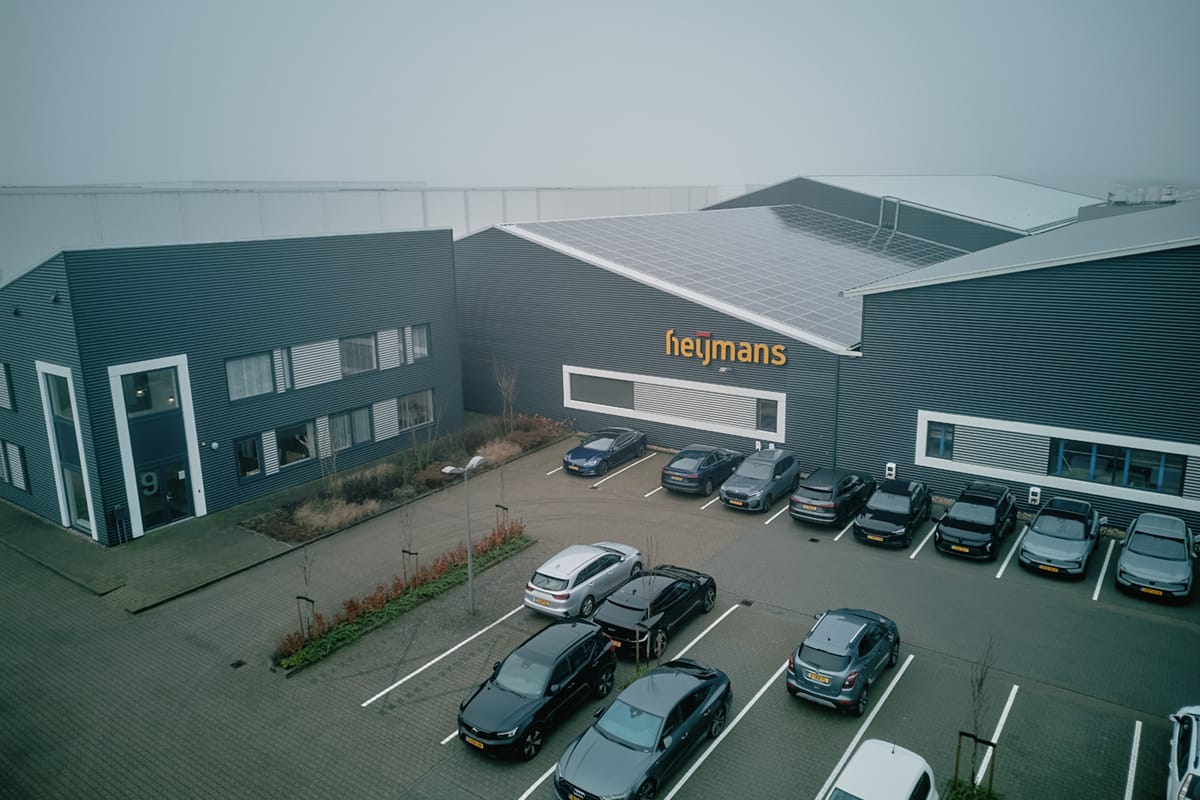
Heijmans has established a groundbreaking factory in Heerenveen, the Netherlands for modular construction, where sustainability and innovation go hand in hand. With a unique combination of 2D and 3D building elements, Heijmans has developed a solution that enables carbon-neutral construction while meeting the highest standards in cost-efficiency, safety, and scalability. A key factor in this success was the collaboration with Aerofilm Systems, which introduced air caster technology to move heavy modules effortlessly, flexibly, and safely.
Challenges
Heijmans has established a new factory in Heerenveen, the Netherlands dedicated entirely to modular construction with a unique blend of 2D and 3D building elements. This ambitious project posed a complex challenge: developing a product and production process that is both sustainable and cost-effective. Simultaneously, the factory needed to be flexible, efficient, and, above all, safe for housing production.
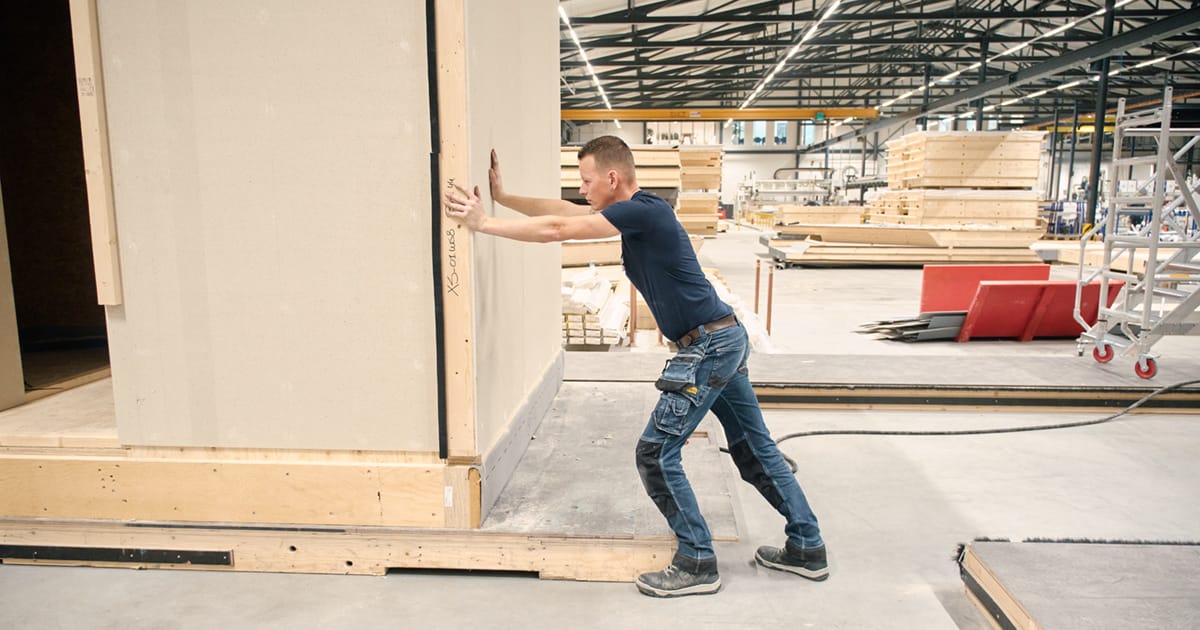
To optimize internal logistics, Heijmans partnered with Aerofilm Systems. By leveraging their innovative air caster technology, the heavy 3D modules—each weighing up to 5 metric tons—can effortlessly float on a thin layer of air. This provides a flexible, simple, and reliable solution for internal module transportation.
The safe and efficient system minimizes physical labor and allows precise positioning of the modules, contributing to a streamlined production process. Sustainability was a key consideration, both in material choices and process optimization.
The challenge was to achieve high output—one home per day—without compromising quality or environmental impact. The need for such rapid production was crucial to meet the growing demand for affordable housing while supporting the construction sector’s sustainability goals. It was a first in the Netherlands: designing an entirely new internal logistic process from scratch, requiring an innovative yet thoughtful approach focused on reproducibility and future growth.
Solution
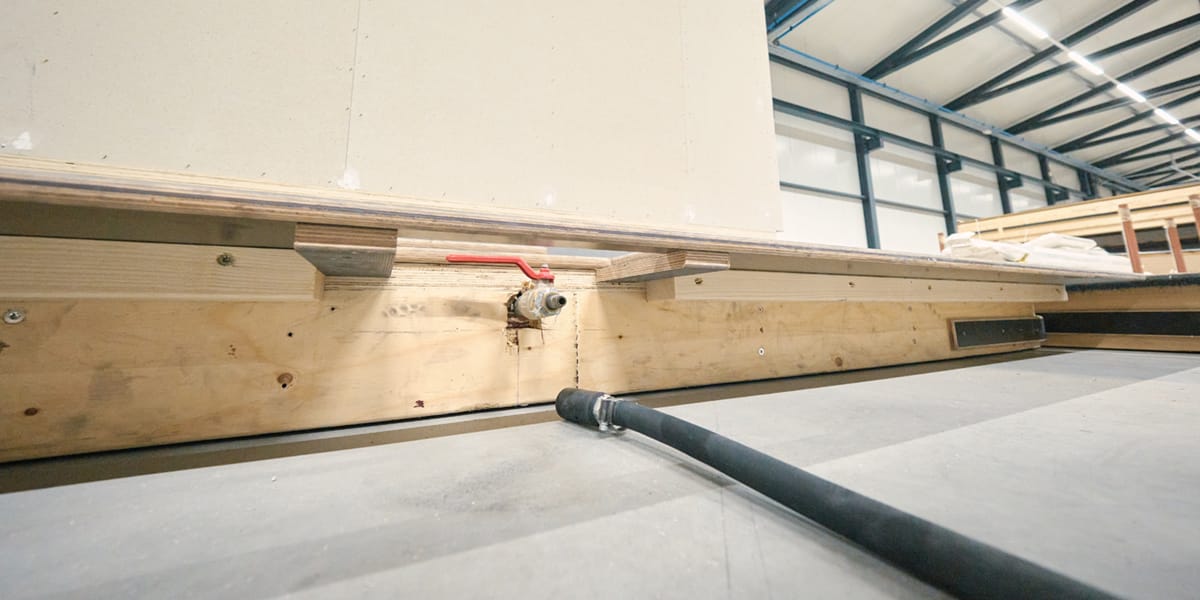
In collaboration with Aerofilm Systems, Heijmans developed innovative skids using air caster technology for moving modules easily and safely. These pallets are equipped with an auto-flow system, making operation extremely simple. The only required actions is connecting an air hose and opening a ball valve. With just one setting, the pallet effortlessly floats, whether empty or fully loaded. Within seconds, the system is operational and ready for use.
The pallets are fitted with six air casters, collectively providing ample capacity to carry the required 5 metric-tons load. Thanks to the air caster technology, the system is not only safe and reliable but also highly cost-effective and flexible. The modular design allows for the quick and easy movement of heavy modules, perfectly aligning with the need for an efficient and streamlined production environment.
The ease of use and reliability of this technology makes it a popular choice among workers. Operators require minimal physical effort to move heavy modules with precision, significantly improving safety and ergonomics. Additionally, the system’s flexibility allows it to be easily adjusted to changing production requirements or future scaling.
By combining Aerofilm’s expertise in air casters with Heijmans’ deep understanding of the construction process, a true team effort has resulted in solutions that perfectly match the builders’ needs while contributing to broader sustainability goals. This synergy has led to an innovative system that enhances productivity and significantly reduces CO2 emissions.
Results
With these results, Heijmans has set a new standard for modular construction in the Netherlands. The combination of sustainability, safety, and ease of use ensures an efficient process that seamlessly aligns with Heijmans’ vision. Thanks to the collaboration with Aerofilm Systems, an innovative solution has been realized that not only optimizes the current production process but also provides room for future growth and further sustainability.
Additionally, the project has demonstrated how innovation can contribute to solving societal challenges such as the housing crisis and climate change. By combining modular and carbon-neutral construction, Heijmans delivers a scalable and affordable solution for creating comfortable and sustainable homes. This makes a significant impact not only in the construction sector but also in shaping a better future for the Netherlands.
Together, Heijmans and Aerofilm have proven that innovative technologies and strategic partnerships are key to successfully tackling complex challenges. The Heerenveen project serves as a prime example of how sustainability and efficiency can lead to structural improvements in the construction industry.
The Aerofilm air caster system helped Heijmans:
- Achieve an efficient production process. Thanks to the air caster system, Heijmans can safely and accurately move heavy modules within seconds, contributing to a daily output of one home.
- Ensure safety and ease of use. Operators experience minimal physical strain and can operate the system easily, regardless of their experience level.
- Promote sustainability and cost savings. The innovative solution supports a carbon-neutral process and lowers overall costs by optimizing time and material usage.
- Enhance flexibility and scalability. The skids provide flexibility to align production with takt times and are prepared for future production growth.
More from Modular Advantage

Mind the Gap: The Interface Between Onsite and Offsite Construction
Every design for manufacture and assembly (DfMA) project — modular, mass timber, or panelized — is really two projects joined at a seam. One is built in a controlled factory to millimeter tolerances; the other in the field, in weather, to the looser tolerances of poured concrete and human hands. Between them sits an interface: where the factory’s precision meets the site’s reality.
Rules, Rails & Repeatability: Applying DfMA to Modular Healthcare
DfMA offers several advantages for healthcare projects, with faster delivery among the most valuable. Schedule matters when building new facilities, expanding campuses, renovating existing space or bringing care closer to communities that need it.
Precision and Possibility: Demands of DfMA and What Modular Mass Timber Makes Possible
Mass timber does not automatically create an efficient modular building. Its precision makes early coordination more important: fabricated components will accurately reproduce both the team’s solutions and its mistakes. The material’s advantages are realized only when supported by an equally precise design and delivery process.
Catch It in the Factory, Not in the Field: Smarter Testing for Modular Builds
Integrating watertightness and airtightness testing into factory workflows transforms quality assurance from a reactive process into a proactive commissioning strategy. It ensures that every module shipped is field ready and resilient for transportation while also supporting the ability of the modular construction industry to make buildings better.
Modular Construction Contracts: Key Considerations for Successful Canadian Projects
Starting a modular project with a well-developed contract protects both the owner and the contractor. It will help keep the project on track and on budget, and it will improve quality from the factory floor to final installation on-site.
Modular by Design: Turning Architecture into a Manufacturing System
Modular construction is often presented as a faster way to build. Speed, however, is only one part of its value. The larger opportunity is to create a coordinated design and production system that improves quality, reduces uncertainty, and allows a building to move efficiently from concept design through manufacturing, transportation, installation, and completion.
Repeatability Begins with Trust: What Alora at Dry Creek Reveals About Scaling Modular Housing
Alora at Dry Creek, a 329-unit, multifamily community comprising five four-story buildings in Centennial, Colorado, demonstrates how repeatable design, standardized manufacturing and early collaboration can work together to create a model that is not only faster to deliver, but easier to replicate across future projects.
T.R. Arnold: The Art of Third-Party Inspections
T.R. Arnold (TRA), a third-party inspection company in Elkhart, Indiana, contracts with modular manufacturers across the US. Manufacturers register with each state to which they intend to send their modules and may be required to hire a third-party inspection company.
Creating an ‘Ecosystem for Innovation:’ 50+ Years of Modular Construction Oversight in Virginia
Virginia’s modular building program began in 1973, with the implementation of the Virginia Industrialized Building Unit and Mobile Home Safety Regulations. Now it’s leading the country in modular code adoption.
Understanding Thermal Barriers Compliance Methods & Emerging NFPA-275 Foam Plastic Technologies
New fire barrier technologies are improving total costs and margins in major areas of construction, such as commercial, government, union and prevailing wage projects. These benefits translate into other large fringe areas, such as agriculture, commercial cold storage facilities, grow houses, outbuildings, military and aviation hangars.