
The How-To Guide For Prefab Leaders: Actively Manage Your Prefab Schedule
In this How-To Guide for Prefab Leaders, we review how to generate a schedule forecast and factory production plan and how to manage the prefab project cycle to ensure that you are hitting the schedule targets. We review how to leverage technology like Offsight to manage prefab project delivery in real-time and to track factory production, live, to ensure you are meeting your deadlines. If production falls behind schedule, we will review how to take proactive steps to accelerate work and how to better understand the cost implications of these corrective actions.


Generate Your Prefab Project Schedule
We begin by generating the project schedule and factoring in labor capacity constraints. These constraints also apply to the unique prefabrication process for the products you are assembling. With Offsight’s pre-built prefab planning, forecasting and estimating templates, you can define your prefabrication process by your product type (e.g. EIFS panels, bath pods, volumetric modules, etc).
Once each process step is identified and hours are assigned to complete each process, you can then add your current labor resources and capacity constraints to generate an accurate factory production schedule with forecasted start and end dates. Projected delivery dates by collection of modules or bundles of panels (e.g. 1st floor, 2nd floor, etc) can then be provided to other project stakeholders to coordinate on-site installation.
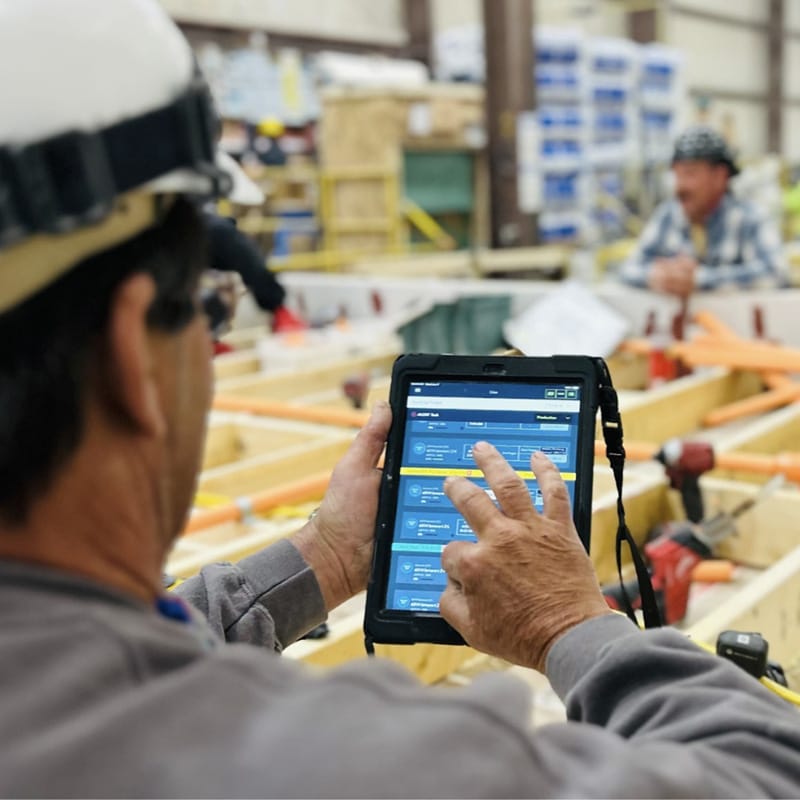
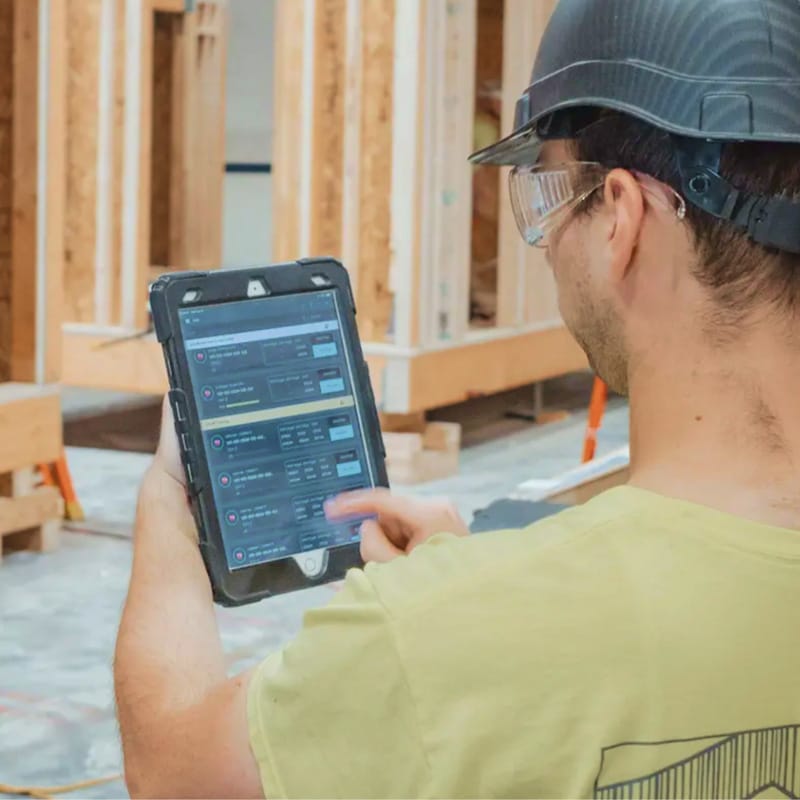
Compare Real-Time Production with Your Planned Schedule
After building your forecasted schedule, you leverage technology like Offsight to track your progress from the shop floor, against your prefab schedule. As operators actively work on products on the shop floor and products move through assembly you can actively tracks status in real time through a mobile app to gain visibility. In order to compare your real time progress against your planned project schedule, you will need to overlay your live production Gantt over your plan.
With Offsight’s Schedule and Analytics Dashboard, you can automatically pull a real time production Gantt chart for all live products on the floor and track when they start prefabrication. It’s important to also track the production status of all live products in the overall assembly, including which processes were completed e.g. framing, and which are still pending and where these processes stand against their forecasted start and end dates.
Identify Schedule Delays and Correcting Course
By automatically linking forecasted product start and end dates, in a digital tool like Offsight, by process and workstation, you can see how each individual product or module is tracking against your plan. Thereby you could track a large modular project by individual module or collection of modules, e.g. floor 1, and immediately identify when production is falling behind your schedule.
In this manner all operators, team leads and supervisors can see when products and processes need to be completed to achieve your schedule targets. If updates to your forecasted schedule are needed to account for delays, a digital solution will allow you to easily move the target start and end dates in your plan. This will ensure you are always tracking your progress and managing prefabrication against your overall project schedule.
By leveraging technology like Offsight to communicate updates to all stakeholders in real time, you can enable collaboration and coordination throughout the project lifecycle.
More from Modular Advantage
Mind the Gap: The Interface Between Onsite and Offsite Construction
Every design for manufacture and assembly (DfMA) project — modular, mass timber, or panelized — is really two projects joined at a seam. One is built in a controlled factory to millimeter tolerances; the other in the field, in weather, to the looser tolerances of poured concrete and human hands. Between them sits an interface: where the factory’s precision meets the site’s reality.
Rules, Rails & Repeatability: Applying DfMA to Modular Healthcare
DfMA offers several advantages for healthcare projects, with faster delivery among the most valuable. Schedule matters when building new facilities, expanding campuses, renovating existing space or bringing care closer to communities that need it.
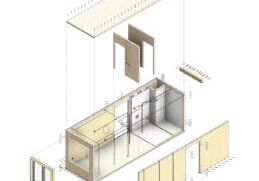
Precision and Possibility: Demands of DfMA and What Modular Mass Timber Makes Possible
Mass timber does not automatically create an efficient modular building. Its precision makes early coordination more important: fabricated components will accurately reproduce both the team’s solutions and its mistakes. The material’s advantages are realized only when supported by an equally precise design and delivery process.
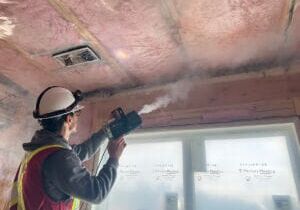
Catch It in the Factory, Not in the Field: Smarter Testing for Modular Builds
Integrating watertightness and airtightness testing into factory workflows transforms quality assurance from a reactive process into a proactive commissioning strategy. It ensures that every module shipped is field ready and resilient for transportation while also supporting the ability of the modular construction industry to make buildings better.
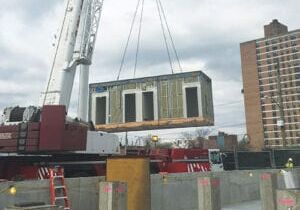
Modular Construction Contracts: Key Considerations for Successful Canadian Projects
Starting a modular project with a well-developed contract protects both the owner and the contractor. It will help keep the project on track and on budget, and it will improve quality from the factory floor to final installation on-site.
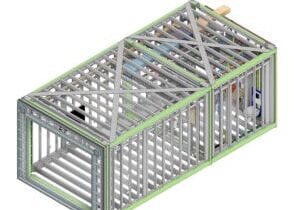
Modular by Design: Turning Architecture into a Manufacturing System
Modular construction is often presented as a faster way to build. Speed, however, is only one part of its value. The larger opportunity is to create a coordinated design and production system that improves quality, reduces uncertainty, and allows a building to move efficiently from concept design through manufacturing, transportation, installation, and completion.
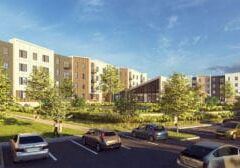
Repeatability Begins with Trust: What Alora at Dry Creek Reveals About Scaling Modular Housing
Alora at Dry Creek, a 329-unit, multifamily community comprising five four-story buildings in Centennial, Colorado, demonstrates how repeatable design, standardized manufacturing and early collaboration can work together to create a model that is not only faster to deliver, but easier to replicate across future projects.

T.R. Arnold: The Art of Third-Party Inspections
T.R. Arnold (TRA), a third-party inspection company in Elkhart, Indiana, contracts with modular manufacturers across the US. Manufacturers register with each state to which they intend to send their modules and may be required to hire a third-party inspection company.

Creating an ‘Ecosystem for Innovation:’ 50+ Years of Modular Construction Oversight in Virginia
Virginia’s modular building program began in 1973, with the implementation of the Virginia Industrialized Building Unit and Mobile Home Safety Regulations. Now it’s leading the country in modular code adoption.
Understanding Thermal Barriers Compliance Methods & Emerging NFPA-275 Foam Plastic Technologies
New fire barrier technologies are improving total costs and margins in major areas of construction, such as commercial, government, union and prevailing wage projects. These benefits translate into other large fringe areas, such as agriculture, commercial cold storage facilities, grow houses, outbuildings, military and aviation hangars.