Newest Line of Container Buildings Broadens Modular’s Reach
Wilmot Modular’s newest line of mobile storage and office buildings is set to expand the reach of modular buildings into remote locations. Their Smart Line – Hybrid Series of container offices and storage buildings provides almost instant connectivity and power in locations that are off-grid, on-grid, or anywhere in between. With a robust solar power generation and storage system, they can be placed nearly anywhere there is access to sunlight and can provide enough power to remain self-sufficient.
Wilmot partnered with Prospect Solar, bringing their modular expertise and combining it with the latest in solar power generation and storage technologies to create a new line of solar powered container offices and storage buildings. Early interactions between the two revealed a strong alignment between their core values, paving the way for a fruitful collaboration.
The Smart Line models come in two sizes: 20 feet and 40 feet. The 20-foot model comes with 13 solar panels that generate 410 watts each, for a total of approximately 5.33 kW. It comes with an 18.4 kWh lithium phosphate battery. The 40-foot model comes with 25
panels at 410 watts each, for a total of approximately 10.25 kW. Depending on how many batteries are installed, it can store 36.8 to
73.6 kWh. Excess power generated by the solar arrays can be used to recharge the batteries, supply power to other modular units, or
potentially can be fed back into the grid, subject to local regulations and grid capabilities.
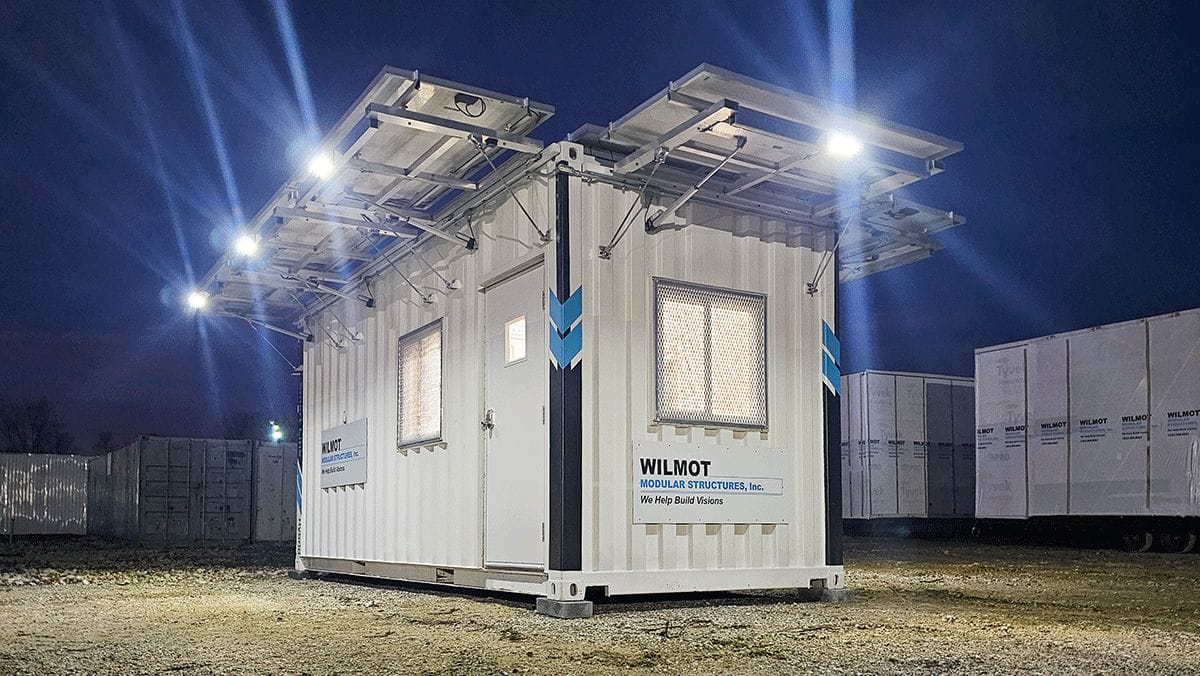
The basis for the Smart Line design was driven by Wilmot’s commitment to environmental responsibility and their ambition to provide innovative solutions within the industry. They began by recognizing the need for efficient, sustainable, and rapidly deployable solar powered office and storage solutions, especially in remote locations. Through the design process, they were able to successfully integrate solar power into shipping containers, and created a product that can be operational within minutes of being deployed. This feature can be particularly valuable in remote areas, where setting up grid connections can be time-consuming, often taking weeks or months.
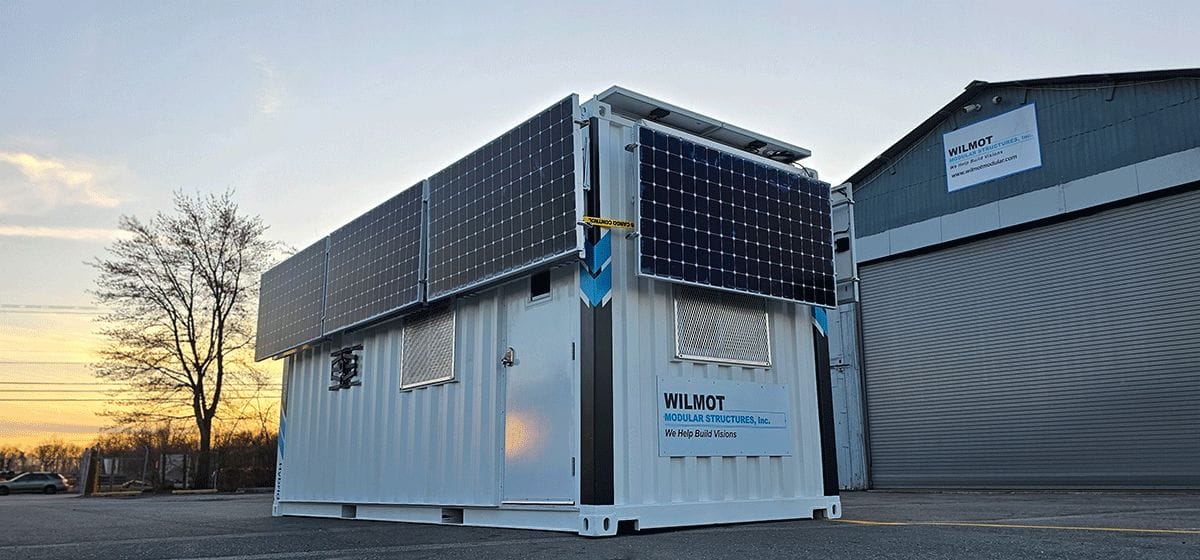
Shipping containers were chosen as the foundational structures for these specialty units because of their structural integrity, modularity, sustainability, and cost effectiveness. The initial Smart Line – Hybrid Series (version 1) effectively powered the HVAC and lighting systems, but it faced certain operational challenges. Specifically, the side panels or “wings” – essential for increasing solar panel area – had to be retracted in winds exceeding 35 mph, and they were deployed manually, which was cumbersome.
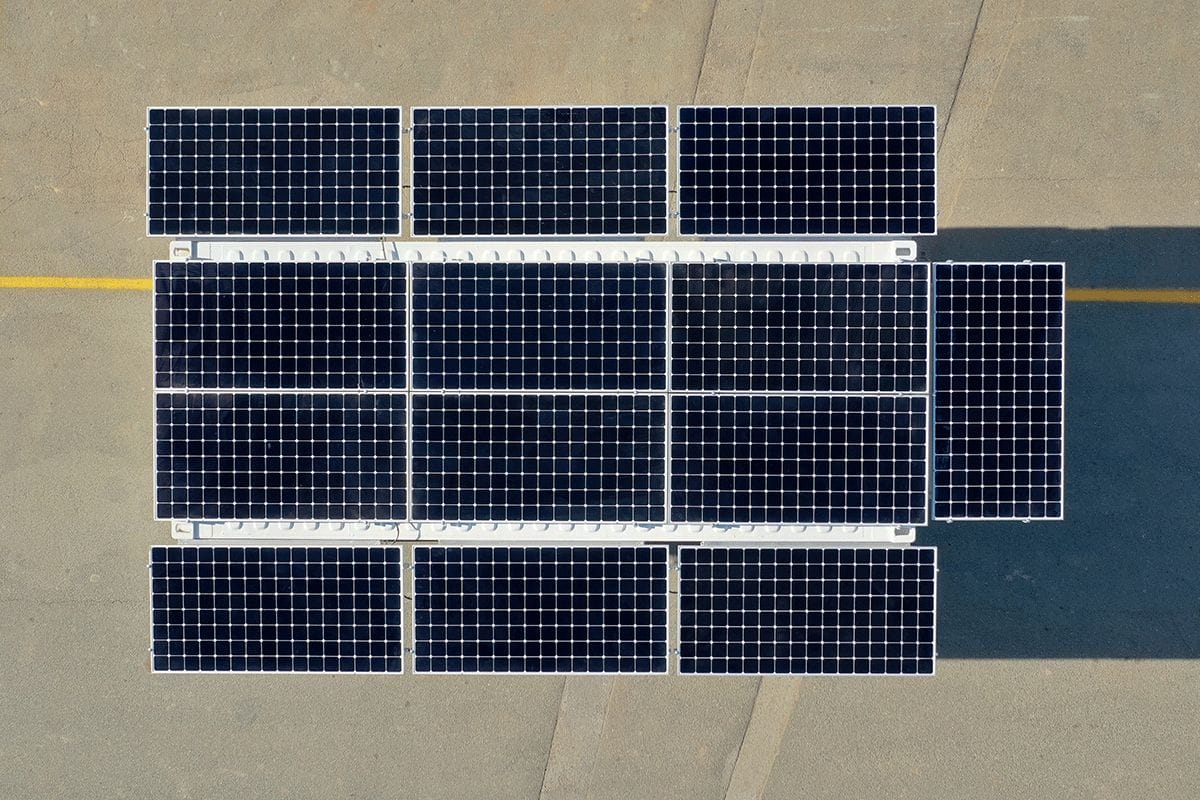
In response, version 2 was developed with significant design enhancements. The improved wing design now withstands higher wind conditions, up to 115 mph, without the need for retraction. Additionally, an automated electronic system for wing deployment was developed. This innovation simplifies the deployment process, minimizes labor efforts, and enhances safety. Overall, these developments have substantially boosted the operational efficiency and strength of the units.
There are several advantages to using Smart Line units. They offer substantial energy generation capabilities, enough to power key functions (HVAC and lighting), especially in the larger 40’ unit with its increased panel count and battery capacity. By significantly reducing or even eliminating reliance on external power sources, customers can also achieve notable savings in energy costs. Additionally, the units offer multiple power options, including solar, battery, optional generator, and a grid power inlet. This versatility and flexibility help ensure consistent power even in remote or unstable grid situations. The units can help customers meet their environmental and sustainability targets through qualification for incentives or tax credits. (Wilmot will be pursuing LEED certification for the units in the near future.) Finally, investing in solar-powered units now can be offset by long-term energy savings and potential financial incentives.
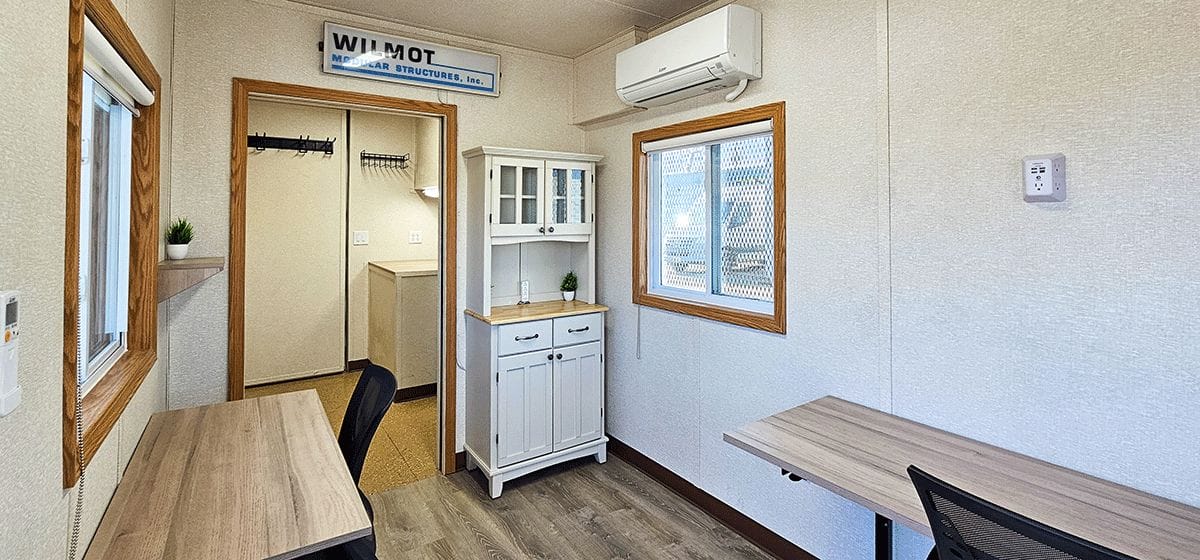
Wilmot is a long-standing family-run business that has always lead by being at the forefront of modular and container buildings technology. Chris Wilmot, Marketing Director, and Kevin Wilmot, Sales Director, have both learned the business from the ground up, starting by working in the field. They’ve watched the steady growth of the company started by their parents, Mike and Kathy Wilmot. Chris began his career after high school when he worked in fleet maintenance. He worked his way up to Manager while earning his marketing degree. He was promoted to Marketing Director in 2022. Kevin also started his career in fleet maintenance after high school. He then moved to field installations, until transferring to sales about ten years ago.
Both say they have learned a lot experiencing the industry from the ground up. Backed by decades of watching the ebb and flow of the industry, they are poised to continue innovating to keep their market edge. Chris said, “Witnessing the growth of our family business from a simple trailer to a major regional player has been a journey of inspiration, rooted in our parents’ dedication and hard work.” “We’ve both seen what happens when the economy has a downturn and fleet units start flooding back into the yard,” said Kevin. “We’ve also seen the good times when we run out of fleet because of high demand. Our parents have allowed us to grow in the business and have always explained the reason for different decisions so we can understand how to run a business. Our shared legacy, founded on the solid groundwork laid by our parents, motivates us to continue pushing the boundaries in the modular construction industry.”
The company provides a range of modular options, from state-of-the-art modular buildings and versatile mobile offices to practical office containers and storage solutions, like plant mezzanines. Their goal is always to cater to the diverse needs of their customers with excellence and efficiency.
The primary objective of this new partnership with Prospect Solar is to revolutionize the perception and functionality of typical mobile offices and storage spaces. Together they are focused on offering solutions that are not only sustainable, but also convenient and cost effective. The line is targeted to those who prioritize sustainability and eco-friendliness without compromising efficiency and cost effectiveness. This includes businesses and individuals seeking practical, portable solutions that are both environmentally responsible and adaptable to a variety of uses.
Wilmot hopes to continue its innovation into 2024. They are looking forward to a suite of offerings that will not only emphasize customization but also set new industry standards in efficiency and eco-responsibility, solidifying their standing as leaders in the modular building industry.
About the Author: Dawn Killough is a freelance construction writer with over 25 years of experience working with construction companies, subcontractors and general contractors. Her published work can be found at dkilloughwriter.com.
More from Modular Advantage
MBI Town Halls 2026: Reflections from Boston
By the end of 2026 MBI’s Government Affairs team will have traveled over 6,000 air miles to bring Town Hall events to five different cities in two countries.
Mind the Gap: The Interface Between Onsite and Offsite Construction
Every design for manufacture and assembly (DfMA) project — modular, mass timber, or panelized — is really two projects joined at a seam. One is built in a controlled factory to millimeter tolerances; the other in the field, in weather, to the looser tolerances of poured concrete and human hands. Between them sits an interface: where the factory’s precision meets the site’s reality.
Rules, Rails & Repeatability: Applying DfMA to Modular Healthcare
DfMA offers several advantages for healthcare projects, with faster delivery among the most valuable. Schedule matters when building new facilities, expanding campuses, renovating existing space or bringing care closer to communities that need it.
Precision and Possibility: Demands of DfMA and What Modular Mass Timber Makes Possible
Mass timber does not automatically create an efficient modular building. Its precision makes early coordination more important: fabricated components will accurately reproduce both the team’s solutions and its mistakes. The material’s advantages are realized only when supported by an equally precise design and delivery process.
Catch It in the Factory, Not in the Field: Smarter Testing for Modular Builds
Integrating watertightness and airtightness testing into factory workflows transforms quality assurance from a reactive process into a proactive commissioning strategy. It ensures that every module shipped is field ready and resilient for transportation while also supporting the ability of the modular construction industry to make buildings better.
Modular Construction Contracts: Key Considerations for Successful Canadian Projects
Starting a modular project with a well-developed contract protects both the owner and the contractor. It will help keep the project on track and on budget, and it will improve quality from the factory floor to final installation on-site.
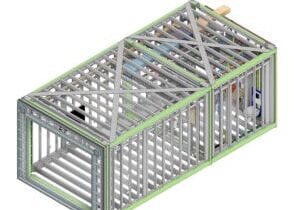
Modular by Design: Turning Architecture into a Manufacturing System
Modular construction is often presented as a faster way to build. Speed, however, is only one part of its value. The larger opportunity is to create a coordinated design and production system that improves quality, reduces uncertainty, and allows a building to move efficiently from concept design through manufacturing, transportation, installation, and completion.
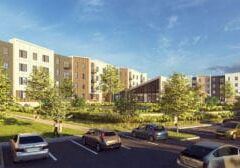
Repeatability Begins with Trust: What Alora at Dry Creek Reveals About Scaling Modular Housing
Alora at Dry Creek, a 329-unit, multifamily community comprising five four-story buildings in Centennial, Colorado, demonstrates how repeatable design, standardized manufacturing and early collaboration can work together to create a model that is not only faster to deliver, but easier to replicate across future projects.

T.R. Arnold: The Art of Third-Party Inspections
T.R. Arnold (TRA), a third-party inspection company in Elkhart, Indiana, contracts with modular manufacturers across the US. Manufacturers register with each state to which they intend to send their modules and may be required to hire a third-party inspection company.
Creating an ‘Ecosystem for Innovation:’ 50+ Years of Modular Construction Oversight in Virginia
Virginia’s modular building program began in 1973, with the implementation of the Virginia Industrialized Building Unit and Mobile Home Safety Regulations. Now it’s leading the country in modular code adoption.