
Dynamic Automation Helps Company Create “Snowflakes”
House of Design, located in Nampa, Idaho, provides a unique solution to building trusses, walls, and other building assemblies: they call it dynamic automation. Shane Dittrich, CEO, explained the term as “the robots have no idea what they’re building today.”
Instead of tasking a robot to build only one type and size of assembly, their software analyzes the most efficient order to produce a variety of similar products in, no matter what size they are. The software takes advantage of efficiencies to shave off milliseconds and full seconds from standard automated fabrication.
House of Design’s proprietary software translates 3D models into machine code, which then communicates with the robot to tell it what size assembly to build. Because buildings are designed uniquely and no truss looks the same, the dimensions and how they are assembled look different. Each is a unique size and shape, or a “snowflake,” as Dittrich calls them. “When a robot picks up a stud,” said Dittrich, “it doesn’t care how long it is. The same End of Arm Tool can pick up a stud if it’s a 7-foot wall or a 10-foot wall, it doesn’t matter.”
Their system is able to switch between assembly sizes and shapes quickly and easily, and make each one in succession in the most efficient way. There are some constraints, such as the size of the assembly table, but otherwise the available configurations are endless.
This level of production customization is more complicated than it seems, as customers don’t always request their materials in the same way. Some want trusses stacked from biggest to smallest for shipping, others want them stacked in the order they’ll be installed.
Luckily, their system doesn’t care and simply fulfills the requested order in the most efficient way given the customer’s requests.
Before production begins, the software analyzes and validates the design, helping to ensure that the assembly is in the proper sequence and that there aren’t any problematic areas that need to be addressed. This helps keep the manufacturing process running smoothly. There are design constraints and material tolerances that must be taken into consideration, but otherwise the system can build almost anything.
“In my mind it’s relatively easy to program a robot to build a wall with studs 16 inches on center. It’s just a stud every 16 inches on the top and bottom plate. It’s a little more difficult to program it to do laminations, staggered studs, blocking, lay flats, and double top plates.” Even complex designs, like wall panels with window and door openings, are able to be programmed into the system.
The software is programmed in multiple languages, including ABB’s proprietary robot language called Rapid, and more standard languages like Rust and PLC-structured text.
Although the rest of the world is fascinated with artificial intelligence, Dittrich said its influence on his process is limited. “Right now, to look at a process and take milliseconds out of a robot’s move takes an experienced robot person. These experts can take a process that takes five seconds down to three and a half. When you’re running that process 24/7, that second and a half adds up. I do believe that AI is going to be able to help us with that in the future.”
The company stays with its customers, working with them on system installation, training, and operations. They provide resident engineers with each system to work side by side with operations workers until it is up and running smoothly.

Shane Dittrich, CEO at House of Design.
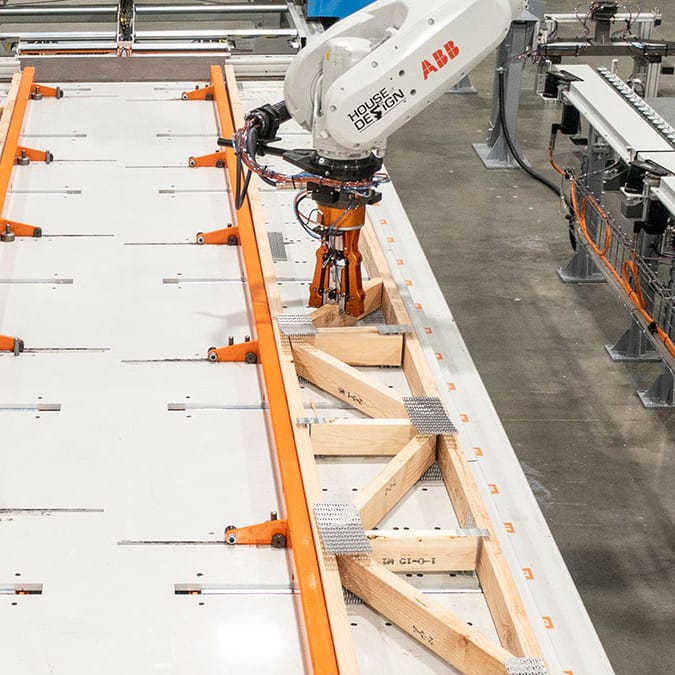
A House of Design-programmed robot assembles a truss for a modular building.
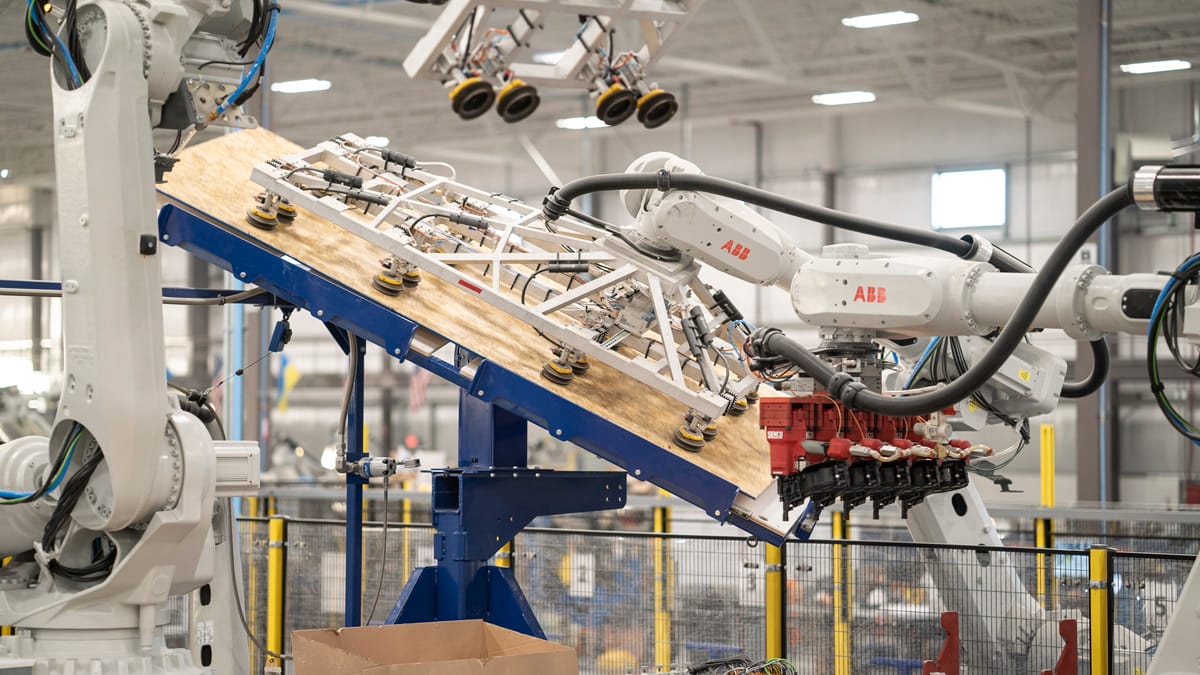
Starting Small
House of Design was founded in 2012 and was focused on custom robotic automation. As Dittrich put it, “We would do anything and everything for anybody.” The company quickly grew from two to almost 100 people right now.
In 2018 they landed work with both Katerra and Autovol. Dittrich has a lot of respect for how Katerra pushed the industry forward, and the contract with Autovol is ongoing and has led to the construction of almost 30 miles of wall assembly.
After getting the contracts with Katerra and Autovol the company pivoted to focus almost exclusively on construction and modular building. Their mission now is to use their robotic automation solutions to help solve the affordable housing crisis.
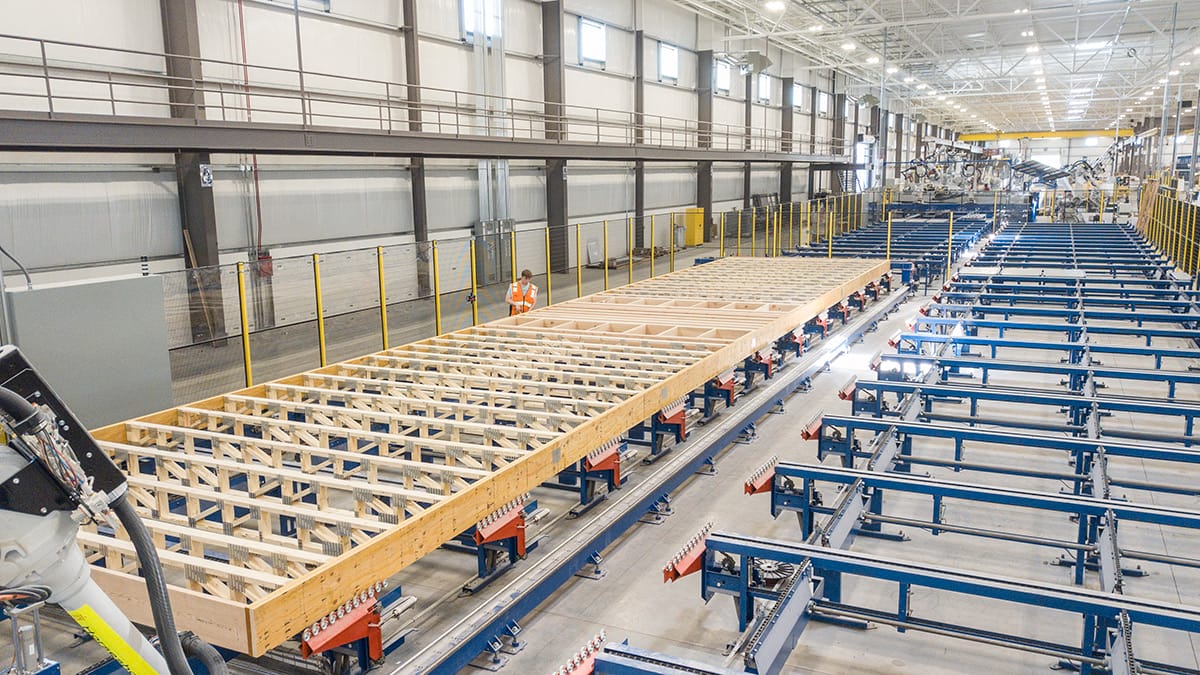
Benefits of Automation
Dittrich sees several benefits to the increased use of robots and automation in the construction industry. One of the most important is that technology opens the door to more diversity in the workforce. It has the ability to appeal to a wider audience, such as women, those of smaller stature, older workers, and those with technological knowledge and aptitudes. “Nowadays younger workers don’t want to be lifting 4 feet by 8 feet sheets of gypsum board all day long. It’s a hard job, and nobody should have to do it. But they love operating a robotic system. It’s almost like gaming to them. Automation opens up the available labor pool for factories.”
Another benefit is improved safety. “We want to get the nail guns out of worker’s hands, because I can guarantee you’re going to have an accident. At Autovol, we’ve built 28 miles of wall assemblies without someone getting hurt with a nail gun. At a manual manufacturing facility, it’s almost guaranteed that someone has driven a nail into their hand.”
Consistent quality is another advantage. “We’re going to pump out the exact same thing every single time.” People can have bad days and bring those bad days to work, greatly affecting the product that comes out of a factory. Automation helps bring consistency to the process.
Labor savings is another benefit that is discussed in the industry, but Dittrich sees it more as labor redistribution. “I don’t know of any company where we’ve gone in, installed automation, and they actually removed or fired people. Usually, they move them to a process that isn’t automated to increase production.”
The Future of Automation
Unfortunately, the cost of automation is increasing, as the price of the steel and electronics used to build robots has gone through the roof in recent years. Dittrich said the industry needs to rethink its mindset when it comes to the role of automation in the workforce. If contractors don’t have enough workers to produce according to project schedules, they’ll need to seek out alternatives, such as automation, to help them keep up with building demand. At that point, cost isn’t going to be as important.
Although automation, even dynamic automation, may not solve all of the construction industry’s woes, it can make significant improvements in specific areas and on specific tasks. “It’s a solution to the specific task that you’re automating, and if it pencils out, then great. If not, that task is not for automation.”
Dittrich sees more on-site manufacturing as the future of automation in the construction industry. Although moving production out of the controlled environment of a warehouse or factory does present risks. Efficiency and safety may be compromised. When asked if we’ll see buildings built exclusively by robots in the near future, Dittrich says he can see that if we address the differences in local building codes and standardize materials dimensions and quality. “You improve those two things, and we will be right there with you to automate those processes.”
About the Author: Dawn Killough is a freelance construction writer with over 25 years of experience working with construction companies, subcontractors and general contractors. Her published work can be found at dkilloughwriter.com.
More from Modular Advantage
MBI Town Halls 2026: Reflections from Boston
By the end of 2026 MBI’s Government Affairs team will have traveled over 6,000 air miles to bring Town Hall events to five different cities in two countries.
Mind the Gap: The Interface Between Onsite and Offsite Construction
Every design for manufacture and assembly (DfMA) project — modular, mass timber, or panelized — is really two projects joined at a seam. One is built in a controlled factory to millimeter tolerances; the other in the field, in weather, to the looser tolerances of poured concrete and human hands. Between them sits an interface: where the factory’s precision meets the site’s reality.
Rules, Rails & Repeatability: Applying DfMA to Modular Healthcare
DfMA offers several advantages for healthcare projects, with faster delivery among the most valuable. Schedule matters when building new facilities, expanding campuses, renovating existing space or bringing care closer to communities that need it.
Precision and Possibility: Demands of DfMA and What Modular Mass Timber Makes Possible
Mass timber does not automatically create an efficient modular building. Its precision makes early coordination more important: fabricated components will accurately reproduce both the team’s solutions and its mistakes. The material’s advantages are realized only when supported by an equally precise design and delivery process.
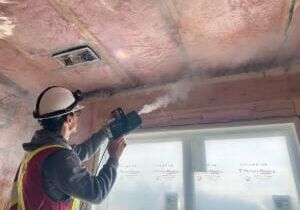
Catch It in the Factory, Not in the Field: Smarter Testing for Modular Builds
Integrating watertightness and airtightness testing into factory workflows transforms quality assurance from a reactive process into a proactive commissioning strategy. It ensures that every module shipped is field ready and resilient for transportation while also supporting the ability of the modular construction industry to make buildings better.
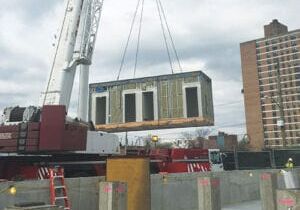
Modular Construction Contracts: Key Considerations for Successful Canadian Projects
Starting a modular project with a well-developed contract protects both the owner and the contractor. It will help keep the project on track and on budget, and it will improve quality from the factory floor to final installation on-site.
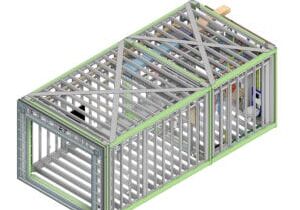
Modular by Design: Turning Architecture into a Manufacturing System
Modular construction is often presented as a faster way to build. Speed, however, is only one part of its value. The larger opportunity is to create a coordinated design and production system that improves quality, reduces uncertainty, and allows a building to move efficiently from concept design through manufacturing, transportation, installation, and completion.
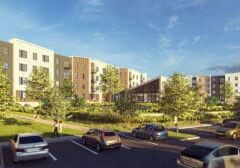
Repeatability Begins with Trust: What Alora at Dry Creek Reveals About Scaling Modular Housing
Alora at Dry Creek, a 329-unit, multifamily community comprising five four-story buildings in Centennial, Colorado, demonstrates how repeatable design, standardized manufacturing and early collaboration can work together to create a model that is not only faster to deliver, but easier to replicate across future projects.
T.R. Arnold: The Art of Third-Party Inspections
T.R. Arnold (TRA), a third-party inspection company in Elkhart, Indiana, contracts with modular manufacturers across the US. Manufacturers register with each state to which they intend to send their modules and may be required to hire a third-party inspection company.
Creating an ‘Ecosystem for Innovation:’ 50+ Years of Modular Construction Oversight in Virginia
Virginia’s modular building program began in 1973, with the implementation of the Virginia Industrialized Building Unit and Mobile Home Safety Regulations. Now it’s leading the country in modular code adoption.