
US Modular Capital: Revolutionizing Offsite Construction Financing

Etai Timna is the Chief Revenue Officer at US Modular Capital
According to the Modular Building Institute, the modular construction industry is currently valued at a staggering $12 billion per year with growth near 20 to 25% year-over-year. This rate of growth has been continuing for quite some time and doesn’t seem to be slowing down. There is no debate on modular’s ability to improve project timelines. It is clear that the built product can meet and exceed site-built quality. It is also clear that using Modern Methods of Construction allows for reduced waste during construction without having to greenwash the results. Additionally, there are efforts across the board to improve manufacturing and installation capabilities. This growth is not without its challenges.
There are likely three major issues hampering the industry today. First amongst these issues are the preconceived notions that most people have about modular construction being akin to a trailer that blows away in a strong breeze. MBI and other organizations are working hard to improve public opinion along with educating the public on the reality of our buildings. The next issue is the lack of manufacturing capacity and skilled labor in most parts of the country. This issue is also being improved, although there are obvious challenges along the way. The third, and most ignored issue, is the access to capital for these projects. US Modular Capital focuses exclusively on providing capital for projects where modular (or off-site) work encompasses the majority of the construction scope.
The Challenge with Securing Capital
Once a developer has determined they want to use Modern Methods of Construction to complete their next project, their next challenge is to secure debt and equity. This challenge not only affects the developers themselves, but also affects the manufacturers. When a developer is unable (or unwilling) to provide substantial deposits to a manufacturer prior to production, there are two choices: both of them negatively affect the manufacturer. The first option is for the manufacturer to reduce or waive part the deposit. In this scenario the manufacturer essentially finances the project for the client. In the second scenario, the manufacturer declines to move forward with the developer, and the project dies on the spot.
Traditional lenders have standards and practices which are not tailored to modular construction and accordingly, it has become increasingly evident that securing adequate funding is one of the key factors essential for the industry’s continued growth.
We at US Modular Capital are a group of modular construction, real estate development, and finance and credit professionals who came together to address this gap in offsite construction lending. US Modular Capital offers credit facilities tailored to resolving common pain points for developers and for manufacturers. Our goal is to enable more developers to embrace modular construction in a financially sustainable way for manufacturers, across real estate product types. Whether the client wants to build a multi-family, hospitality, tract home community or other modular product, we are fully committed to supporting these project types and providing funding in an industry specific fashion.
Problems with Real Estate Loans for Manufacturers
Developers often struggle to secure financing for the initial stages of an offsite build, and manufacturers are forced to consider damaging interim cash flow, effectively crediting builds, or turning away projects altogether due to material funding gaps. Contributing to these risks is the limited universe of traditional lenders comfortable with modular/offsite construction lending.
The overwhelming majority of real estate development lenders reject modular projects at face. They are not comfortable with offsite development construction schedules, capital needs and risks which are unique to the industry. These groups typically do not have industry experts to help them understand the benefits and pain points in the modular construction process. US Modular Capital is different because it was designed to serve the needs of the developers and the manufacturers working in modular construction.
The issue extends beyond simple development activity interests and directly affects housing needs of the United States. Many programs intended to be in favor of affordable development push similar constraints and misconceptions onto projects. US Modular Capital provides developers with a dependable source of debt to allow projects to continue moving forward at the speed and accuracy required for a modular project.
How We Solve the Problem
US Modular Capital offers credit facilities tailored to resolving common pain points for developers and manufacturers by addressing the core needs of manufacturers financial health. We have several tenets that guide our mandate and make us an outstanding partner for your development project. First, we are dedicated to modular construction. US Modular Capital is a private lender, not a bank. We are fully committed to supporting modular projects, and there is no question that funding will be provided based on a project being modular and constructed offsite. Second, we are collaborative with manufacturers, developers, and all project participants throughout a project cycle. We enable all parties to benefit from the same surety, transparency and project-life solvency onsite developers enjoy. We are uniquely prepared to manage the unique risk profile of offsite real estate construction. Third, we are comfortable with almost all product types and capital structures (in-place and take-out). – These are just a few of our advantages– please reach out to learn more!
US Modular is a Collaborative Partner to the Modular Industry and We Want to Hear from Manufacturers and Developers!
We at US Modular Capital place great importance on our relationships with modular manufacturers and developers. In addition to acting as a one-call resource for development lending, US Modular Capital is excited to offer preliminary approval at the counterparty level to reduce delays commonly associated with due diligence toward an actual capital need. Our team brings decades of experience across modular development, real estate lending, and finance and US Modular operates with a flexible mandate. We have the flexibility and expertise necessary to tailor solutions for traditional and complex offsite projects. We pride ourselves on enabling all counterparties to maximize project efficiency and excellence, which allows us to minimize or eliminate capital risk and deficits throughout a project.
We at US Modular Capital are committed to enabling modular and offsite construction to meet the demands of a diverse set of end markets and we look forward to working with you!
More from Modular Advantage
MBI Town Halls 2026: Reflections from Boston
By the end of 2026 MBI’s Government Affairs team will have traveled over 6,000 air miles to bring Town Hall events to five different cities in two countries.
Mind the Gap: The Interface Between Onsite and Offsite Construction
Every design for manufacture and assembly (DfMA) project — modular, mass timber, or panelized — is really two projects joined at a seam. One is built in a controlled factory to millimeter tolerances; the other in the field, in weather, to the looser tolerances of poured concrete and human hands. Between them sits an interface: where the factory’s precision meets the site’s reality.
Rules, Rails & Repeatability: Applying DfMA to Modular Healthcare
DfMA offers several advantages for healthcare projects, with faster delivery among the most valuable. Schedule matters when building new facilities, expanding campuses, renovating existing space or bringing care closer to communities that need it.
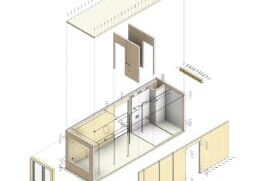
Precision and Possibility: Demands of DfMA and What Modular Mass Timber Makes Possible
Mass timber does not automatically create an efficient modular building. Its precision makes early coordination more important: fabricated components will accurately reproduce both the team’s solutions and its mistakes. The material’s advantages are realized only when supported by an equally precise design and delivery process.
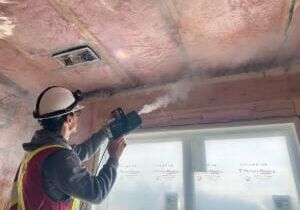
Catch It in the Factory, Not in the Field: Smarter Testing for Modular Builds
Integrating watertightness and airtightness testing into factory workflows transforms quality assurance from a reactive process into a proactive commissioning strategy. It ensures that every module shipped is field ready and resilient for transportation while also supporting the ability of the modular construction industry to make buildings better.
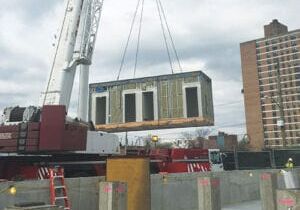
Modular Construction Contracts: Key Considerations for Successful Canadian Projects
Starting a modular project with a well-developed contract protects both the owner and the contractor. It will help keep the project on track and on budget, and it will improve quality from the factory floor to final installation on-site.
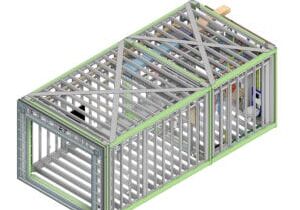
Modular by Design: Turning Architecture into a Manufacturing System
Modular construction is often presented as a faster way to build. Speed, however, is only one part of its value. The larger opportunity is to create a coordinated design and production system that improves quality, reduces uncertainty, and allows a building to move efficiently from concept design through manufacturing, transportation, installation, and completion.
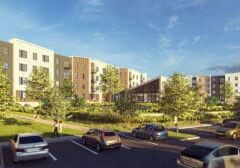
Repeatability Begins with Trust: What Alora at Dry Creek Reveals About Scaling Modular Housing
Alora at Dry Creek, a 329-unit, multifamily community comprising five four-story buildings in Centennial, Colorado, demonstrates how repeatable design, standardized manufacturing and early collaboration can work together to create a model that is not only faster to deliver, but easier to replicate across future projects.

T.R. Arnold: The Art of Third-Party Inspections
T.R. Arnold (TRA), a third-party inspection company in Elkhart, Indiana, contracts with modular manufacturers across the US. Manufacturers register with each state to which they intend to send their modules and may be required to hire a third-party inspection company.
Creating an ‘Ecosystem for Innovation:’ 50+ Years of Modular Construction Oversight in Virginia
Virginia’s modular building program began in 1973, with the implementation of the Virginia Industrialized Building Unit and Mobile Home Safety Regulations. Now it’s leading the country in modular code adoption.