
Tiny Cabins Offer Minimalist Getaways
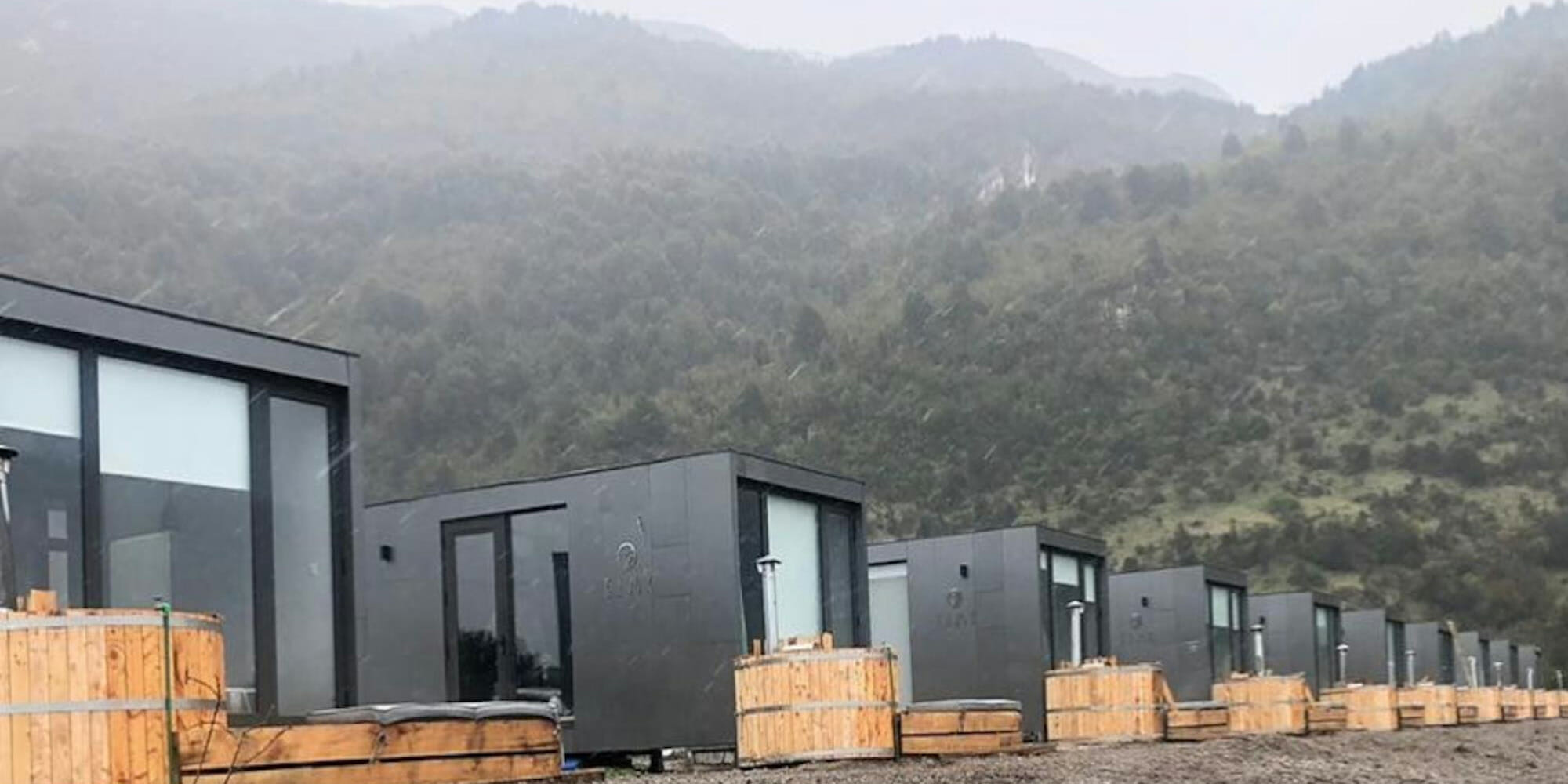
The concept of Tiny Homes is widespread in the United States, given its size and mobility advantages. This has generated a tendency to live with the essentials and at lower costs than maintaining large homes. The popularity of Tiny Homes isn’t confined to the United States, however.
MBI member Tecno Fast S.A. utilized this principle for the creation of their “Tiny Cabin by Tecno Fast” in Chile, South America. Technically the Tiny Cabin is a house with approximately 80 square meters of surface, with an efficient, minimalist, and high-quality design. Each cabin has a bedroom, kitchen, bathroom, closet, and additional services such as an electric lock and alarm.
The plans come in two modern designs from renowned Chilean architects Mathias Klotz and Felipe Assadi. Conceptually, the Tiny Cabin designed by Mathias Klotz is designed to share and enjoy with the family, with a living room that connects with a natural environment. Felipe Assadi’s creation is a space that prioritizes resting with a privileged view from the bedroom. The purpose is to create a minimalist and sustainable space.
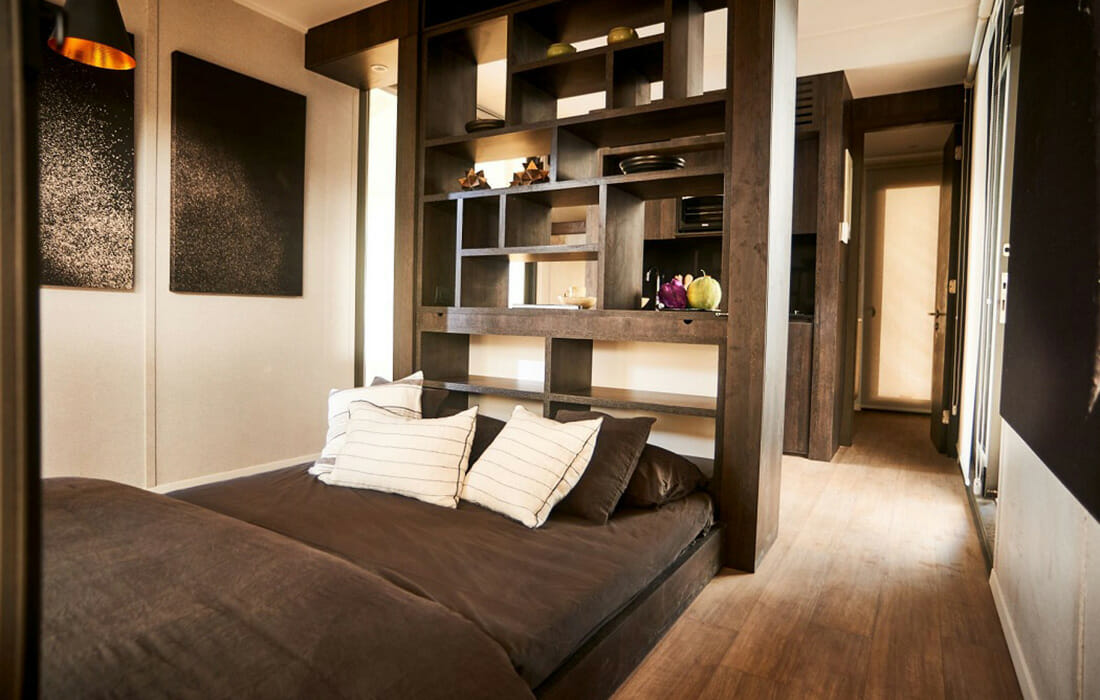
The Tiny Cabins are prefabricated transportable steel structure modules and can be arranged adjacently to generate a single-family home. The modules have the following exterior measurements: width of 3.44 m; length of 6.94 m; height of 2.80 m, and dimensional tolerances of +/- 1cm.
The partitions and walls consist of plasterboard, glass wool and OSB. This ensures excellent acoustic measures, protection against fire and, above all, temperature, providing a module manufactured and designed for harsh weather conditions. The exterior cladding consists of a panel made of 2 aluminum sheets and a plastic core, giving it a modern and minimalist look. The roof is covered in liquid membrane, making it difficult to reach complicated and complex places such as the 2-channel canals, providing maximum impermeability. The windows, thermo panel with aluminum frames, provide a good seal to the outside while maintaining the indoor temperature, either cold or hot.
Tecno Fast launched this program in the Spring of 2019 by calling on those who have land in areas with high tourism potential. The methodology was based on registering on the company’s website www.tinycabin.cl, completing the application form and submitting a series of documents. Tecno Fast received over 1,000 applications from all over our country, from the most extreme zone to the most deserted area. The company selected the 50 best project locations and have installed Tiny Cabins throughout Chile including 10 located 1,897 km from the Tecno Fast factory, on the shore of General Carrera Lake in Chilean Patagonia.
This article was adapted from an Awards of Distinction entry. Browse more projects.
More from Modular Advantage

Mind the Gap: The Interface Between Onsite and Offsite Construction
Every design for manufacture and assembly (DfMA) project — modular, mass timber, or panelized — is really two projects joined at a seam. One is built in a controlled factory to millimeter tolerances; the other in the field, in weather, to the looser tolerances of poured concrete and human hands. Between them sits an interface: where the factory’s precision meets the site’s reality.
Rules, Rails & Repeatability: Applying DfMA to Modular Healthcare
DfMA offers several advantages for healthcare projects, with faster delivery among the most valuable. Schedule matters when building new facilities, expanding campuses, renovating existing space or bringing care closer to communities that need it.
Precision and Possibility: Demands of DfMA and What Modular Mass Timber Makes Possible
Mass timber does not automatically create an efficient modular building. Its precision makes early coordination more important: fabricated components will accurately reproduce both the team’s solutions and its mistakes. The material’s advantages are realized only when supported by an equally precise design and delivery process.
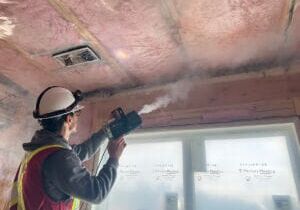
Catch It in the Factory, Not in the Field: Smarter Testing for Modular Builds
Integrating watertightness and airtightness testing into factory workflows transforms quality assurance from a reactive process into a proactive commissioning strategy. It ensures that every module shipped is field ready and resilient for transportation while also supporting the ability of the modular construction industry to make buildings better.
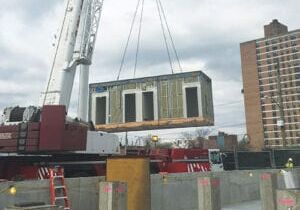
Modular Construction Contracts: Key Considerations for Successful Canadian Projects
Starting a modular project with a well-developed contract protects both the owner and the contractor. It will help keep the project on track and on budget, and it will improve quality from the factory floor to final installation on-site.
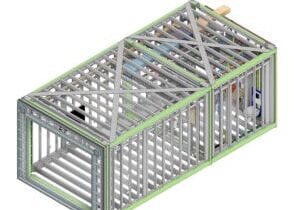
Modular by Design: Turning Architecture into a Manufacturing System
Modular construction is often presented as a faster way to build. Speed, however, is only one part of its value. The larger opportunity is to create a coordinated design and production system that improves quality, reduces uncertainty, and allows a building to move efficiently from concept design through manufacturing, transportation, installation, and completion.

Repeatability Begins with Trust: What Alora at Dry Creek Reveals About Scaling Modular Housing
Alora at Dry Creek, a 329-unit, multifamily community comprising five four-story buildings in Centennial, Colorado, demonstrates how repeatable design, standardized manufacturing and early collaboration can work together to create a model that is not only faster to deliver, but easier to replicate across future projects.

T.R. Arnold: The Art of Third-Party Inspections
T.R. Arnold (TRA), a third-party inspection company in Elkhart, Indiana, contracts with modular manufacturers across the US. Manufacturers register with each state to which they intend to send their modules and may be required to hire a third-party inspection company.

Creating an ‘Ecosystem for Innovation:’ 50+ Years of Modular Construction Oversight in Virginia
Virginia’s modular building program began in 1973, with the implementation of the Virginia Industrialized Building Unit and Mobile Home Safety Regulations. Now it’s leading the country in modular code adoption.
Understanding Thermal Barriers Compliance Methods & Emerging NFPA-275 Foam Plastic Technologies
New fire barrier technologies are improving total costs and margins in major areas of construction, such as commercial, government, union and prevailing wage projects. These benefits translate into other large fringe areas, such as agriculture, commercial cold storage facilities, grow houses, outbuildings, military and aviation hangars.