Flexible Air Caster Solution Boosts Output in a Growing Modular Factory
Maat Feeling Home Scales Modular Production with Aerofilm Systems Air Casters
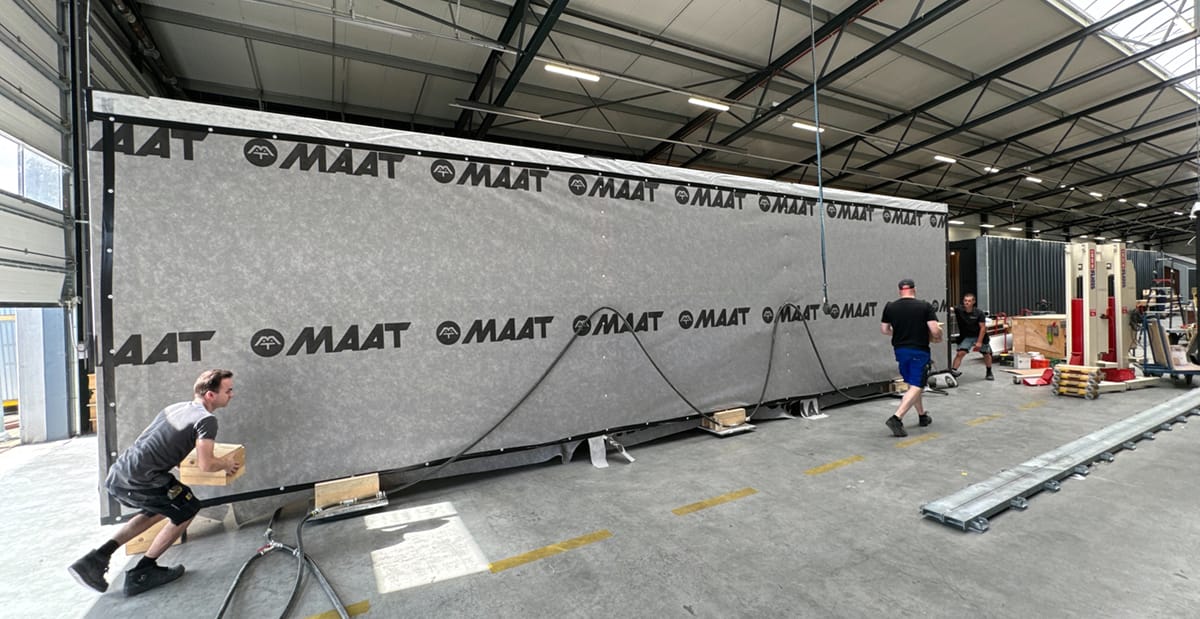

Maat Feeling Home operates in a production environment where efficiency, flexibility, and space utilization are critical. With rising demand for modular housing and a fixed factory footprint, the company faced a clear challenge: increasing production capacity without expanding floor space. The shift toward line-based manufacturing added complexity, requiring smooth and adaptable internal transport between two production halls.
In collaboration with Aerofilm Systems, Maat implemented a custom air caster transport solution tailored to its modular production process. The system enables safe, controlled movement of modular units of varying sizes and weights, integrates seamlessly into the production flow, and removes internal transport as a bottleneck.
This case study highlights how a flexible and practical transport solution helped Maat Feeling Home scale output from 300–400 to 500–600 modules per year, within the same surface area. Showing how smart internal logistics can drive efficiency, improve flexibility, and support sustainable growth in modular construction.
About Maat Feeling Home
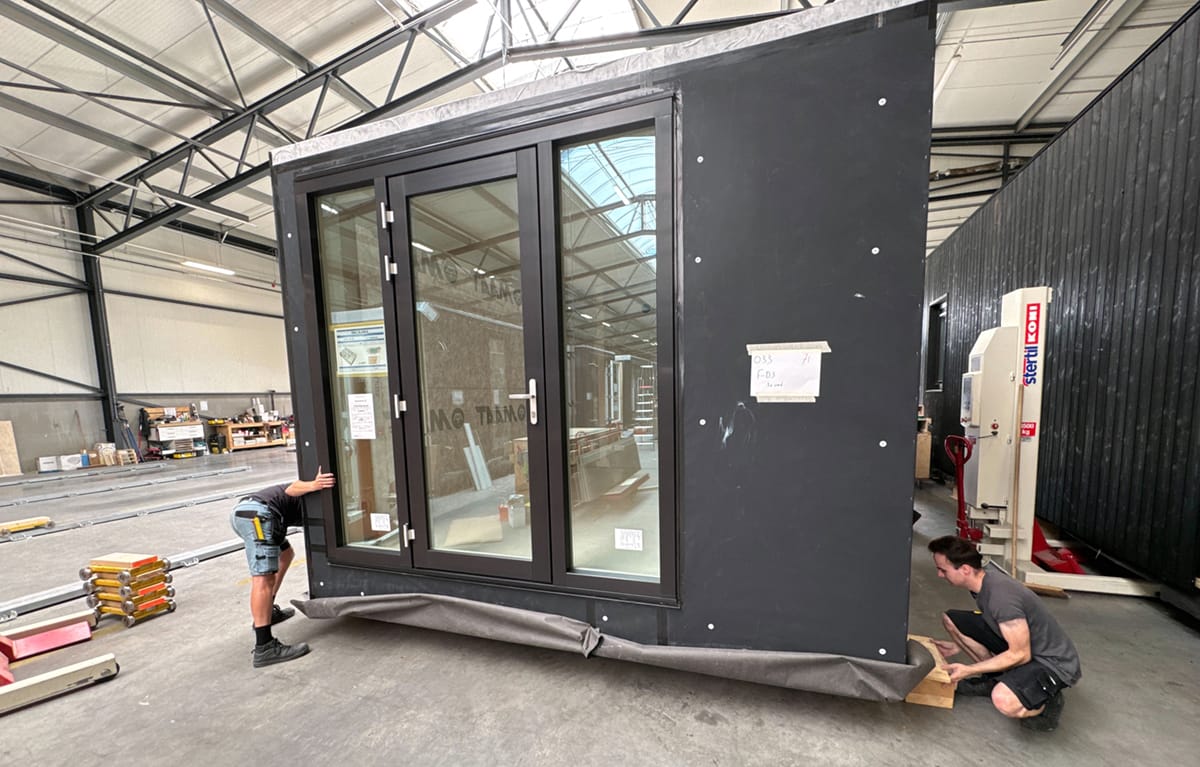
Maat Feeling Home is a well-established, family-owned manufacturer of modular and recreational housing, headquartered in Sliedrecht, the Netherlands. With over 50 years of experience, the company has built a strong reputation for craftsmanship, reliability, and high-quality prefab construction for both recreational and permanent living solutions.
Maat Feeling Home manages the full process in-house, from engineering and production to project coordination, ensuring consistent quality control and smooth delivery. The homes are built in the company’s facilities in Sliedrecht and leave the factory only when fully finished, enabling efficient on-site placement and a true turn-key experience for customers.
With a broad product range and modular units that vary in size, layout, and weight, Maat operates in a market that demands both speed and flexibility. Continuous improvement and innovation in production and internal logistics remain key priorities, helping the company optimize space, increase throughput, and stay competitive in the fast-evolving modular construction industry.
At the same time, Maat manufactures a wide variety of modular units with differences in dimensions and weight. Any transport system therefore needed to be highly flexible, safe to operate, and easy to integrate into daily production operations.
Maat was looking for a system that could:
- Handle different module sizes and weights
- Support line-based production
- Enable efficient movement between production halls
- Integrate seamlessly into the existing manufacturing process
The Challenge
Maat Feeling Home set out to increase production capacity without expanding its factory footprint. The objective was straightforward: produce more modules per year on the same surface area. To support this growth, the company redesigned its manufacturing process into a line-based production setup, enabling modules to move step-by-step through the factory in a structured flow.
This transition introduced a new internal logistics challenge. As part of the production sequence, modular units now had to be transported smoothly and reliably between Factory A and Factory B, without disrupting throughput or requiring excessive handling time.
The Solution
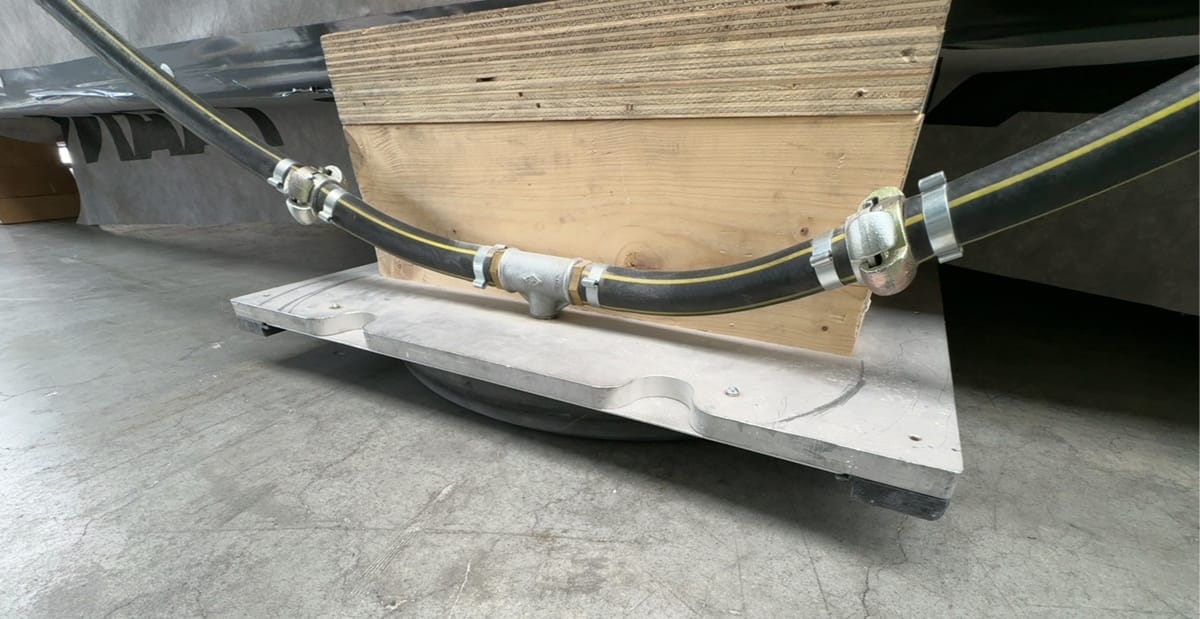
Maat found the solution in air caster technology from Aerofilm Systems. From the outset, the collaboration focused on delivering a practical and flexible transport approach, tailored to Maat’s specific production requirements and daily workflows.
Following the order, an Aerofilm application specialist visited the site to support the implementation and ensure a smooth start-up. Working closely with the Maat team, the system was configured and fine-tuned to integrate seamlessly into the line-based production process.
The specialist remained on-site until the solution performed exactly as intended, providing a reliable handover and giving the production team full confidence in daily operation.
The air caster solution enables Maat to move modular units smoothly, safely, and with minimal effort across the factory floor. Regardless of size or weight. Its built-in flexibility makes the system ideally suited to Maat’s broad product range and continuously evolving production layout.
As a result, internal transport is no longer a constraint, but a reliable and fully integrated part of the line-based manufacturing flow, supporting both efficiency and scalable production.
Beyond the numbers, the solution delivered clear operational benefits:
- A smoother, more efficient production flow
- Greater flexibility for handling different module sizes and weights
- Reliable internal transport between production halls
- A future-ready setup that supports continued growth
More from Modular Advantage
MBI Town Halls 2026: Reflections from Boston
By the end of 2026 MBI’s Government Affairs team will have traveled over 6,000 air miles to bring Town Hall events to five different cities in two countries.

Mind the Gap: The Interface Between Onsite and Offsite Construction
Every design for manufacture and assembly (DfMA) project — modular, mass timber, or panelized — is really two projects joined at a seam. One is built in a controlled factory to millimeter tolerances; the other in the field, in weather, to the looser tolerances of poured concrete and human hands. Between them sits an interface: where the factory’s precision meets the site’s reality.
Rules, Rails & Repeatability: Applying DfMA to Modular Healthcare
DfMA offers several advantages for healthcare projects, with faster delivery among the most valuable. Schedule matters when building new facilities, expanding campuses, renovating existing space or bringing care closer to communities that need it.
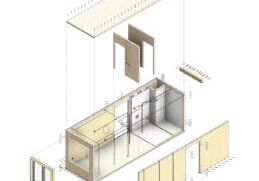
Precision and Possibility: Demands of DfMA and What Modular Mass Timber Makes Possible
Mass timber does not automatically create an efficient modular building. Its precision makes early coordination more important: fabricated components will accurately reproduce both the team’s solutions and its mistakes. The material’s advantages are realized only when supported by an equally precise design and delivery process.
Catch It in the Factory, Not in the Field: Smarter Testing for Modular Builds
Integrating watertightness and airtightness testing into factory workflows transforms quality assurance from a reactive process into a proactive commissioning strategy. It ensures that every module shipped is field ready and resilient for transportation while also supporting the ability of the modular construction industry to make buildings better.
Modular Construction Contracts: Key Considerations for Successful Canadian Projects
Starting a modular project with a well-developed contract protects both the owner and the contractor. It will help keep the project on track and on budget, and it will improve quality from the factory floor to final installation on-site.
Modular by Design: Turning Architecture into a Manufacturing System
Modular construction is often presented as a faster way to build. Speed, however, is only one part of its value. The larger opportunity is to create a coordinated design and production system that improves quality, reduces uncertainty, and allows a building to move efficiently from concept design through manufacturing, transportation, installation, and completion.

Repeatability Begins with Trust: What Alora at Dry Creek Reveals About Scaling Modular Housing
Alora at Dry Creek, a 329-unit, multifamily community comprising five four-story buildings in Centennial, Colorado, demonstrates how repeatable design, standardized manufacturing and early collaboration can work together to create a model that is not only faster to deliver, but easier to replicate across future projects.

T.R. Arnold: The Art of Third-Party Inspections
T.R. Arnold (TRA), a third-party inspection company in Elkhart, Indiana, contracts with modular manufacturers across the US. Manufacturers register with each state to which they intend to send their modules and may be required to hire a third-party inspection company.
Creating an ‘Ecosystem for Innovation:’ 50+ Years of Modular Construction Oversight in Virginia
Virginia’s modular building program began in 1973, with the implementation of the Virginia Industrialized Building Unit and Mobile Home Safety Regulations. Now it’s leading the country in modular code adoption.