Leading the Way with ICC/MBI Offsite Construction Standards: An Interview with Brian Hilderbrand of the Virginia Department of Housing and Community Development
As the demand for housing and infrastructure continues to outpace traditional construction methods, Virginia has taken proactive steps to modernize its building processes by embracing modular construction. One of the most significant milestones in this effort was the state's early adoption of the ICC/MBI Offsite Construction Standards—a move that has positioned Virginia as a national leader in the offsite construction sector.
A Strategic Move Toward National Consistency
Virginia's decision to adopt the ICC/MBI offsite building standards stemmed from a desire to address two of the most pressing challenges in the building industry: housing affordability and production capacity. Offsite construction, particularly modular methods, offers a scalable solution to both. However, the fragmented regulatory landscape across states has long created roadblocks for manufacturers and builders.
"Virginia, like the rest of the nation, is always looking for ways to address the challenges of producing enough housing to keep up with demand and making housing more affordable," said Brian Hilderbrand, Construction Regulation Administrator at the State Building Codes Office in the Virginia Department of Housing and Community Development.
“Offsite construction plays a critical role in addressing these challenges, but navigating the patchwork of regulatory requirements related to offsite construction across the country has long been identified as a major barrier for the offsite construction industry. Implementation of a national standard for the approval of offsite construction is an important step in addressing this barrier.”
By adopting a nationally recognized standard, Virginia helped eliminate this inconsistency. The state played a key role in developing the standards and became one of the first to implement them.
“The standards have improved our program by formalizing many of the policies and practices we had in place and ensuring that the requirements are clear and consistent. Our industry customers regularly express their appreciation for Virginia’s offsite program and for our willingness to be a leader in addressing the barriers they face.”
continued below...
ICC/MBI Standards for Off-Site Construction
Published in partnership with the ICC, these off-site standards bring clarity to the off-site and modular construction processes.
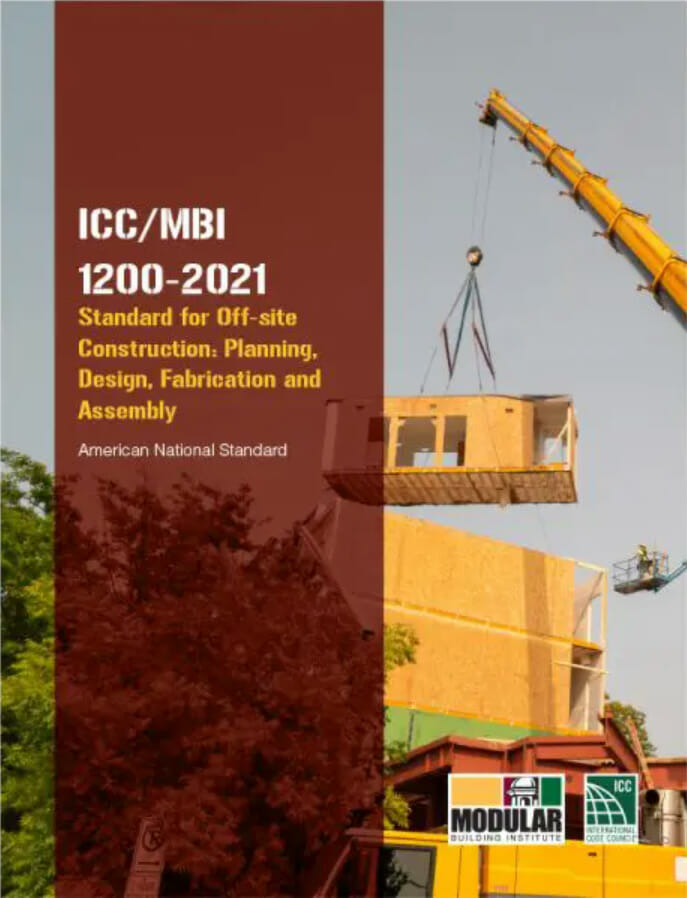
ICC/MBI 1200-2021 Standard for Off-site Construction: Planning, Design, Fabrication and Assembly
This first edition standard provides planning and preparation requirements such as: the role of the architect, modular manufacturer, construction manager, and general contractor; location of plant vs. construction site; and material procurement and lead times.
ICC/MBI 1200-2021 includes requirements for:
- A controlled manufacturing environment.
- Supply chain integration.
- Structural modular vs. nonstructural modular.
- The fabrication process and on-site assembly.
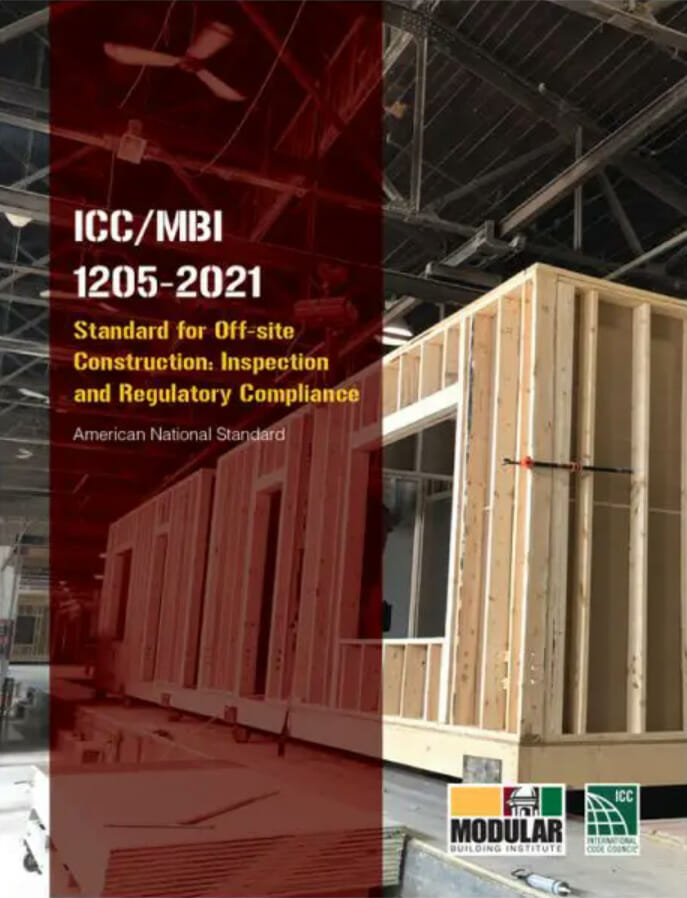
ICC/MBI 1205-2021 Standard for Off-site Construction: Inspection and Regulatory Compliance
The scope of this first edition standard is to provide minimum requirements to safeguard the public health, safety and general welfare and address societal and industry challenges for the inspection and regulatory compliance of off-site and modular construction. It addresses the inspection, approval and regulatory compliance of off-site residential and commercial construction components as well as their assembly and completion at the final building site.
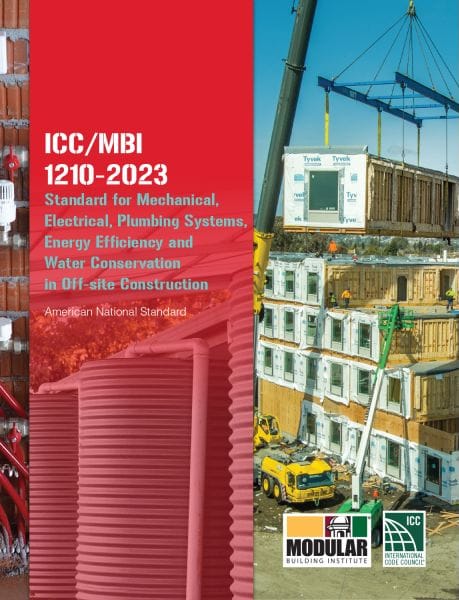
ICC/MBI 1210-2023 Standard for Mechanical, Electrical, Plumbing Systems, Energy Efficiency and Water Conservation in Off-site Construction
The scope of this standard is to provide minimum requirements to safeguard the public health, safety, general welfare and address societal and industry challenges for the energy efficiency and water conservation of off-site construction projects and the planning, designing, fabricating, transporting, and assembling, of commercial and residential building mechanical, electrical and plumbing (MEP) system elements. This includes the componentization and modularization of elements of MEP systems, the incorporation of MEP systems in componentized, panelized or modularized building elements, and the achievement of energy efficiency and water conservation requirements in off-site construction.
Rapid Growth of Commercial Modular Construction Since 2019
Virginia has witnessed a surge in commercial modular construction projects over the past several years.
"By a significant margin," said Hilderbrand, "utility type accessory structures have increased the most. This would include control rooms for substations and cell towers, gensets, switchgear enclosures, etc., followed by guard shacks and construction trailers. There has also been a significant increase in educational buildings for both schools and private companies."
A growing trend has also emerged around modular bathroom pods. In fact, one Virginia-based manufacturer recently produced 314 pods for a hotel in the southwest region of the state, with another producer preparing to deliver a similar quantity for a hotel project in Central Virginia.
"I believe the primary reason for the sustained growth is the increase in awareness of the availability and versatility of these structures at a considerably more affordable cost," commented Hilderbrand. "Registered design professionals are seeing the advantages to incorporating these structures into their designs, saving their customers time and money while increasing quality.
"Based on conversations with local building departments, contractors and other stakeholders, we anticipate significant increases for the foreseeable future in not only the utility occupancies but in R-2, A-3, and E occupancies as well."
Driving Factors Behind Continued Growth
The sustained expansion of modular construction in Virginia can be attributed to increasing awareness of the benefits these structures offer. Cost efficiency, time savings, and improved quality control have made modular systems a preferred option for many design professionals. Architects and engineers are now more inclined to integrate modular components into their plans, which has translated to greater adoption across sectors.
In Hilderbrand's opinion, "the most impactful [reason modular construction is growing in Virginia] is plan review."
"In Virginia," he said, "the CAA’s review the drawings in accordance with the Virginia Uniform Statewide Building Code, comment on non-compliances, and approve compliant drawings, evidenced by their seal on each page. The CAA is then required to submit 20% of all Virginia Plans they approve each month (minimum of 1) to the SBCO for a cursory review. This eliminates a common bottleneck caused by the state reviewing and approving the drawings causing significant delays, which discourages the use of modular units."
Even during the challenges posed by the COVID-19 pandemic, the upward trajectory continued—a testament to the resilience and appeal of modular construction.
Promoting a Modular-Friendly Environment
Another vital initiative has been education. Many local officials initially lacked a clear understanding of modular construction and its rigorous quality assurance processes. Confusion between manufactured homes and industrialized modular buildings further complicated acceptance.
"So many of the local officials do not have a clear understanding of modular and the multiple layers of quality assurance checks required before seals are affixed," said Hilderbrand. "There are some that still do not understand the difference between Manufactured Homes and Industrialized Buildings. Here in Virginia, we provide an 8-hour class in localities throughout the state every year on offsite construction. Through these efforts, we have seen a significant increase in awareness leading to considerably greater acceptance and even appreciation of modular buildings."
Virginia’s embrace of modular construction and its adoption of the ICC/MBI standards serve as a compelling example of how states can modernize their building codes, support industry innovation, and meet urgent construction needs. Through strategic planning, regulatory clarity, and public education, the Commonwealth is not just responding to today's challenges—it's building for the future.
About the Author: John McMullen, PCM, is the marketing director for the Modular Building Institute. You can reach him directly at mcmullen@modular.org or on LinkedIn.
More From Modular Advantage

MBI Town Halls 2026: Reflections from Boston
By the end of 2026 MBI’s Government Affairs team will have traveled over 6,000 air miles to bring Town Hall events to five different cities in two countries.

Mind the Gap: The Interface Between Onsite and Offsite Construction
Every design for manufacture and assembly (DfMA) project — modular, mass timber, or panelized — is really two projects joined at a seam. One is built in a controlled factory to millimeter tolerances; the other in the field, in weather, to the looser tolerances of poured concrete and human hands. Between them sits an interface: where the factory’s precision meets the site’s reality.
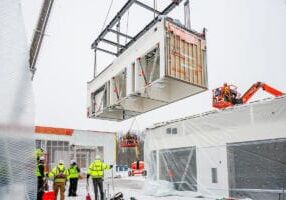
Rules, Rails & Repeatability: Applying DfMA to Modular Healthcare
DfMA offers several advantages for healthcare projects, with faster delivery among the most valuable. Schedule matters when building new facilities, expanding campuses, renovating existing space or bringing care closer to communities that need it.
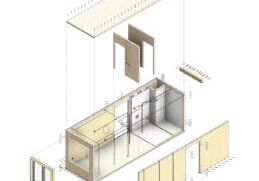
Precision and Possibility: Demands of DfMA and What Modular Mass Timber Makes Possible
Mass timber does not automatically create an efficient modular building. Its precision makes early coordination more important: fabricated components will accurately reproduce both the team’s solutions and its mistakes. The material’s advantages are realized only when supported by an equally precise design and delivery process.
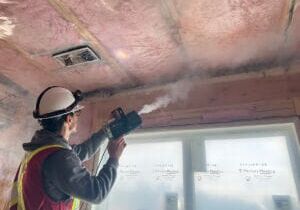
Catch It in the Factory, Not in the Field: Smarter Testing for Modular Builds
Integrating watertightness and airtightness testing into factory workflows transforms quality assurance from a reactive process into a proactive commissioning strategy. It ensures that every module shipped is field ready and resilient for transportation while also supporting the ability of the modular construction industry to make buildings better.
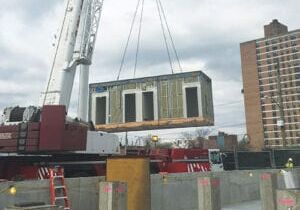
Modular Construction Contracts: Key Considerations for Successful Canadian Projects
Starting a modular project with a well-developed contract protects both the owner and the contractor. It will help keep the project on track and on budget, and it will improve quality from the factory floor to final installation on-site.
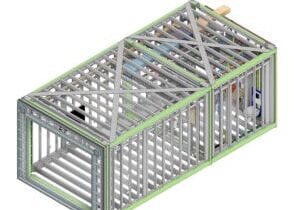
Modular by Design: Turning Architecture into a Manufacturing System
Modular construction is often presented as a faster way to build. Speed, however, is only one part of its value. The larger opportunity is to create a coordinated design and production system that improves quality, reduces uncertainty, and allows a building to move efficiently from concept design through manufacturing, transportation, installation, and completion.

Repeatability Begins with Trust: What Alora at Dry Creek Reveals About Scaling Modular Housing
Alora at Dry Creek, a 329-unit, multifamily community comprising five four-story buildings in Centennial, Colorado, demonstrates how repeatable design, standardized manufacturing and early collaboration can work together to create a model that is not only faster to deliver, but easier to replicate across future projects.

T.R. Arnold: The Art of Third-Party Inspections
T.R. Arnold (TRA), a third-party inspection company in Elkhart, Indiana, contracts with modular manufacturers across the US. Manufacturers register with each state to which they intend to send their modules and may be required to hire a third-party inspection company.

Creating an ‘Ecosystem for Innovation:’ 50+ Years of Modular Construction Oversight in Virginia
Virginia’s modular building program began in 1973, with the implementation of the Virginia Industrialized Building Unit and Mobile Home Safety Regulations. Now it’s leading the country in modular code adoption.