
Miles, Modules, and Memes: Building a Modular Network One Flight at a Time

Steve Dubin is the business development manager for RMax, a Sika Company.
A couple of years ago, I was attending a Greenbuild show hoping to explore new opportunities for residentially-focused sales. Expecting the usual low ROI of a massive trade show, this particular show had a specific focus on offsite construction innovations. There, I met Sara-Ann Logan, VP of Design at Volumetric Building Companies, who introduced me to some of their modular projects. With these, she challenged me to rethink how to support this industry. Looking back, that chance conversation shifted the trajectory of my career.
Soon after, while scrolling LinkedIn, I came across a post from Fading West about a factory tour they’d hosted. In one photo, I spotted a piece of material similar to what my company produces—definitely a lead for someone like me! I immediately dove into their profile to learn more. A month later, I met their design and operations team at a trade show. They graciously invited me to tour their Colorado facility, where I applied the new insights I had gained. This “sell” was different from my usual approach— now focusing on reducing materials and labor, streamlining processes, and eliminating supply chain pinch points- all while still meeting required building codes.
It’s amazing how a handshake at a conference or a LinkedIn comment can spark partnerships, insights, and growth that can ripple across the industry.

From laptop to lanyard: a year's journey of transforming virtual conversations into real-world relationships across the modular industry.
So, at the beginning of 2024, armed with new knowledge and a new partnership that proved the value of collaboration, I started that new role focused specifically on the modular and offsite industry. Taking the advice of a friend (and giant in the offsite construction world, the late Gerry McCaughey) who advised me to “show that that you are on the same journey as they are,” I hit the road, taking these conversations from the digital cloud to the actual clouds. There was a lot more things to learn, and a lot of factories and people to learn them from.
Observations and Insights: Lessons from a Year of Connections
I think that the best insights don’t just come from what you see—they come from the people you meet. Every conversation, every factory visit, and every conference was an opportunity to connect, share ideas, and, honestly, rethink some of the assumptions I once had.
Take building codes, for example. Initially, I understood why some modular companies stuck to the bare minimum in building codes—cost competition with traditional construction. But through conversations with industry leaders, I saw how pushing beyond code creates long-term advantages, like smoother processes and higher-quality results
Many people assume that modular construction should be cheaper than traditional methods, and I used to be one of them. But after talking with people across the industry, I now know that’s not the point at all. Modular isn’t about being cheaper—it’s about being better. Through all these connections, I’ve seen the real value: faster timelines, higher-quality builds, and quicker returns. It’s not just about saving money upfront; it’s about getting people into homes, hotels, and hospitals faster, which is where the true impact lies. And the stories I’ve heard—like projects being completed 18 months earlier than expected—are proof that modular can deliver in ways traditional construction just can’t, or won’t.
One of the more interesting themes this year has been how teams within modular companies interact—or don’t. I’ve heard plenty of stories about how design and manufacturing sometimes don’t quite sync up, or how operations and purchasing scramble to buy materials last minute. But I’ve also met people who’ve cracked the code on collaboration. Those conversations have been inspiring, and they’ve taught me that even when modular has its hiccups, it’s still way ahead of traditional construction in terms of coordination and adaptability.
Looking back, it’s clear that the real difference maker for me this year has been the people. Every connection I’ve made has brought a new perspective or sparked an idea I hadn’t considered before. It’s been a year of learning, thanks to some incredible folks in this industry who are just as passionate about moving modular forward as I now am.
Becoming a “Thought Leader” (Apparently)
Somehow, in this short time, because of my interactions both in-person and online, I’ve become something of a known entity in the modular field, sometimes being referred to as a ‘thought leader,’ which is appreciated, but feels misplaced. I see myself more as a learner- especially this early into my entrance into this particular market space. Sharing insights, visiting factories, and engaging online have helped me connect with others equally excited about modular construction. This industry is a close-knit community, and it’s been humbling to see how my efforts to engage have resonated with others. I’m grateful for the chance to contribute and to learn from the incredible people driving this industry forward. The only reason I’ve been able to take on this role is because I’ve had the privilege of learning from others who are actually ‘thought leaders’ themselves.
The Power of Community
At its core, modular construction thrives on collaboration. Every trip I’ve taken this year has underscored the importance of relationships—whether it’s over a great breakfast with Russ Willis at MODLOGIQ, factory visits with the wonderful people at Mandeville Modular, Simplex Homes and Stratford Building Corporation, deep conversations about energy codes with Muncy Homes and Z Modular, sharing contacts between Guerdon and Vederra at an Offsite Construction Summit, or sharing experiences over dinner with innovators at Wind River Built. The fantastic teams at Blazer Industries, REMO Homes, Northstar Systembuilt, and so many others continue to inspire and redefine what construction is.

A small collection of real-world moments with just a sampling of some of the brightest minds in modular and offsite construction.
Social Media: A Gateway to Real Connections
It’s been mentioned a couple times here, so let’s talk about social media a moment. Social media is a powerful way to connect and share, but it’s easy to misstep if you’re not mindful. Here are some lessons I’ve learned, sometimes the hard way:
- Don’t Post in the Heat of the Moment: Venting frustration online can damage relationships you’ve worked hard to build. Before posting, take a breath and ask, “Will I stand by this tomorrow?” Most times, it’s better to wait. A short-sighted post I put up early last year was understandably not received well, and prompted a tough conversation with someone I respect, and I regret that post still.
- Do Share Something Useful: Focus on adding value by sharing insights, tips, or lessons learned. Helpful content naturally sparks conversations and creates opportunities without being pushy. Instead of being a shill for the company or product you represent, offer insights into what drives your business or product. For me- that’s things like energy codes, air and moisture mitigation, sustainability and the like.
- Do Show Up for Others: Engaging with others’ content—through thoughtful comments or sharing—builds goodwill. Supporting others without expecting immediate benefits often leads to unexpected and meaningful connections.
- Don’t Forget the Human Side: Posts that show gratitude, recognize effort, or share lessons resonate more than polished self-promotion. People connect with authenticity. It’s okay to disagree with others, but do so respectfully, as you would in real life.
At the end of the day, social media is just another tool for building connections, and like any other tool, needs to be used skillfully to work properly. Use social media thoughtfully, and it will open doors to real opportunities and relationships you didn’t even see coming.
Why Connections Matter
In the modular industry, I’ve noticed that the best breakthroughs often happen in informal moments—over shared meals, casual chats, or even LinkedIn comment strings. Partnerships build smarter, more efficient projects, creating a network that supports innovation and growth.
These connections go beyond just business. By collaborating, we’re able to tap into different perspectives and experiences, which leads to better solutions and stronger networks. Every conversation and partnership strengthens the whole industry and encourages us all to keep pushing forward. Relationships are what it is all about, and we can’t push this forward without working well together.
What’s Next?
Looking ahead, I’m gearing up for the World of Modular show, where I’ll be participating in a panel discussion along with other ‘thought leaders’ on leveraging social media to elevate personal and brand awareness in the modular space. I encourage anyone reading this article to join me for that presentation, or any of the other fantastic presentations that will be part of the show.
I have seen firsthand that the modular industry thrives on connections—both in how we build and how we grow. Every conversation, every mile traveled, and every module placed brings us closer to a stronger, more innovative community. Here’s to forging bonds, building dreams, and shaping the future together. Cheers to what’s ahead!
About the Author: Steve Dubin is a Business Development Manager for Rmax, a Sika Company, focusing on modular and offsite construction manufacturers. He currently serves on the board of directors for the Modular Home Builders Association, as well as an Associate member on the Building Systems Council for the NAHB. You can reach him on LinkedIn or at dubin.steve@us.sika.com.
More from Modular Advantage
MBI Town Halls 2026: Reflections from Boston
By the end of 2026 MBI’s Government Affairs team will have traveled over 6,000 air miles to bring Town Hall events to five different cities in two countries.
Mind the Gap: The Interface Between Onsite and Offsite Construction
Every design for manufacture and assembly (DfMA) project — modular, mass timber, or panelized — is really two projects joined at a seam. One is built in a controlled factory to millimeter tolerances; the other in the field, in weather, to the looser tolerances of poured concrete and human hands. Between them sits an interface: where the factory’s precision meets the site’s reality.
Rules, Rails & Repeatability: Applying DfMA to Modular Healthcare
DfMA offers several advantages for healthcare projects, with faster delivery among the most valuable. Schedule matters when building new facilities, expanding campuses, renovating existing space or bringing care closer to communities that need it.
Precision and Possibility: Demands of DfMA and What Modular Mass Timber Makes Possible
Mass timber does not automatically create an efficient modular building. Its precision makes early coordination more important: fabricated components will accurately reproduce both the team’s solutions and its mistakes. The material’s advantages are realized only when supported by an equally precise design and delivery process.
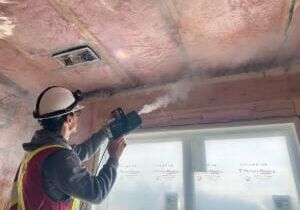
Catch It in the Factory, Not in the Field: Smarter Testing for Modular Builds
Integrating watertightness and airtightness testing into factory workflows transforms quality assurance from a reactive process into a proactive commissioning strategy. It ensures that every module shipped is field ready and resilient for transportation while also supporting the ability of the modular construction industry to make buildings better.
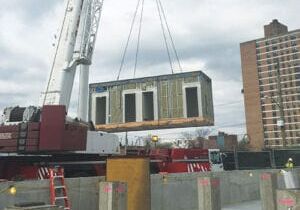
Modular Construction Contracts: Key Considerations for Successful Canadian Projects
Starting a modular project with a well-developed contract protects both the owner and the contractor. It will help keep the project on track and on budget, and it will improve quality from the factory floor to final installation on-site.
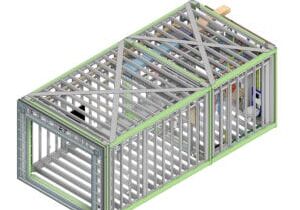
Modular by Design: Turning Architecture into a Manufacturing System
Modular construction is often presented as a faster way to build. Speed, however, is only one part of its value. The larger opportunity is to create a coordinated design and production system that improves quality, reduces uncertainty, and allows a building to move efficiently from concept design through manufacturing, transportation, installation, and completion.
Repeatability Begins with Trust: What Alora at Dry Creek Reveals About Scaling Modular Housing
Alora at Dry Creek, a 329-unit, multifamily community comprising five four-story buildings in Centennial, Colorado, demonstrates how repeatable design, standardized manufacturing and early collaboration can work together to create a model that is not only faster to deliver, but easier to replicate across future projects.

T.R. Arnold: The Art of Third-Party Inspections
T.R. Arnold (TRA), a third-party inspection company in Elkhart, Indiana, contracts with modular manufacturers across the US. Manufacturers register with each state to which they intend to send their modules and may be required to hire a third-party inspection company.
Creating an ‘Ecosystem for Innovation:’ 50+ Years of Modular Construction Oversight in Virginia
Virginia’s modular building program began in 1973, with the implementation of the Virginia Industrialized Building Unit and Mobile Home Safety Regulations. Now it’s leading the country in modular code adoption.