Collaboration — How to Do It Right
Collaboration in the Modular Construction Industry

Landon Boucher is the Director of Business Design and Innovations at MiTek Inc.
So much is said in the world of construction regarding the need to collaborate, particularly in off-site construction. Anyone experienced with successful project execution will tell you that good collaboration amongst project team members, will yield quantitative results. Some in our industry have taken the time to dive deeper into exactly what that means and the impact it can have on a project. What seems to be missing often from these presentations and marketing campaigns is real, tangible direction on, “how” – how to collaborate. I have witnessed many project teams miss the intended results of a project due to a poorly guided, albeit well intended, attempt at collaboration. Usually, these failed projects start with a lot of enthusiasm from the team members to share respective knowledge and insights in their aim toward a successful outcome. The definition of success can vary depending on the expectations laid out by the customer, but regardless of how its defined, success can subtly slip away from the team without a clear understanding of “how.”
There are several high-quality tools and resources on the market that can aid a team in their collaborative efforts, including some from MiTek regarding structural building components. Still, no matter how great these tools are, if little is understood about how to extract all capabilities from these tools and maximize outputs, even if improved results are seen, the full potential is missed. One obvious solution is including someone on the team who has advanced level expertise in this area. Sometimes however, that just isn’t available. In those cases, a representative from the company that developed and maintains that tool, is a necessary member to add, even if it is someone only available remotely to troubleshoot as needed. Still, even more important than understanding how to take full advantage of the capabilities available within the many tools and resources our industry provides, is an understanding of how to apply the general principles of collaboration. More than just another industry buzzword, collaboration is a process that requires leadership to maintain its implementation through project completion.
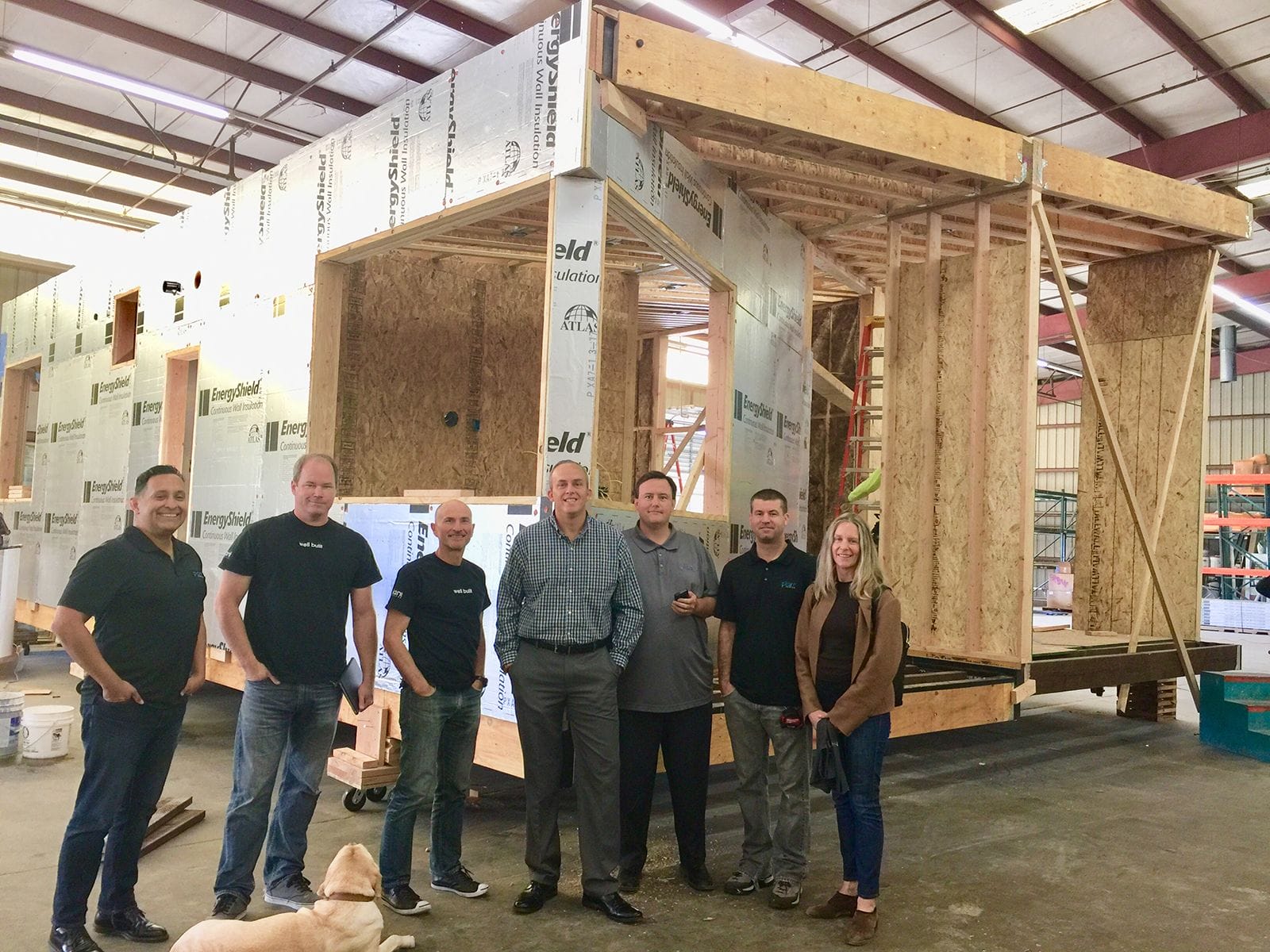
So how can you establish good collaboration? First you must determine what sort of collaboration your project will benefit from most. The two main types are Open and Closed. Open collaboration involves utilizing people from inside and outside your organization to generate ideas or solve problems. This type of collaboration usually involves a large number of participants. A common use of this type of collaboration would be market research. Closed collaboration, however, involves using a relatively small group of specialists working toward a common goal. Closed collaboration is what you would typically see on a construction project team. A relatively small group of specialists, working toward a common goal, to design, make and build a high performing building that produces a financial net gain for the owner.
Once you’ve defined the type of collaboration you will need, you must select the right people and begin building your team. Take careful consideration of the value of the work they provide, not just the bid. A good structural engineer for instance can spend twice the amount of time to complete a project but in that time, remove 100’s of 1,000’s of dollars from your construction budget. What matters more? The cost to design a project or the cost to build it? Even though in a collaborative environment, you want to have equal participation amongst all members of the team, it is important to still assign leadership roles to ensure the project stays on track. This is particularly important in our industry where the options can often seem endless regarding design choices and construction methodologies.
Now that your team is selected, its time to define your purpose. We can’t be successful in our “how” without defining our “why”. Share your mission and vision for the project and have it written down as the header of all communications going forward. A shared mission will keep the team together and a shared vision will help them arrive at the right destination.
Lastly, once the mission and vision have been identified, you will need to deliver it with conviction to generate buy-in from all participants. If you believe it, make it known and make it owned! As the leader of the project, you will need to set the example, build trust, and show consistency if you are going to be successful in establishing a creative and supportive culture that is rooted in the principals of collaboration.
I’ll share one final thought about leadership. While this article is focused on collaboration, the success of collaboration relies on leadership. Everything rises and falls on leadership! There is an old paradox known as Buridan’s Donkey. It’s named after the author, Jean Buridan who was a 14th century philosopher and a student of Aristotle. Buridan’s Donkey is an illustration of a paradox in philosophy regarding the concept of free will or the power to make choices. It refers to a hypothetical situation wherein a donkey that is equally parts hungry and thirsty is placed exactly midway between its food source and its water source. The paradox assumes that the donkey will always default to whatever is closest (or easiest to access). Ultimately, it dies of both hunger and thirst since it cannot make a rational decision between the food or the water. Jean Buridan was a great humorist and would regularly use humor to illustrate his philosophical teachings. While humorous, this paradox of the donkey, holds a lot of wisdom. We have all experienced the famous “analysis paralysis” dilemma on project teams. I think the point Buridan is making here in this paradox, is choices must be made. Sometimes, the easy choice isn’t the best. Regardless, you have to take decisive action. You have to move. You have to lead.
So, don’t be a donkey! Make decisions and lead your team to success through collaboration.
If you are interested in collaborating with MiTek, contact me at Landon.Boucher@mii.com
More from Modular Advantage
MBI Town Halls 2026: Reflections from Boston
By the end of 2026 MBI’s Government Affairs team will have traveled over 6,000 air miles to bring Town Hall events to five different cities in two countries.

Mind the Gap: The Interface Between Onsite and Offsite Construction
Every design for manufacture and assembly (DfMA) project — modular, mass timber, or panelized — is really two projects joined at a seam. One is built in a controlled factory to millimeter tolerances; the other in the field, in weather, to the looser tolerances of poured concrete and human hands. Between them sits an interface: where the factory’s precision meets the site’s reality.
Rules, Rails & Repeatability: Applying DfMA to Modular Healthcare
DfMA offers several advantages for healthcare projects, with faster delivery among the most valuable. Schedule matters when building new facilities, expanding campuses, renovating existing space or bringing care closer to communities that need it.
Precision and Possibility: Demands of DfMA and What Modular Mass Timber Makes Possible
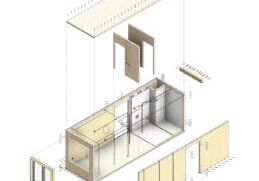
Mass timber does not automatically create an efficient modular building. Its precision makes early coordination more important: fabricated components will accurately reproduce both the team’s solutions and its mistakes. The material’s advantages are realized only when supported by an equally precise design and delivery process.
Catch It in the Factory, Not in the Field: Smarter Testing for Modular Builds
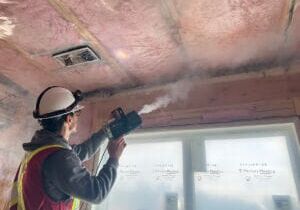
Integrating watertightness and airtightness testing into factory workflows transforms quality assurance from a reactive process into a proactive commissioning strategy. It ensures that every module shipped is field ready and resilient for transportation while also supporting the ability of the modular construction industry to make buildings better.
Modular Construction Contracts: Key Considerations for Successful Canadian Projects
Starting a modular project with a well-developed contract protects both the owner and the contractor. It will help keep the project on track and on budget, and it will improve quality from the factory floor to final installation on-site.
Modular by Design: Turning Architecture into a Manufacturing System
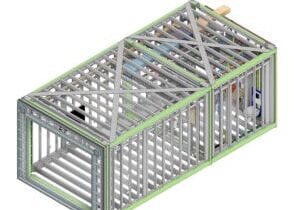
Modular construction is often presented as a faster way to build. Speed, however, is only one part of its value. The larger opportunity is to create a coordinated design and production system that improves quality, reduces uncertainty, and allows a building to move efficiently from concept design through manufacturing, transportation, installation, and completion.
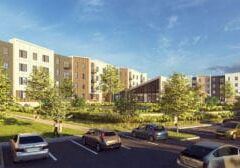
Repeatability Begins with Trust: What Alora at Dry Creek Reveals About Scaling Modular Housing
Alora at Dry Creek, a 329-unit, multifamily community comprising five four-story buildings in Centennial, Colorado, demonstrates how repeatable design, standardized manufacturing and early collaboration can work together to create a model that is not only faster to deliver, but easier to replicate across future projects.
T.R. Arnold: The Art of Third-Party Inspections
T.R. Arnold (TRA), a third-party inspection company in Elkhart, Indiana, contracts with modular manufacturers across the US. Manufacturers register with each state to which they intend to send their modules and may be required to hire a third-party inspection company.
Creating an ‘Ecosystem for Innovation:’ 50+ Years of Modular Construction Oversight in Virginia
Virginia’s modular building program began in 1973, with the implementation of the Virginia Industrialized Building Unit and Mobile Home Safety Regulations. Now it’s leading the country in modular code adoption.