
Industrializing European Modular Construction with Pop-Up Factories

Xavier Jaffray is the founder and president of LECO, a modular construction company in France. The Leco group specializes in the design and construction - in an industrial environment - of carbon-free buildings exclusively based on wood.
Before Xavier Jaffray launched LECO, a modular construction company, in France in 2013, he held management positions in both Toyota and Bic factories. He’d seen industrialized manufacturing up close. When he began researching the construction industry, he found that the companies that manufacture components for buildings — such as roof trusses, wall panels, and windows — are industrialized, but there was no industrialization in design and construction.
“Industrialization is based on the idea of manufacturing the same product over and over again, every day,” Jaffray says. Conventional construction doesn’t repeatedly produce the same product, so it doesn’t gain the efficiencies of industrialization. Part of the problem is that construction is necessarily localized and project-based. A social housing project here, a student dorm project there, a hotel project somewhere else.
Just because modular construction takes place in a factory, that by itself doesn’t mean it’s industrialized. “A real estate company might order 200 identical modules. But 200 units is not a mass-produced product,” Jaffray says.
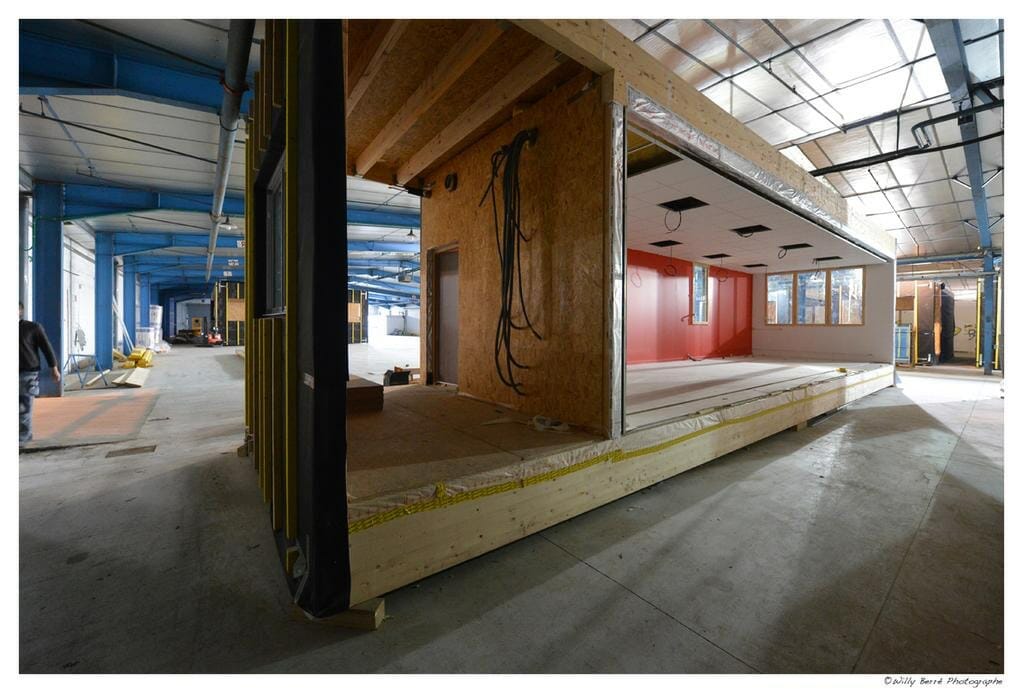
A constant stream of identical products is typical of industrial manufacturing. When a factory isn’t producing anything, it continues to incur overheads, which is clearly inefficient. So, a challenge for modular construction companies is to eliminate factory overheads between projects. One way to do this is to have constant demand so there are no gaps between projects. This is ideal, but it’s not something a company can control. Another way is by eliminating the factory when there’s no demand. This is the route LECO has taken.
Going Local with Pop-Up Factories
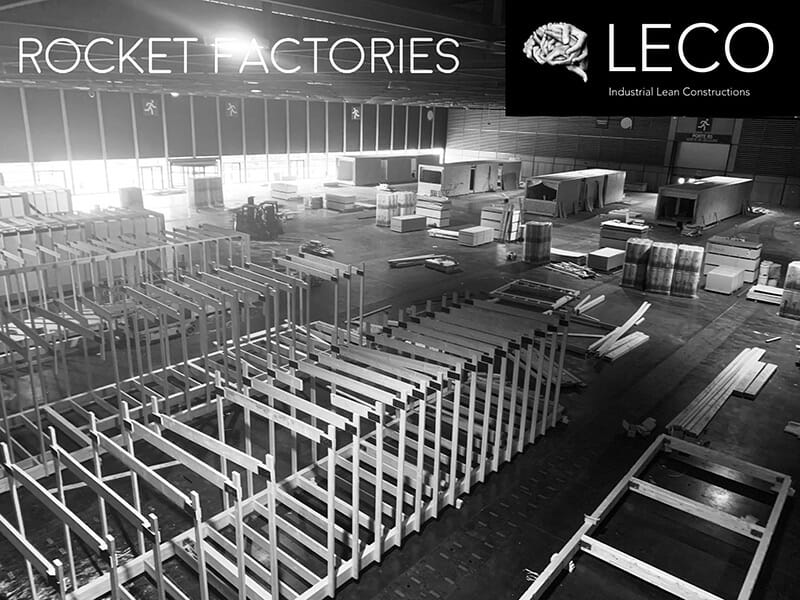
“The construction market requires agility,” says Jaffray. That is, construction companies need to adapt quickly to the location and volume of demand, without incurring overhead when there’s no demand for the product. Jaffray’s solution is novel. He uses what we might call ‘pop-up’ factories or what he sometimes calls ‘flying’ or ‘rocket’ factories near the project sites. LECO rents a large open space in a building, such as a warehouse or exhibition hall, to use as a factory. If there’s enough demand for LECO modules in the area, then the factory may continue to operate for two, five, ten years, or more. If there’s no demand, the factory closes — eliminating overheads. For as long as the factory is open, it’s constantly producing modules.
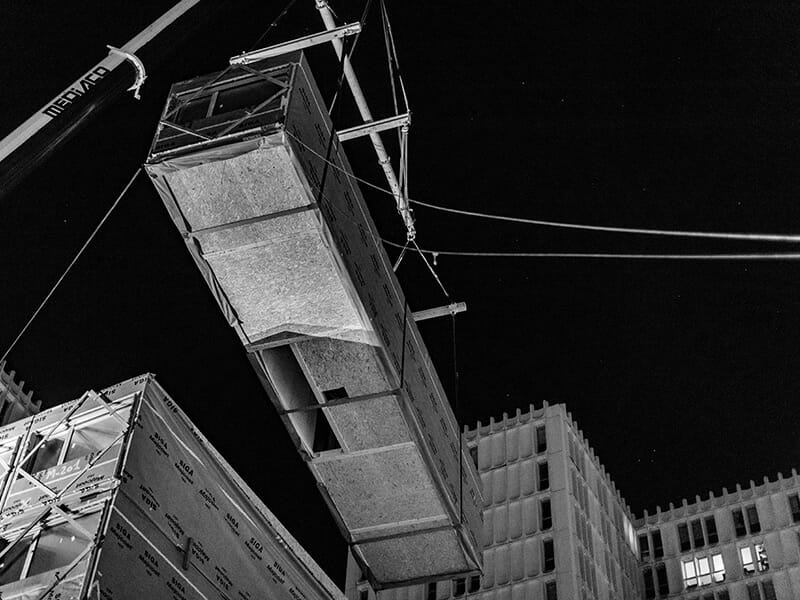
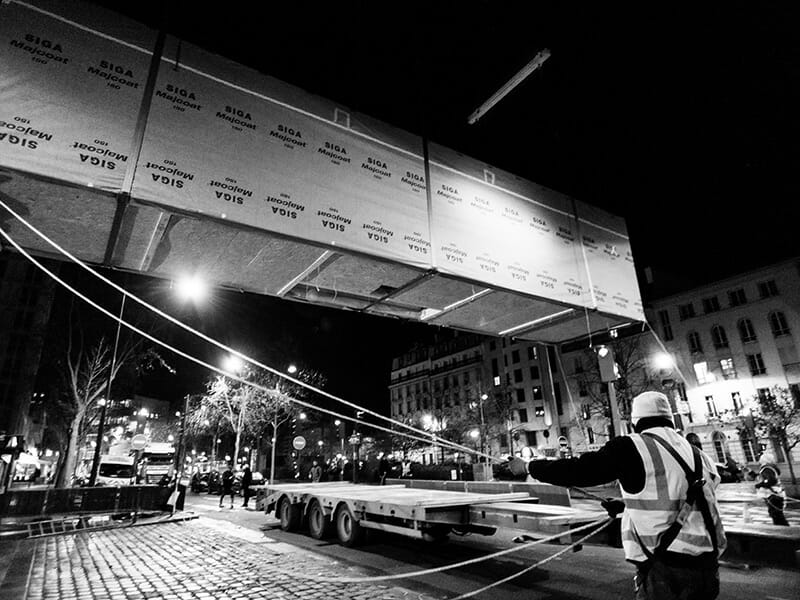
“It doesn’t make economic sense to have a big, permanent factory producing modules in one location and then transporting them long distances,” Jaffray says. LECO ships modules up to a distance of only 100 kilometers. LECO subcontracts with local companies on each project to transport the modules, lay the foundation, and set the modules in place. Most of the suppliers are also in the same area. They also transport the biggest modules they can each time — 5 meters wide and 20 meters long. “We’ve learned that it makes economic sense to deliver the maximum value on every truck trip.”
Eliminating overheads when a project isn’t going through means that LECO has been able to lower costs so that their timber modular construction is cheaper, as well as faster, than both conventional concrete or timber construction.
“Our first project using a temporary factory was a school for 600 students. It took three months in the warehouse-factory, and one month on the site to complete.”
Since then, LECO has opened seven temporary factories in France. Just as important as the temporary factories is the simple assembly process that can be taught quickly to unskilled local workers.
Labor and Logistics
For maximum efficiency, LECO needs to be able to get people working in the temporary factories quickly. They also need to draw from the pool of labor local to each factory. This means they can’t rely on being able to find skilled workers. Having to rely on unskilled labor requires an assembly process that is very simple and quick to learn. LECO’s factories do not cut the wood for their modules (eliminating the need for cutting machines and skilled workers to operate them). The pre-cut wood is delivered to LECO’s temporary factories for assembly.
Having a number of temporary factories, instead of one permanent one, creates logistical supply chain challenges. To address these challenges, LECO formed a dedicated supply chain division. LECO is a group of four companies, each of which has a different function: supply chain; employee training; engineering; and signing the contract with the client.
“Our supply chain company buys the wood and finds a company in the vicinity of the project who can cut it,” Jaffray explains. “We get the wood delivered to that company, and give them the files they need for their cutting machines. Then, the cut pieces are delivered to our temporary factory for assembly.”
Like McDonald's
Jaffray wants LECO to grow without becoming a huge company with high overhead. The way they’re doing this is by selling LECO licenses. “For those who buy a LECO license, we provide the engineering, we deliver the pre-cut components, and we train the employees. But they sign the contracts with their clients and employees, and they arrange for delivery and installation of the modules.”
LECO currently has two licensees in Germany and is working on getting licensees in the UK and the US. “I’m looking for people in the US who want to change the world,” Jaffray says with a laugh.
He compares his licensing business model to McDonald’s franchising. McDonald’s doesn’t have a huge factory where it manufactures Bic Macs to ship long distances to every McDonald’s restaurant. “McDonald’s franchisees hire unskilled workers locally at each restaurant. Those workers make the same products in all the different locations, using a simple process, with ingredients from the local supply chain. The restaurants in all their locations then serve the exact same products,” Jaffray says.
Recent and Upcoming Projects
Last year, in the heart of Paris, LECO built a three-story student dormitory on top of an existing three-story building. “With 400 people living within 100 meters of the construction site, there were concerns about construction noise over a long period,” Jaffray says. But LECO completed the project quickly and quietly.
For a month and a half, an exhibition hall in the north of Paris wasn’t holding any events. “So we rented the space for that period between two exhibition events,” Jaffray explains. “We spent four nights placing the modules and the maximum noise we made was briefly 80 decibels.” (According to the Centers for Disease Control and Prevention, 80 decibels is the same volume as city traffic from inside a car, and is significantly quieter than a motorcycle.)
For the 2024 Olympic Games in Paris, LECO will rent space from a large trade show company to build accommodation for 100 athletes. It’ll be needed for only two months. Like all LECO modules, they can be moved afterwards and be used for other purposes.
Jaffray explains that being able to relocate buildings is a more sustainable and economical solution than building new facilities when others are under-used. For example, an area may no longer need an elementary school building, but it now needs accommodation for college students. So instead of a building standing empty or under-used at the elementary school and building new college accommodation, the building can be relocated from the elementary school to the college.
“Relocatability is especially important for social housing,” Jaffray explains. “It’s easier and quicker to get approval if the housing is permitted for a limited period of time, eight years say, rather than permanently. That means that people can be housed sooner, but still in high quality buildings.”
About the Author: Zena Ryder is a freelance writer, specializing in writing about construction and for construction companies. You can find her at Zena, Freelance Writer or on LinkedIn.
More from Modular Advantage
Mind the Gap: The Interface Between Onsite and Offsite Construction
Every design for manufacture and assembly (DfMA) project — modular, mass timber, or panelized — is really two projects joined at a seam. One is built in a controlled factory to millimeter tolerances; the other in the field, in weather, to the looser tolerances of poured concrete and human hands. Between them sits an interface: where the factory’s precision meets the site’s reality.
Rules, Rails & Repeatability: Applying DfMA to Modular Healthcare
DfMA offers several advantages for healthcare projects, with faster delivery among the most valuable. Schedule matters when building new facilities, expanding campuses, renovating existing space or bringing care closer to communities that need it.
Precision and Possibility: Demands of DfMA and What Modular Mass Timber Makes Possible
Mass timber does not automatically create an efficient modular building. Its precision makes early coordination more important: fabricated components will accurately reproduce both the team’s solutions and its mistakes. The material’s advantages are realized only when supported by an equally precise design and delivery process.
Catch It in the Factory, Not in the Field: Smarter Testing for Modular Builds
Integrating watertightness and airtightness testing into factory workflows transforms quality assurance from a reactive process into a proactive commissioning strategy. It ensures that every module shipped is field ready and resilient for transportation while also supporting the ability of the modular construction industry to make buildings better.
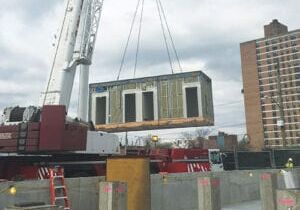
Modular Construction Contracts: Key Considerations for Successful Canadian Projects
Starting a modular project with a well-developed contract protects both the owner and the contractor. It will help keep the project on track and on budget, and it will improve quality from the factory floor to final installation on-site.
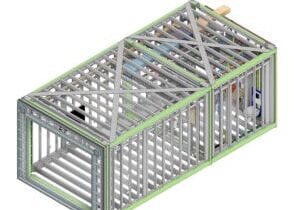
Modular by Design: Turning Architecture into a Manufacturing System
Modular construction is often presented as a faster way to build. Speed, however, is only one part of its value. The larger opportunity is to create a coordinated design and production system that improves quality, reduces uncertainty, and allows a building to move efficiently from concept design through manufacturing, transportation, installation, and completion.
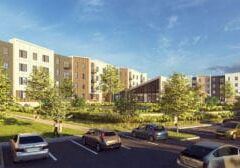
Repeatability Begins with Trust: What Alora at Dry Creek Reveals About Scaling Modular Housing
Alora at Dry Creek, a 329-unit, multifamily community comprising five four-story buildings in Centennial, Colorado, demonstrates how repeatable design, standardized manufacturing and early collaboration can work together to create a model that is not only faster to deliver, but easier to replicate across future projects.

T.R. Arnold: The Art of Third-Party Inspections
T.R. Arnold (TRA), a third-party inspection company in Elkhart, Indiana, contracts with modular manufacturers across the US. Manufacturers register with each state to which they intend to send their modules and may be required to hire a third-party inspection company.
Creating an ‘Ecosystem for Innovation:’ 50+ Years of Modular Construction Oversight in Virginia
Virginia’s modular building program began in 1973, with the implementation of the Virginia Industrialized Building Unit and Mobile Home Safety Regulations. Now it’s leading the country in modular code adoption.
Understanding Thermal Barriers Compliance Methods & Emerging NFPA-275 Foam Plastic Technologies
New fire barrier technologies are improving total costs and margins in major areas of construction, such as commercial, government, union and prevailing wage projects. These benefits translate into other large fringe areas, such as agriculture, commercial cold storage facilities, grow houses, outbuildings, military and aviation hangars.