Modular Retail/Commercial Market Size & Forecast
As retailers, developers, and business owners work to open new locations, expand operations, and respond quickly to changing market demands, modular construction is providing what conventional building methods often cannot: dramatically shorter project timelines, greater cost predictability, and the flexibility to relocate, expand, or reconfigure space as needs evolve. Whether used for permanent stores, restaurants, offices, banks, or other commercial facilities, or for temporary sales centers, pop-up shops, and swing space, today’s modular buildings are more flexible, scalable, and efficient than ever before.
In fact, according to MBI's 2026 United States Permanent Modular Construction Industry Report, retail and commercial applications continue to offer meaningful opportunities for modular construction as companies seek faster, more reliable ways to bring functional, high-quality buildings to market.
Specifically, MBI expects the permanent modular retail & commercial market to grow at 5.1 percent CAGR over the next five years with a market size of $5 billion by 2029.
Modular Retail & Commercial Building Applications
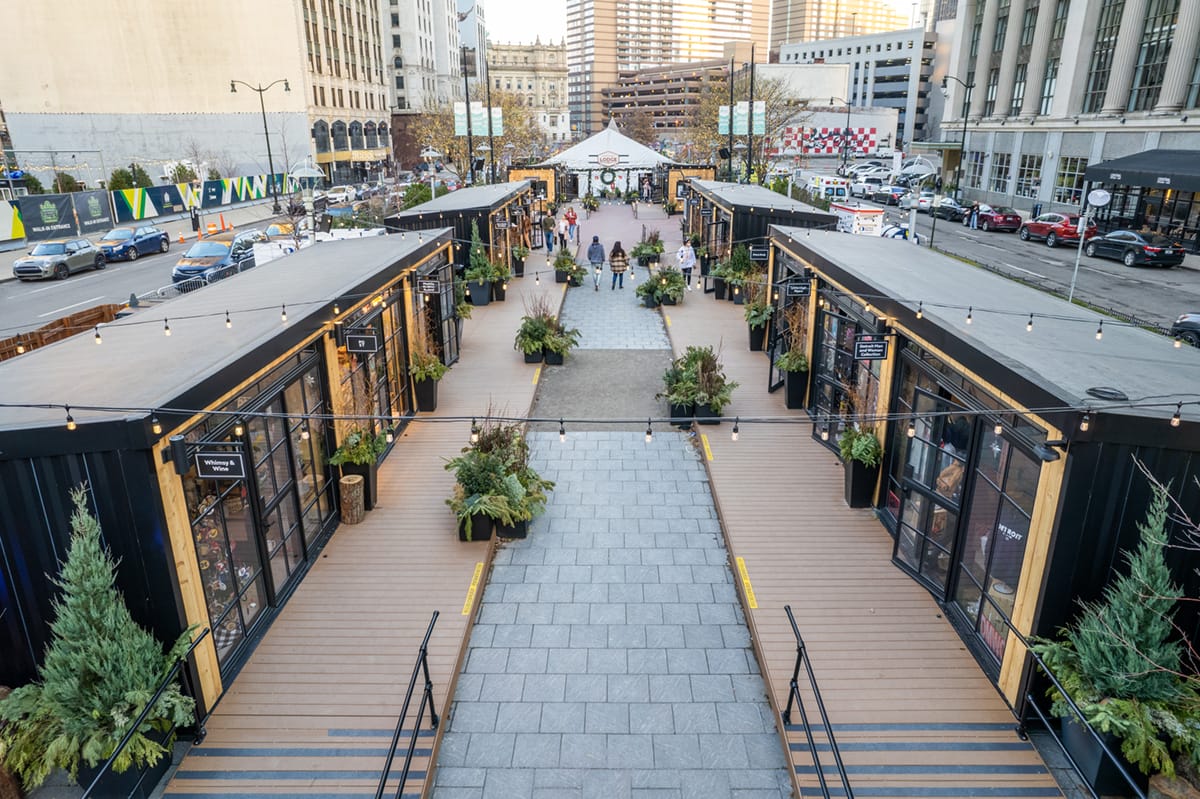
MBI members are delivering modular retail stores and commercial buildings across the full spectrum of project types — from full-scale shopping malls and mixed-use complexes to boutique shops and pop-up restaurants.
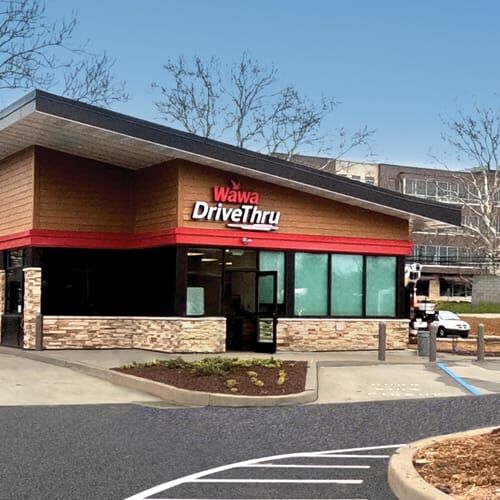
Convenience stores & QSRs
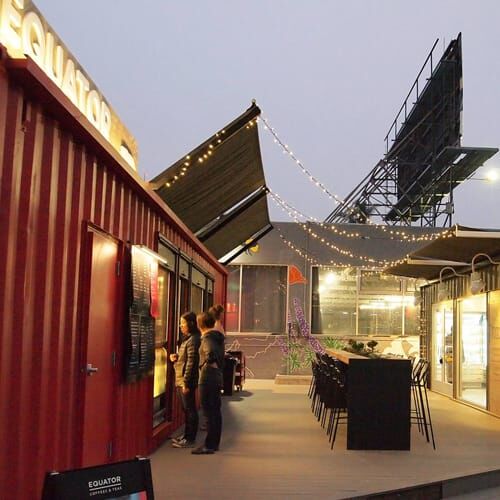
Boutique cafes & shops
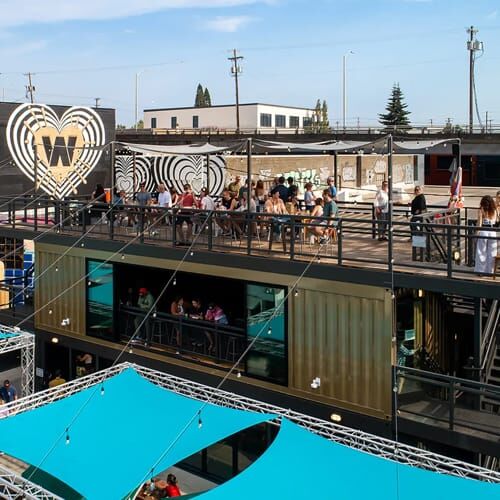
Entertainment venues
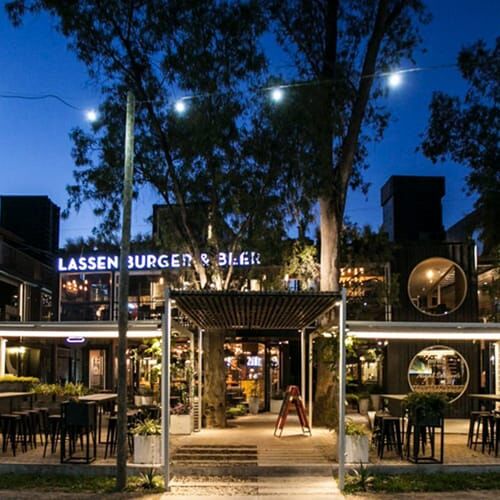
Shopping centers
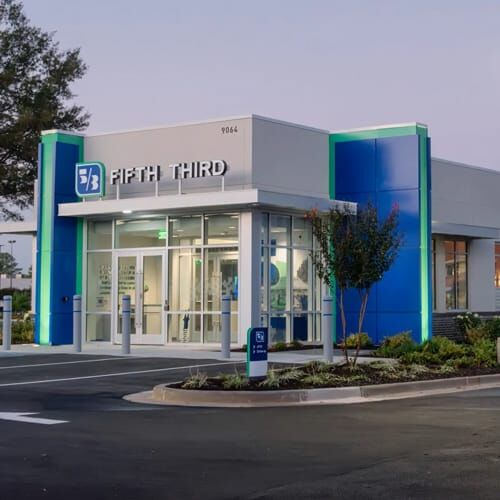
Banks & branch locations
Explore Modular Retail & Commercial Projects Around the World
Use this interactive map to learn more about commercial modular and retail projects built by MBI members across the globe.
Benefits of Modular Construction for Retail & Commercial Projects
The need for flexible, rapidly deployable retail and commercial space has become increasingly clear as businesses respond to shifting consumer habits, changing market conditions, and evolving real estate needs. In this environment, the advantages of modular construction, including speed, efficiency, cost predictability, and adaptability, are more valuable than ever.
As retailers, developers, and business owners plan for future growth, modular construction offers an efficient, cost-effective path forward. Permanent and temporary modular buildings can support a wide range of uses, from large retail stores and office facilities to pop-up shops, sales centers, branch locations, and temporary commercial space in markets of any size.
Speed to Occupancy
Site work and module fabrication happen simultaneously, compressing timelines that would could last 18–24 months into as few as 9–12. That's treatment and revenue-generating capability, faster.
Predictable Budgets
Factory production insulates commercial modular projects from the labor shortages and material volatility that plague site-built work. Costs are locked earlier, surprises are fewer.
Consistent Quality
With highly-repeatable units, modular storefronts and retail shops can be built to the same specifications, in the same environment, by the same crews — inspected at the factory before they ever reach the site. Less rework. Tighter tolerances.
Reduced Site Impact
Fewer trucks, fewer workers, less noise, less debris. For many retail projects in commercially-zoned areas, minimizing site disruption isn't just courteous — it's often a permitting requirement.
Scalable Units
From standalone stores to interconnected shopping malls, modular delivery scales across product types without sacrificing quality or design flexibility.
Built Sustainably
Tighter building envelopes, reduced site waste, and the ability to integrate energy-efficient systems at the factory level give modular stores and shopping centers a measurable sustainability edge.
Emerging Trends and Future Potential
The future of retail and commercial construction is increasingly modular. Advances in technology, design, and building materials are making modular buildings more versatile and better able to meet the varied needs of retailers, developers, and business owners. From temporary pop-up shops and sales centers to permanent stores, restaurants, offices, and other commercial facilities, modular construction offers a scalable and adaptable solution that can evolve alongside changing markets, customer expectations, and business needs.
The Value of Modular Construction
By offering speed, cost efficiency, and flexibility, modular construction provides a practical solution to many of the challenges facing today’s retail and commercial building markets. As MBI members continue to innovate and expand what modular construction can achieve, its role in delivering stores, restaurants, sales centers, and other commercial facilities is positioned to grow. Learn more about how MBI members are advancing retail and commercial construction by creating adaptable, high-quality spaces designed for the future of business.
Explore Modular Retail and Commercial Building Articles & Case Studies
The following projects highlight modular's presence in the retail and commercial building sector
Art²Park – A Creative Application of Modular and Conventional Construction
Art²Park is more than a park building—it’s a demonstration of what modular construction can achieve when thoughtfully integrated with traditional materials. The use of shipping containers provided not only speed and sustainability benefits but also a powerful structural core that simplified and strengthened the rest of the building.
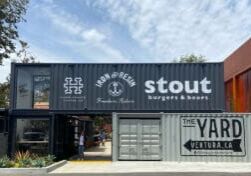
UrbanBloc—From Passion to Industry Leader
UrbanBloc specializes in three main categories or markets – what they call “Phase 0” projects, amenities, and urban infill. Clients are often attracted to shipping containers because from a real estate perspective they are considered an asset. Having the flexibility to move and transport these assets allows owners to respond to different circumstances in a fluid manner that they can’t get with standard construction.
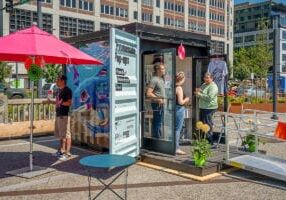
The Retail & Hospitality Game-Changer
“Hospitality is about more than just providing a service – it’s about delivering an experience,” says Anthony Halsch, CEO of ROXBOX. “And that’s where containers thrive. They allow us to create spaces that are unique, efficient, and sustainable.”
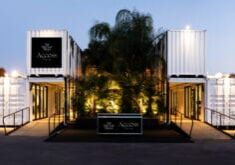
BMarko Structures – Modular Means Flexible
In an effort to increase sales, Miami’s Bal Harbour Shops devised a unique idea – create a mobile mini version that could travel to other locations and tap into new customer bases. Shipping containers seemed to make the most sense as the backbone for the new mall, but there was certainly an image problem: How to provide a high-end shopping experience using shipping containers?
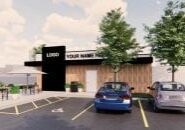
Repetition, Communication, and Coordination: A QSR Case Study
This modular QSR project seemed like any another modular building on the surface. Inside, it was anything but. The rhythm, the desire to iterate and repeat, and the constant communication between all parties made it stand out.
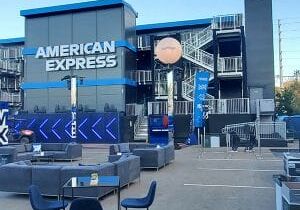
Formula 1 Race, Las Vegas, Nevada
In partnership with InProduction, Phoenix Modular Elevator (PME) designed, manufactured, and installed seven modular elevators for the F1 Grand Prix race in Las Vegas, Nevada. To minimize space, the design utilized machine roomless (MRL) hydraulic elevators, eliminating the need for separate machine rooms for each elevator. Instead, using the MRL design, the machine room equipment is built into the hoistway, and accessed via a small door on the side.
Find a Modular Builder for Your Next Retail/Commercial Project
MBI members include the most experienced modular manufacturers and
contractors across the globe — all vetted, all ready to deliver.