
Housing Without Borders: Go Global with Haskell Modular Solutions


With the capacity to service over 15 diverse markets across multiple continents, Haskell is the reliable choice for our 80% repeat client base no matter how their needs evolve. So, when a longstanding client—typically known for their large-scale, institutional buildings—engaged Haskell with a very different need—multinational housing projects—Haskell knew exactly what approach to take.
Everyone agrees that time is a big challenge with conventional construction. Ambitious contractors can erect multi-story housing in 18-24 months, but these projects can often take much longer. And as delivery drags on, the likelihood of incurring undue risk, including increased costs, rises. For a client who wanted to neutralize these challenges, we recommended volumetric modular construction as a viable solution.
Haskell’s advantage as a truly integrated firm differentiates us in the modular arena. We seamlessly provide cradle-to-grave services, from design and manufacturing to installation. This creates a closed loop system that dramatically compresses timelines and protects clients from needless cost incursions, all while meeting stringent quality standards. We deliver scalable, turnkey solutions in complex global environments, where tariffs, shipping logistics or geopolitics can take a turn at any time. Wherever our clients are, we stand ready to deliver projects anytime, anywhere.
Teamwork, Expertise & Adaptability Facilitate Problem Solving Worldwide
When a confidential client asked Haskell to develop and efficiently deliver a housing program across dozens of countries and multiple continents, we proposed a modular solution. They listened, and we leveraged our long history of a fully integrated approach designing, manufacturing, and installing an array of modular project types to complete several projects in three to eight months. Virtually impossible with traditional stick-built construction, we accomplished this through teamwork, expertise, and adaptability.


Teamwork | Cagayan de Oro, Philippines
Haskell demonstrated just how quickly a 22,000-square-foot housing facility could safely be installed in the heart of the Philippines. A single component of a larger plan for this five-acre site, we managed the housing building as a stand-alone project with its own critical path. This decision empowered greater collaboration with our subcontractors and enabled buy-in for a single mobilization. Modules were delivered to the project site in November and within three months all 26 had been set, stitched, installed, and the building was substantially complete. The team exceeded the client’s project goals and met its own objective of driving completion of the housing facility and leaving it operational.
Expertise | San Luis Potosí, Mexico
Our 14,500-square-foot housing project in San Luis Potosí, Mexico showcases Haskell’s internal procurement and logistics teams’ capabilities. This effort highlights their ability to source materials and equipment from vendors on multiple continents. Experts in procurement and logistics, they ensured that every component, from heavy steel frames to final furnishings, arrived on a tight, synchronized schedule. Modules were designed to our client’s strict guidelines and arrived ready to be set, stitched and installed, resulting in a seamless delivery that underscored the strength of Haskell’s integrated approach.
Adaptability | Managua, Nicaragua
When asked to provide additional housing in a year’s time, Haskell’s design team leveraged existing layouts to jumpstart the project, responding to a near-term opportunity that demanded immediate action. We modified our standard prototype design to meet the client’s new criteria for this 9,500-square foot project and moved from first weld in the factory to final installation in eight months. Our ability to adapt was vital in a region where geopolitical instability, supply chain disruptions, and new tariffs on imported goods can inflate building costs suddenly.
Integrated Expertise
Each build provides new “lessons learned,” strengthens our capabilities throughout the project lifecycle, and allows us to confidently price and deliver turnkey housing solutions across global markets. Ultimately, the success of these projects demonstrates not only the effectiveness of modular delivery, but also Haskell’s ability to respond quickly and reliably to our clients’ evolving needs, anywhere in the world.
More from Modular Advantage
From Model to Machine: Why Modular Scale Is Becoming a Software Problem, not a Material One
For modular manufacturers that have already secured demand and repeatable volume, the next major constraint may no longer be forming capacity itself. Increasingly, it is the continuity of the information feeding that capacity.

Who Will Define Modular Products for AI?
Artificial intelligence is making building configurators easier and less expensive to create. This makes urgent manufacturers’ need portable product definitions, stable identities, and shared interfaces regardless of how others’ software is produced.
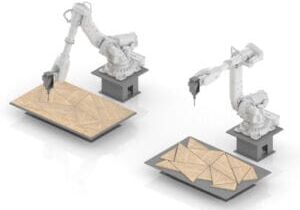
From BIM to Robotic Production: A Digital Workflow for Customized Components in Volumetric Modular Construction
For volumetric modular manufacturers, the value of this workflow is not simply the use of robotics. Its real value is continuity.
Helping Build a Common Framework for Modular Construction in Canada
Canada’s modular construction sector continues to gain momentum, but scaling it successfully will depend on shared expectations across design, manufacturing, approvals, and project delivery. CSA Z251 helps provide that common foundation.
Edges, Exits & Equipment: A Modular Builder’s Guide to Rooftop Access
Rooftop access belongs in the factory design. Before the modules ship, the project team should identify each route’s users, confirm applicable requirements, coordinate with the roof system and structure, and assign responsibility.
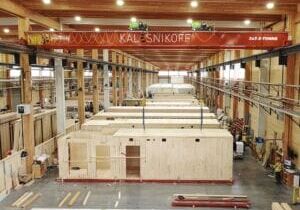
When Timber Production and Modular Construction Share One System
As demand for multifamily and workforce housing continues to outpace what conventional construction timelines can deliver, models that reduce the number of handoffs between structural fabrication and modular assembly are likely to draw more attention.
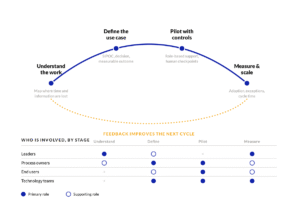
Your AI Strategy Is an Enablement Strategy
Tools will change. Teaching employees only the steps in one platform creates a narrow capability. Involving them in problem definition, process mapping, data assessment, controls, and measurement gives the organization a way to improve its systems as technology evolves.
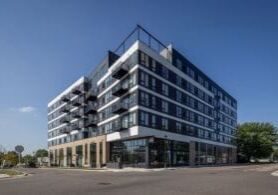
By-Right Permitting: The Missing Lever for Scaling Modular Multifamily
Modular has already proven it can outperform traditional building methods on speed and cost per unit. The next frontier is outside the factory in the front end of the process, where projects either clear a path to construction or get stuck in review.
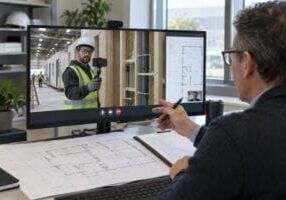
Remote Inspections and The Future of Factory Oversight
Remote inspection is becoming a practical part of modular construction oversight. Its value is greatest when it is used selectively, governed by clear procedures, and supported by complete traceability.
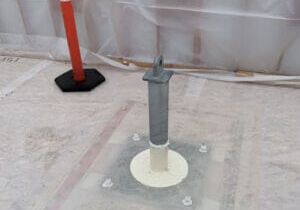
Reimagining Dry-In: How a Temporary-to-Permanent Roofing Strategy Mitigates Risk Between Modular Installation and Final Roof Construction
As volumetric modular projects continue to increase in scale and complexity, the Temporary-to-Permanent FiberTite Roof System represents an example of how traditional trade scopes can be reimagined through Design for Manufacturing and Assembly (DfMA) principles.