FullStack Modular’s Bicoastal Moves Are Making Waves
A New HQ in CT and a Project With Starwood Capital in CA
As Founder and President of FullStack Modular, Roger Krulak has overseen the company’s growth since its inception in 2016. The firm has moved from its first factory in the Brooklyn Navy Yard to a new home in Hamden, Connecticut—all while establishing a flourishing factory in Portland, Oregon.
FullStack Modular has been in Connecticut since late April 2023, getting set up portside at Gateway Terminal. The company has been quick to establish contracts with the state government, providing design and manufacturing options for affordable housing and a myriad of other projects.
“Connecticut is very pro-development and have been great partners since our arrival in Hamden,” said Roger. “The business environment there is very proactive in encouraging new ways to meet their housing needs. So that’s super exciting, and our participation in that is growing.”
In Portland, FullStack Modular is collaborating with the city’s public transportation agency, TriMet, in an effort to develop housing near its rail lines. Roger says it’s all part of his bigger vision to optimize and improve the construction process to propel the industry forward.
“Manufacturing is a process of continuous improvement. The first time we build something, it’s never as efficient as the fifth time we build it. Industrialized construction embraces this approach and we are happy to see that the built environment is finally open to utilizing industrialization and offsite construction to help solve for what seems like an unrelenting demand,” he said.
“Is there a better way to do this? Over the years, I have become very fond of that mindset and process. And I think that the industry as a whole is finally starting to embrace change in order to move the industry forward.”
All the changes and expansions to the business have given Roger a better understanding of the value of continuous improvement, especially as factories adopt robots and automation to increase their speed and efficiency.
Know Your Process Before Introducing Automation
Having been in the business for over 15 years, Roger has seen a lot of successes and failures in the industry. These days, he says, anyone looking to expand or work in modular manufacturing needs to focus on owning their design and process before introducing automation.
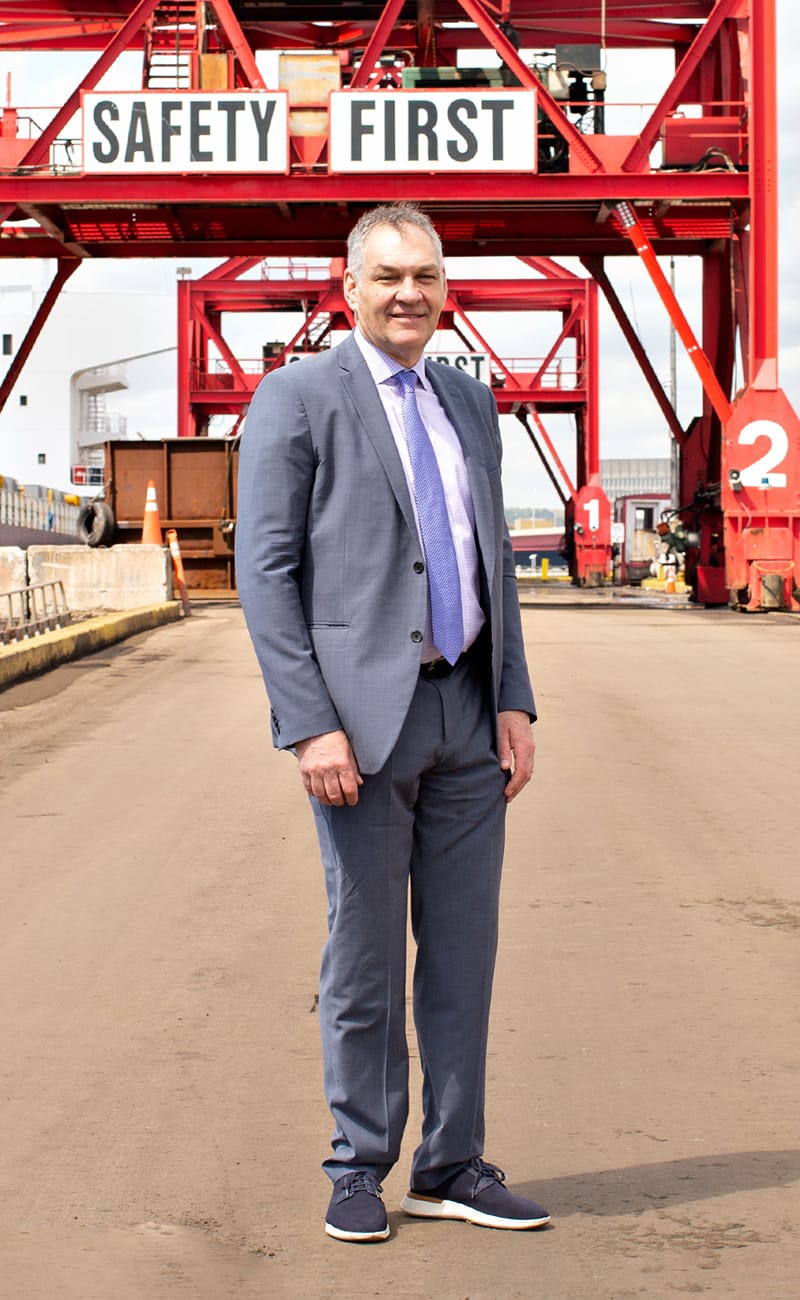
Roger Krulak, founder and president of FullStack Modular. Photo credit: Riverstone Images Studio.
“First, know what your product is and know how you’re going to build it effectively,” he says. “Second, make sure that your factory can accommodate the needs of your product and your process.”
Roger notes that automation—without knowing your process inside and out—could lead to larger financial mistakes down the line. While mistakes are unavoidable, there are some costly ones that manufacturers can and should be wary of.
“I see that mistake made literally every day of the week. They buy a bunch of robots, and they build a window plant that can make 8,000 windows a week, but you can’t even use 8,000 windows in three months,” he says. “Nothing’s going to be perfect, and continuous improvement is imperative. One thing I’ve heard too many times is, ‘I’m buying a bunch of robots, and then I’m going to figure out how to use them.’ Do not do that!”
With these experiences and lessons learned, FullStack Modular’s dedication to sustainability and process yielded their latest project for the Portland factory: a sustainable hotel for Starwood Capital Group in Sunnyvale, California.
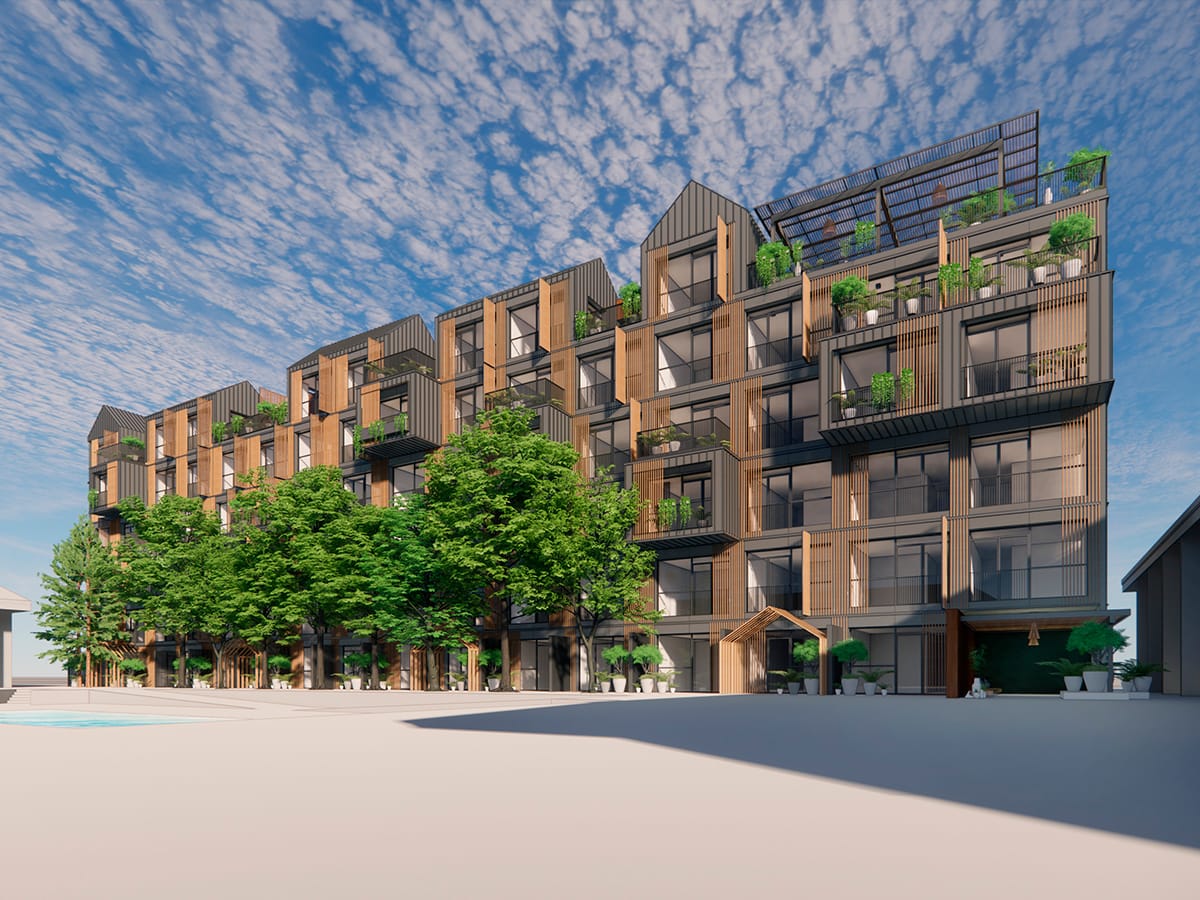
A rendering of Starwood Capital Group's first modular Treehouse hotel in Sunnyvale, CA, manufactured by FullStack Modular. Opening is scheduled for late 2024.
Related Listening:
Notes From a Growing Manufacturer: New Projects and Lessons Learned w/ FullStack Modular
Roger Krulak, founder of FullStack Modular, joins the podcast to talk about the growth of his modular manufacturing company and the exciting projects FullStack and its partners have in the pipeline.
Roger also shares some of the lessons learned from his career in modular and gives advice to up and coming modular manufacturers.
Chasing Sustainability Highs in California
The six-story Treehouse hotel features 200 modules and 143 rooms, all done in coordination with Starwood Capital Group, who, as Roger says, has embraced many of the tenets that make modular work better. The private investment company was looking for a firm that could build in California not just with sustainability in mind, but also climate resiliency in a high seismic zone.
In fact, FullStack Modular’s focus as a mid-to-high-rise all-steel construction modular company resonated with Starwood Capital Group’s plans to create the first Treehouse hotel in the U.S.
“They interviewed every modular company in the world,” said Roger. “It sounds funny, but I’m totally serious. They felt like our unique approach to offsite construction provided them a long-term solution.”
“Our system is seismically responsive, wind responsive, and adaptable to almost every condition,” said Roger. “From whatever our mods sit on all the way through the parapet, it’s all mods, stairwells, elevator shafts, [and] there are no concrete cores in FullStack Modular’s system. It’s all steel and cement floors. Then, it’s all bolted together on-site.”
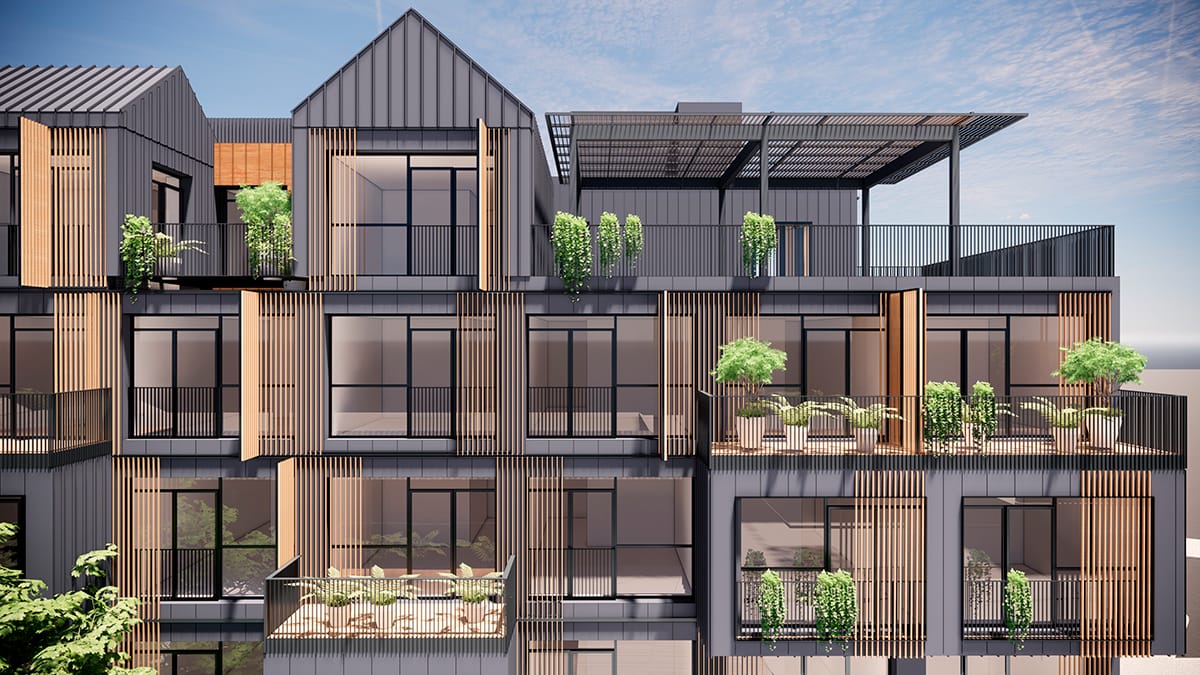
Manufacturing Modules in Portland Bound for California
After working with Starwood Capital Group on the overall design and goal, the Portland factory set to work on developing six different varieties of modules. With FullStack Modular’s system of building with double-loaded corridors, the construction and building process looks to be quick. Roger says the company is aiming to assemble the six-story building over the course of one month once all the modules have arrived via truck from Portland to Sunnyvale.
While the Portland factory is working on these modules, the project took a bit to get started. COVID delays related to the hotel business—namely financing and knowing when to officially start—plagued the manufacturer, on top of supply chain delays.
In all, the timeline is now set to deliver the modules in April or May of 2024. The goal is to have the hotel open by the end of 2024.
About the Author: Karen P. Rivera is a freelance writer and editor with a passion for storytelling. She is a former United Nations-based reporter, with experience covering international breaking news, venture capital, emerging healthcare tech, and the video game industry.
More from Modular Advantage
Mind the Gap: The Interface Between Onsite and Offsite Construction
Every design for manufacture and assembly (DfMA) project — modular, mass timber, or panelized — is really two projects joined at a seam. One is built in a controlled factory to millimeter tolerances; the other in the field, in weather, to the looser tolerances of poured concrete and human hands. Between them sits an interface: where the factory’s precision meets the site’s reality.
Rules, Rails & Repeatability: Applying DfMA to Modular Healthcare
DfMA offers several advantages for healthcare projects, with faster delivery among the most valuable. Schedule matters when building new facilities, expanding campuses, renovating existing space or bringing care closer to communities that need it.
Precision and Possibility: Demands of DfMA and What Modular Mass Timber Makes Possible
Mass timber does not automatically create an efficient modular building. Its precision makes early coordination more important: fabricated components will accurately reproduce both the team’s solutions and its mistakes. The material’s advantages are realized only when supported by an equally precise design and delivery process.
Catch It in the Factory, Not in the Field: Smarter Testing for Modular Builds
Integrating watertightness and airtightness testing into factory workflows transforms quality assurance from a reactive process into a proactive commissioning strategy. It ensures that every module shipped is field ready and resilient for transportation while also supporting the ability of the modular construction industry to make buildings better.
Modular Construction Contracts: Key Considerations for Successful Canadian Projects
Starting a modular project with a well-developed contract protects both the owner and the contractor. It will help keep the project on track and on budget, and it will improve quality from the factory floor to final installation on-site.
Modular by Design: Turning Architecture into a Manufacturing System
Modular construction is often presented as a faster way to build. Speed, however, is only one part of its value. The larger opportunity is to create a coordinated design and production system that improves quality, reduces uncertainty, and allows a building to move efficiently from concept design through manufacturing, transportation, installation, and completion.
Repeatability Begins with Trust: What Alora at Dry Creek Reveals About Scaling Modular Housing
Alora at Dry Creek, a 329-unit, multifamily community comprising five four-story buildings in Centennial, Colorado, demonstrates how repeatable design, standardized manufacturing and early collaboration can work together to create a model that is not only faster to deliver, but easier to replicate across future projects.

T.R. Arnold: The Art of Third-Party Inspections
T.R. Arnold (TRA), a third-party inspection company in Elkhart, Indiana, contracts with modular manufacturers across the US. Manufacturers register with each state to which they intend to send their modules and may be required to hire a third-party inspection company.
Creating an ‘Ecosystem for Innovation:’ 50+ Years of Modular Construction Oversight in Virginia
Virginia’s modular building program began in 1973, with the implementation of the Virginia Industrialized Building Unit and Mobile Home Safety Regulations. Now it’s leading the country in modular code adoption.
Understanding Thermal Barriers Compliance Methods & Emerging NFPA-275 Foam Plastic Technologies
New fire barrier technologies are improving total costs and margins in major areas of construction, such as commercial, government, union and prevailing wage projects. These benefits translate into other large fringe areas, such as agriculture, commercial cold storage facilities, grow houses, outbuildings, military and aviation hangars.