
6 Reasons Modular Manufacturers Need an Orchestration Layer

Ryan O’Reilly is the Chief Commercial Officer at WrxFlo
Modular manufacturing brings much of a building project into a controlled factory environment. That can improve consistency and make schedules more predictable. Yet a module still depends on the right materials arriving, work moving through the factory in sequence, transport being ready and the site being prepared to receive it. A delay at any one point can travel through the rest of the plan.
For me, the test of an orchestration layer is whether it helps people make a better decision when the plan changes. Can procurement, production and logistics assess the same delivery risk without first assembling their own versions of events? The objective is a more dependable operating process, with clear responsibility for the response.

1. Connect Information Across Existing Systems
An ERP system may hold orders, purchasing and financial transactions. A manufacturing system tracks work orders and production progress. Warehouse software records inventory and movements, while transport tools manage dispatch. Each can perform its job well and still leave a gap when a team needs to understand what is happening beyond its own process.
An orchestration layer relates selected information from those systems to the operational work it supports. For example, answering “Which scheduled deliveries are at risk?” might require order dates from ERP, production milestones from MES, material availability from WMS and dispatch plans from transport software. Connecting those signals to the relevant modules helps teams assess the delivery commitment as a whole.
2. Understand How One Delay Affects the Wider Operation
Consider a module due to leave the factory on Thursday. Procurement knows a specified component will arrive a day late. Production can see the work order. Logistics has booked a vehicle, and the site expects a delivery slot. The facts exist, but they may sit in four different places. If the dependency becomes obvious only through a chain of calls, the options available narrow quickly.
The missing component could mean resequencing work or moving the delivery. That choice depends on available labor, finishing capacity, storage space and the booked installation slot. Simply flagging the component as late leaves the wider assessment to separate conversations. Relating it to the affected module and its downstream commitments gives teams a clearer basis for choosing a response.
3. Prioritize the Issues that Threaten Delivery
Not every exception deserves the same level of attention. A late item with a viable substitute may require monitoring. A late item on the critical path of a scheduled installation may need immediate coordination. The relationship between the issue and the delivery commitment should determine the urgency, rather than the order in which warnings appear on a screen.
Teams can use that context to agree escalation rules: which situations require a planner to respond, which need a project manager and which can wait for the next review. An alert should identify the affected commitment and reach the person responsible, with enough information to assess the options.
Orchestration does not remove the need for professional judgement. Whether a substitute is technically acceptable or a revised installation sequence is safe remains a decision for the appropriate people. Its contribution is to make the relevant facts and dependencies easier to assess, so those people spend less time reconstructing the situation before deciding.

4. Keep Factory Output Aligned with Site Readiness
Completion in the factory is one milestone in a larger commitment. Access windows, groundworks, lifting equipment and installation crews need to align with factory output. A completed module arriving before a site is ready can create handling or storage problems. A prepared site waiting for a module can leave equipment and crews idle. Delivery planning needs to account for both situations.
The handoff therefore needs a practical definition of readiness. Does “complete” mean production finished, quality checks passed or the module available for loading? Does “site ready” mean access is confirmed, foundations are accepted and lifting arrangements are in place? Those terms should be agreed before teams rely on a combined view.
Site partners may use different tools, and some updates will still come from people. Start with the milestones that affect delivery most and establish how they will be updated. A green status with different meanings across departments can create false confidence.
5. Give Teams Clear Ownership of the Response
For each type of exception, teams need to agree who assesses the impact, who can authorise a change and who informs the people affected. Those responsibilities should be part of the workflow, rather than something staff have to work out during a disruption.
Once a response is agreed, revised milestones need to reach the relevant teams, with a clear record of what changed and who changed it. Otherwise, one department may resolve an exception while others continue working to an outdated plan. Recording the decision also helps the business distinguish an unresolved warning from an issue that already has an agreed response.
My recommendation is to map one recurring disruption from its first signal to final resolution. Note where time is spent checking facts, finding an owner or seeking approval. That exercise separates a data connection problem from a responsibility problem. Technology can support both, but clear ownership must be agreed by the business.
6. Improve Decisions Without Replacing Existing Systems
An orchestration layer complements the systems already responsible for transactions and specialist tasks. Its scope should be explicit: which information is connected, what triggers attention and whether any updates can be sent back to source systems. Manufacturers can begin with a limited workflow, such as factory completion to site delivery, and extend it as the process becomes more dependable.
Before implementation, establish a baseline for the time taken to identify and resolve exceptions, the number of last-minute dispatch changes and the effort spent reconciling spreadsheets. Review those measures afterwards. The number of integrations delivered is a poor substitute for evidence that the workflow is improving.
I would judge orchestration by the quality and speed of the decisions it supports. If teams can assess the affected commitment and agree a response sooner, there is a practical basis for extending it.
A Practical Starting Point
When something changes today, how quickly can the people responsible understand its effect on tomorrow’s delivery? That question is a useful starting point for deciding where orchestration will help and where clearer definitions or ownership are needed first.
Ryan O’Reilly is Chief Commercial Officer at WrxFlo. He works with modular manufacturers to connect operational information across factory production, logistics and site delivery, helping teams see the impact of changes and coordinate their response.
More from Modular Advantage
From Model to Machine: Why Modular Scale Is Becoming a Software Problem, not a Material One
For modular manufacturers that have already secured demand and repeatable volume, the next major constraint may no longer be forming capacity itself. Increasingly, it is the continuity of the information feeding that capacity.

Who Will Define Modular Products for AI?
Artificial intelligence is making building configurators easier and less expensive to create. This makes urgent manufacturers’ need portable product definitions, stable identities, and shared interfaces regardless of how others’ software is produced.
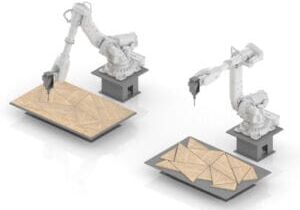
From BIM to Robotic Production: A Digital Workflow for Customized Components in Volumetric Modular Construction
For volumetric modular manufacturers, the value of this workflow is not simply the use of robotics. Its real value is continuity.

Helping Build a Common Framework for Modular Construction in Canada
Canada’s modular construction sector continues to gain momentum, but scaling it successfully will depend on shared expectations across design, manufacturing, approvals, and project delivery. CSA Z251 helps provide that common foundation.

Edges, Exits & Equipment: A Modular Builder’s Guide to Rooftop Access
Rooftop access belongs in the factory design. Before the modules ship, the project team should identify each route’s users, confirm applicable requirements, coordinate with the roof system and structure, and assign responsibility.
When Timber Production and Modular Construction Share One System
As demand for multifamily and workforce housing continues to outpace what conventional construction timelines can deliver, models that reduce the number of handoffs between structural fabrication and modular assembly are likely to draw more attention.
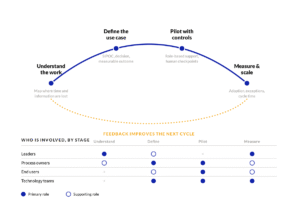
Your AI Strategy Is an Enablement Strategy
Tools will change. Teaching employees only the steps in one platform creates a narrow capability. Involving them in problem definition, process mapping, data assessment, controls, and measurement gives the organization a way to improve its systems as technology evolves.

By-Right Permitting: The Missing Lever for Scaling Modular Multifamily
Modular has already proven it can outperform traditional building methods on speed and cost per unit. The next frontier is outside the factory in the front end of the process, where projects either clear a path to construction or get stuck in review.

Remote Inspections and The Future of Factory Oversight
Remote inspection is becoming a practical part of modular construction oversight. Its value is greatest when it is used selectively, governed by clear procedures, and supported by complete traceability.

Reimagining Dry-In: How a Temporary-to-Permanent Roofing Strategy Mitigates Risk Between Modular Installation and Final Roof Construction
As volumetric modular projects continue to increase in scale and complexity, the Temporary-to-Permanent FiberTite Roof System represents an example of how traditional trade scopes can be reimagined through Design for Manufacturing and Assembly (DfMA) principles.