
Du Moulin School


Location: Lanaudière, Québec
Project Type: Modular school building
Install Window: Two weeks
Soil Conditions: Cu < 50 kPa (very soft clays)
Foundation System: Engineered multi-helix Postech piles
Performance Verification: Load tests were required to ensure safety
The Company
Postech Screw Piles delivers engineered helical foundations for residential and large-scale projects around the world, offering speed, reliability, and certified performance in all conditions.
Project Overview
When the Lanaudière school board approved a new modular expansion for Du Moulin School, the expectations were clear: build fast, build right, and avoid surprises. The 74 × 109 ft structure had to move from approval to installation on an accelerated schedule, leaving no margin for foundation delays.
Early geotechnical findings complicated the path forward. The site sat on very soft clays, with undrained shear strength below 50 kPa, conditions that typically force costly workarounds with conventional concrete.
The project needed a foundation system that could match the pace of modular construction while delivering absolute confidence in weak ground.
The Challenge
The geotechnical report made one thing clear: traditional concrete foundations were incompatible with both the soil and the schedule. Excavation in soft clays, ground improvement, formwork, curing time, and weather dependency would introduce delays a modular build simply couldn’t absorb.
The engineering team needed a solution that could:
- Perform reliably in extremely soft soils
- Install quickly with minimal site disruption
- Deliver immediate structural capacity
- Be verified directly on site
- Adapt to buried obstructions without slowing the schedule
This project required speed, adaptability, and confirmation, not assumptions.
The Solution
Postech proposed a fully engineered screw pile system designed specifically for low-strength clay conditions, with performance validated in real time and confirmed through field testing
Design & Engineering
A custom-engineered system optimized for soft soils and validated in real time during installation.
- 20-ft pile depths to reach competent bearing
- Multi-helix configurations with diameters up to 30 inches
- Helix geometry optimized for load transfer in low-Cu clays
- Real-time torque monitoring for every Postech piles
Installation & Adaptability
Certified installers recorded torque logs throughout installation to ensure alignment with engineering expectations. When buried obstructions were encountered, transfer beams allowed the team to bypass them without excavation, preserving both schedule and site integrity.
Field Validation
A full compression load test was performed on site, reaching failure at 277.7 kN, confirming that the engineered solution met required performance under actual ground conditions.


Results
Despite very soft soils and a compressed installation window, the foundation was:
- Installed and fully verified within the two-week schedule
- Proven through direct load testing
- Immediately ready to support the modular build
No curing time. No ground remediation. No weather-dependent delays.
This project demonstrates how engineered screw piles turn challenging soils into a stable, build-ready platform, without slowing fast-track construction timelines.
Key Takeaways
Confidence in Weak Soils. Multi-helix screw piles delivered reliable performance in Cu < 50 kPa clay with no ground improvement.
Speed for Modular Construction. Design, installation, and verification were completed within a strict two-week window.
Proof of Capacity. Load testing to 277.7 kN confirmed performance, not theoretical assumptions.
Adaptable Installation. Transfer beams enabled seamless progress around buried obstructions.
Built for Fast-Track Projects. Immediate load capacity and low site disruption make screw piles an ideal foundation system for modular and off-site construction.
More from Modular Advantage
From Model to Machine: Why Modular Scale Is Becoming a Software Problem, not a Material One
For modular manufacturers that have already secured demand and repeatable volume, the next major constraint may no longer be forming capacity itself. Increasingly, it is the continuity of the information feeding that capacity.

Who Will Define Modular Products for AI?
Artificial intelligence is making building configurators easier and less expensive to create. This makes urgent manufacturers’ need portable product definitions, stable identities, and shared interfaces regardless of how others’ software is produced.
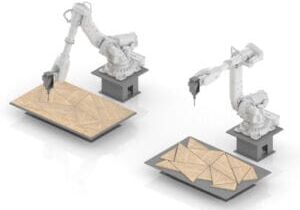
From BIM to Robotic Production: A Digital Workflow for Customized Components in Volumetric Modular Construction
For volumetric modular manufacturers, the value of this workflow is not simply the use of robotics. Its real value is continuity.
Helping Build a Common Framework for Modular Construction in Canada
Canada’s modular construction sector continues to gain momentum, but scaling it successfully will depend on shared expectations across design, manufacturing, approvals, and project delivery. CSA Z251 helps provide that common foundation.
Edges, Exits & Equipment: A Modular Builder’s Guide to Rooftop Access
Rooftop access belongs in the factory design. Before the modules ship, the project team should identify each route’s users, confirm applicable requirements, coordinate with the roof system and structure, and assign responsibility.
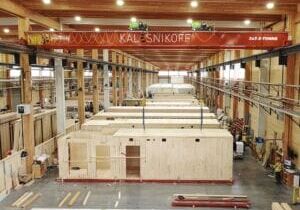
When Timber Production and Modular Construction Share One System
As demand for multifamily and workforce housing continues to outpace what conventional construction timelines can deliver, models that reduce the number of handoffs between structural fabrication and modular assembly are likely to draw more attention.
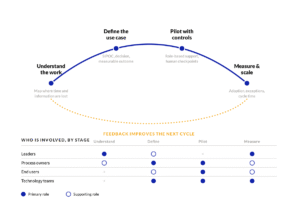
Your AI Strategy Is an Enablement Strategy
Tools will change. Teaching employees only the steps in one platform creates a narrow capability. Involving them in problem definition, process mapping, data assessment, controls, and measurement gives the organization a way to improve its systems as technology evolves.

By-Right Permitting: The Missing Lever for Scaling Modular Multifamily
Modular has already proven it can outperform traditional building methods on speed and cost per unit. The next frontier is outside the factory in the front end of the process, where projects either clear a path to construction or get stuck in review.
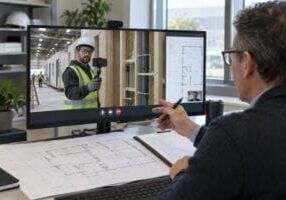
Remote Inspections and The Future of Factory Oversight
Remote inspection is becoming a practical part of modular construction oversight. Its value is greatest when it is used selectively, governed by clear procedures, and supported by complete traceability.
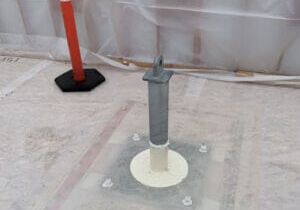
Reimagining Dry-In: How a Temporary-to-Permanent Roofing Strategy Mitigates Risk Between Modular Installation and Final Roof Construction
As volumetric modular projects continue to increase in scale and complexity, the Temporary-to-Permanent FiberTite Roof System represents an example of how traditional trade scopes can be reimagined through Design for Manufacturing and Assembly (DfMA) principles.