Choosing the Right Ramp
Why Modular May Be the Smarter Investment

Matthew Brown is the Strategic Business Development Manager at FlexDecks.
Accessibility is a crucial consideration for residential, commercial, and mixed-use properties thanks to the Americans with Disabilities Act (ADA), signed into law 35 years ago in 1990. Major renovations require at least 60% of public entrances to be accessible (ADA 206.4.1) and entrances are the most visible compliance risk for most buildings. It’s important to get that right with the correct ramp, stair, and landing design, and compliance to local and national standards like the ADA and International Building Code (IBC) enhances property value and improves tenant satisfaction, while minimizing risk for the business.
Historically, ADA and IBC entrances have been designed and built using traditional methods like timber, concrete, and custom metal fabrication. This approach can suffer from expensive design and QA resources to deliver consistent, high-quality results. Skilled labour and variable field conditions will slow down construction and often require build times of weeks or months to complete.
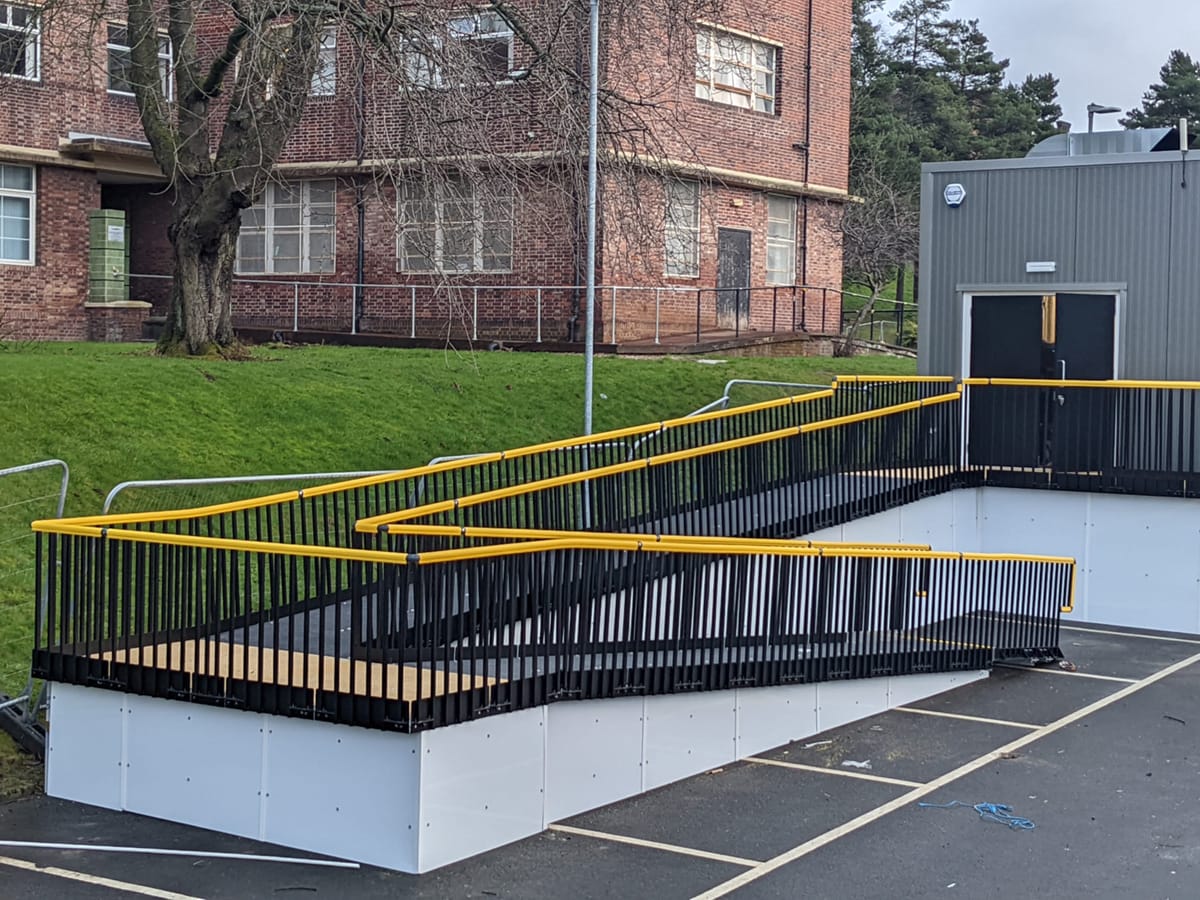
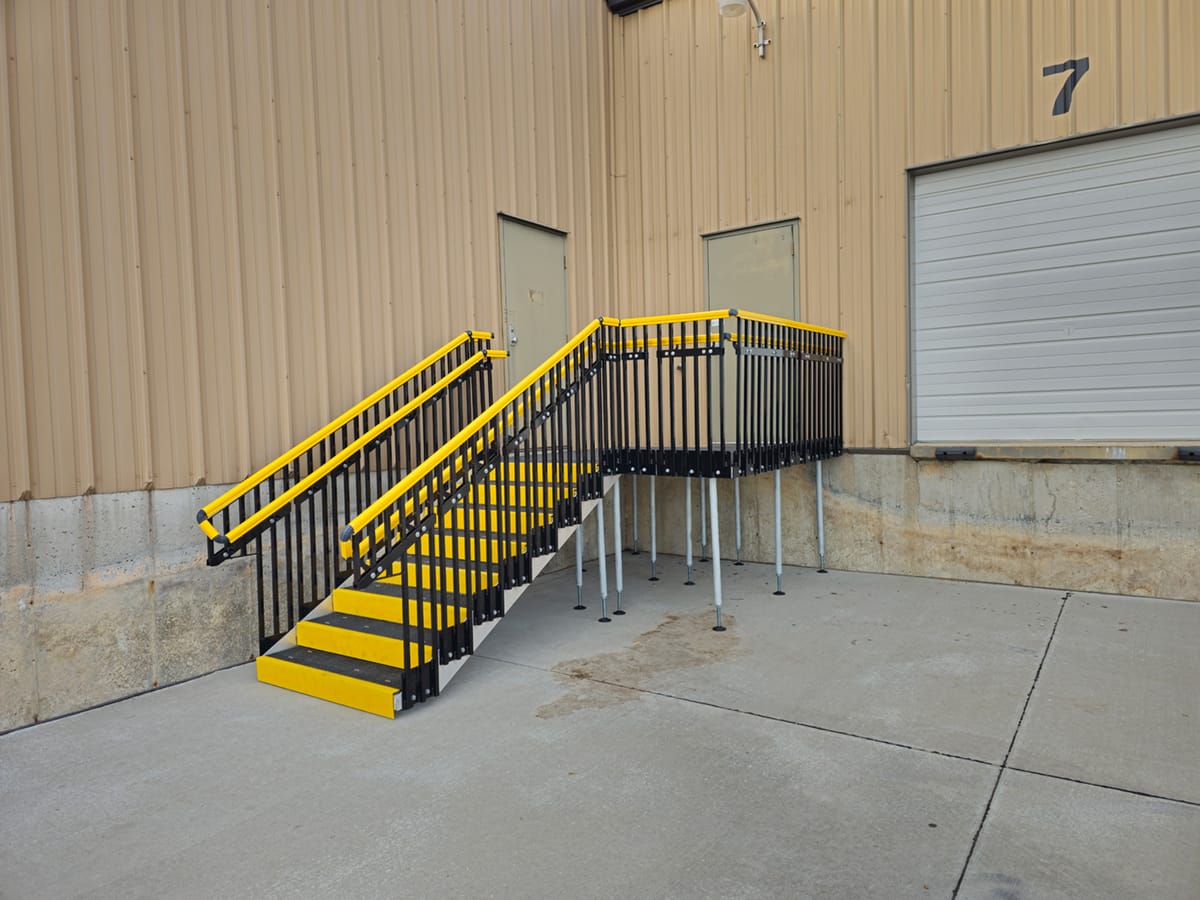
Modular ADA egress stairs.
Challenges of Traditional Construction
Traditional construction methods are time consuming. It is labor intensive with little room for automation or concurrent work schedules, so trying to move faster only introduces more problems like safety and quality risks along with an increased likelihood of costly mistakes. Limited control over schedules means limited control over costs, with slow build times adding significant labor costs.
Labor is also specialized, with tradespeople constructing or fabricating at the site. These trades are costly and rightfully so — the skills needed are difficult to get and can produce some amazing results. The problem is that some aspects of construction simply do not need that level of ability in the field and asking general labor to do the same task introduces significant risk to the quality of the result.
Controlling the onsite environment is limited, affecting quality, speed, and even safety. Weather conditions can wreak havoc on the most meticulous plans, even with well-prepared contingencies to protect building materials and schedules. Traffic, pedestrians, other local construction, and even political activity can hamper schedules and disrupt progress, adding significant cost to the project. Safety on a construction site is deadly serious — OSHA reports 1069 construction fatalities in 2022.
Compliance with safety standards is already difficult and delivering a safety and/or compliance-based scope of work becomes even more challenging to deliver in real world conditions. OSHA, IBC, ADA, NEC — the codes may be clear, but construction of a solution with many onsite variables adds risk to the result and a potentially costly inspection cycle.
Finally, layers of approval and review are needed for fabricated, traditional construction building components. This is critically important as the design is new every time and the work must be meticulously controlled to deliver the expected result for the Owner. Documentation must be organized and trustworthy, adding further risk as multiple parties get involved.
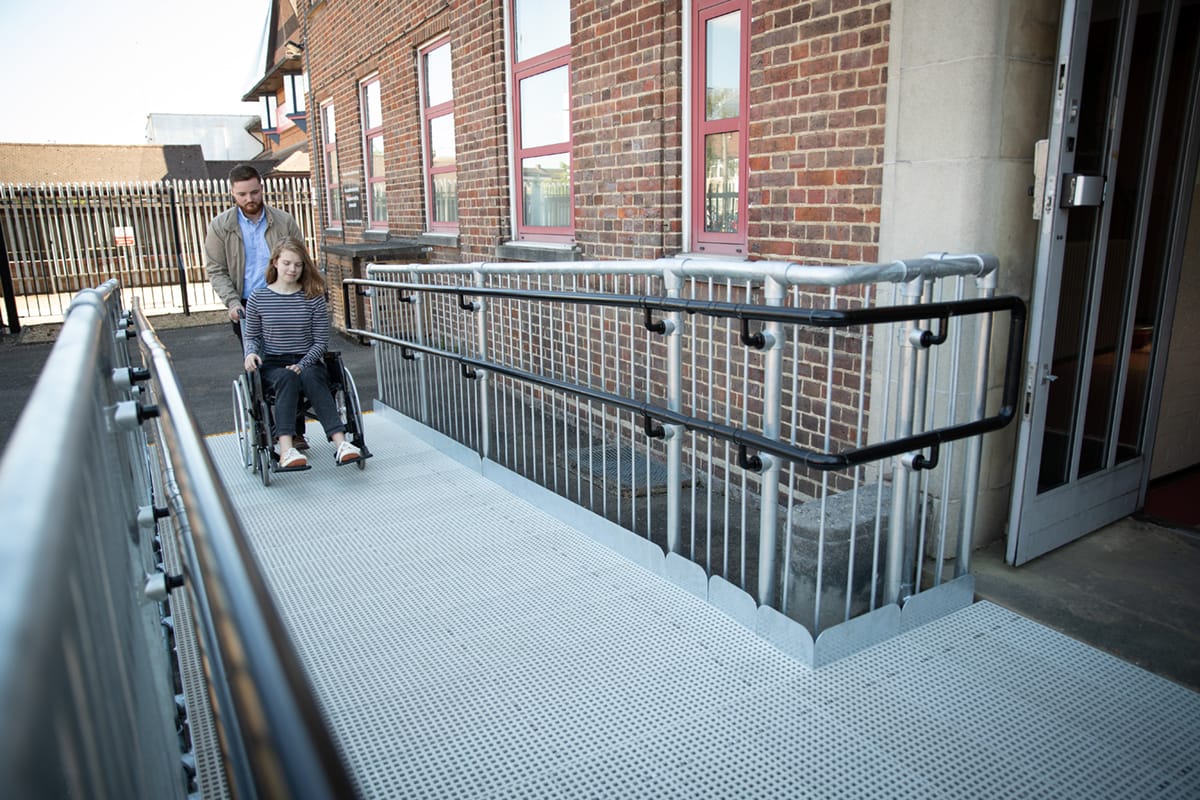
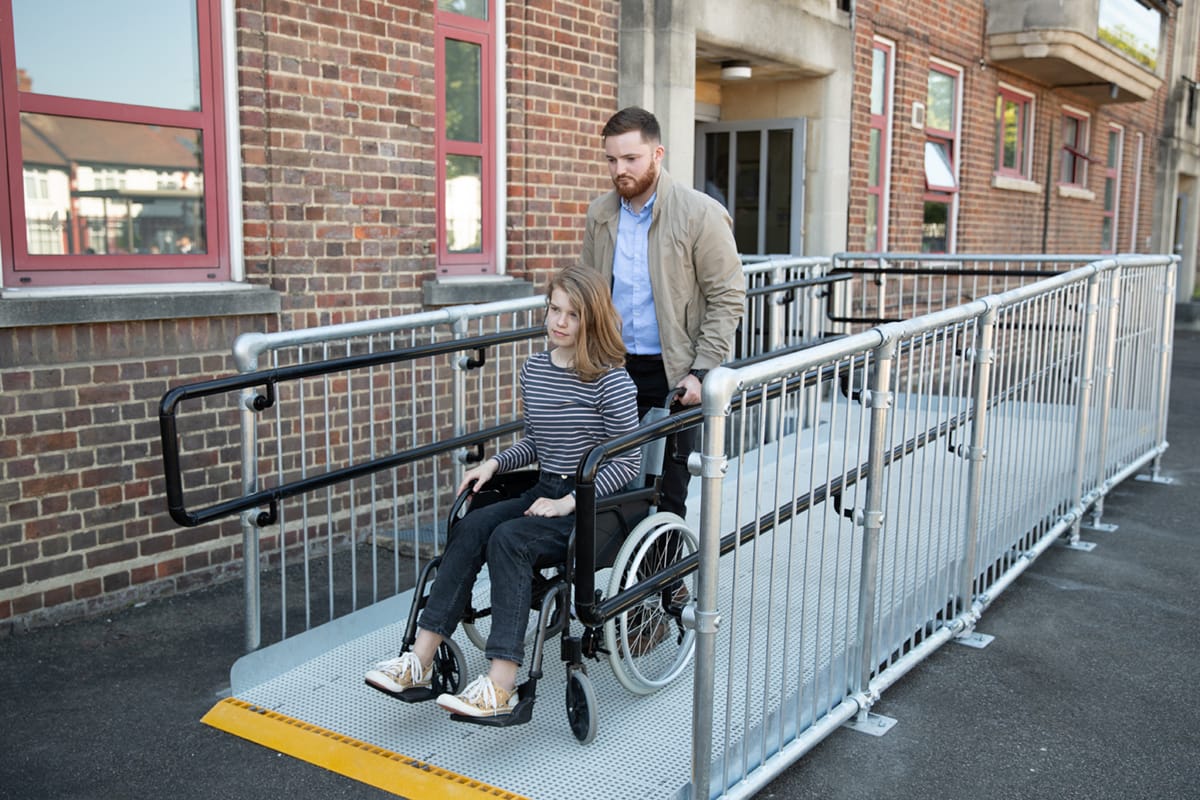
Modular ADA ramp for public access.
Benefits of Modular Construction
Modular construction solves these problems directly, and the goal is still the same — we want a quality, reliable structure that meets the functional requirements and satisfies compliance. Modular entrance systems offer flexible design parameters and integrated engineering to provide a reliable and compliant result. Design loads are easily calculated thanks to offsite construction of all components, and all requirements will be considered to deliver peace of mind. Even late-stage changes can be accommodated with rapid redesign and deployment of modular components.
Installation for most configurations can be done in days, not weeks or months. Mechanical assembly requires only common labor and hand tools, and components are manufactured in a controlled environment following standard processes that deliver reliable quality. Unexpected conditions can be solved with in-stock, standard components instead of a costly and time-consuming redesign.
Conclusion
Modular construction offers a compelling alternative to traditional methods for designing and building ADA and IBC-compliant entrances. By addressing the challenges of traditional construction, such as time-consuming processes, unavailable specialized labor, and variable field conditions, modular solutions provide a more efficient, cost-effective, and reliable approach. The benefits of modular construction, including flexible design parameters, rapid installation, and consistent quality, make it an attractive option for property owners and managers seeking to enhance accessibility and compliance while minimizing risks.
More from Modular Advantage
Mind the Gap: The Interface Between Onsite and Offsite Construction
Every design for manufacture and assembly (DfMA) project — modular, mass timber, or panelized — is really two projects joined at a seam. One is built in a controlled factory to millimeter tolerances; the other in the field, in weather, to the looser tolerances of poured concrete and human hands. Between them sits an interface: where the factory’s precision meets the site’s reality.
Rules, Rails & Repeatability: Applying DfMA to Modular Healthcare
DfMA offers several advantages for healthcare projects, with faster delivery among the most valuable. Schedule matters when building new facilities, expanding campuses, renovating existing space or bringing care closer to communities that need it.
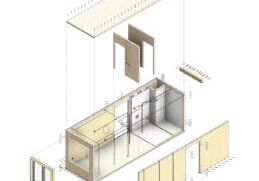
Precision and Possibility: Demands of DfMA and What Modular Mass Timber Makes Possible
Mass timber does not automatically create an efficient modular building. Its precision makes early coordination more important: fabricated components will accurately reproduce both the team’s solutions and its mistakes. The material’s advantages are realized only when supported by an equally precise design and delivery process.
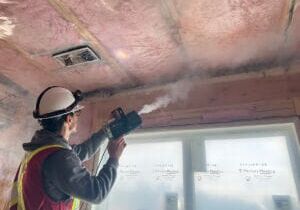
Catch It in the Factory, Not in the Field: Smarter Testing for Modular Builds
Integrating watertightness and airtightness testing into factory workflows transforms quality assurance from a reactive process into a proactive commissioning strategy. It ensures that every module shipped is field ready and resilient for transportation while also supporting the ability of the modular construction industry to make buildings better.
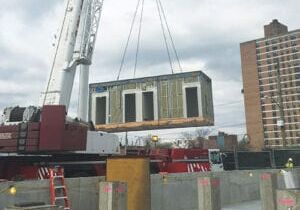
Modular Construction Contracts: Key Considerations for Successful Canadian Projects
Starting a modular project with a well-developed contract protects both the owner and the contractor. It will help keep the project on track and on budget, and it will improve quality from the factory floor to final installation on-site.
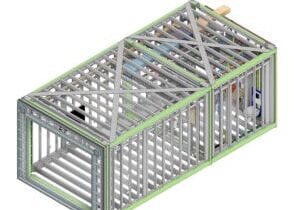
Modular by Design: Turning Architecture into a Manufacturing System
Modular construction is often presented as a faster way to build. Speed, however, is only one part of its value. The larger opportunity is to create a coordinated design and production system that improves quality, reduces uncertainty, and allows a building to move efficiently from concept design through manufacturing, transportation, installation, and completion.
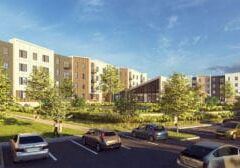
Repeatability Begins with Trust: What Alora at Dry Creek Reveals About Scaling Modular Housing
Alora at Dry Creek, a 329-unit, multifamily community comprising five four-story buildings in Centennial, Colorado, demonstrates how repeatable design, standardized manufacturing and early collaboration can work together to create a model that is not only faster to deliver, but easier to replicate across future projects.

T.R. Arnold: The Art of Third-Party Inspections
T.R. Arnold (TRA), a third-party inspection company in Elkhart, Indiana, contracts with modular manufacturers across the US. Manufacturers register with each state to which they intend to send their modules and may be required to hire a third-party inspection company.
Creating an ‘Ecosystem for Innovation:’ 50+ Years of Modular Construction Oversight in Virginia
Virginia’s modular building program began in 1973, with the implementation of the Virginia Industrialized Building Unit and Mobile Home Safety Regulations. Now it’s leading the country in modular code adoption.
Understanding Thermal Barriers Compliance Methods & Emerging NFPA-275 Foam Plastic Technologies
New fire barrier technologies are improving total costs and margins in major areas of construction, such as commercial, government, union and prevailing wage projects. These benefits translate into other large fringe areas, such as agriculture, commercial cold storage facilities, grow houses, outbuildings, military and aviation hangars.